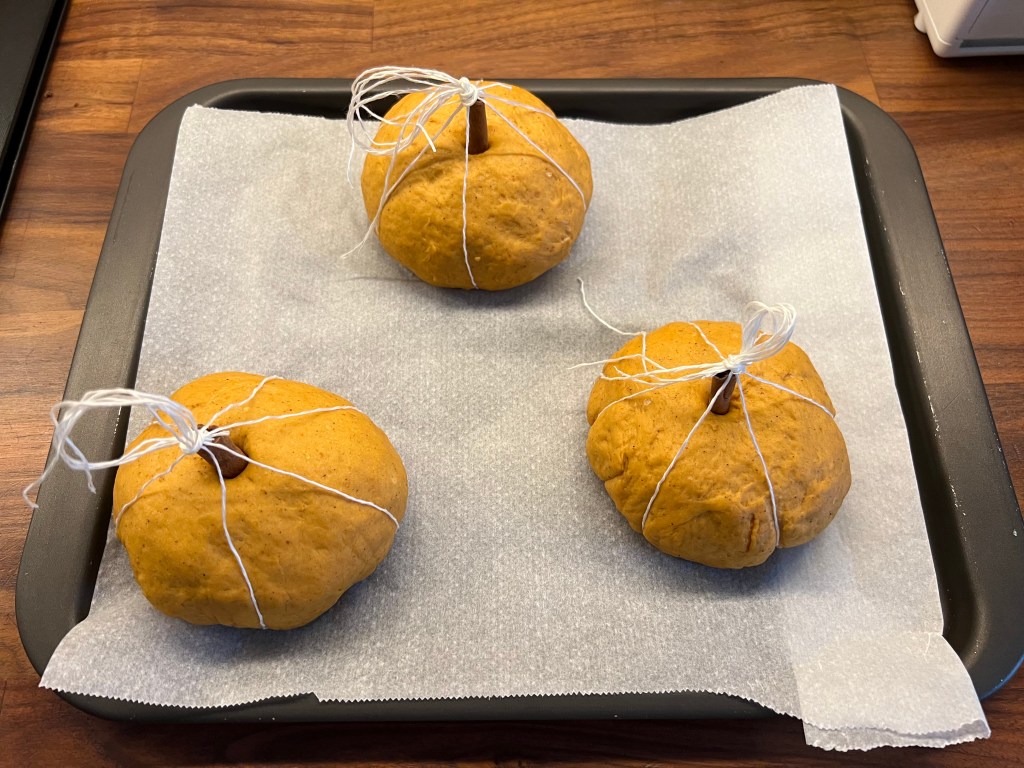
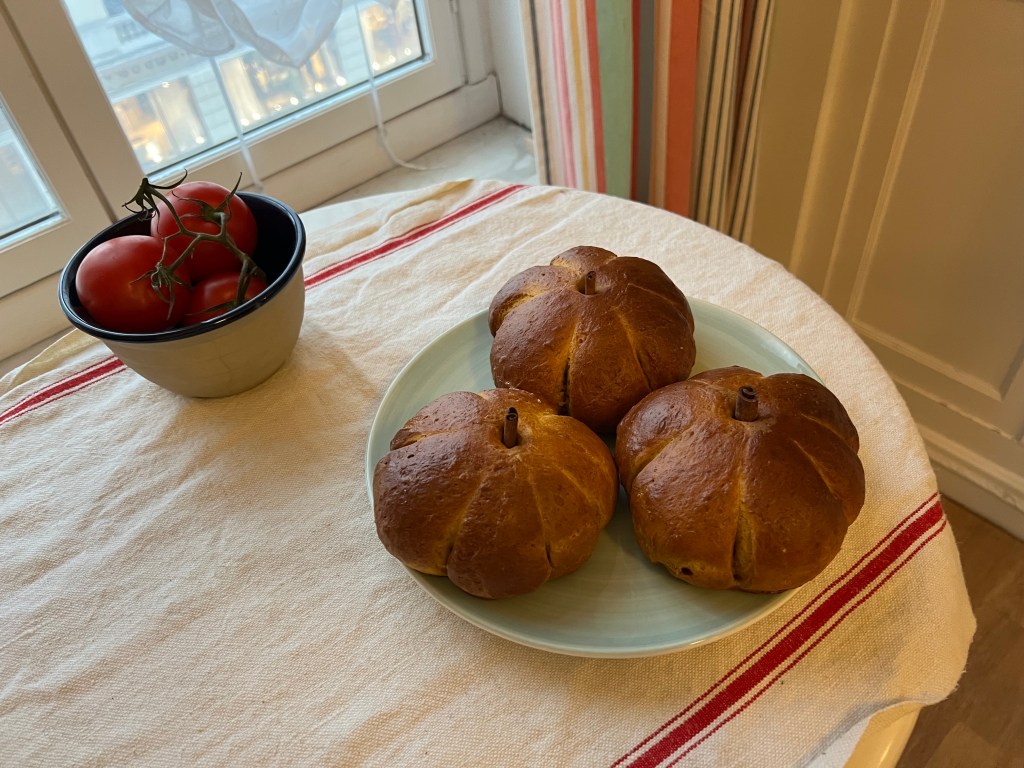
This was a busy month and we’ve tons of pictures to show on a trip (for us) of a lifetime. But first, further embracing fall, the month started with me continuing to bake. One recipe I tried and we enjoyed was a pumpkin bread that had you tie strings which, as the dough rose, created separations to mimic the look of miniature pumpkins. Great fun!

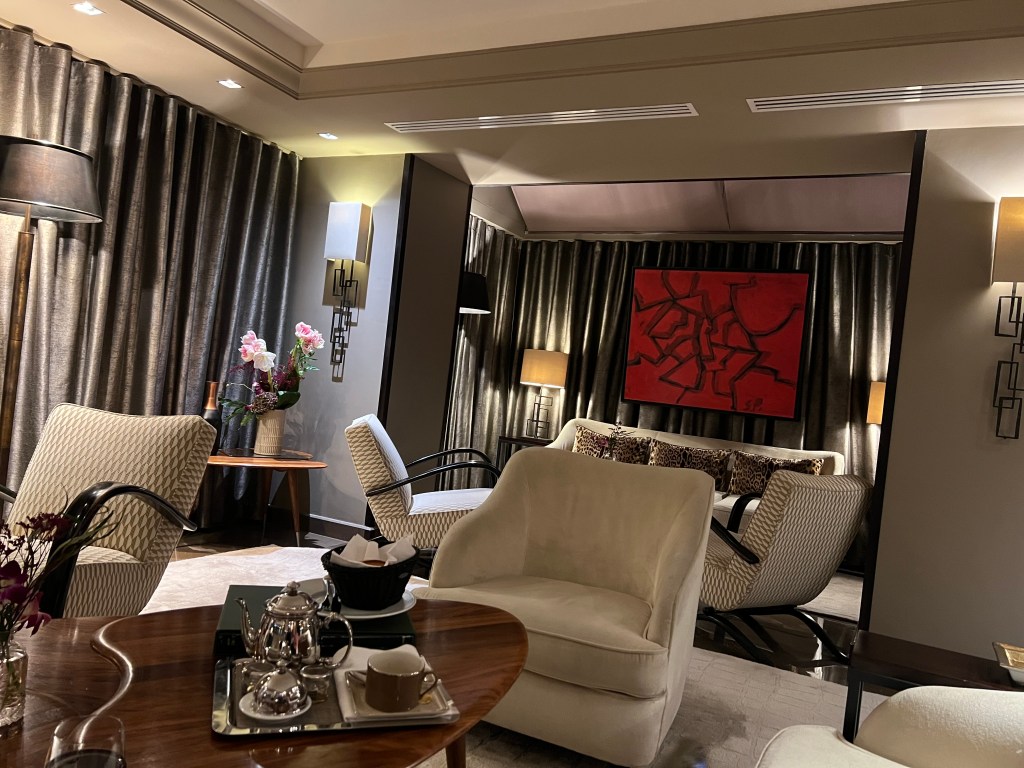
In the second week, we met a previous colleague of G’s, her husband and two of their friends in Paris for dinner. We went to Roger la Grenouille, a favorite of ours and a well known and highly respected historic 1930’s Bistro French restaurant. The dinner was fabulous, the wine outstanding and the company terrific. We caught up on a huge amount of news and thoroughly enjoyed all of their stories before parting ways. We stayed at a new hotel for us, the Esprit St Germain, in the 6th arrondissement, which has become our go-to place in Paris. The staff was incredible, the rooms great, and the atmosphere so cozy. And of course, some window shopping while in Paris.

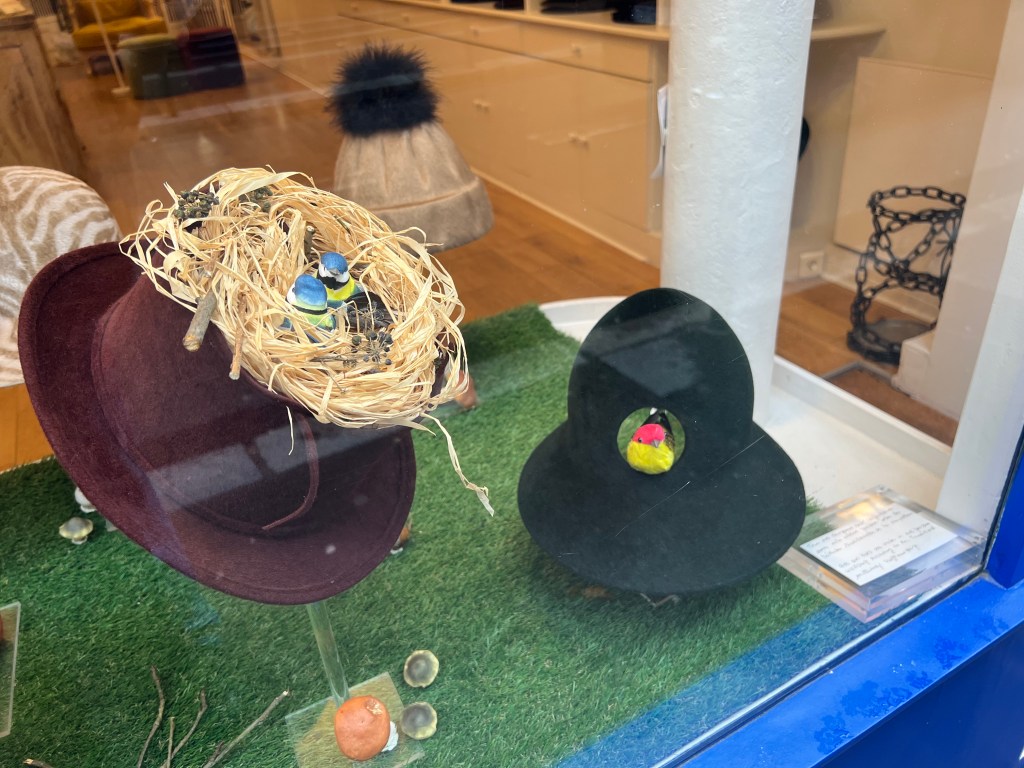
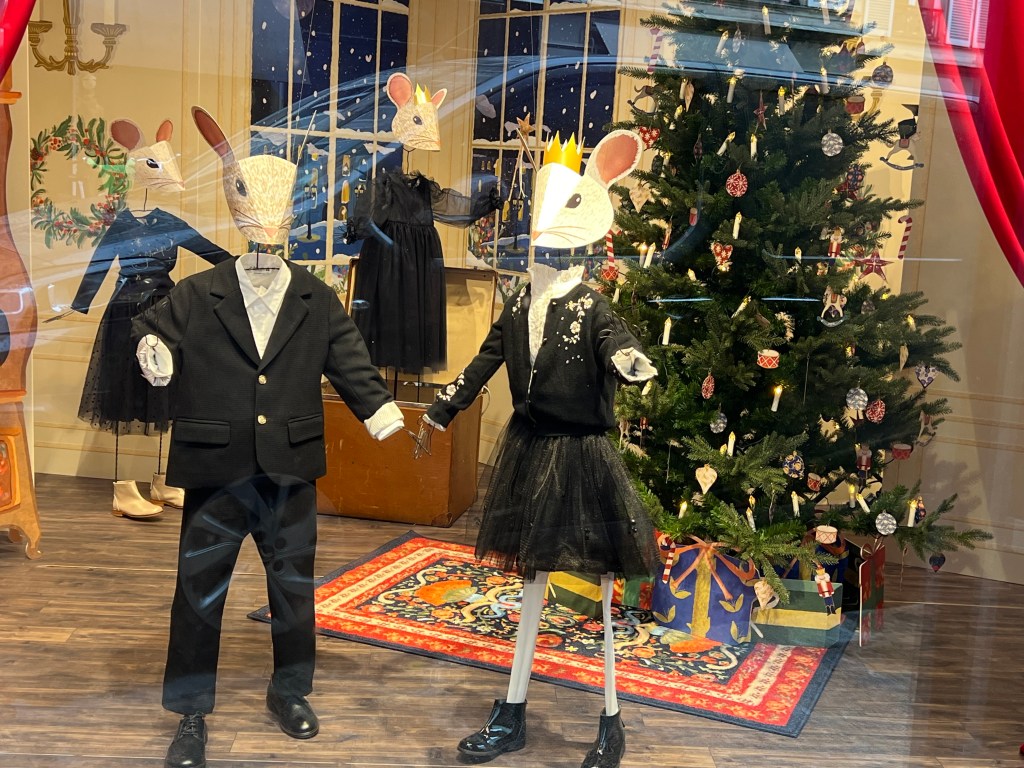
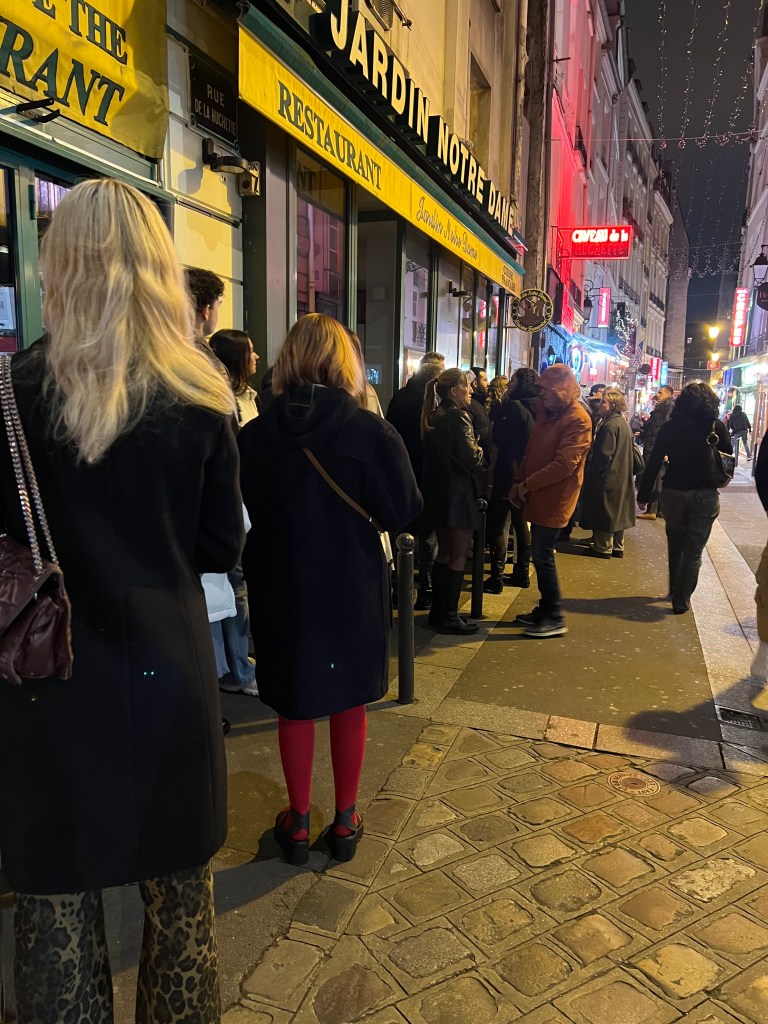
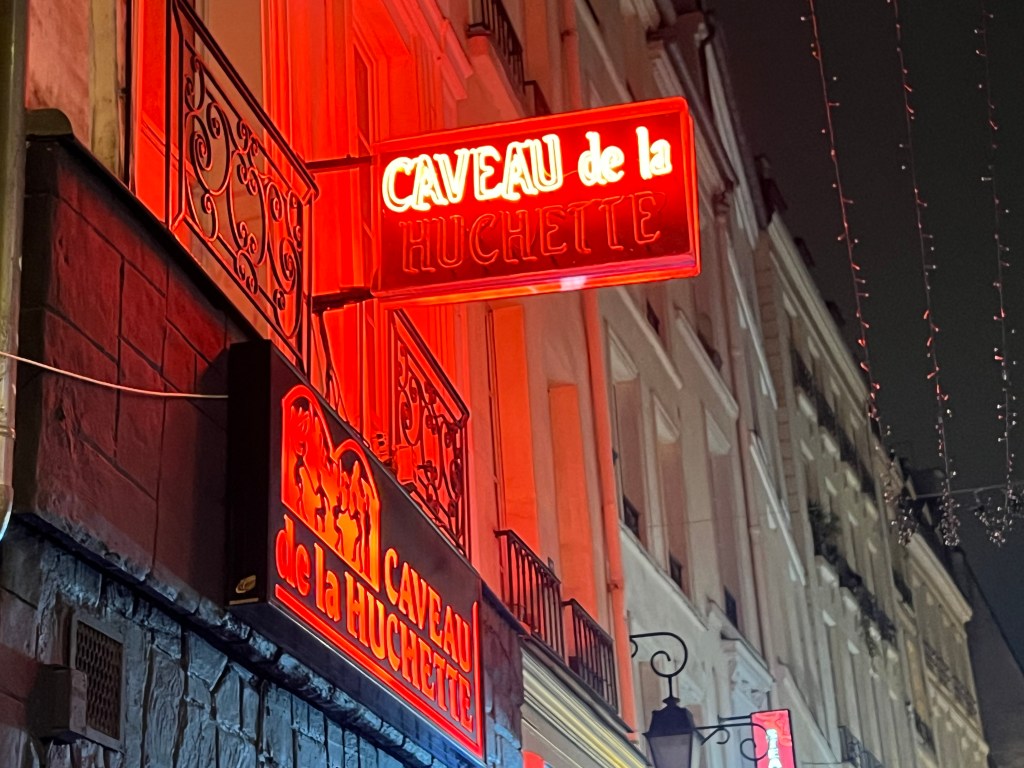
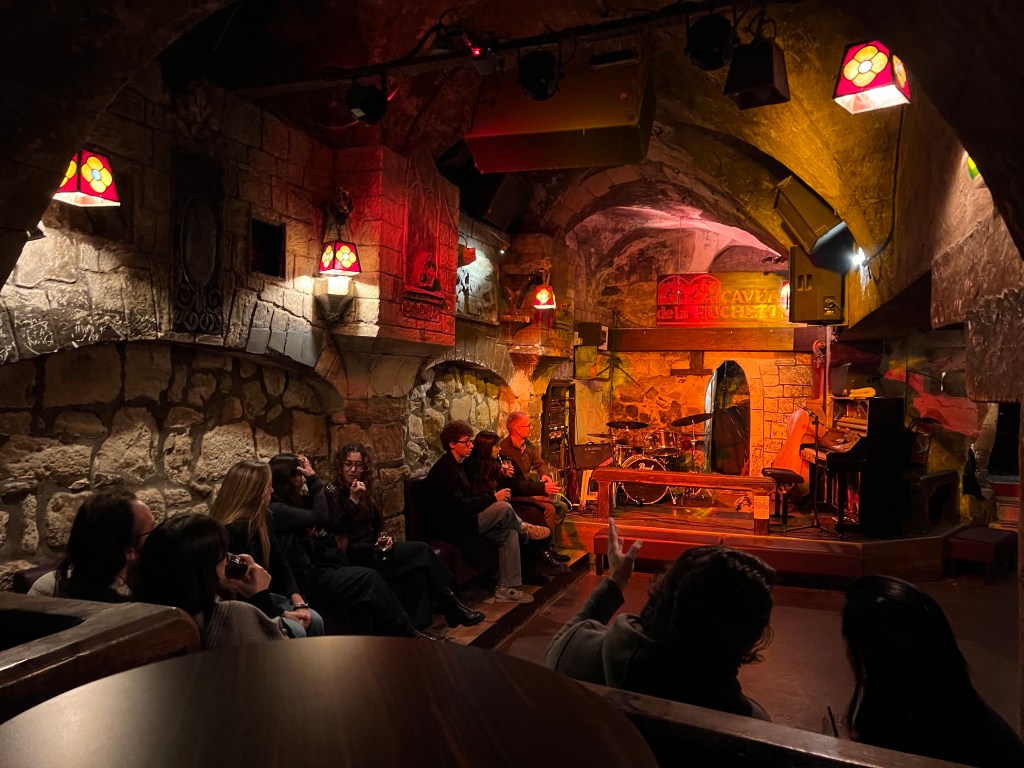
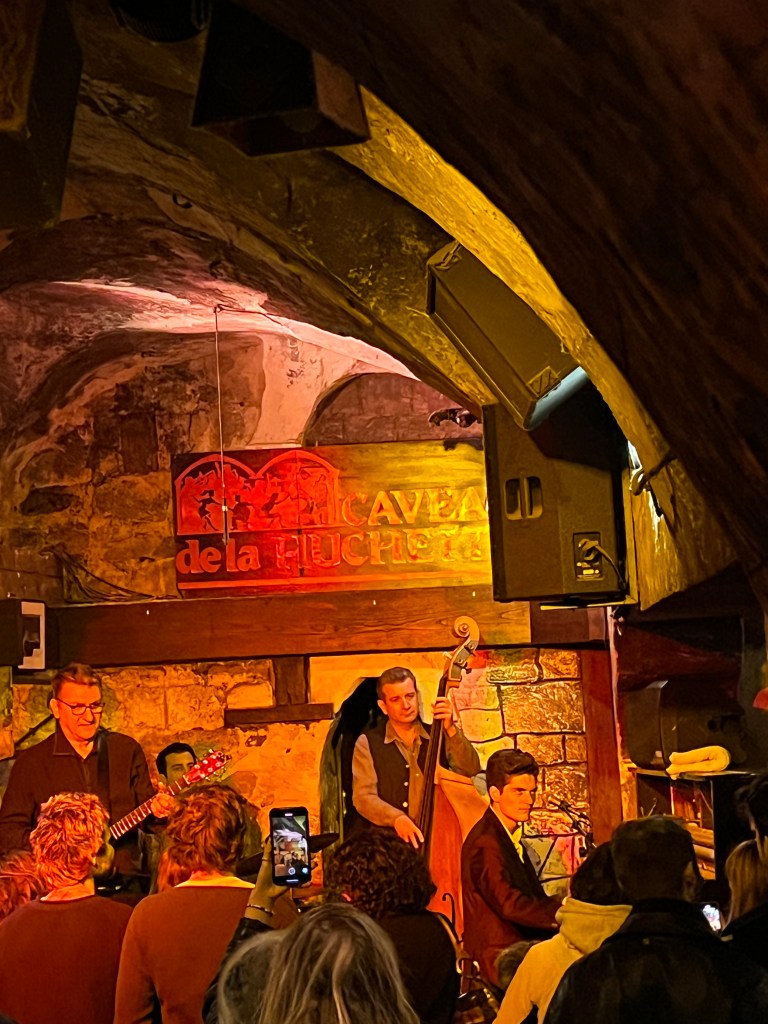
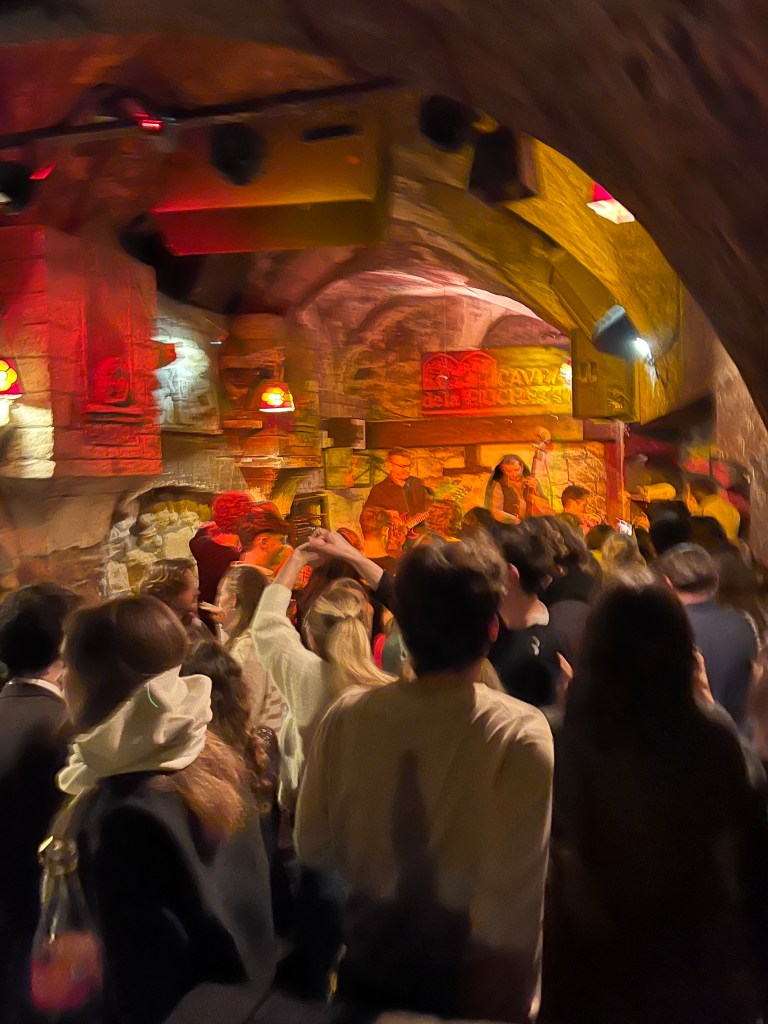
As I said, before leaving to return home, we window shopped in the Latin Quarter which is a favorite, and also took in a jazz evening at the Caveau de la Huchette, also a famous spot. The building dates to the 16th century but it became an underground jazz club in 1949, a hub for jazz and dancing. It has seen the likes of Count Basie, Lionel Hampton and even the Beatles in their beginnings. The only disappointment for us is that it is now a hot spot for the younger crowd to drink and talk – to the point that the music was hard to hear. The proprietors also really packed the club so that most attendees were forced to stand the entire evening, blocking the view of anyone fortunate to have found a seat before the place filled up. The pictures we took were well before the club filled and as the evening wore on, it left us wondering how on earth anyone would be able to evacuate quickly in any emergency. Still it was a thrill to see such a vintage icon.
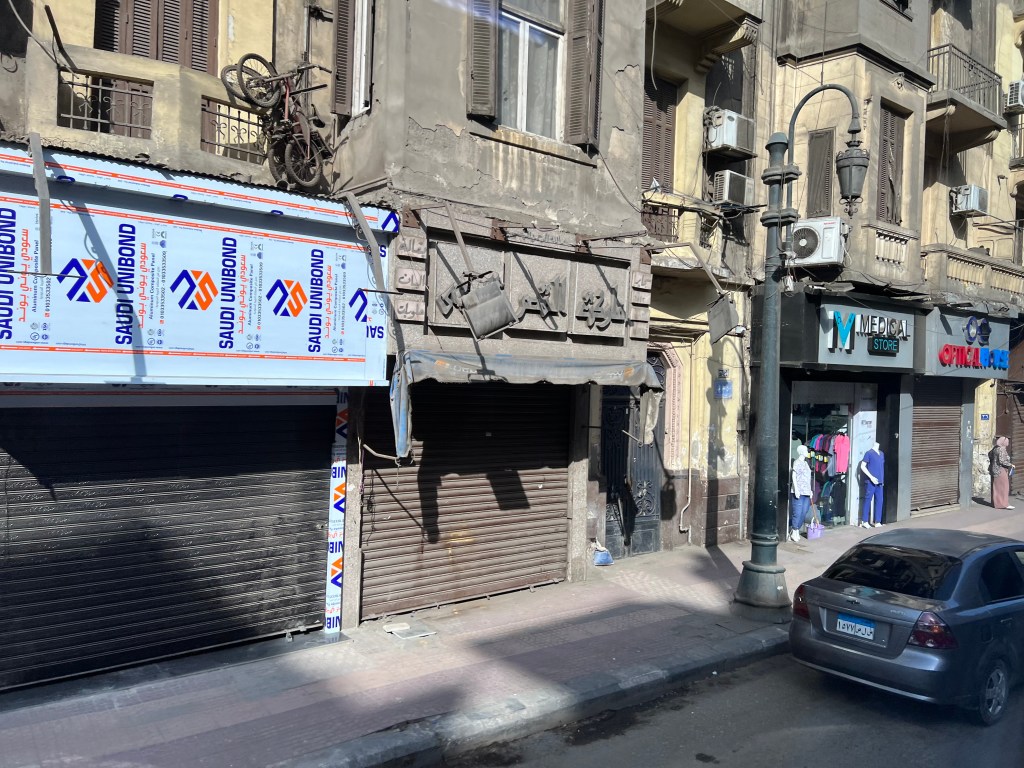
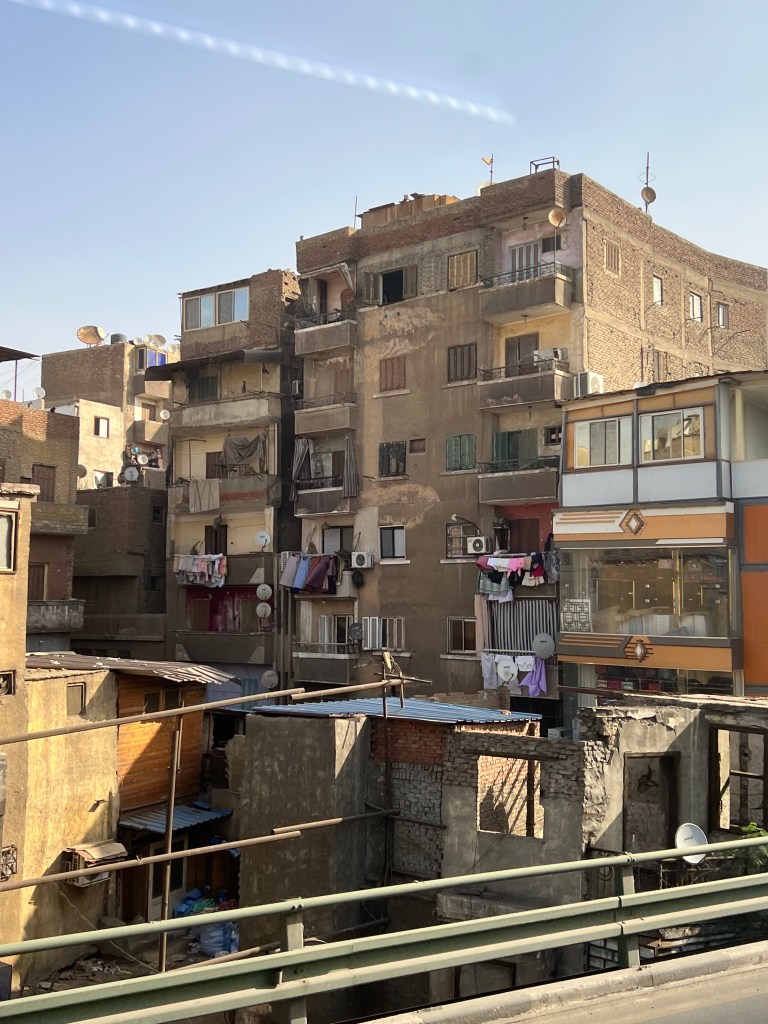
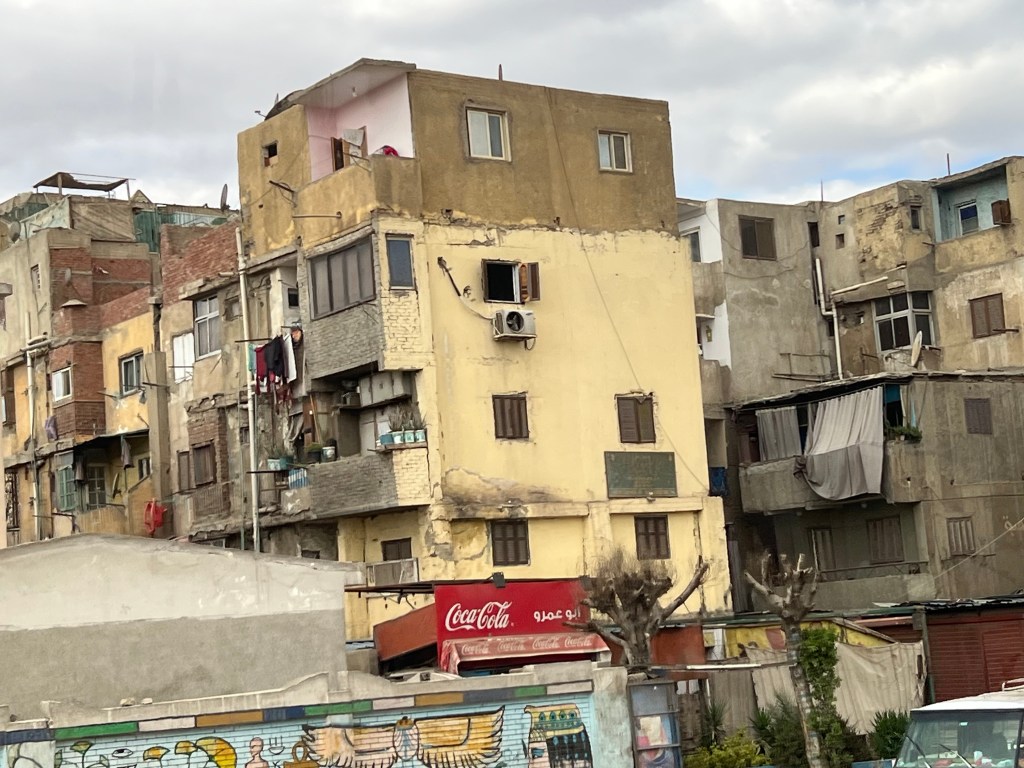
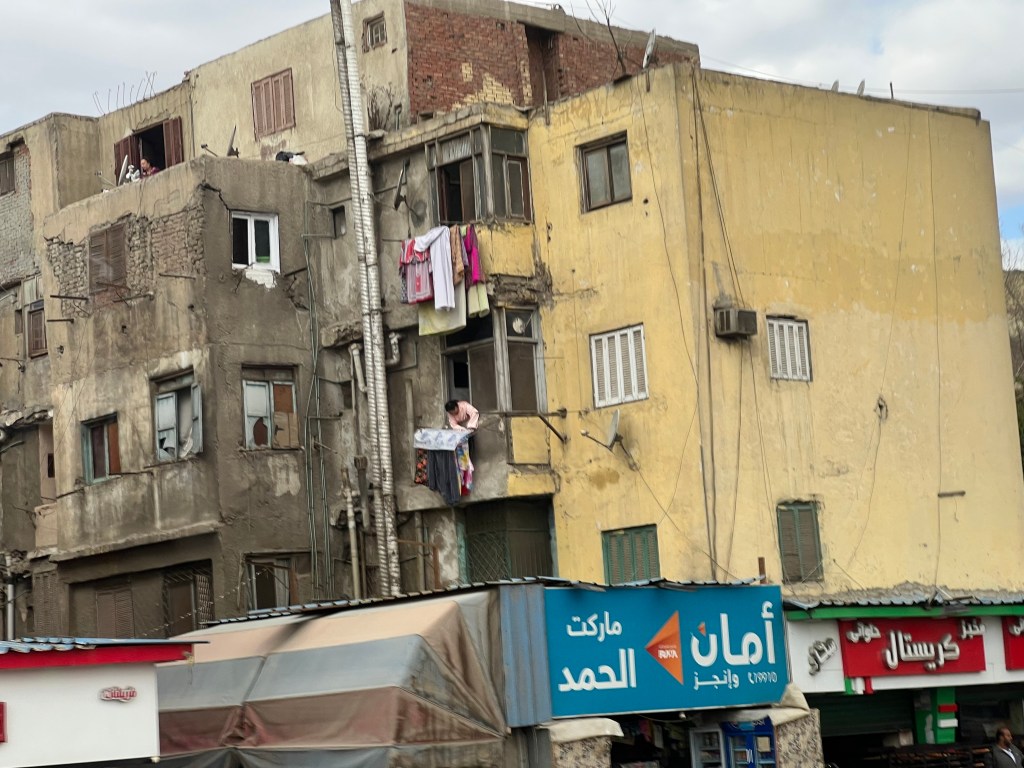
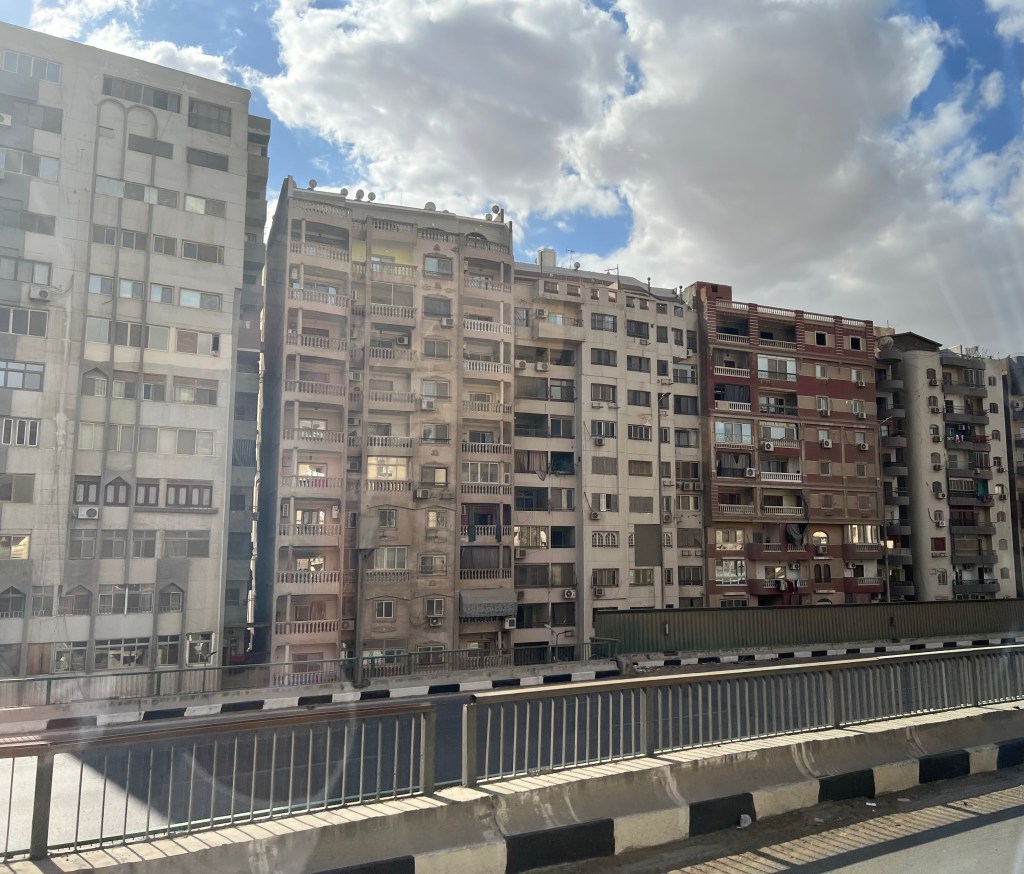
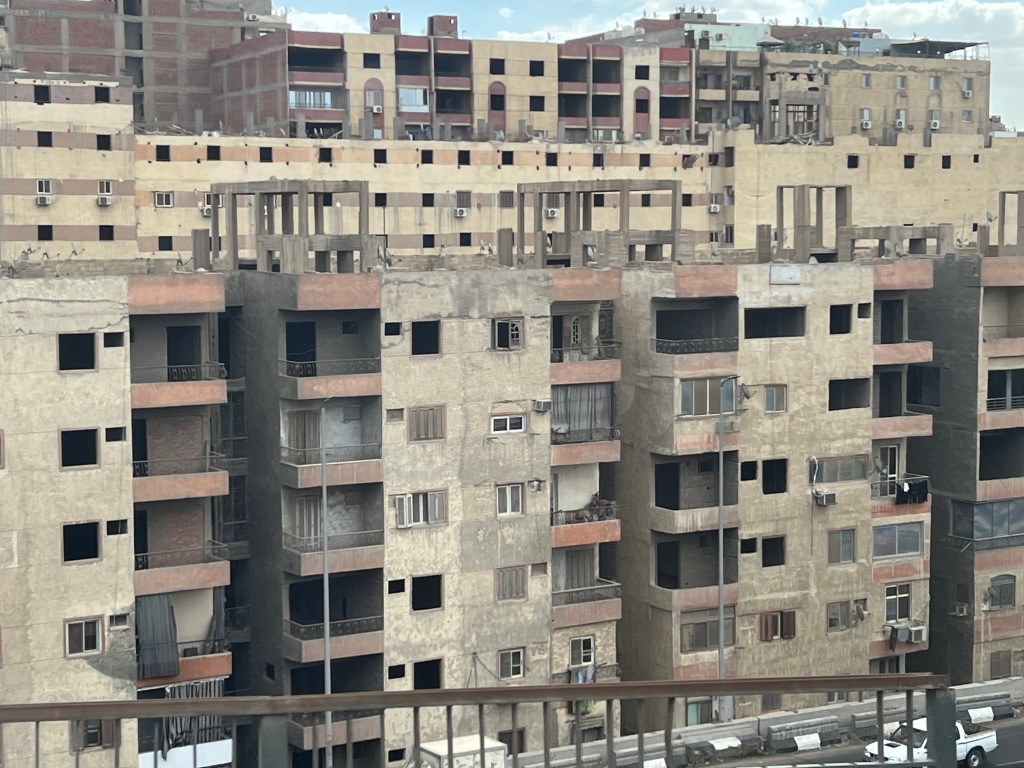
The trip was quick because we needed to return home in order to prepare for a Nile River cruise with Uniworld that we’d booked early in the year. Equipped with our Egypt Visas, the 4.5-hour flight to Egypt was uneventful and we were met in Cairo by a Uniworld representative to take us to the Four Seasons Hotel. Cairo, as we came to see, is a densely populated city, with narrow streets crowded with multistoried, flat roofed, grey concrete rectangular buildings. With the multiple balconies, looking up as we passed, it reminded me of the architecture in Blade Runner. In contrast, entering the luxurious lobby and front lounge of the hotel, we were quickly shown a wonderful lush room overlooking the Nile.
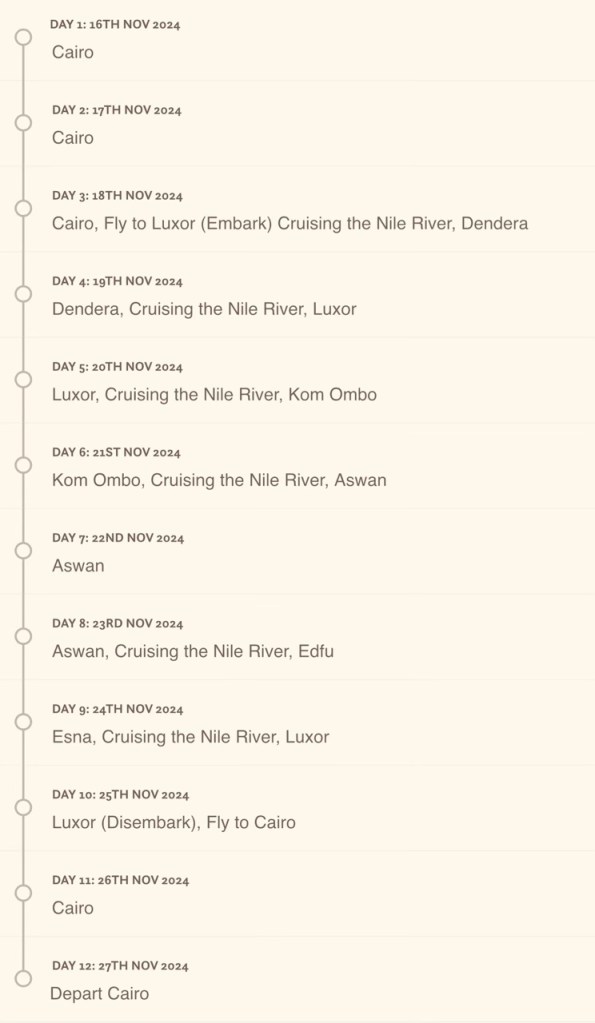
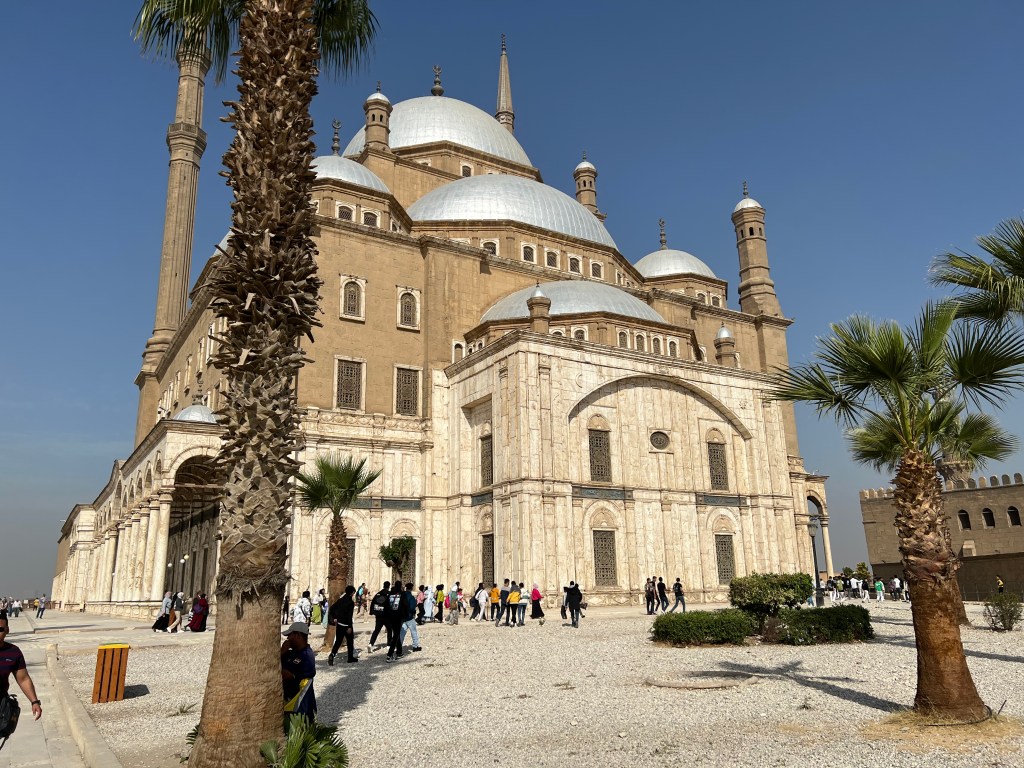
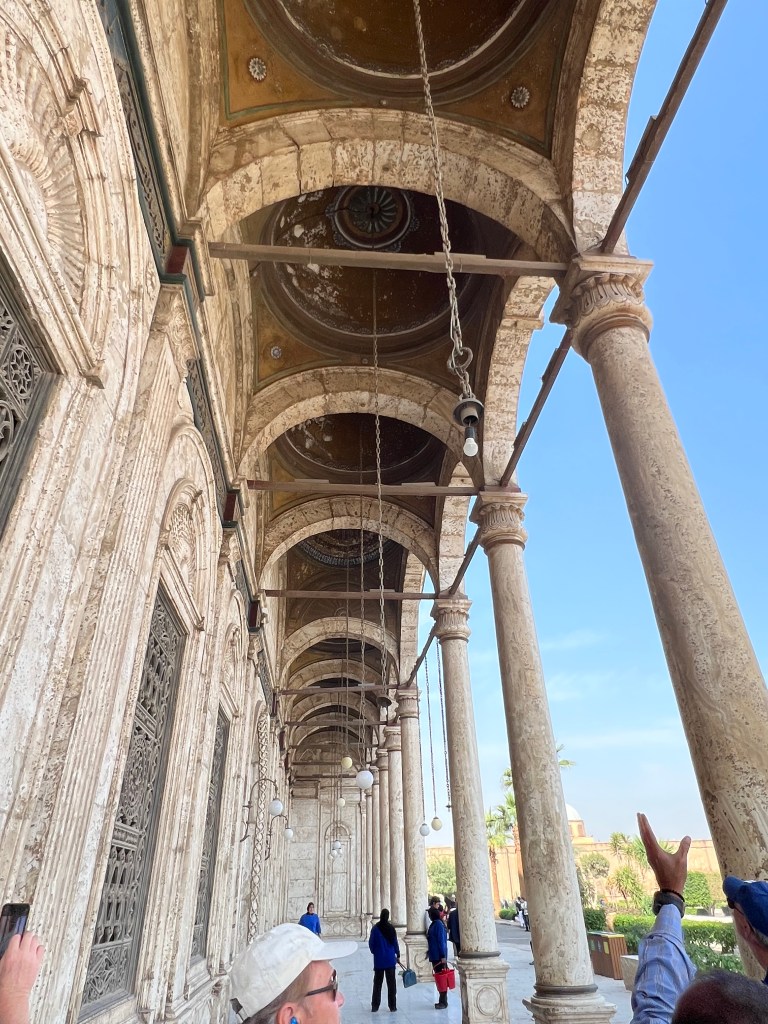
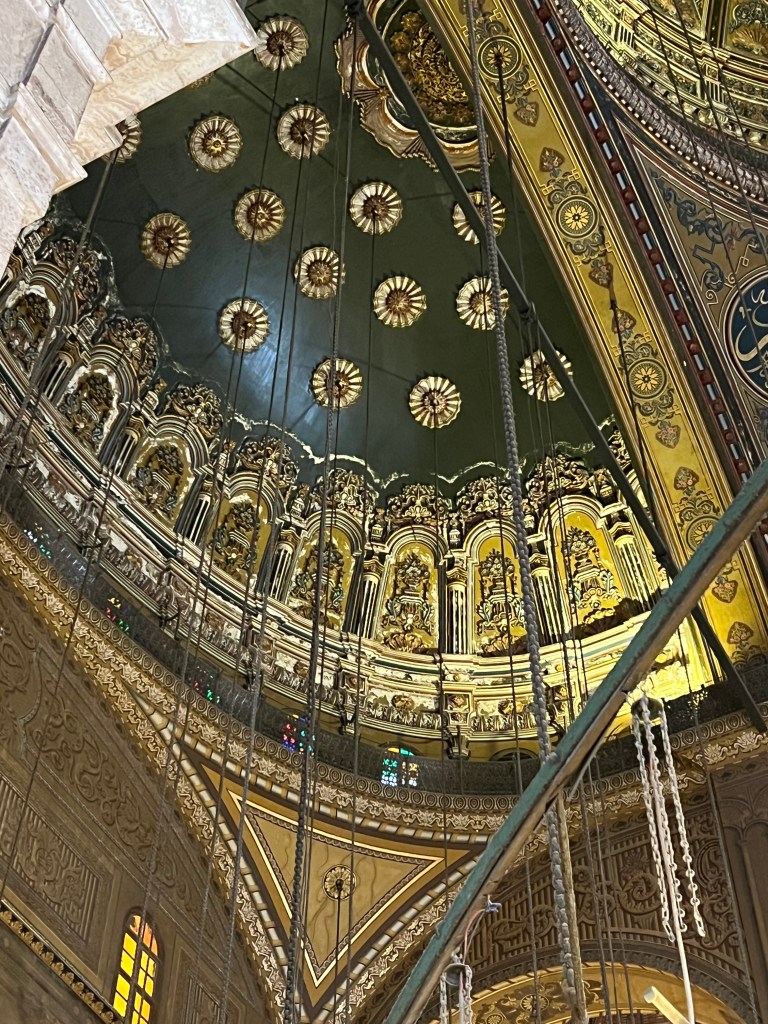
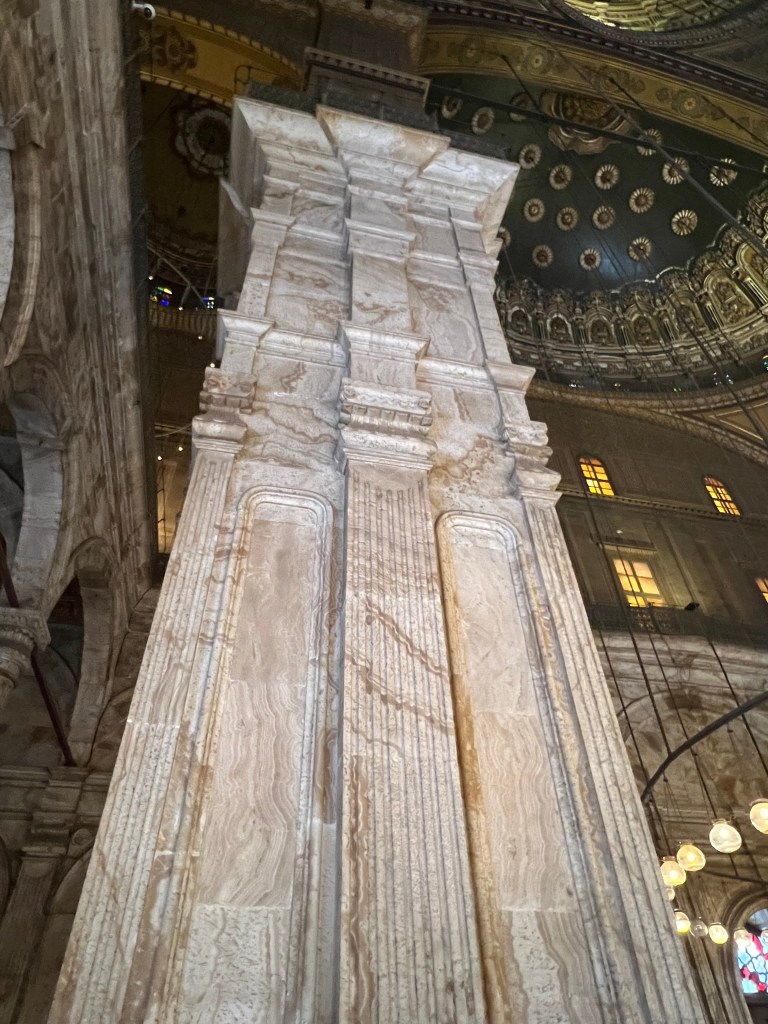
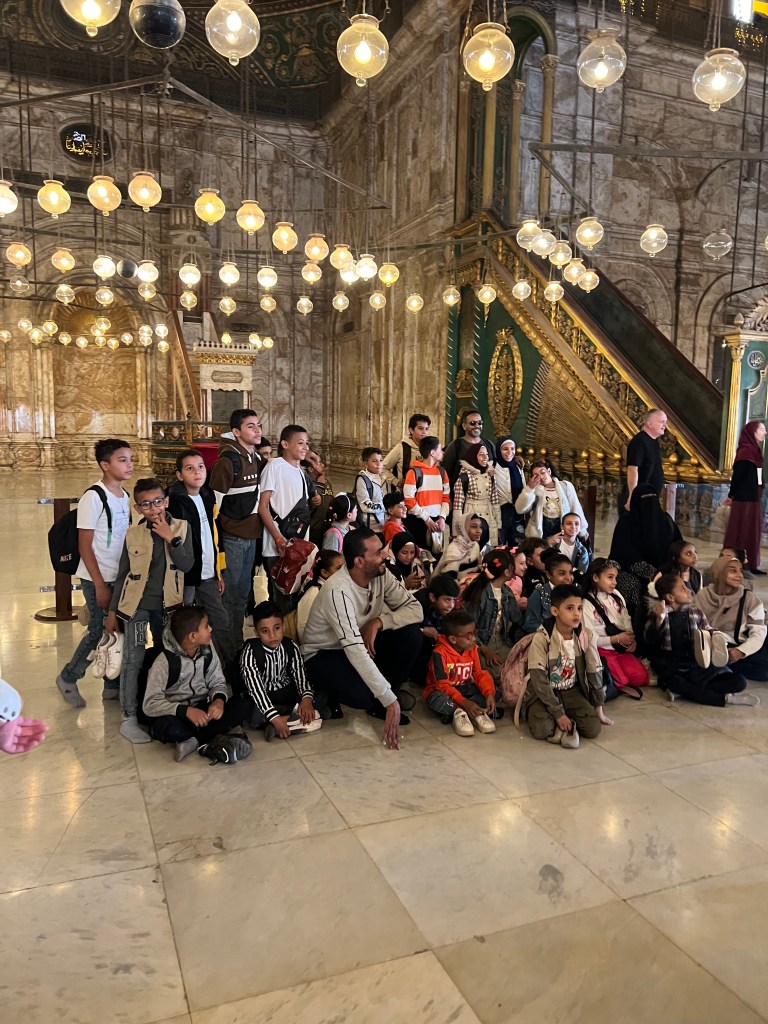
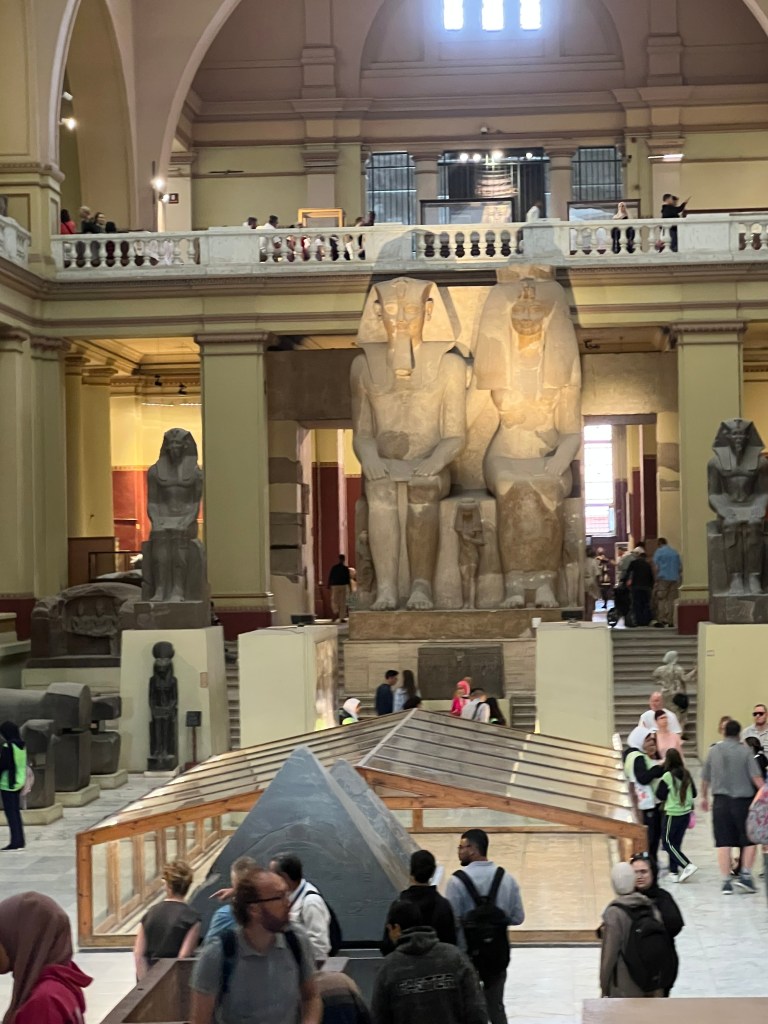
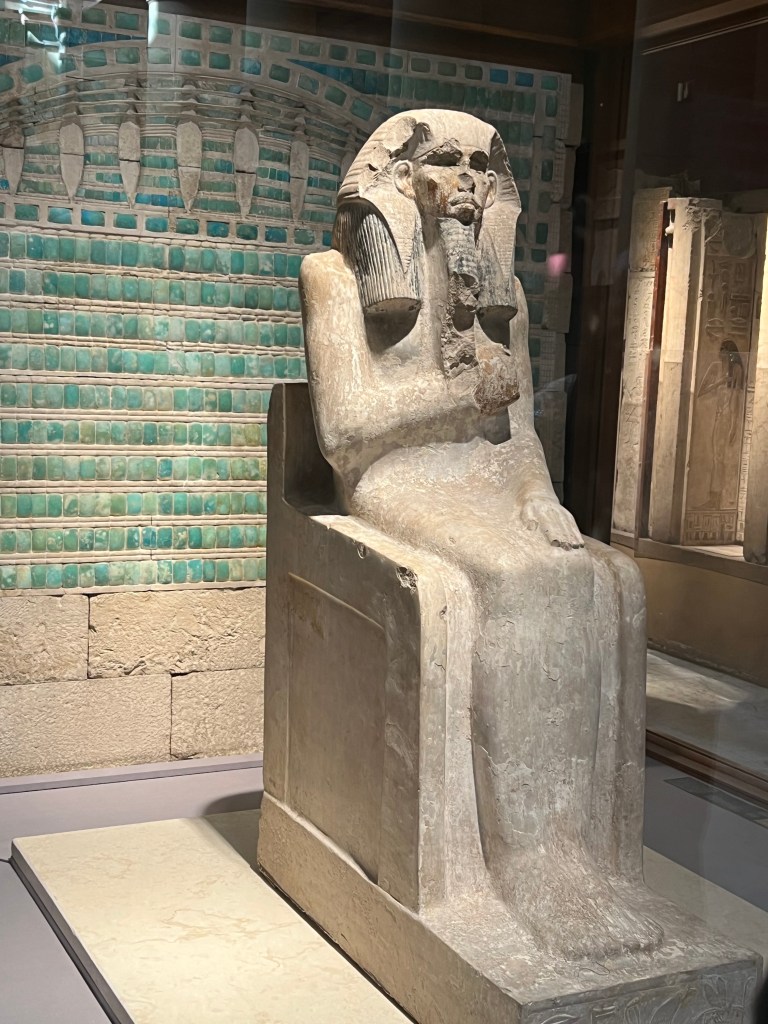
The introduction meeting was at 6 am the following day, where we met three Egyptologists and received the itinerary for the cruise. The room was filled with about 60 people, most retirement ages, and for a large part were either British or American, with a few Canadians, including from Newfoundland. A slide show gave the highlights of what we were going to see in the coming days and it enabled us to have any questions answered. What followed was a dizzying string of days, involving an array of temples, behemoth statues, museums and stunning landscapes. You may nod off but we’ll try to impart what we experienced in the order in which we did. After the introductory meeting and a meal, a third of us boarded a bus with Mohamed, one of the egyptologists, to tour Cairo’s Old Citadel of Salah al-Din with the Alabaster Mosque of Muhammad Ali. Then we took in the Egyptian Museum. Mohamed, who we would have as our guide during the entire trip, turned out to be a soft spoken, kind and patient, generous gentleman whose incredible bank of knowledge was clearly evident and deeply appreciated by all. He also offered many pieces of information outside of the historic sites we visited, answering all questions generously with quite a bit of humor. Here comes a boat load of pictures and historic information:





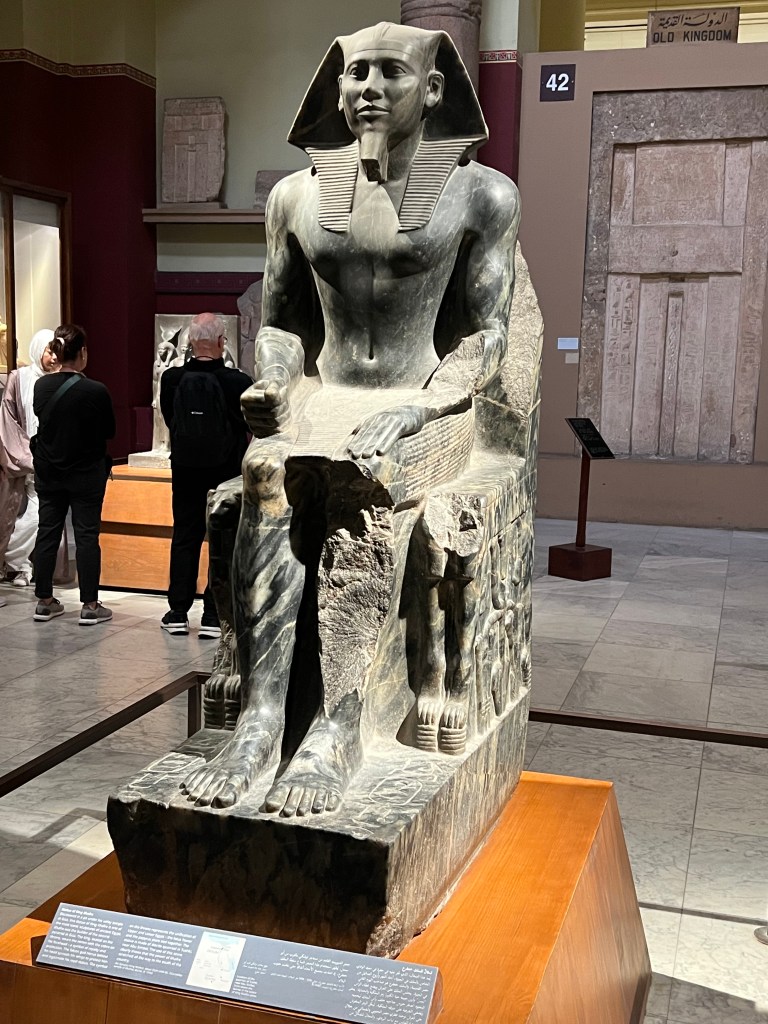
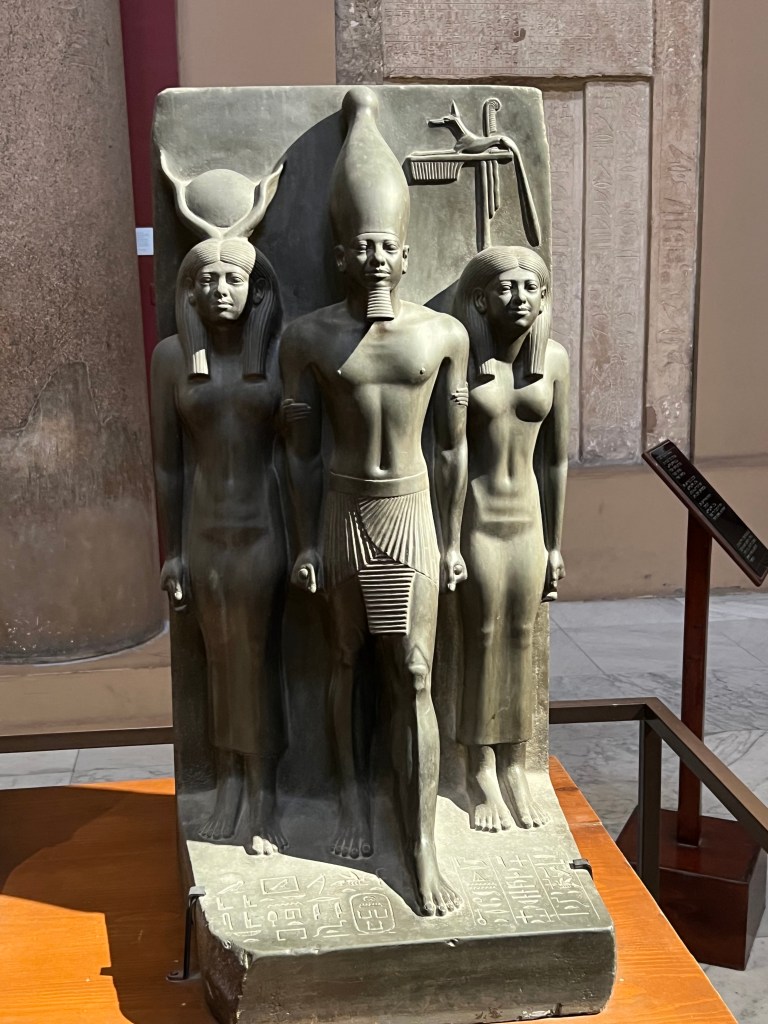
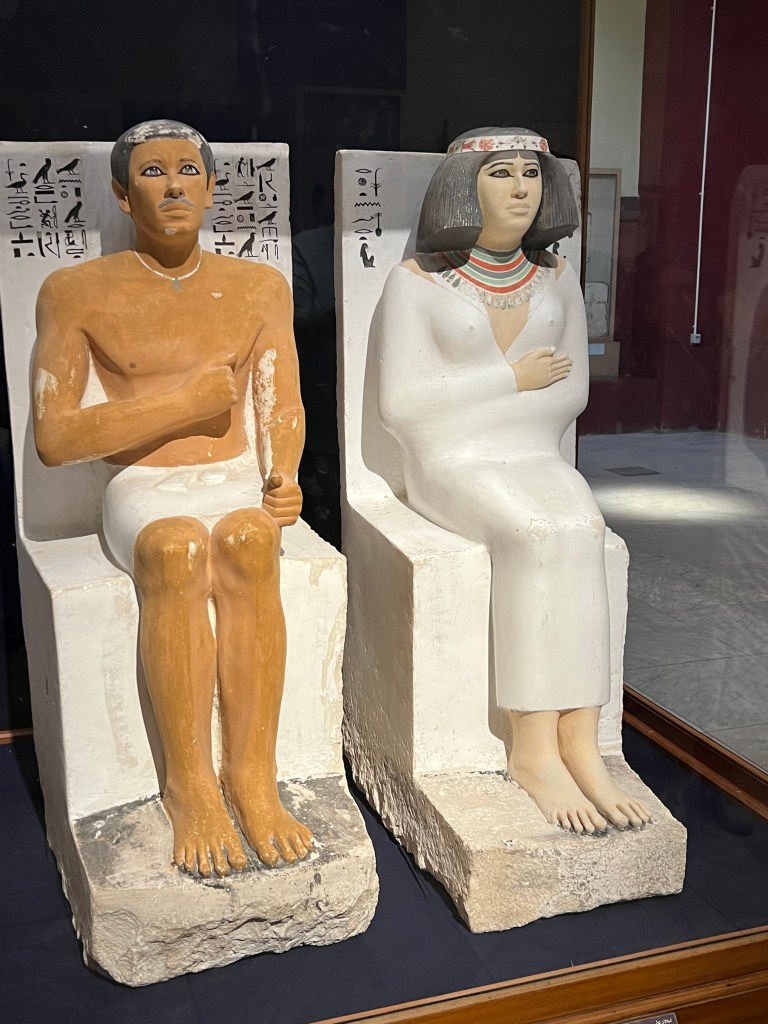


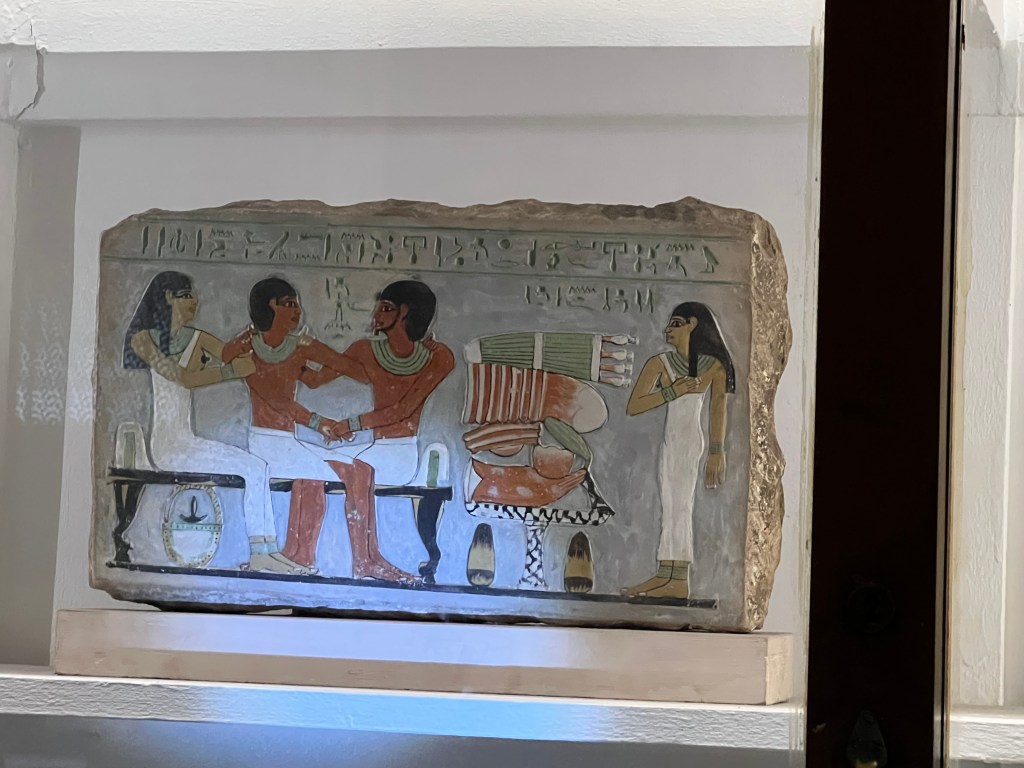
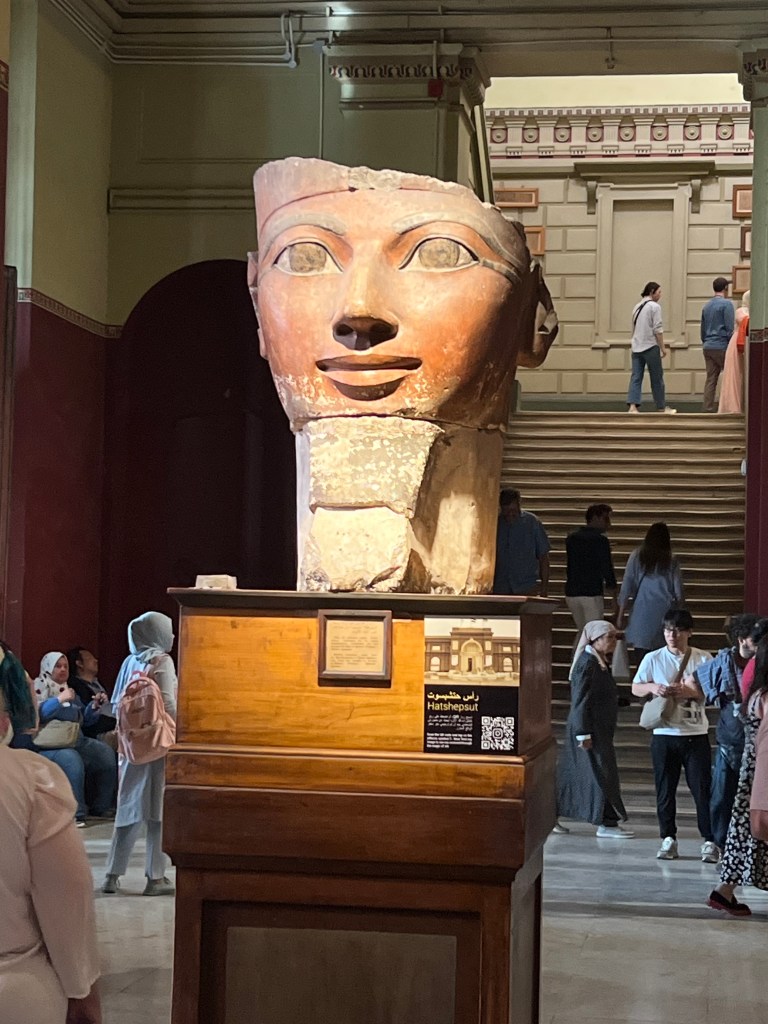


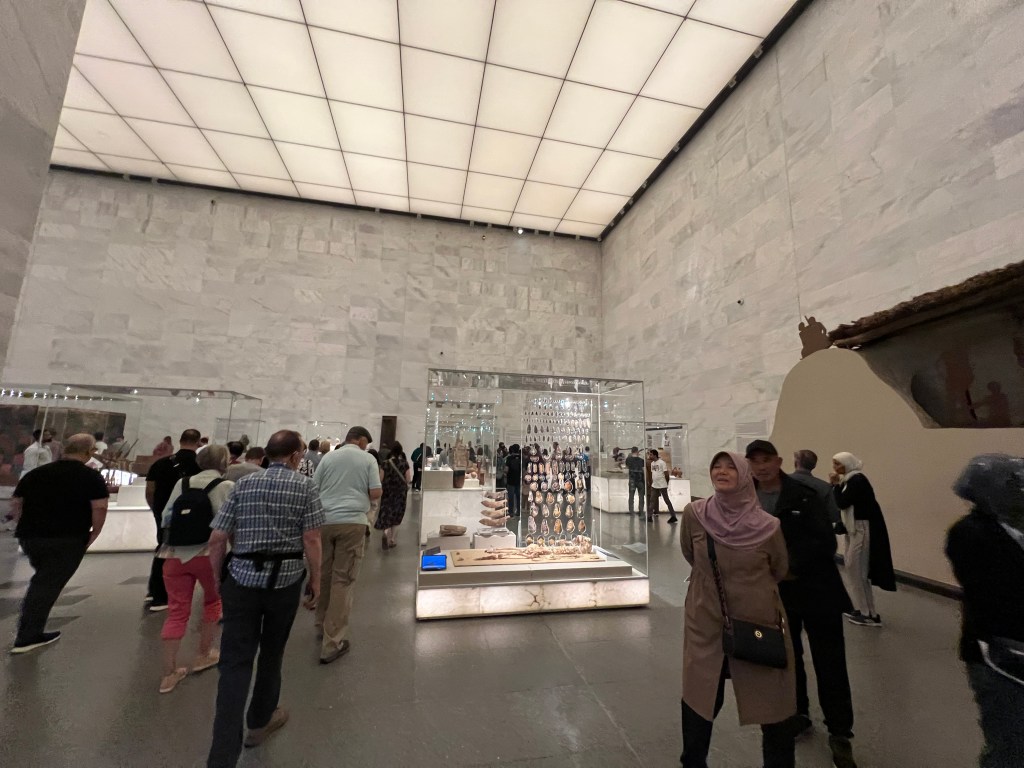
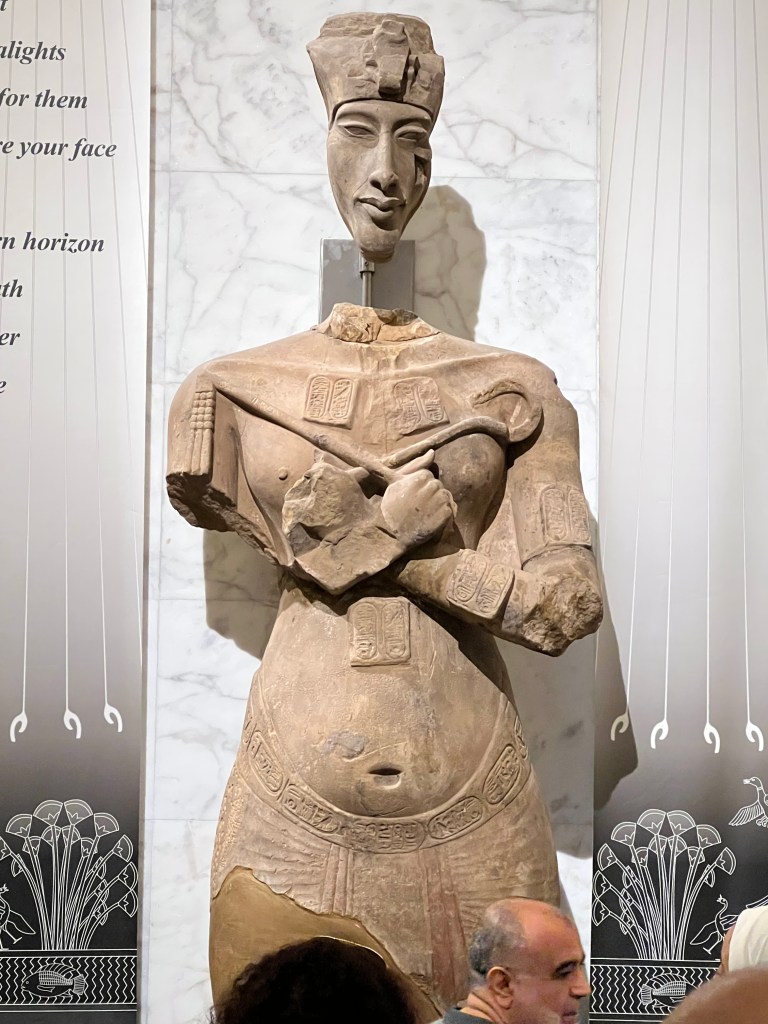

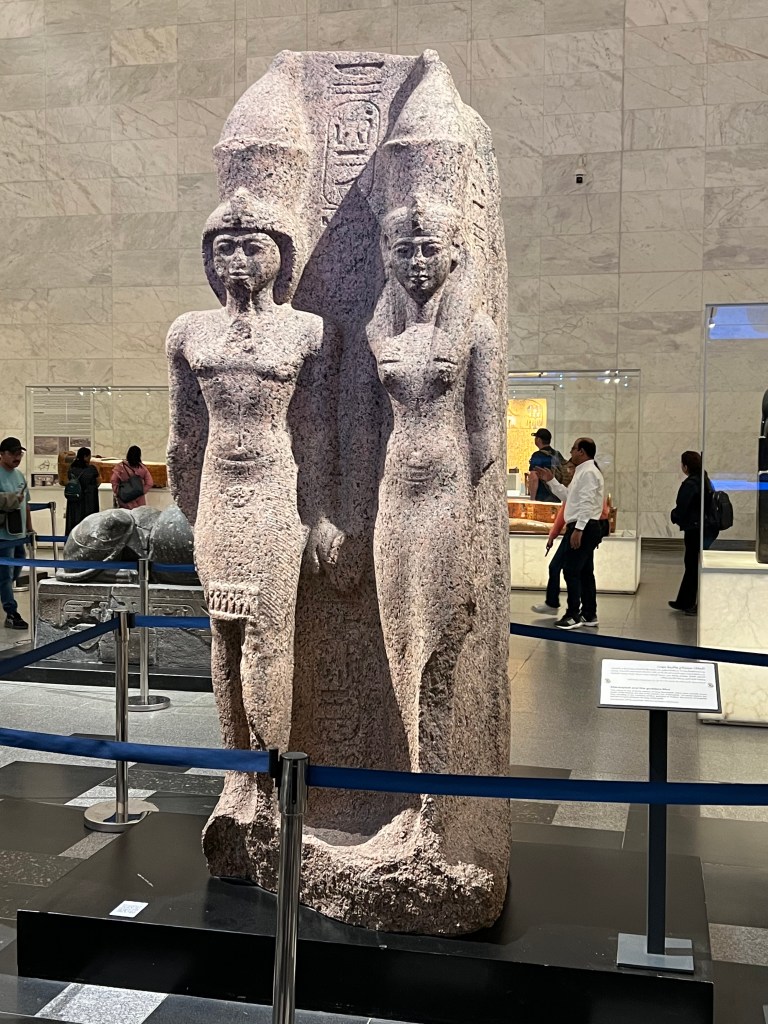
Ancient Egypt As a reminder, the history of ancient Egypt is divided into three main periods: the Old Kingdom (about 2,700-2,200 B.C.E.), the Middle Kingdom (2,050-1,800 B.C.E.), and the New Kingdom (about 1,550-1,100 B.C.E.). The New Kingdom was followed by a period called the Late New Kingdom, which lasted to about 343 B.C.E. There were more than 30 dynasties in Egyptian history. During these periods, power passed from one dynasty to another. Dynasties helped keep Egypt united, and leaders faced periods of chaos, ambitious rivals, and also foreigners who wanted to conquer the region.
Beginning in about 4,000 B.C.E., all of Egyptian society existed in two kingdoms, Upper Egypt and Lower Egypt. Around 3,100 B.C.E., Menes, the king of Upper Egypt, started the long string of dynasties by conquering Lower Egypt. He unified the regions and built his capital city at Memphis, near the border of these two kingdoms. Because Memphis was located on an island in the Nile, it was easy to defend. About 300 years after Menes united Egypt, its rulers formed a central government in which they held supreme power. This was the beginning of the Old Kingdom. (Kings tend to rule from a central place, which is why the early dynastic period is not considered a kingdom.)
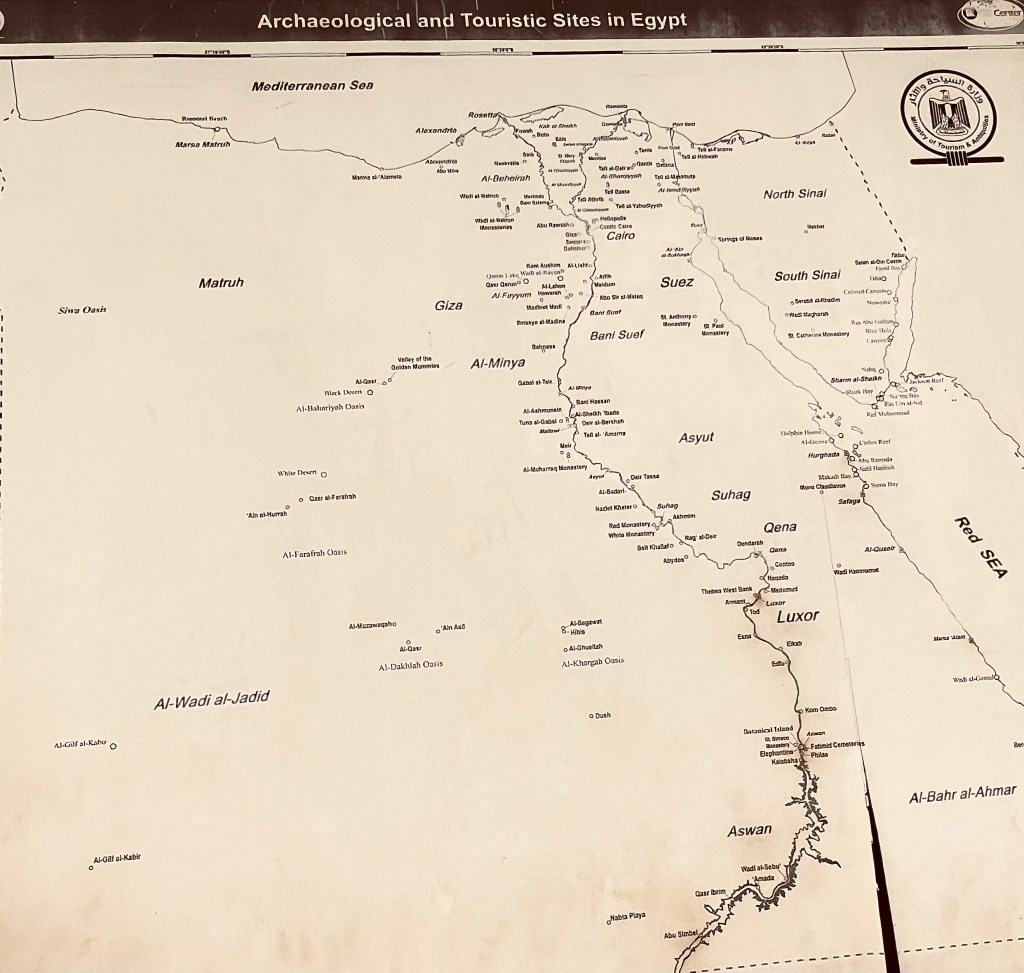
So began the first dynasty, an age called the Early Dynastic Period. Little is known of the pharaohs (rulers) of the early dynasties. The Egyptian word “pharaoh” literally means “great house.” Pharaohs were more than just rulers. They were considered gods and were believed to possess the secrets of heaven and earth. Pharaohs led the government and the army and wielded unlimited power. The end of the Old Kingdom was marked by civil wars between pharaohs and nobles.
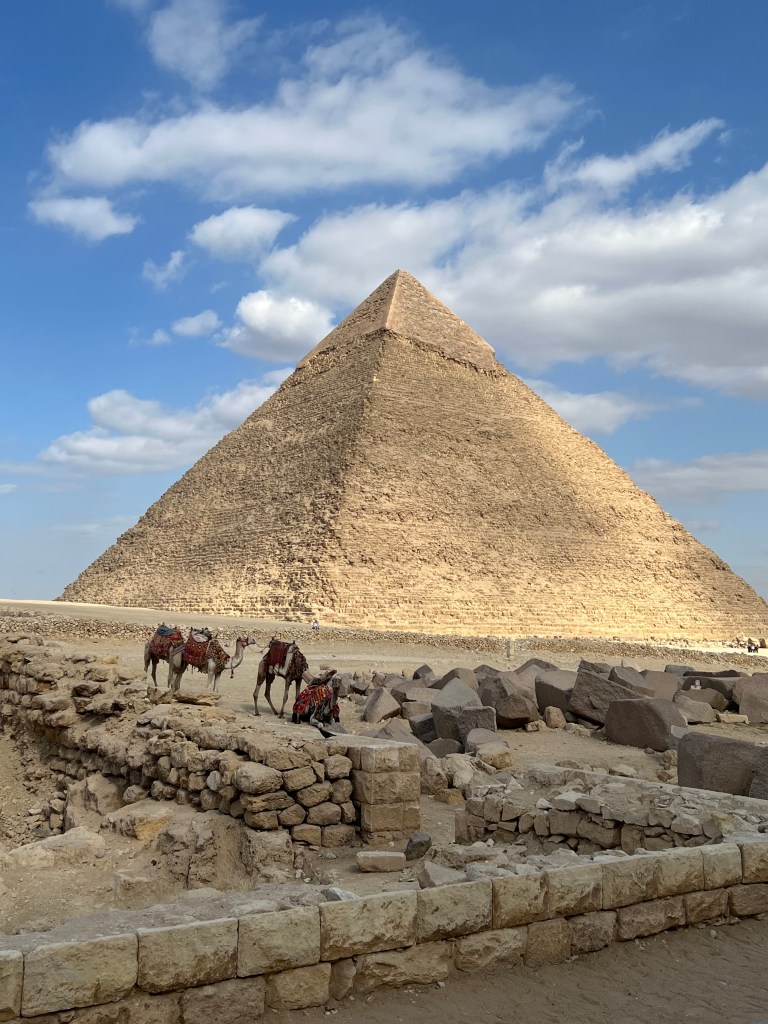
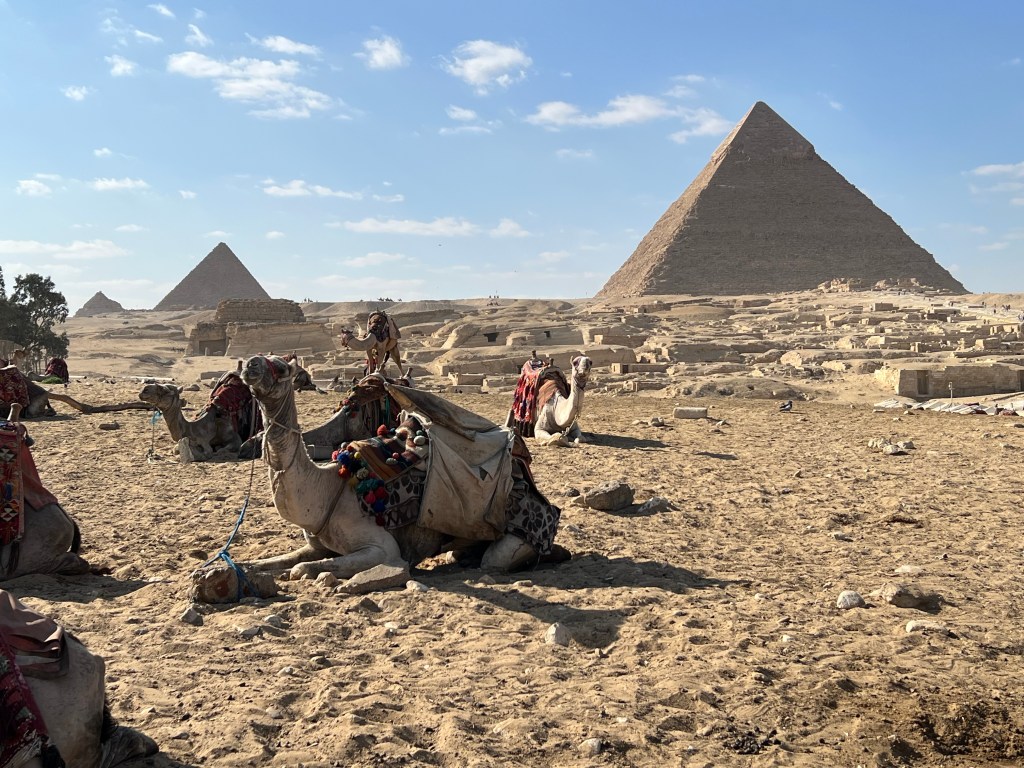
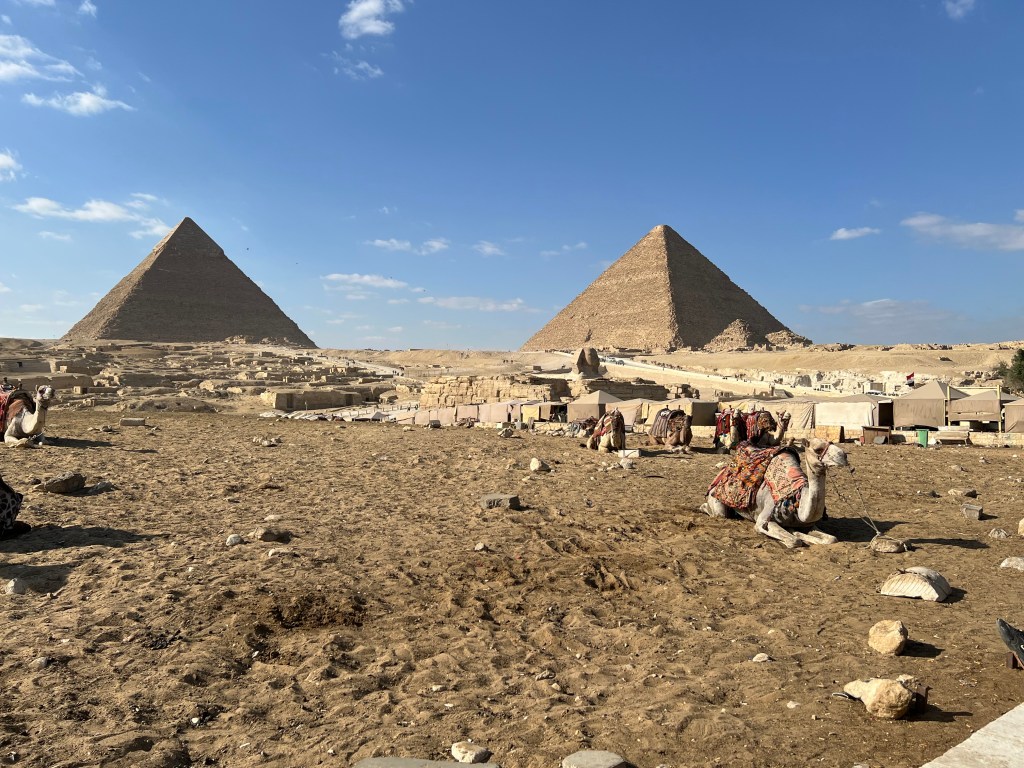
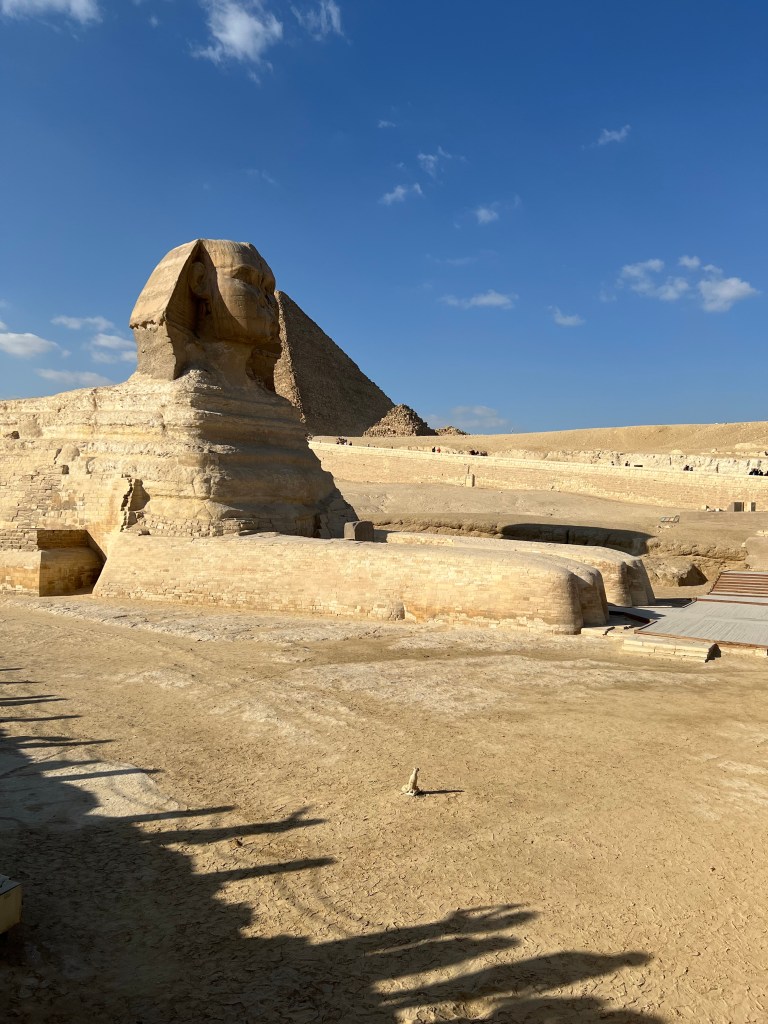
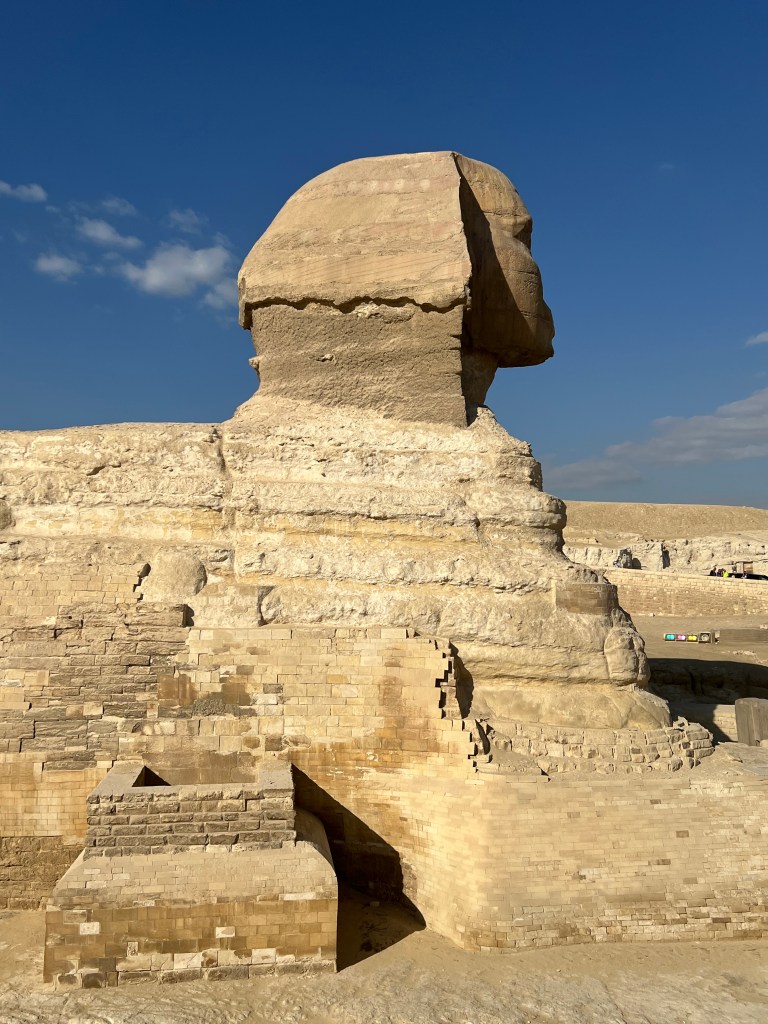
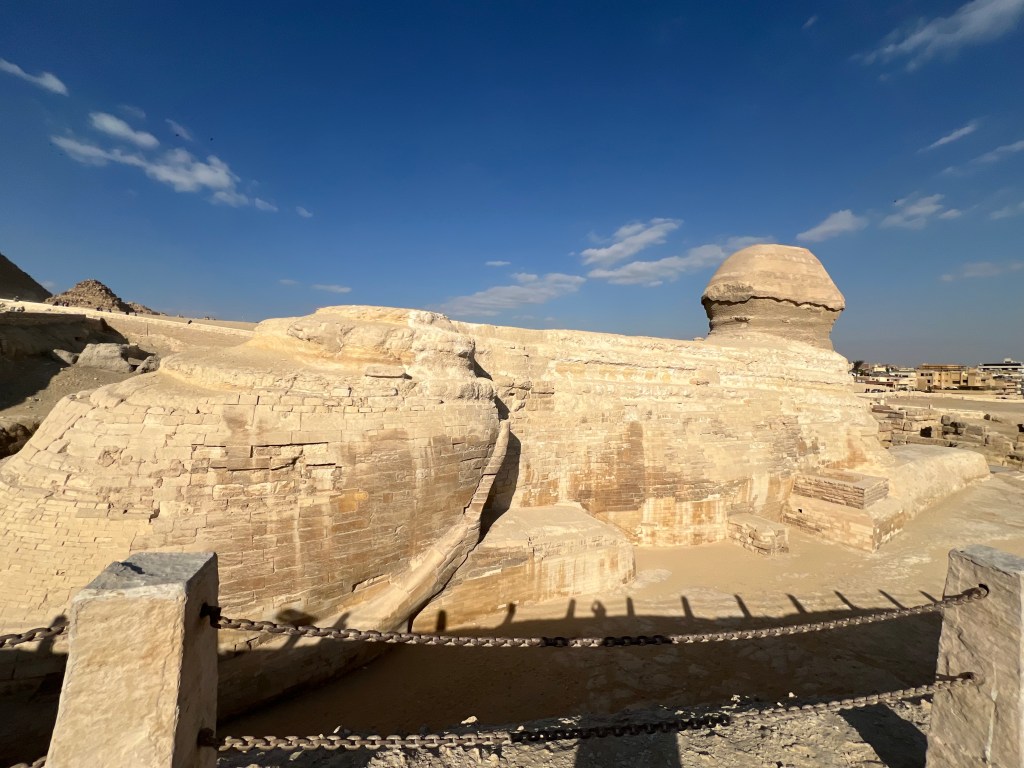
During the Old Kingdom, pyramid building flourished. Cheops had the six-million-ton Great Pyramid of Giza constructed as his tomb. Under Chephren, a Fourth Dynasty ruler, the Great Sphinx was built.
Montuhotep II (2,007-1,956 B.C.E.), an Eleventh dynasty pharaoh, was the last ruler of the Old Kingdom and the first ruler of the Middle Kingdom. He and his successors restored political order. The Middle Kingdom is remembered as a time of flourishing arts, particularly in jewelry making. Egypt became a great trading power during this period and continued massive construction projects. Eventually, the long reign of prosperity gave way to old problems: crop failures, economic woes, dynastic power struggles, and foreign invaders.
Amenemhat III (1817-1772 B.C.E.), of the 12th Dynasty, was one of the great rulers of the Middle Kingdom. During his time as pharaoh, the Pyramid of Hawara was built. It contained 3000 rooms and became known as the Labyrinth. He was also responsible for the construction of the giant waterwheels of the Faiyum region that diverted the floodwaters of the Nile. Trouble struck when a group of foreigners, the Hyksos, a Semitic-Asiatic group, invaded the Nile Delta region. These advanced warriors used new tools for war: bronze weapons and horse-drawn chariots. They defeated the Egyptians, who fought on foot with copper-and-stone weapons.
Early pharaohs of the New Kingdom evicted the Hyksos. The New Kingdom is remembered as a time of renaissance in artistic creation, but also as the end of dynastic rule. This period was also marred by corrupt priests and tomb-robbing by government officials.
A famed pharaoh of the new period was Amenhotep IV, who triggered a religious revolution. Before Amenhotep’s rule, Egypt was a polytheistic society that believed in many gods, the most important named Amon. But, Amenhotep believed only in Aton, the sun god. Belief in only one god (monotheism) was a radical notion. To show his devotion to Aton, the pharaoh changed his name to Akenhaton (“he who is loyal to Aton”). Akenhaton moved his capital from Thebes, where Amon was worshipped, to Tell el Amarna.
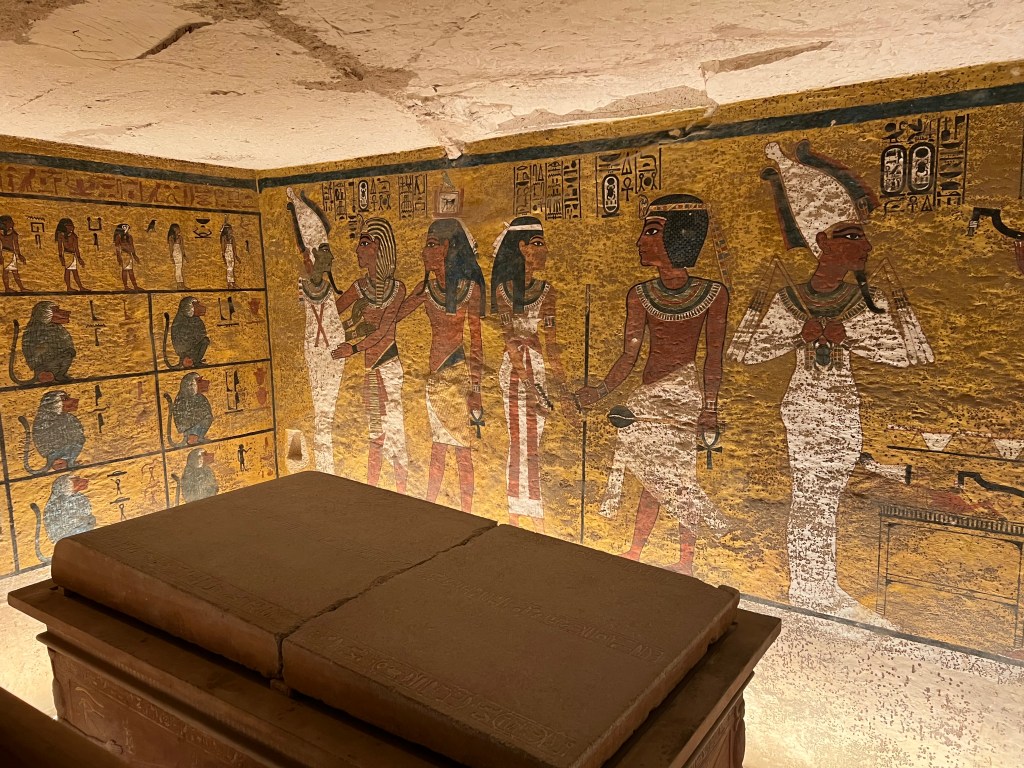
The priests who represented the other gods did not like this change one bit. Many Egyptians also did not like the pharaoh discrediting their gods. After the death of Akenhaton, the powerful priests forced the new capital to be moved back to Thebes. The pharaoh who moved the capital back to Thebes was the boy-king, Tut Ankh Amon, or King Tut. He ruled for nine years, attempted to pacify the priests, and was responsible for some modest building projects. He began his reign at the age of 10 but died of a head injury at 19. Tut is mostly remembered because of his beautiful tomb — one of the very few that was not pillaged by grave robbers.
Ramses II, or Ramses the Great, was another important ruler during this period. He reigned for 67 years and died in about 1,213 B.C.E. at age 96. His nearly 200 wives and concubines bore 96 sons and 60 daughters. Not only did Ramses build a great family, he also built two temples at Abu Simbel, a covered hall of giant pillars at Karnak, additions at the Luxor Temple, and the Ramesseum, a compound consisting of two temples and a palace.
After Ramses’ rule, Egypt fell into steady decline. Today, his 3,000-year-old mummy lies in a display case on the second floor of the Egyptian Museum in Cairo. No photos were allowed in the mummy display room, so sorry, no photos.
Over the course of the next nine centuries, the Nubians, the Assyrians, and the Persians bounded into Egypt and ravaged the area. When Pharaoh Nectanebo II retreated to Memphis to avoid death at the hands of oncoming Persian invaders in 343 B.C.E., he became the last Egyptian-born pharaoh, ending over 2,500 years of Egyptian self-rule.
OK, there’s your quick Egyptian history lesson. Our schedule: Each morning we were up by 4:30-5:00 am, for a 6 am breakfast before we headed out by bus or plane. The schedule was designed to get us to a large variety of sites before the expected horde of other visitors and before the temperatures climbed to their peak. But for us, given that personally when we travel its at a slow pace, in a window of time that suits our preferences, we found this trip to be a rather demanding and brutal grind, akin to a boarding school or military regiment.
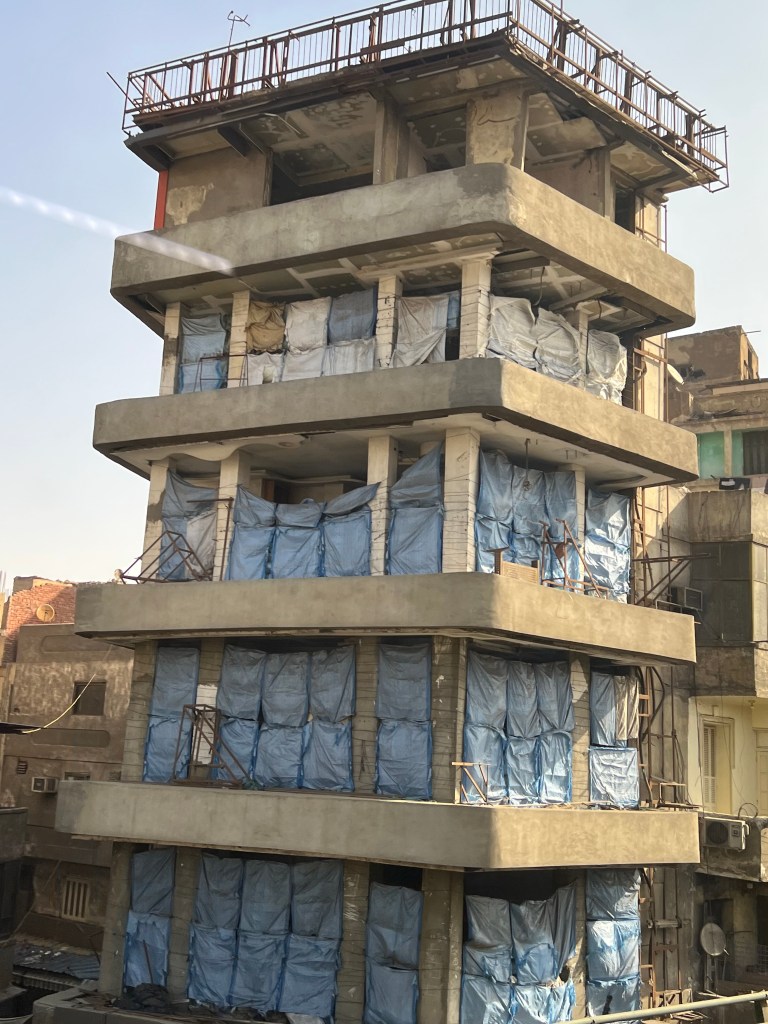
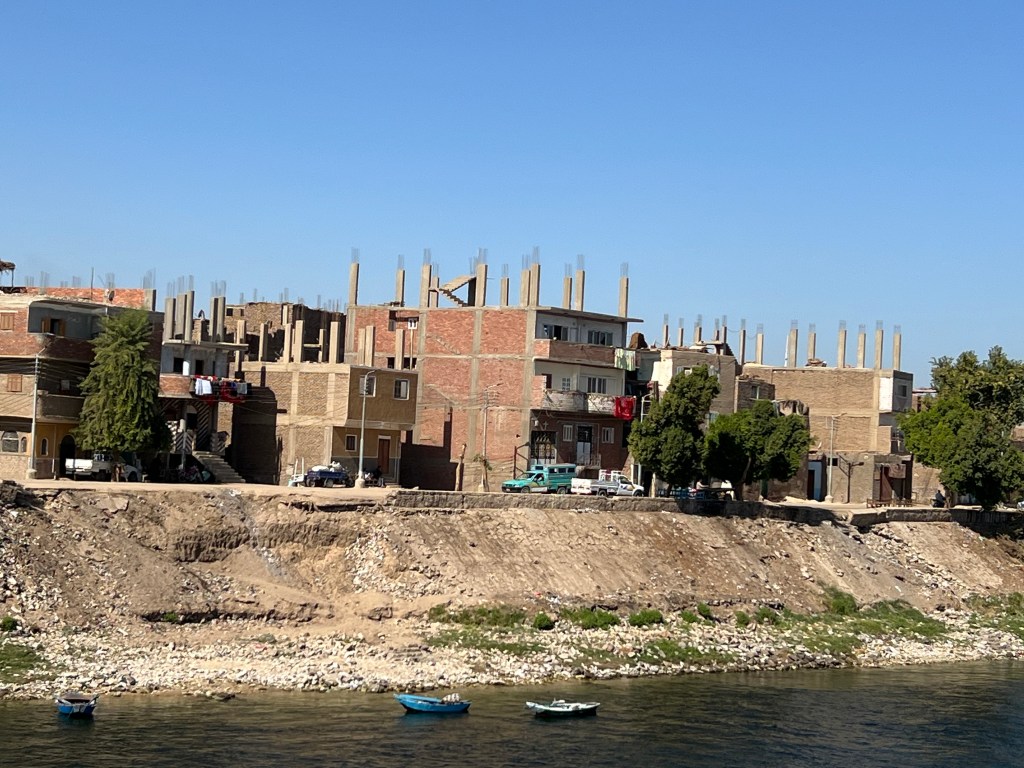
The residential buildings in all of the places we passed were the same flat topped, rectangular structures that had unfinished roofs and often sported open wall sections that looked as if they’d been blown open to the elements. Mohamed explained, when asked, that walls were optional as people were want to finish them to their own tastes. Many times, they simply didn’t finish them. The roofs were incomplete due to a tax on what floors were ‘finished’. They would build up each floor in expectation as the family expanded and offspring would marry, moving above their parent’s home. But the top floor would not be roofed (or taxed) until another set of family built further on. He also pointed out that Egyptians inhabit only 18% of the country and that is only along the Nile. The rest of the country is desert.




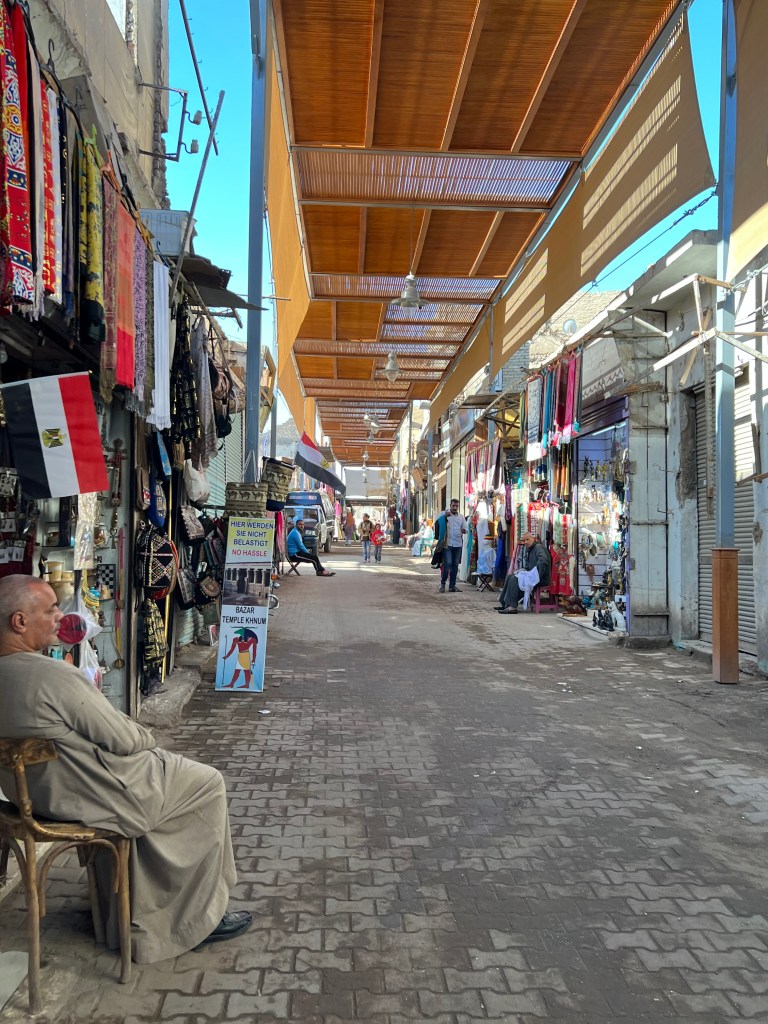
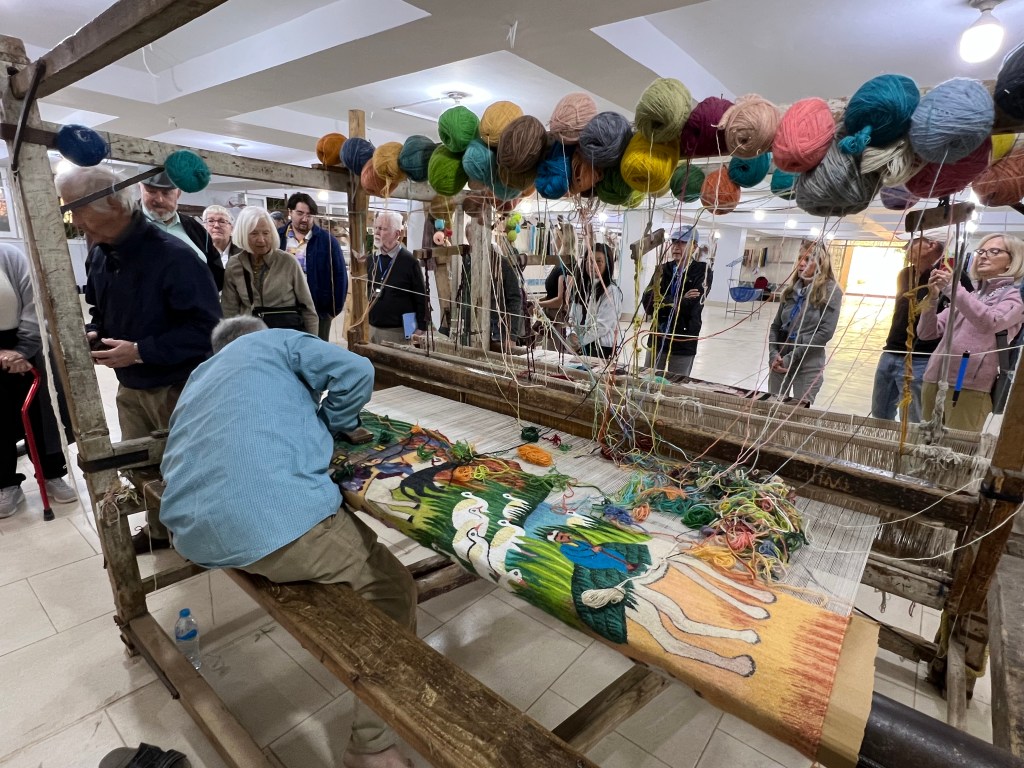
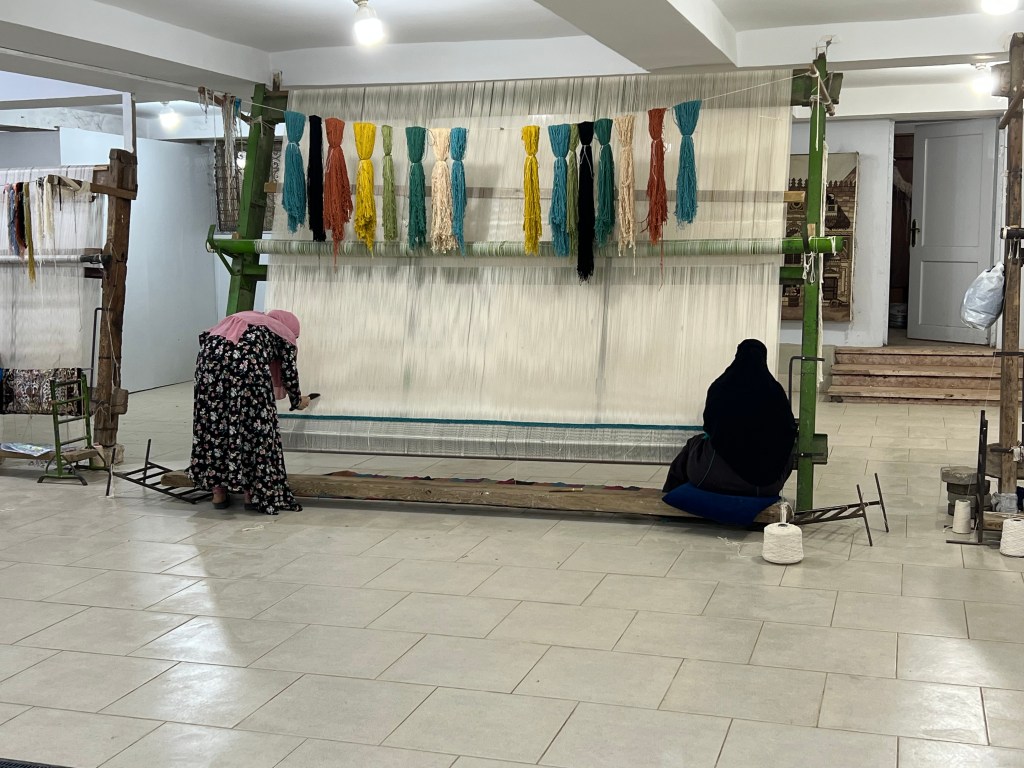
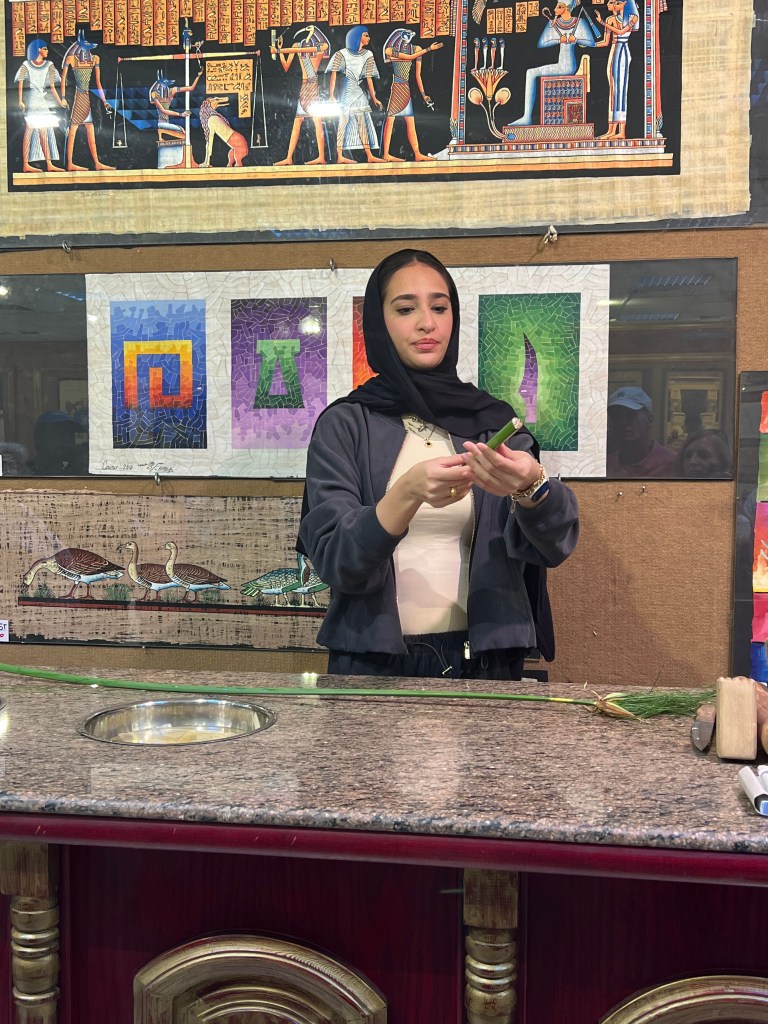
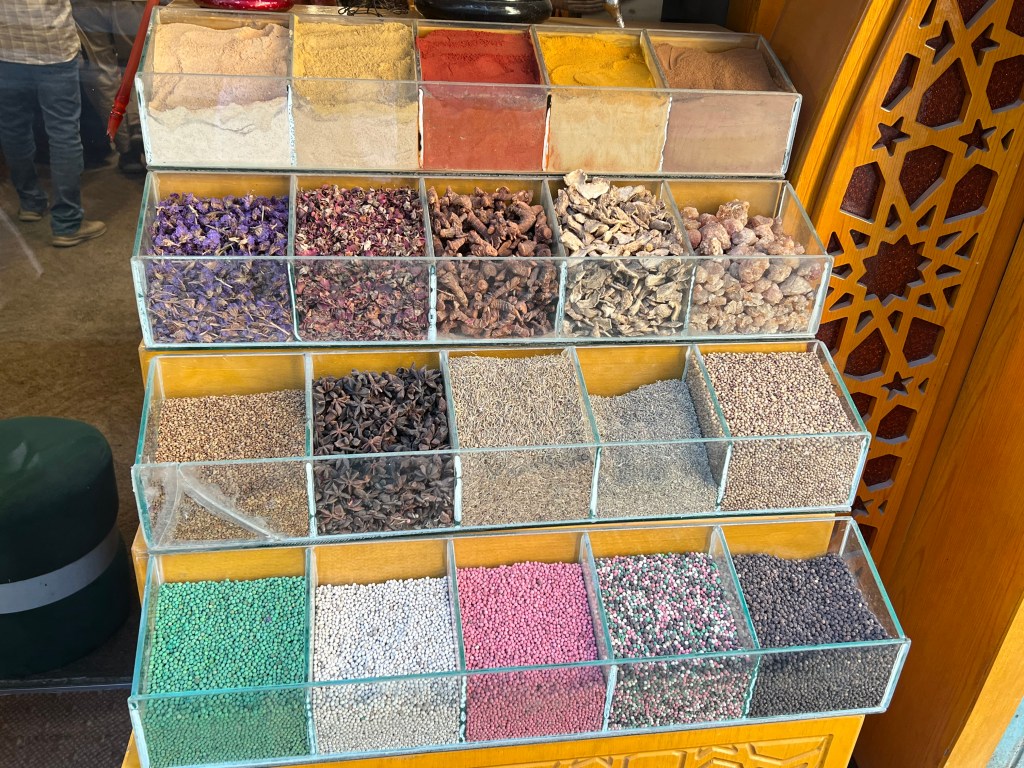
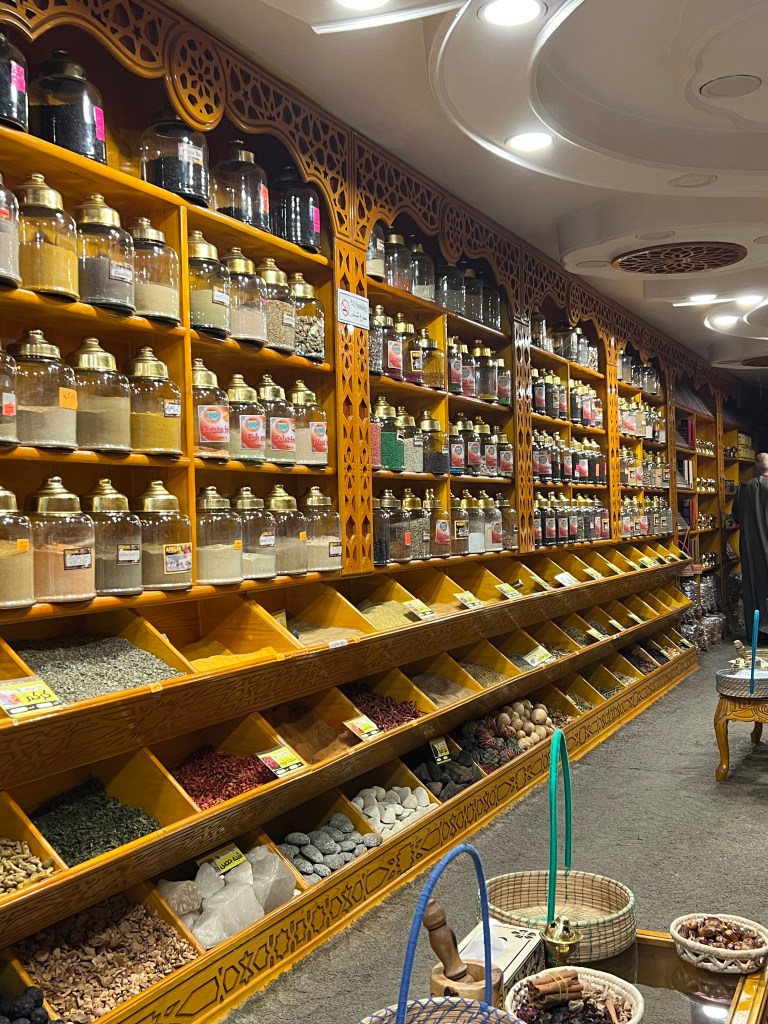
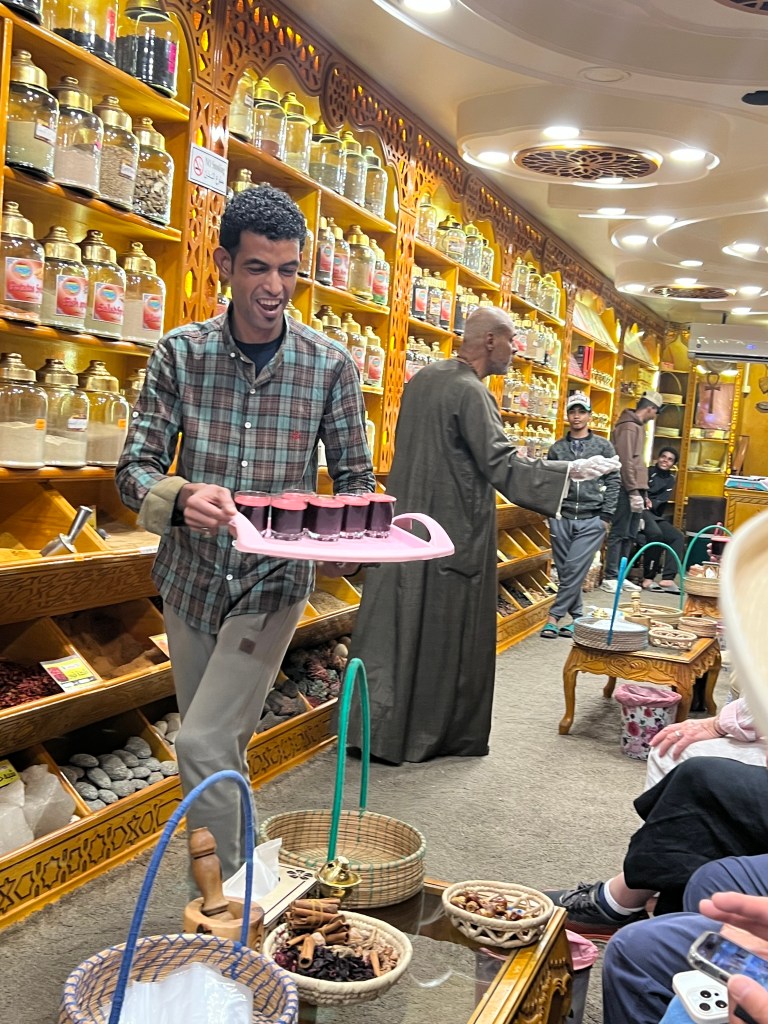
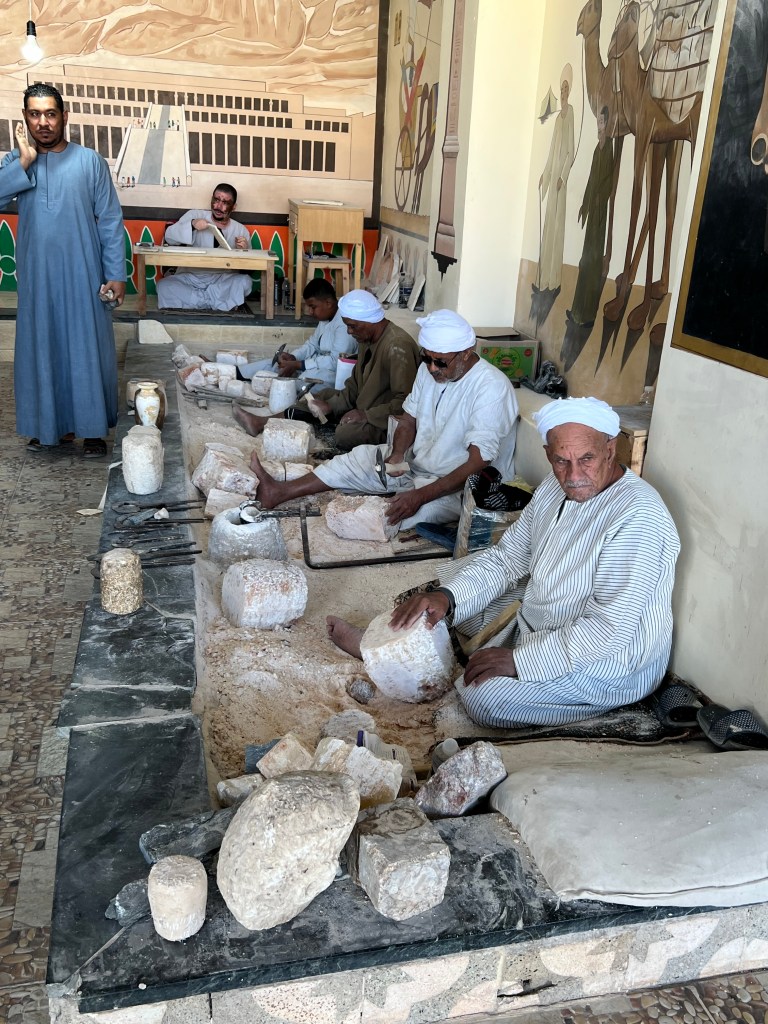
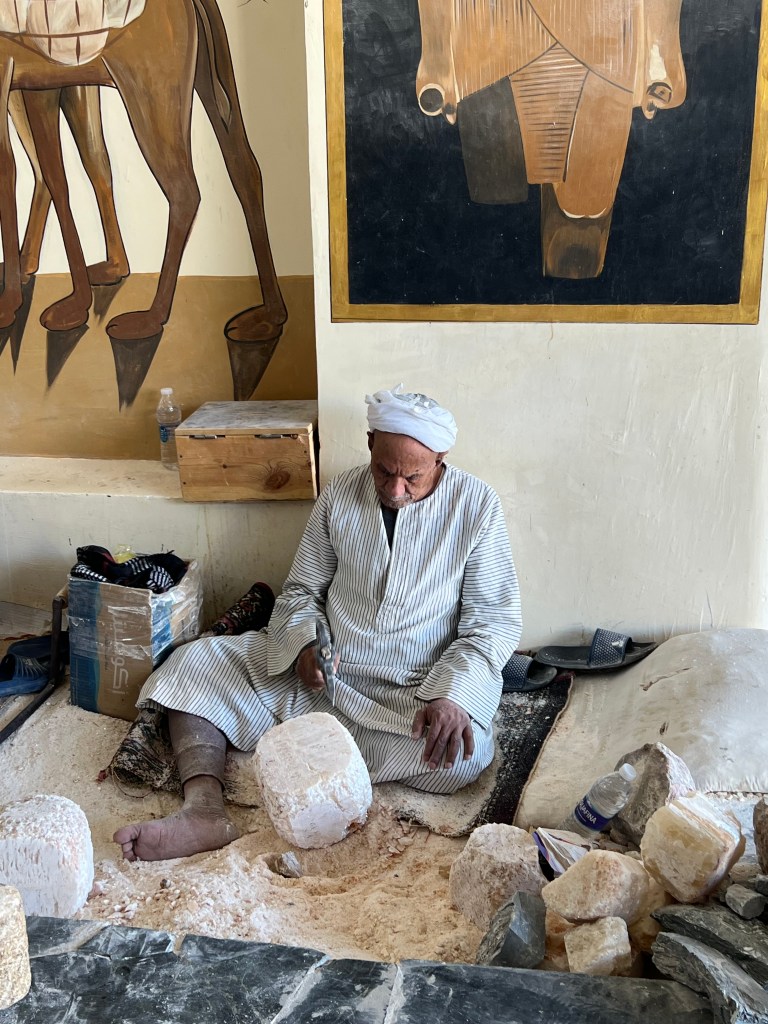
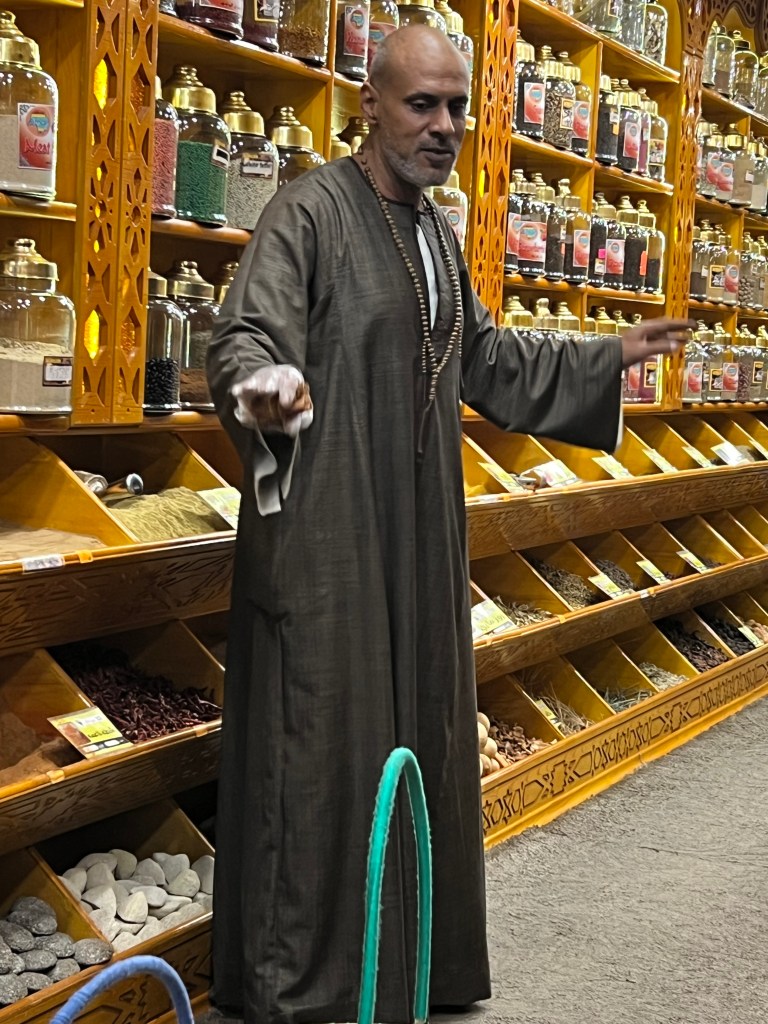
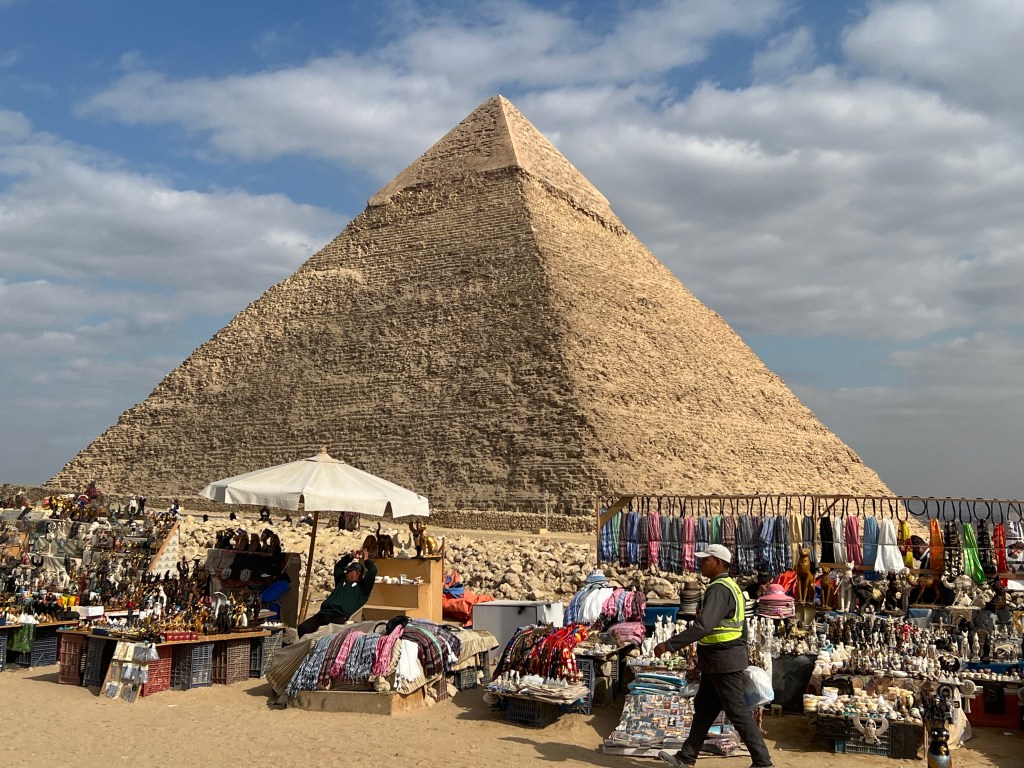
Mohamed also explained that there was a difference in vendor goods. If the vendors were government-sanctioned, the goods were authentic Egyptian and held to good quality. If they were private vendors, the goods were bought from China and poor replicates. The vendors were bunched before all of the entrances and after the exits so there was no escaping the gauntlet of aggressive hawkers. We referred to them as ‘The Valley of the Vendors’. Shouts of “One Dollar! One Dollar! Almost free!”, no matter what the item, and thrust into your hands which made it impossible to give back, followed by demands for the payment and insistent calls to come into their shop “just to look” where they would then block your exit, pressing for a purchase. All of us learned quickly to keep our hands closed, to repeatedly state calmly, “No Thank You” and adopt a steady march from exit to bus. With Mohamed’s guidance, we were able to visit vendors who explained their craft in depth and then understand the nuances of the materials they worked with. Personally, I couldn’t imagine trying to navigate without that attention and guidance.


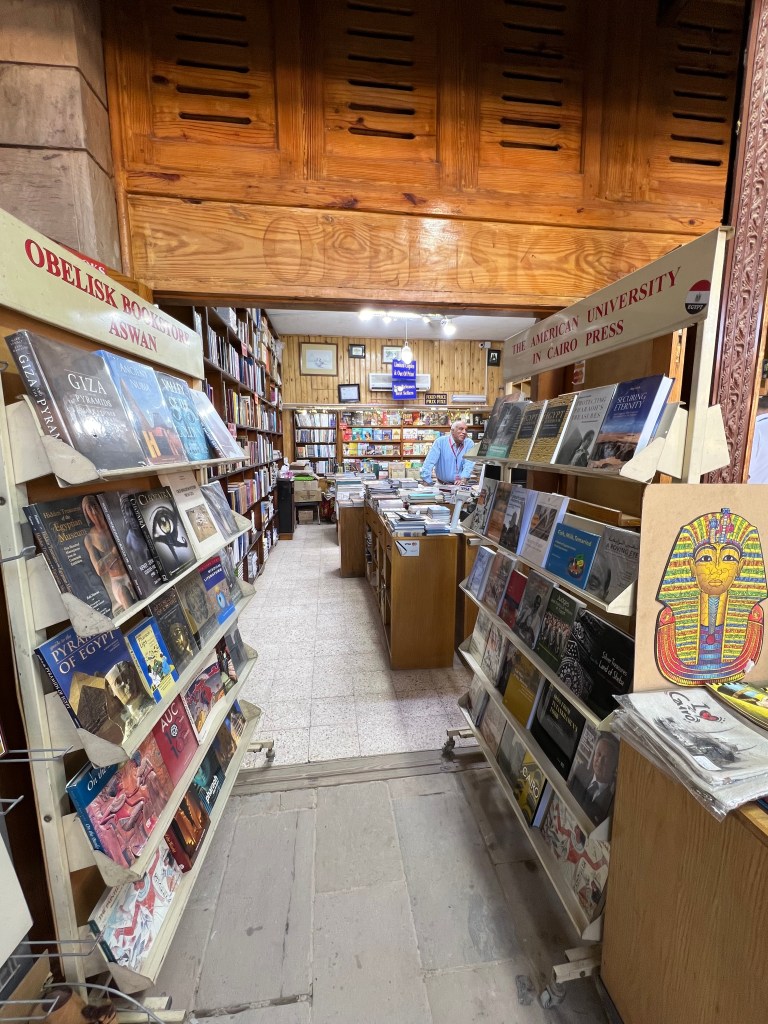


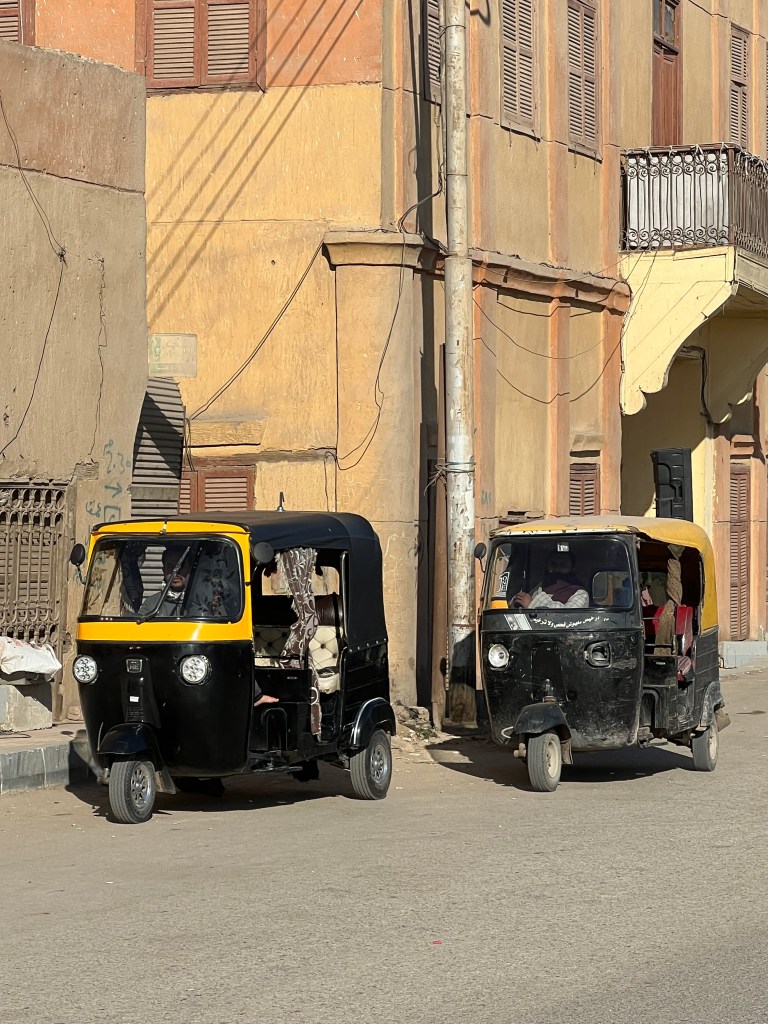
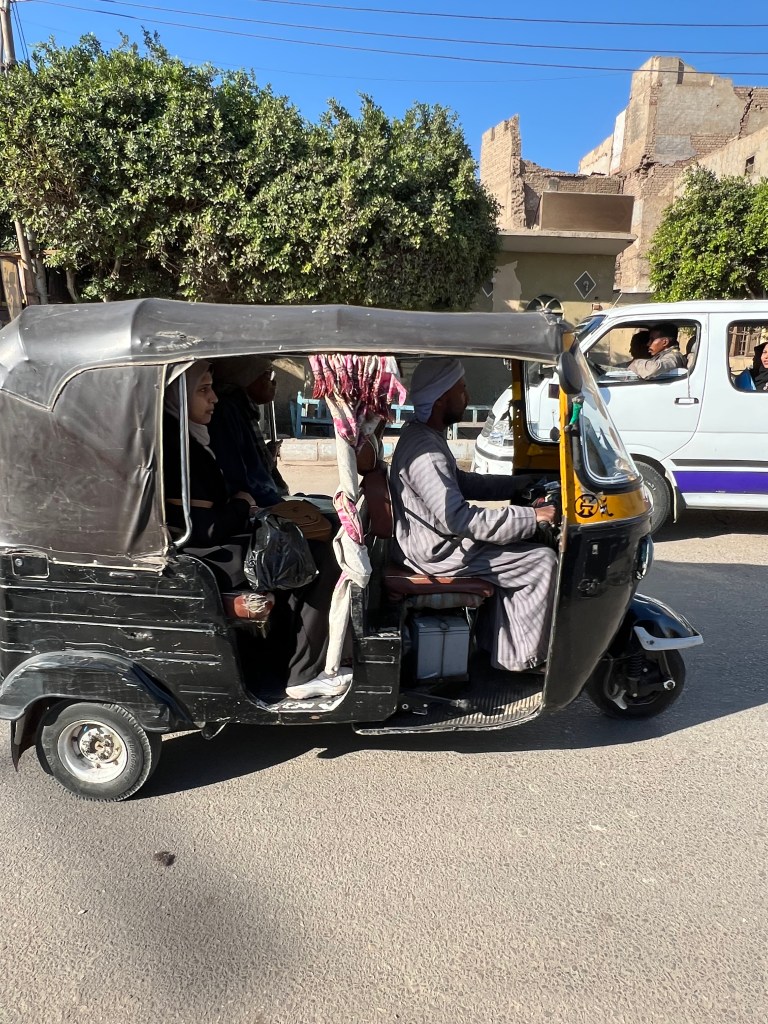
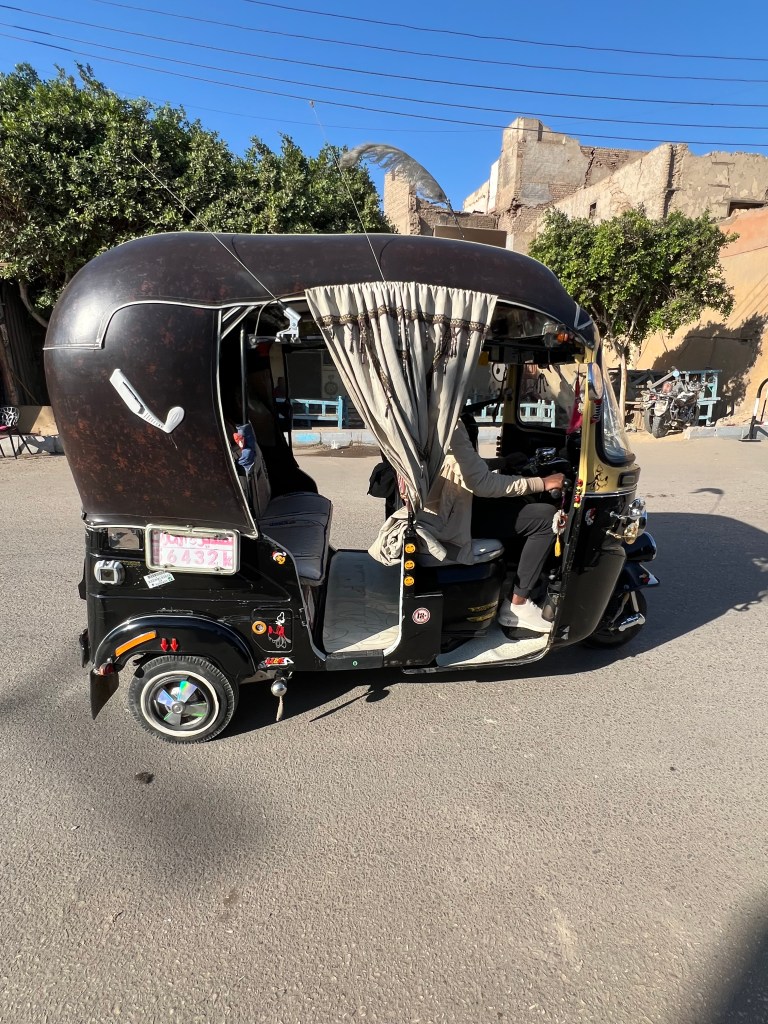
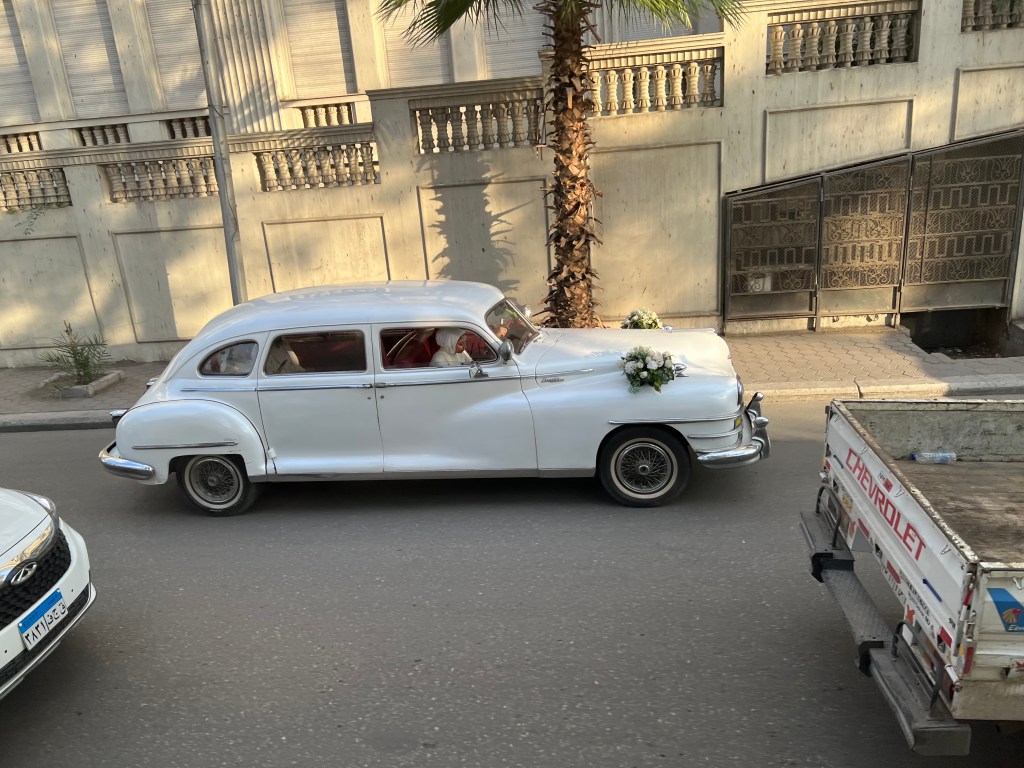
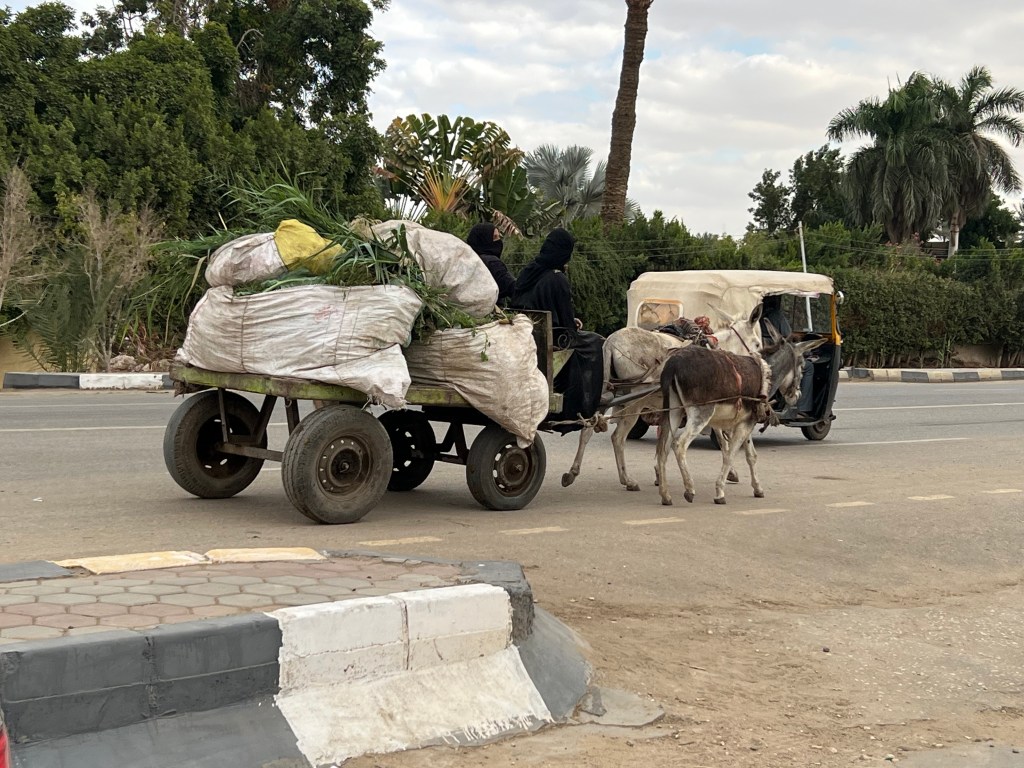
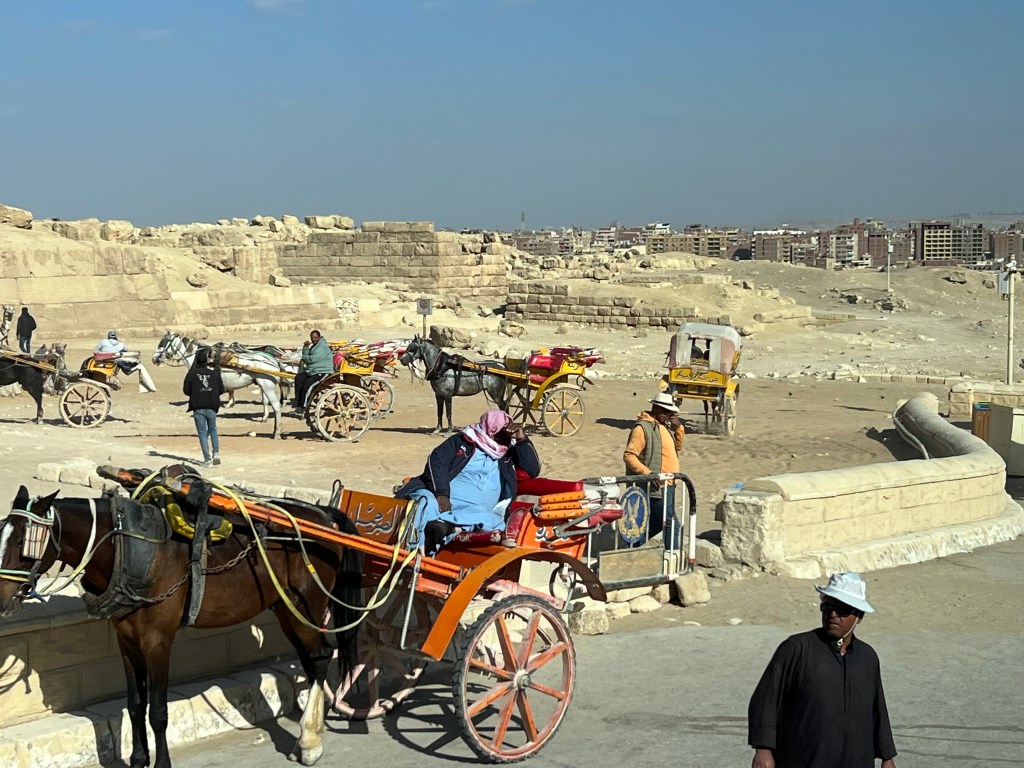
Traffic in Cairo is crazy! Drivers don’t follow the dividing lines and there are all sorts of vehicles. ‘Mohamed referred to some of the as “flying coffins.” I would never want to drive here. There are no crosswalks and people cross at their own peril.


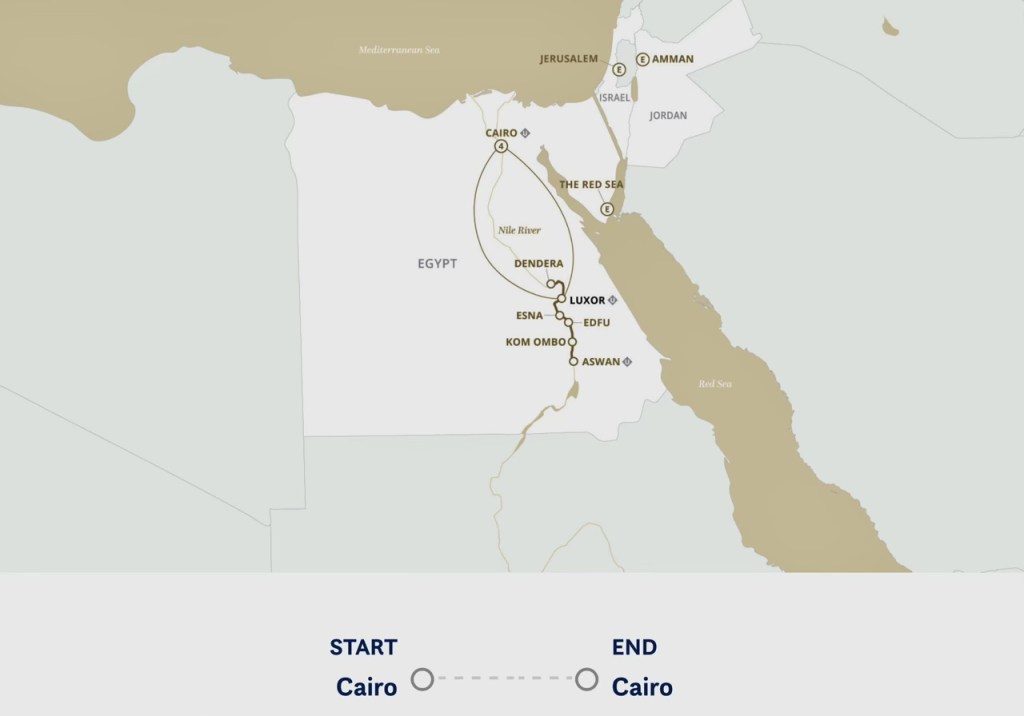
The next day after breakfast, we hustled to the airport for an early flight to Luxor, where we were immediately shuttled to the Temple of Karnak.
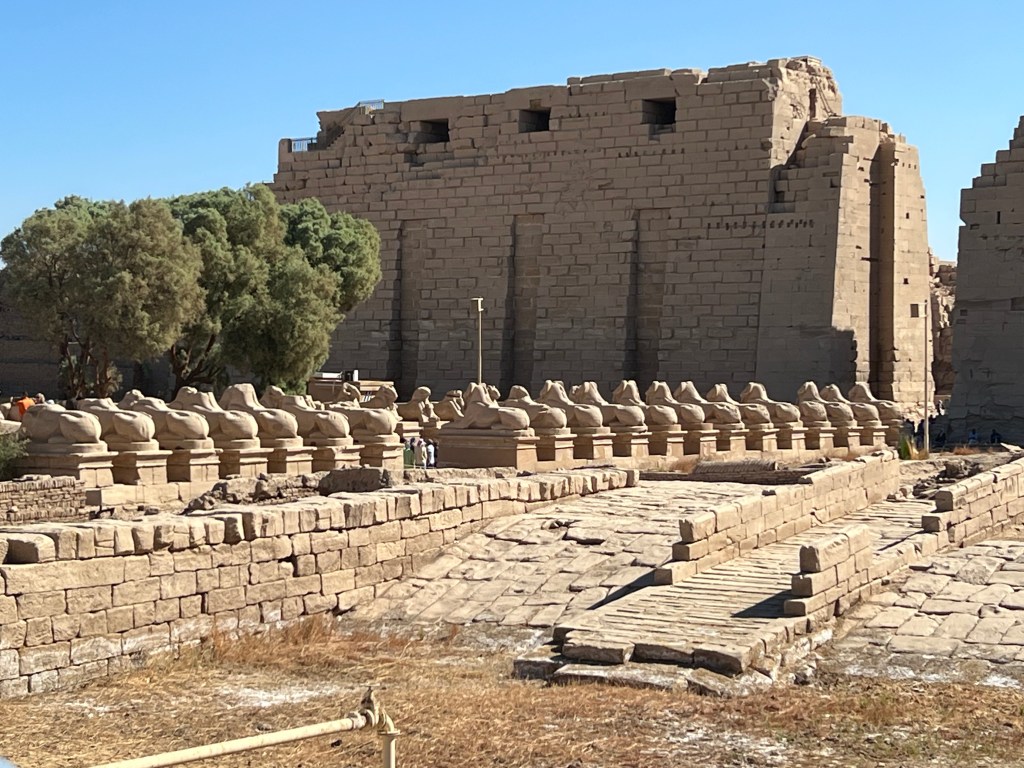
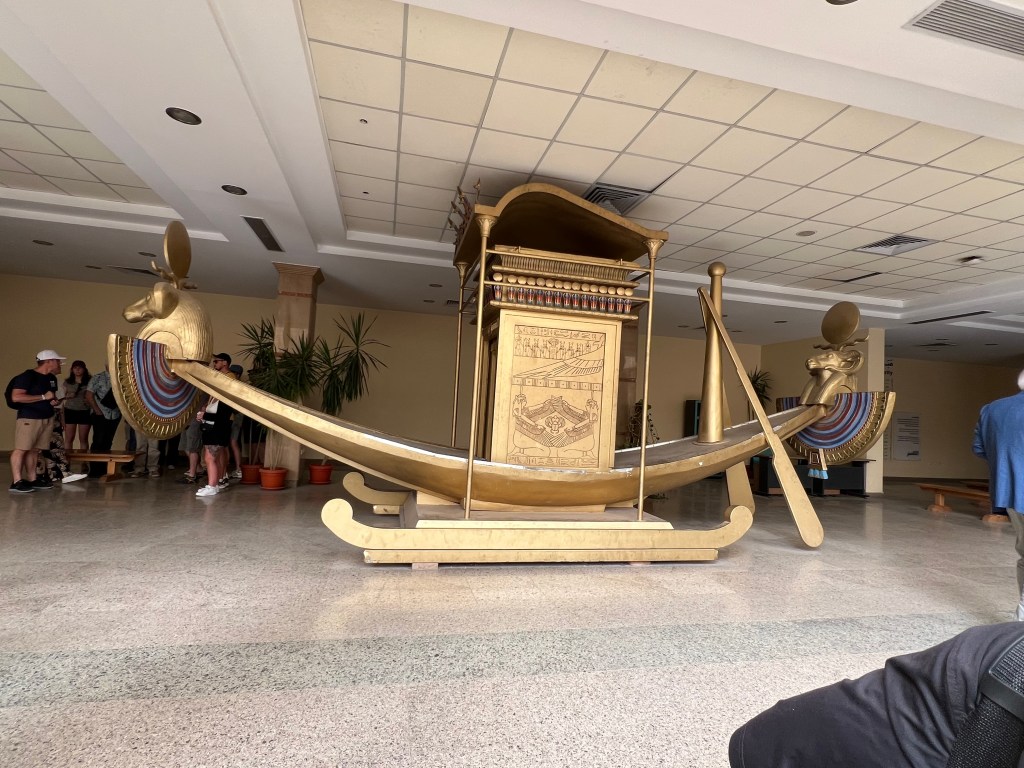
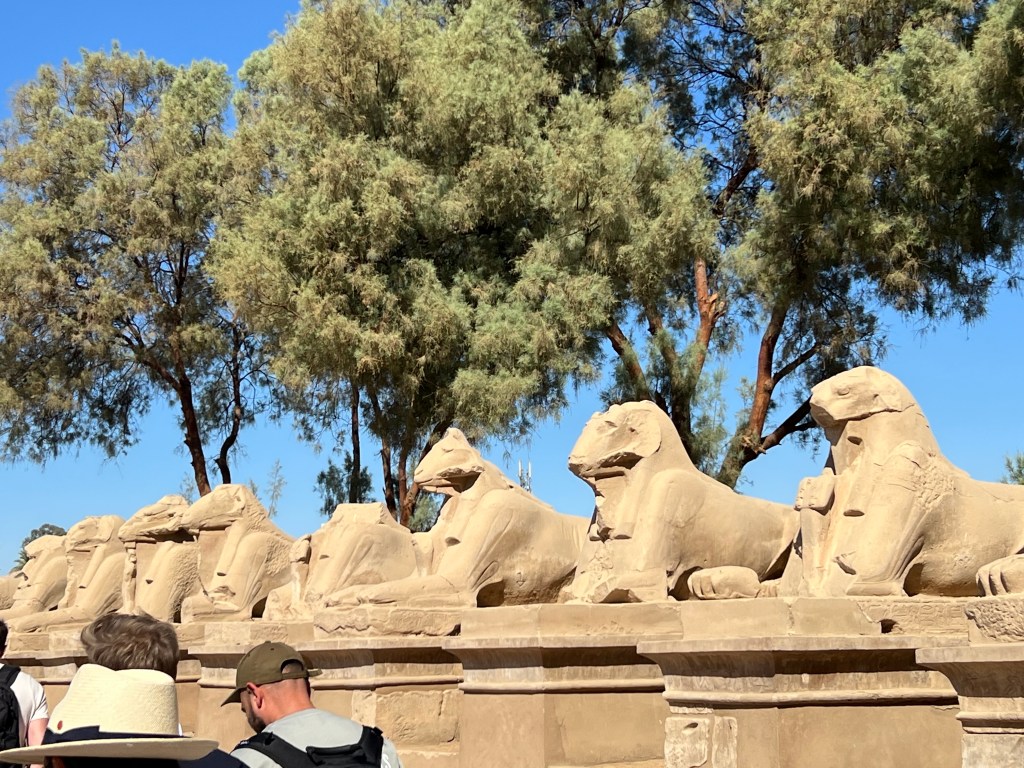
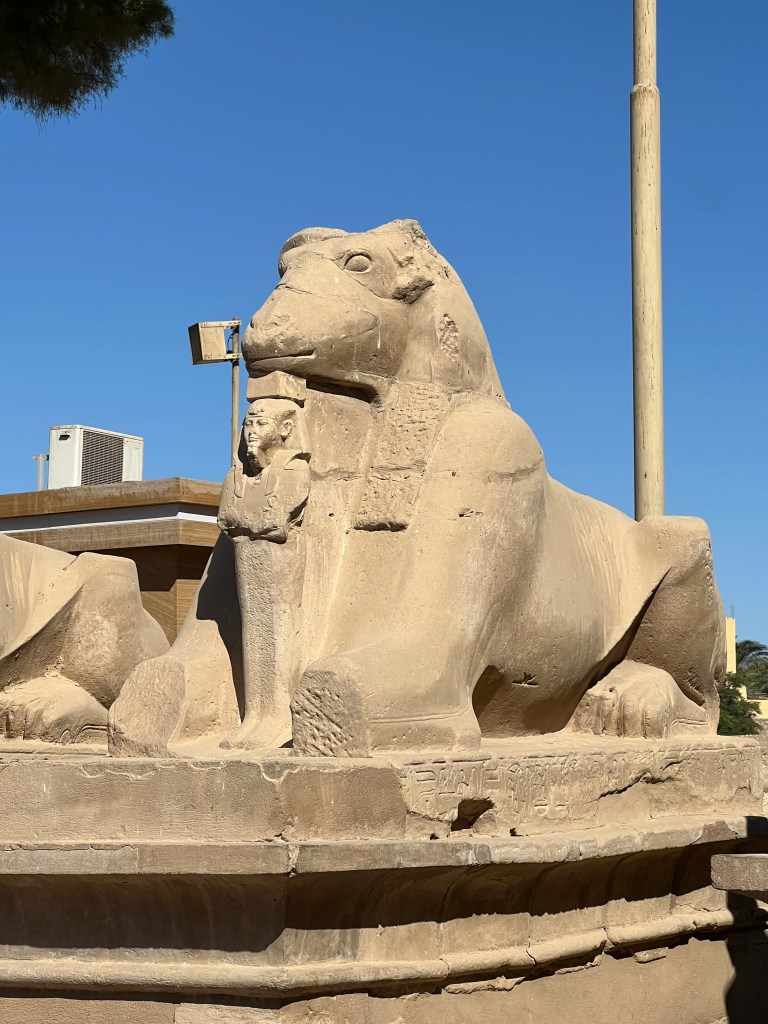
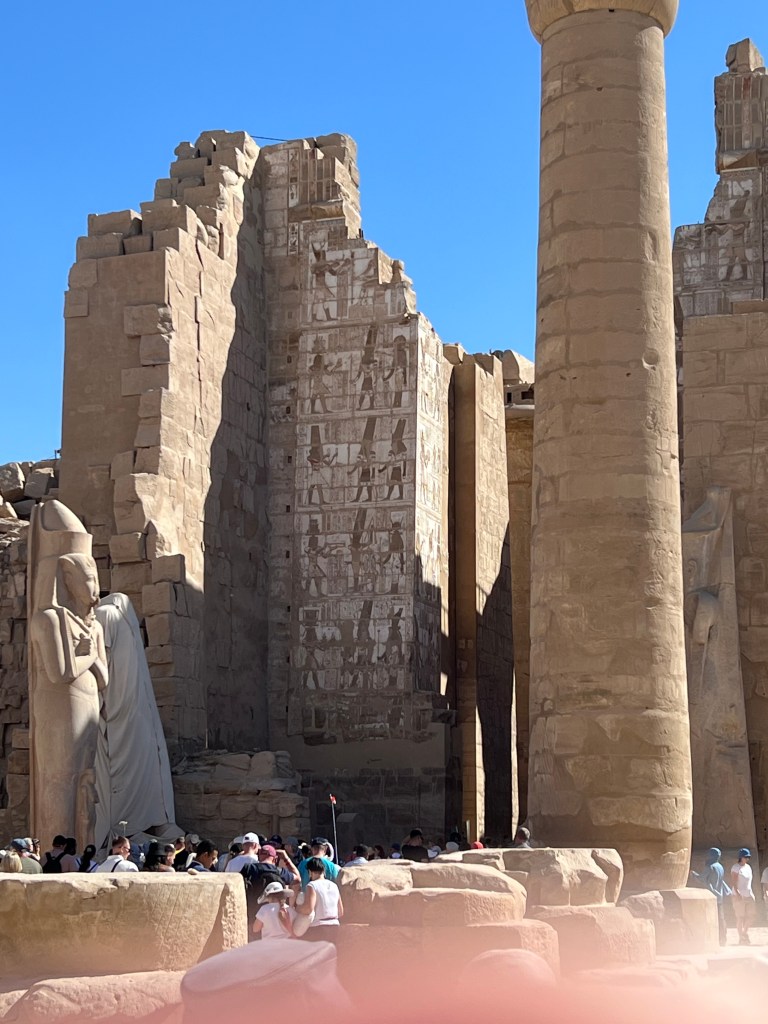
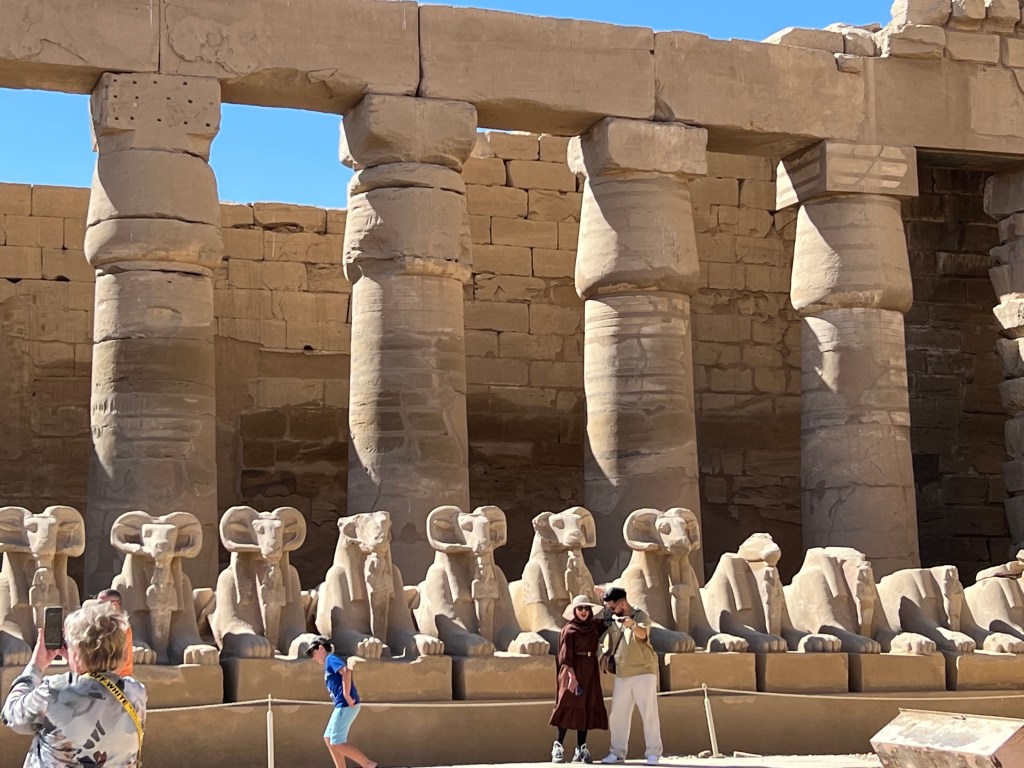
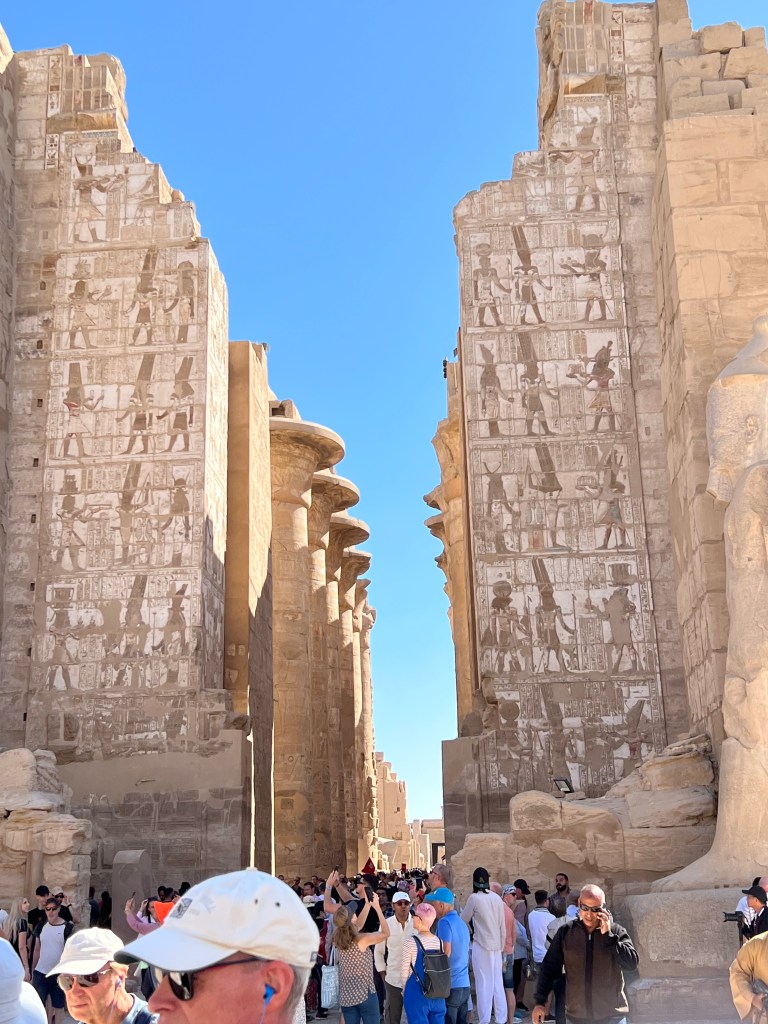


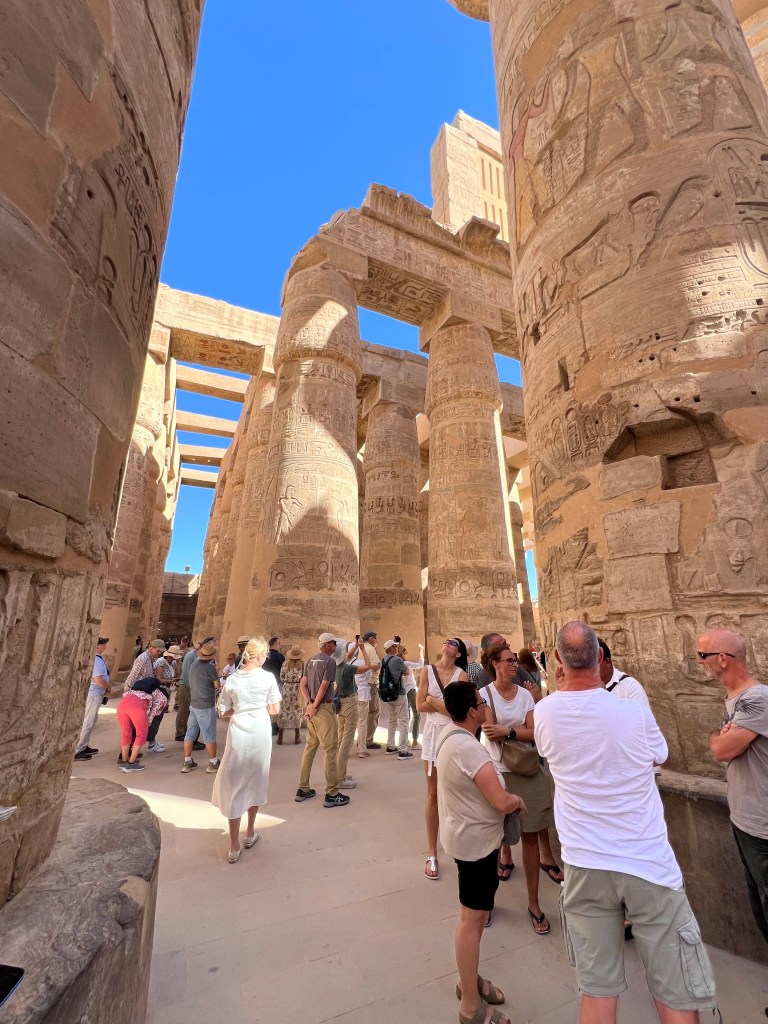
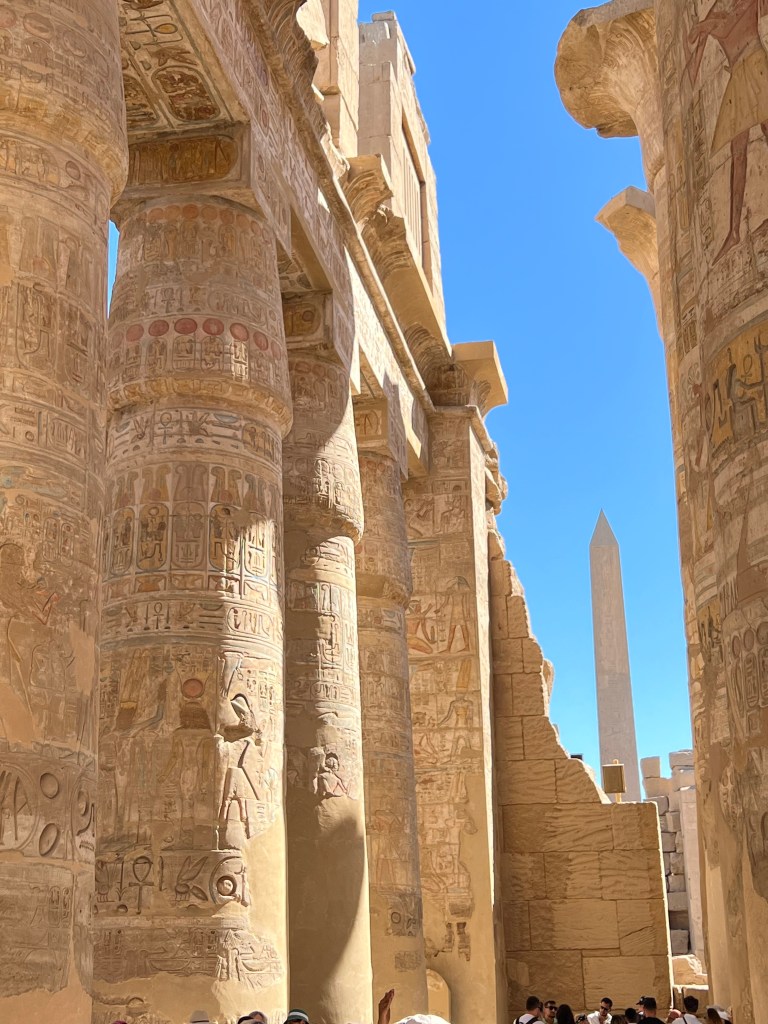
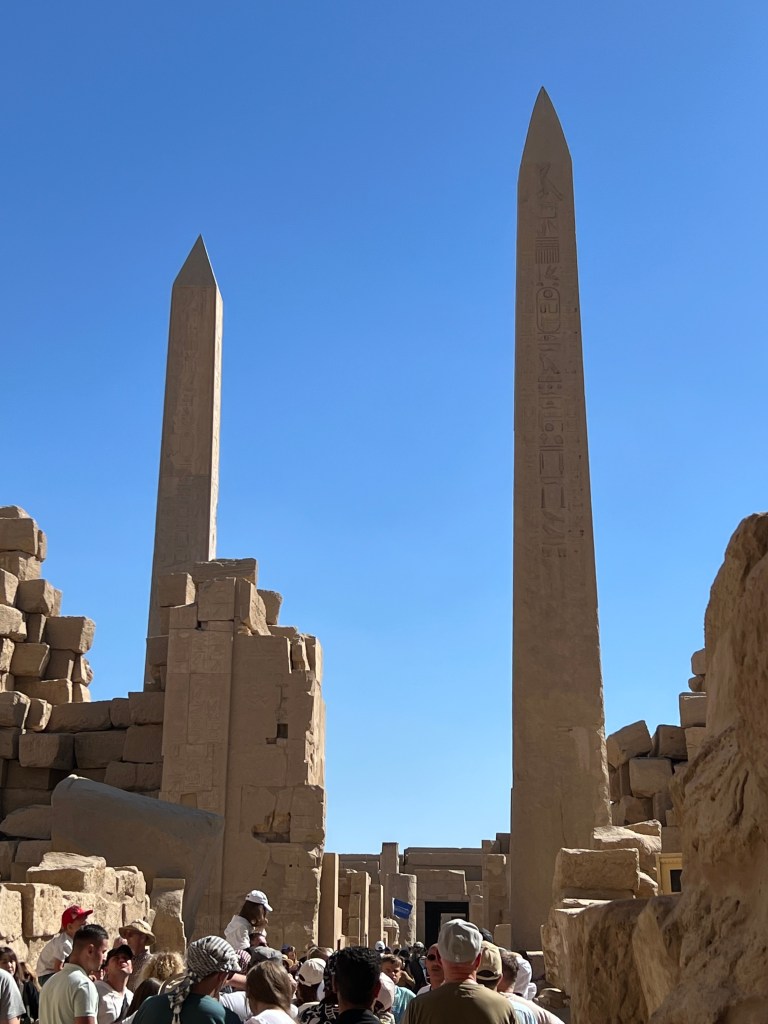
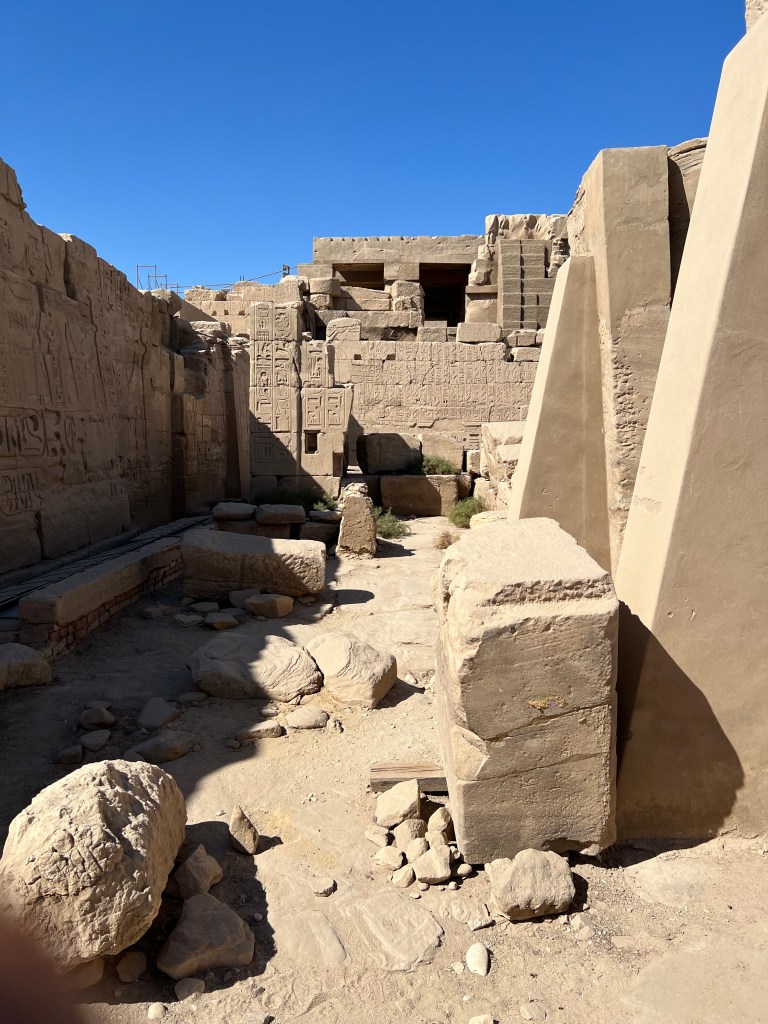
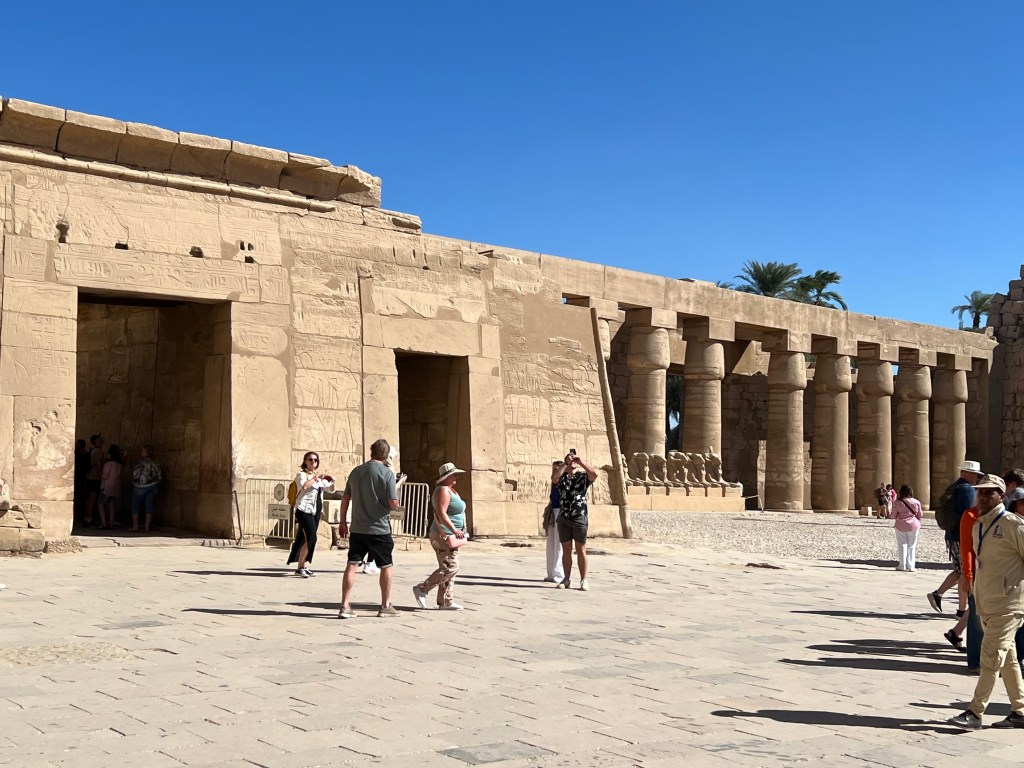

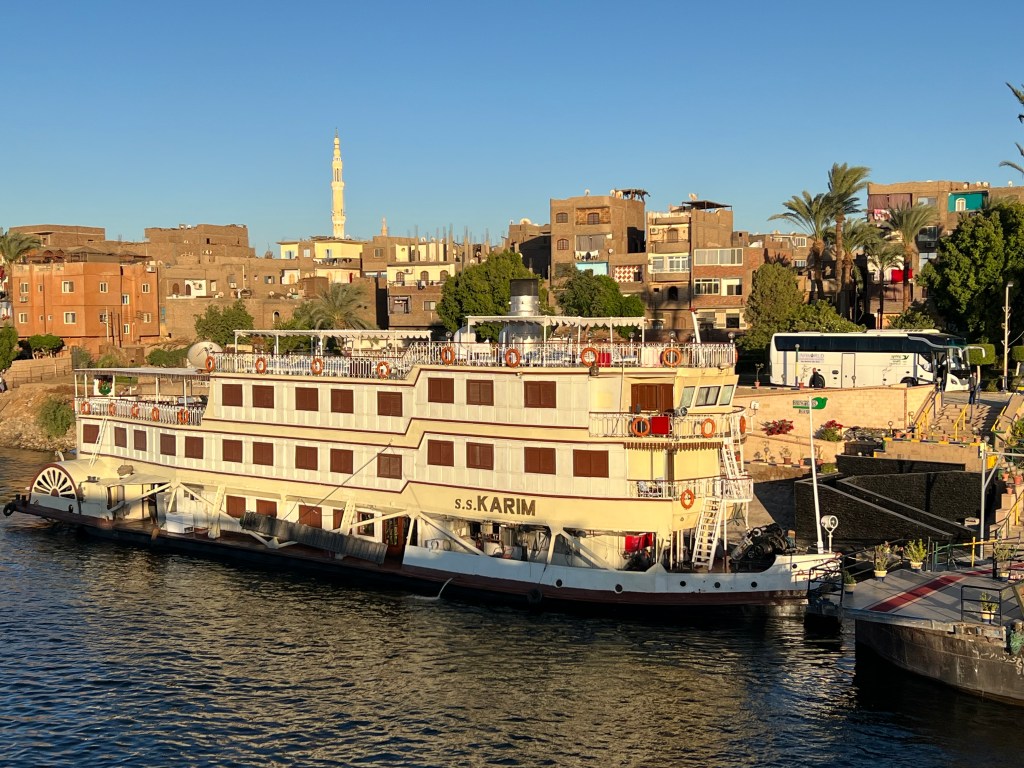
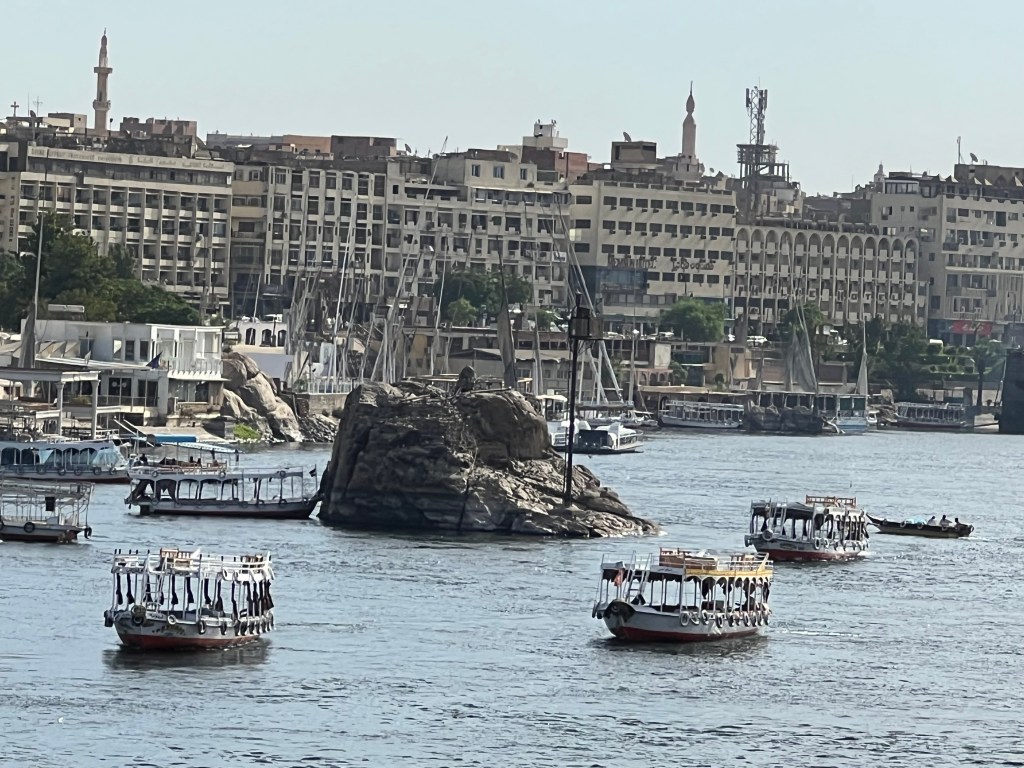
Next we were bussed to board the S.S. Sphinx and lunch, as it set sail to Dendera, where we also harbored for the night.


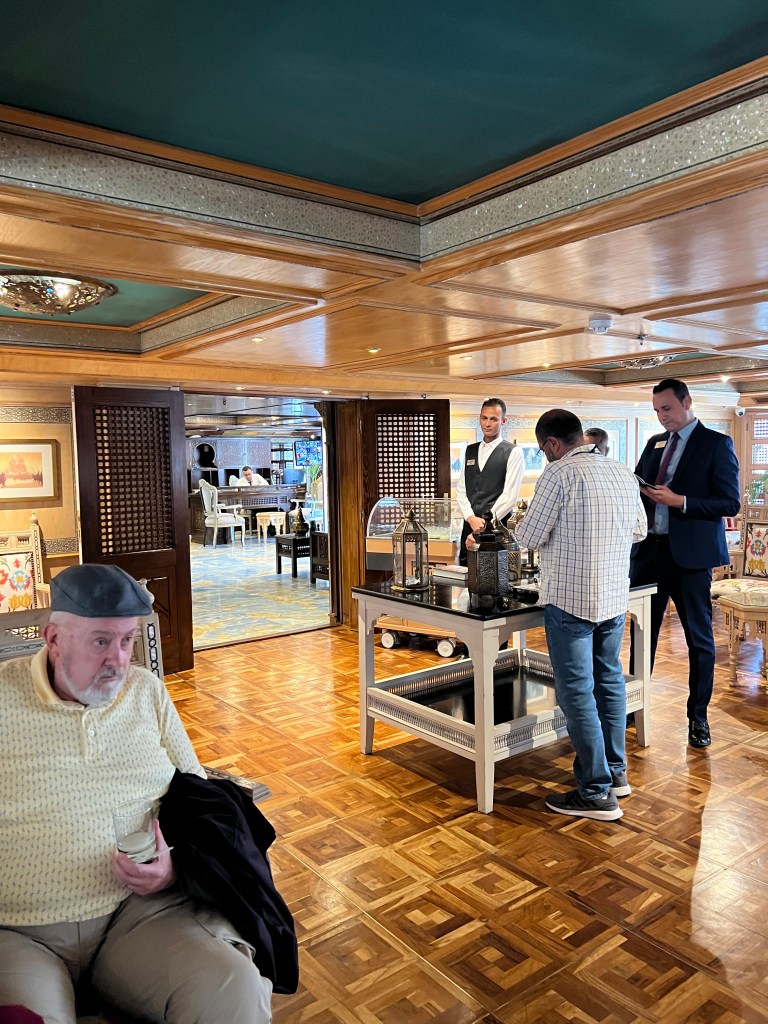
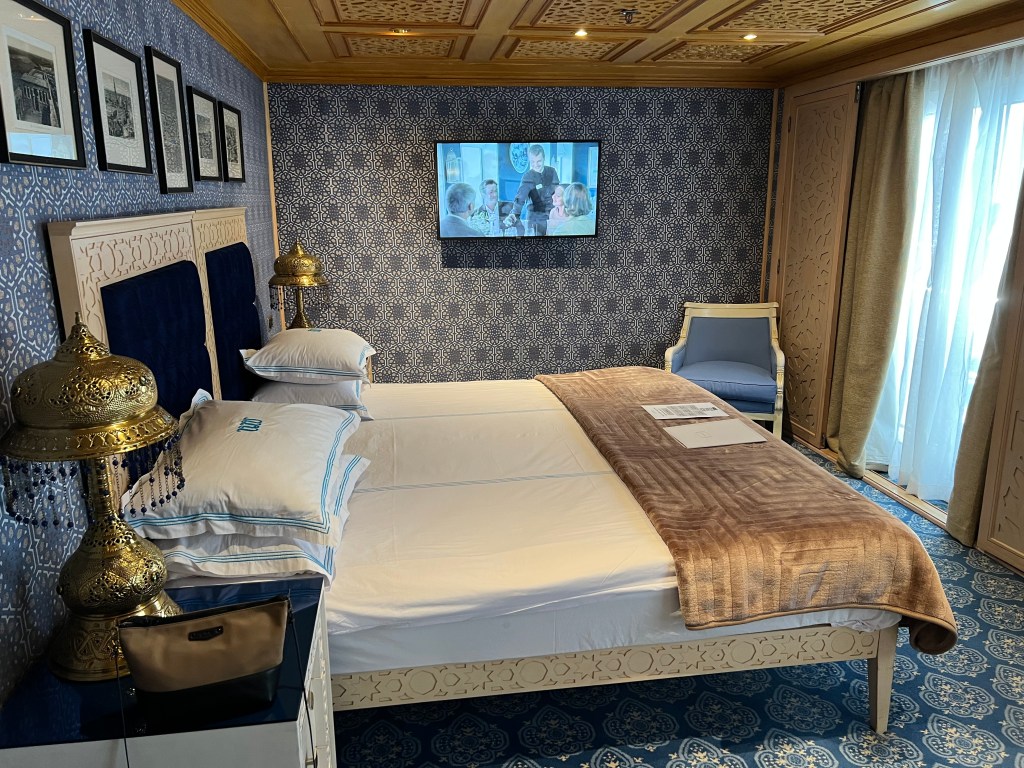
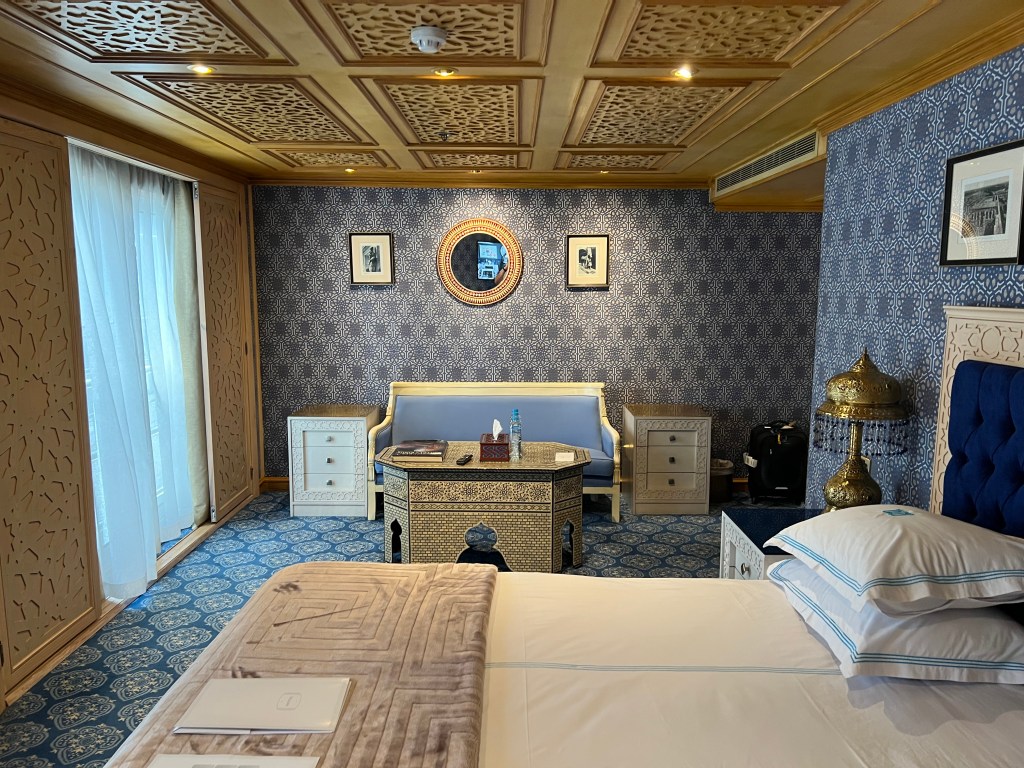
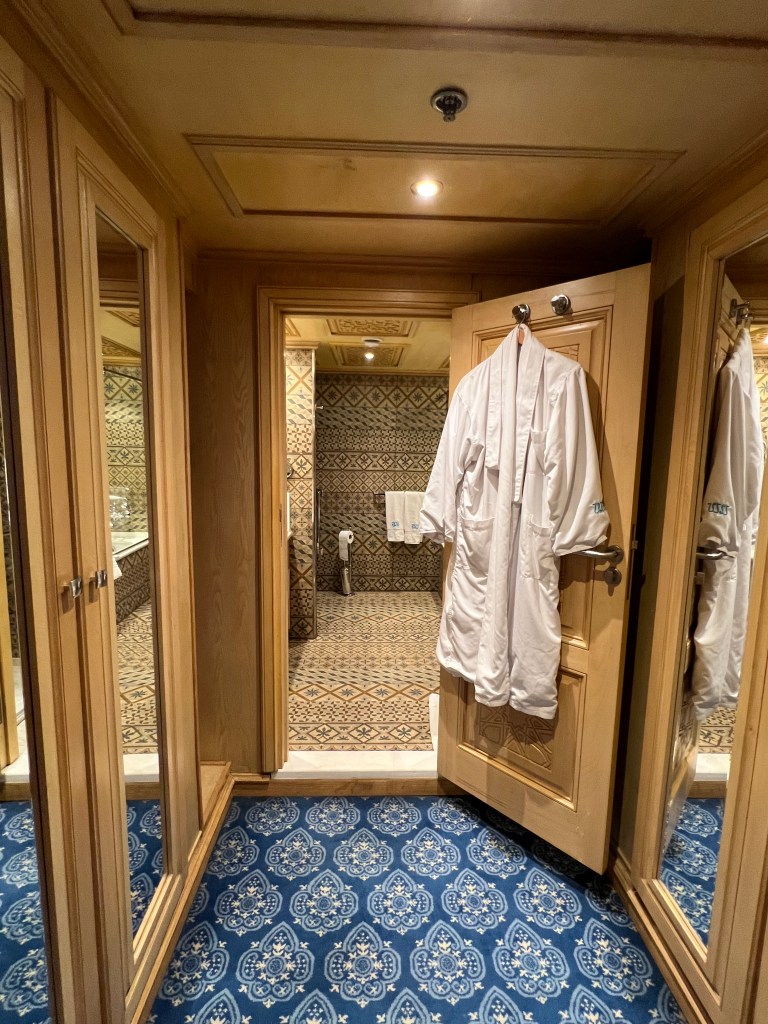
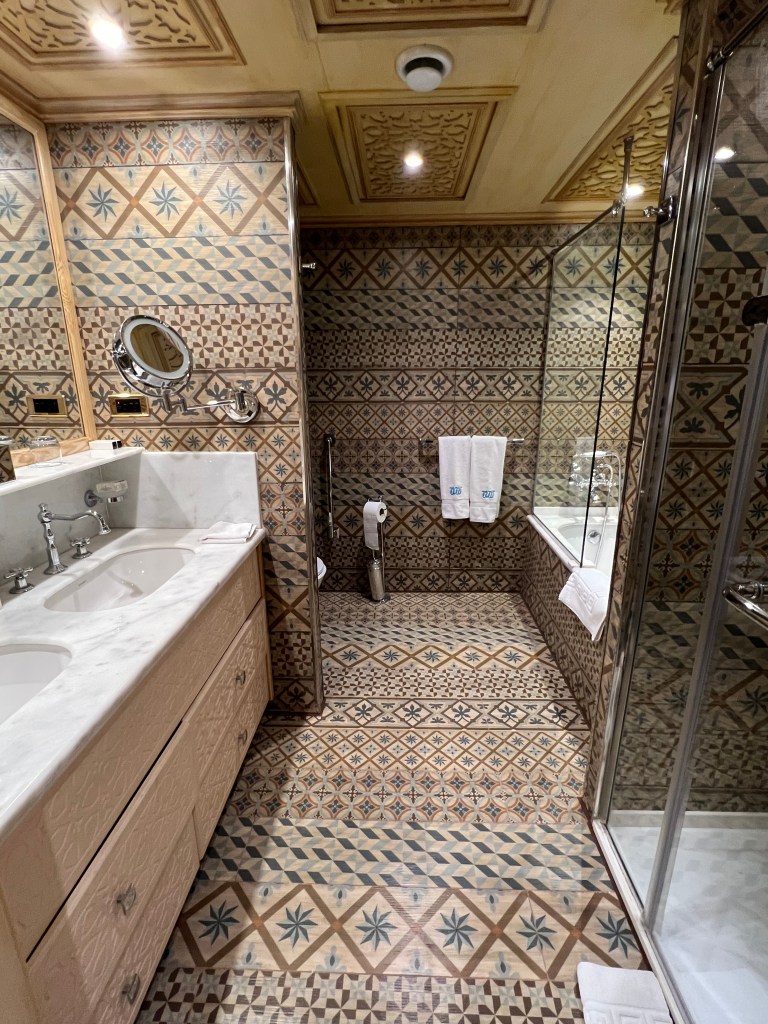
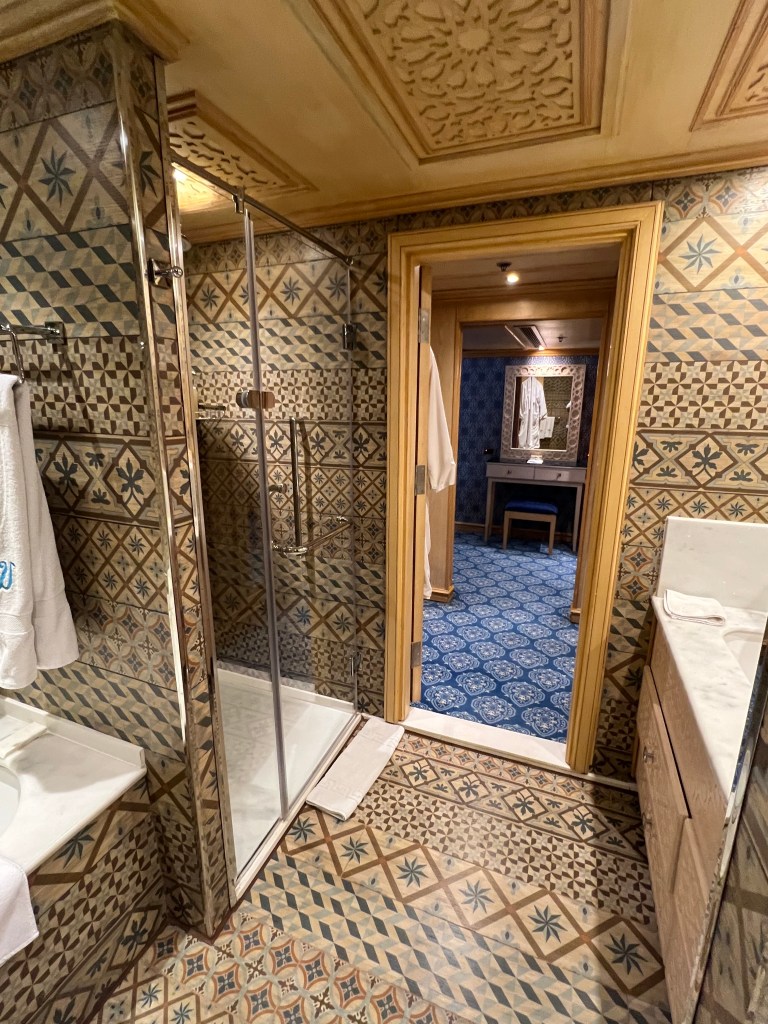


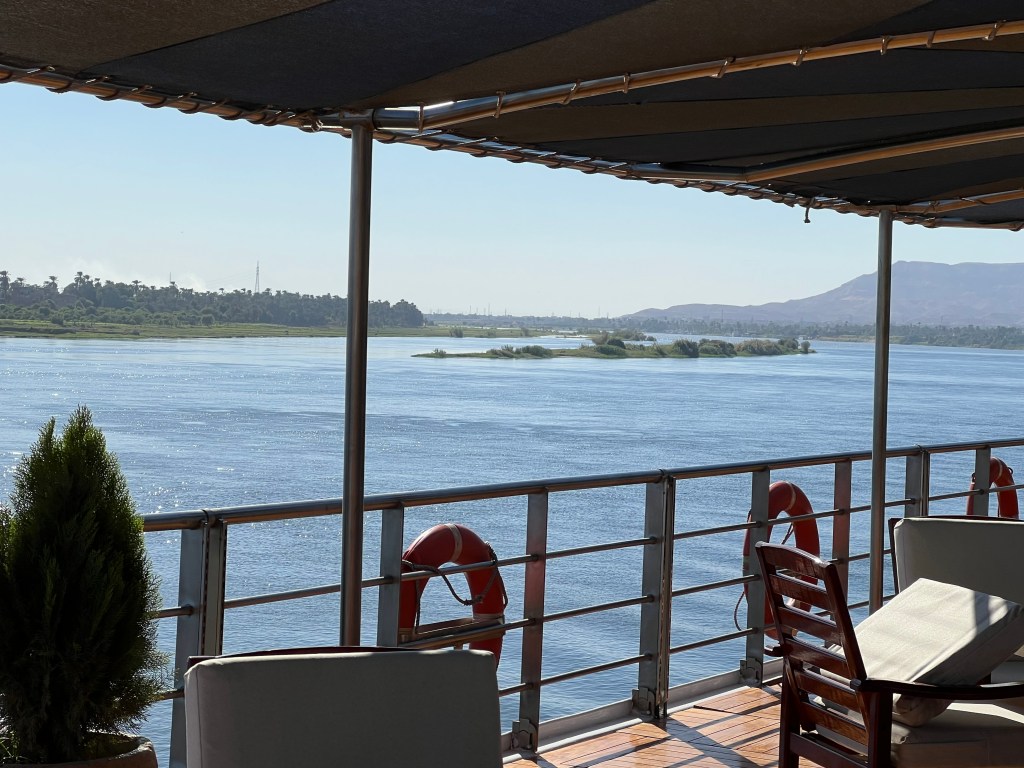

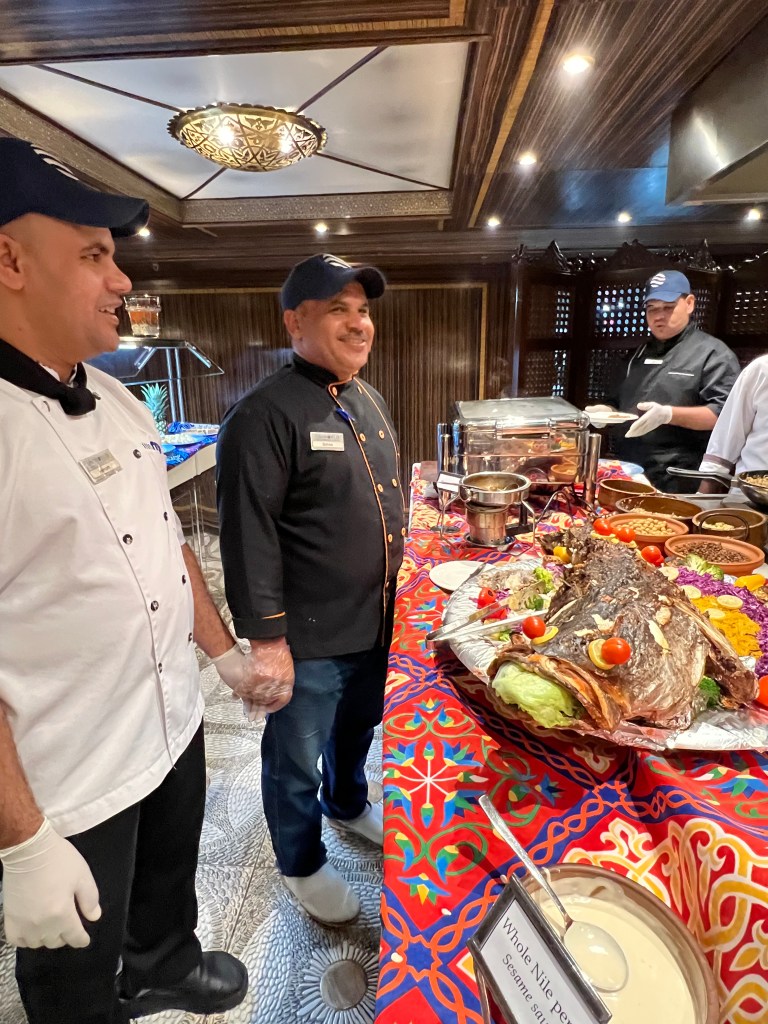
Our days on the S.S. Sphinx were a routine of an early buffet, followed by destinations by bus, followed by a lunch buffet back aboard, bussed to more destinations and then on board a with a set menu’d dinner with entertainment. Before each dinner we had a presentation of what the following day’s itinerary entailed. The meals were a variety of Egyptian dishes from all regions and all were delightful.


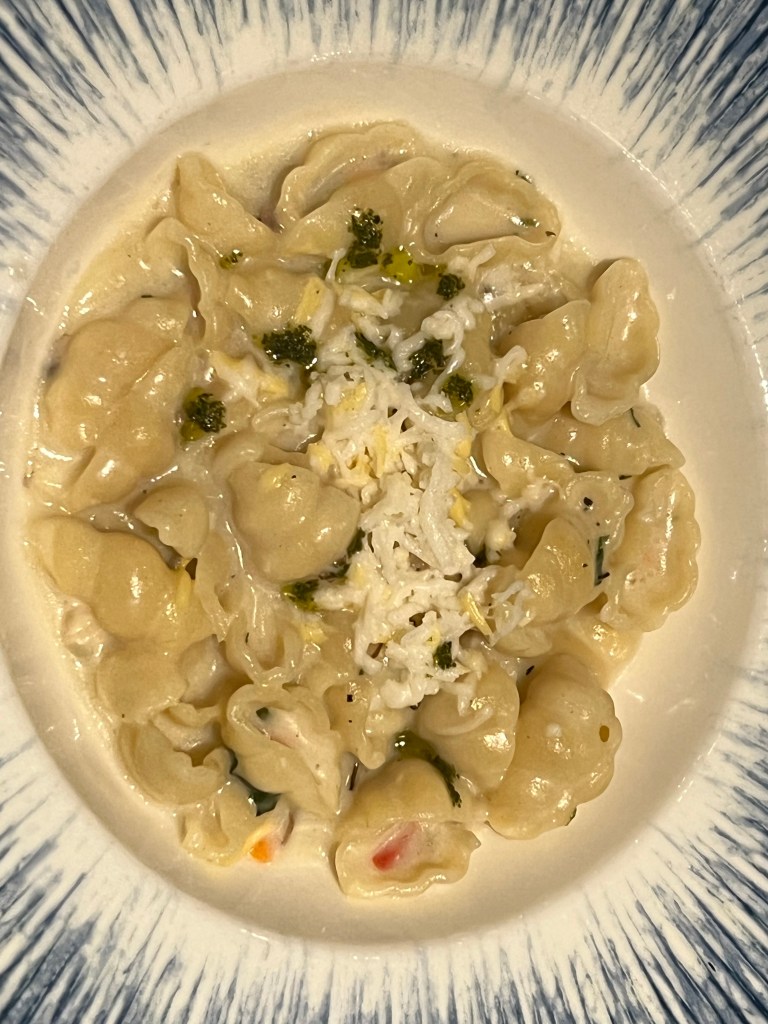
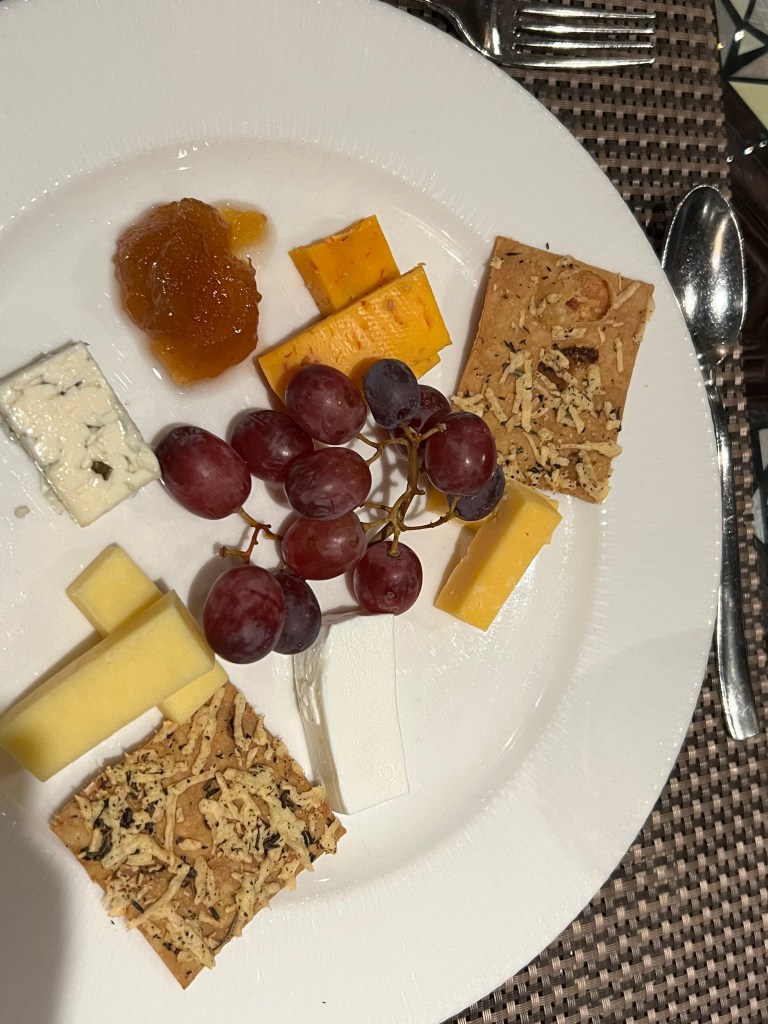
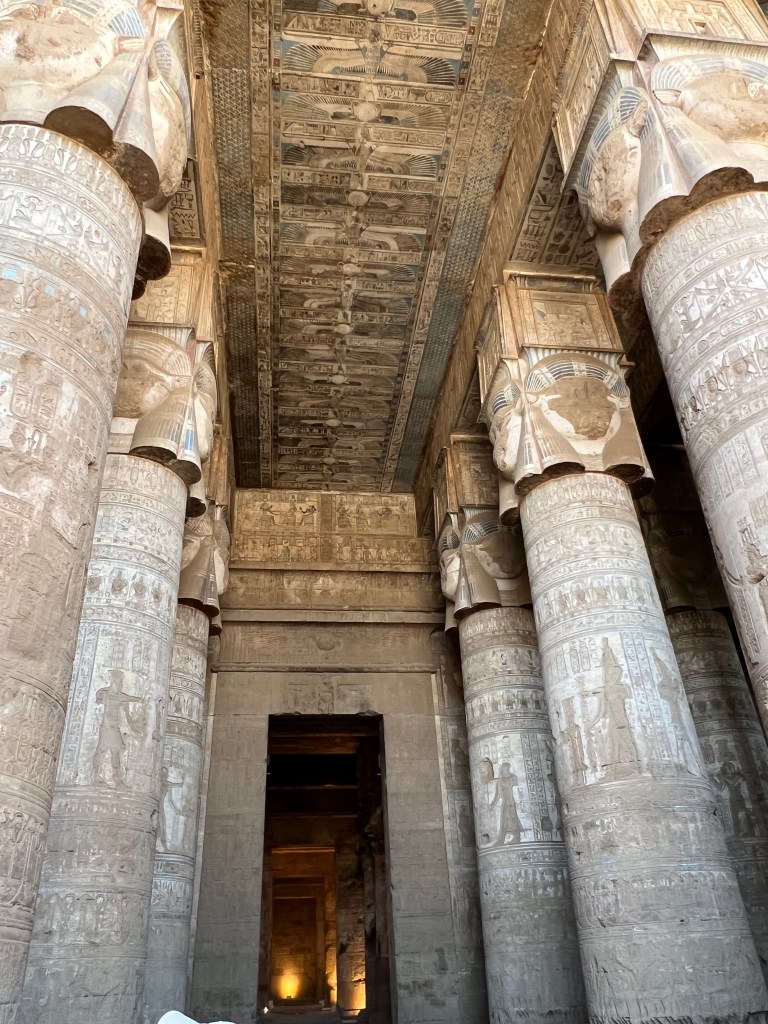
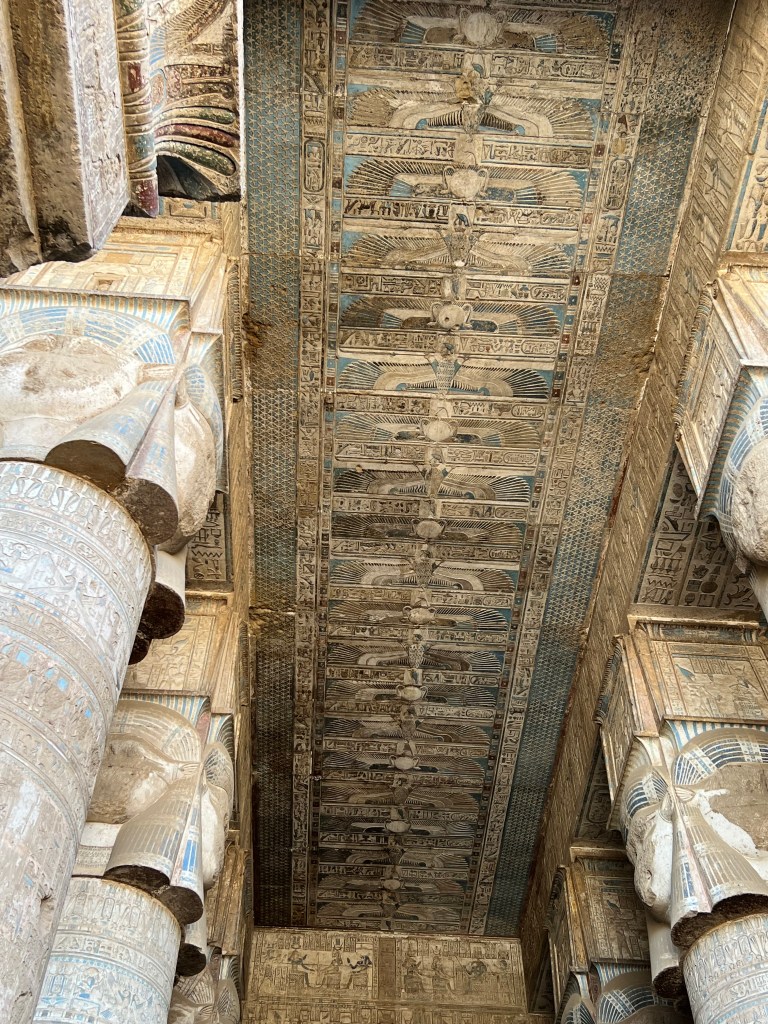
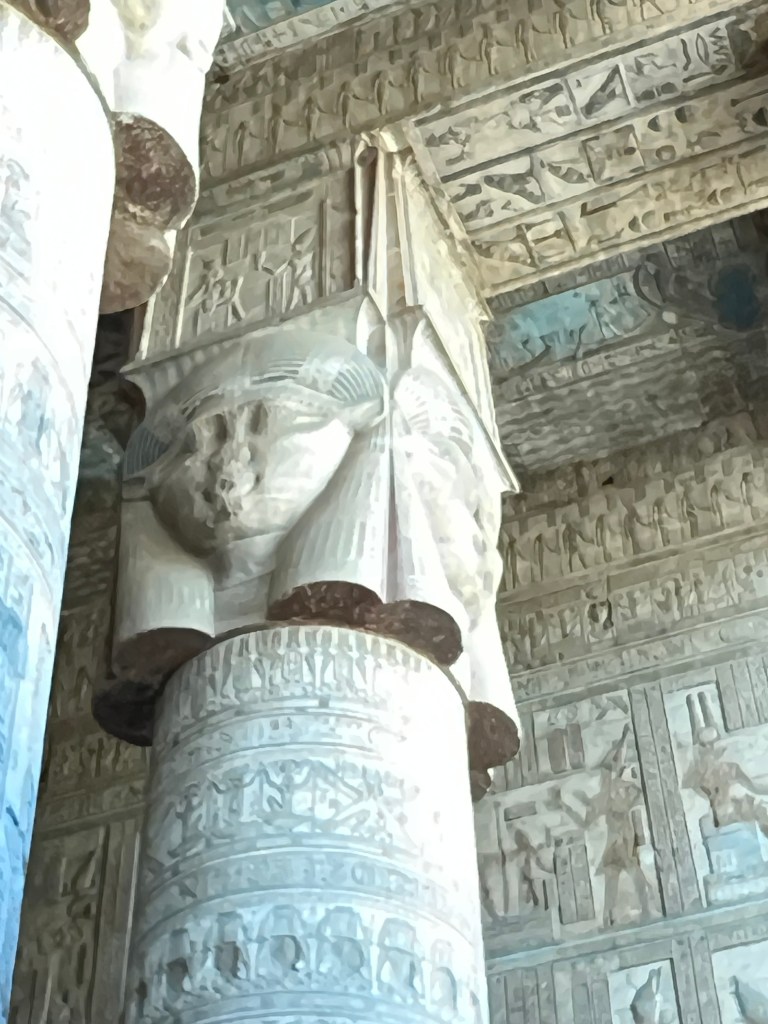
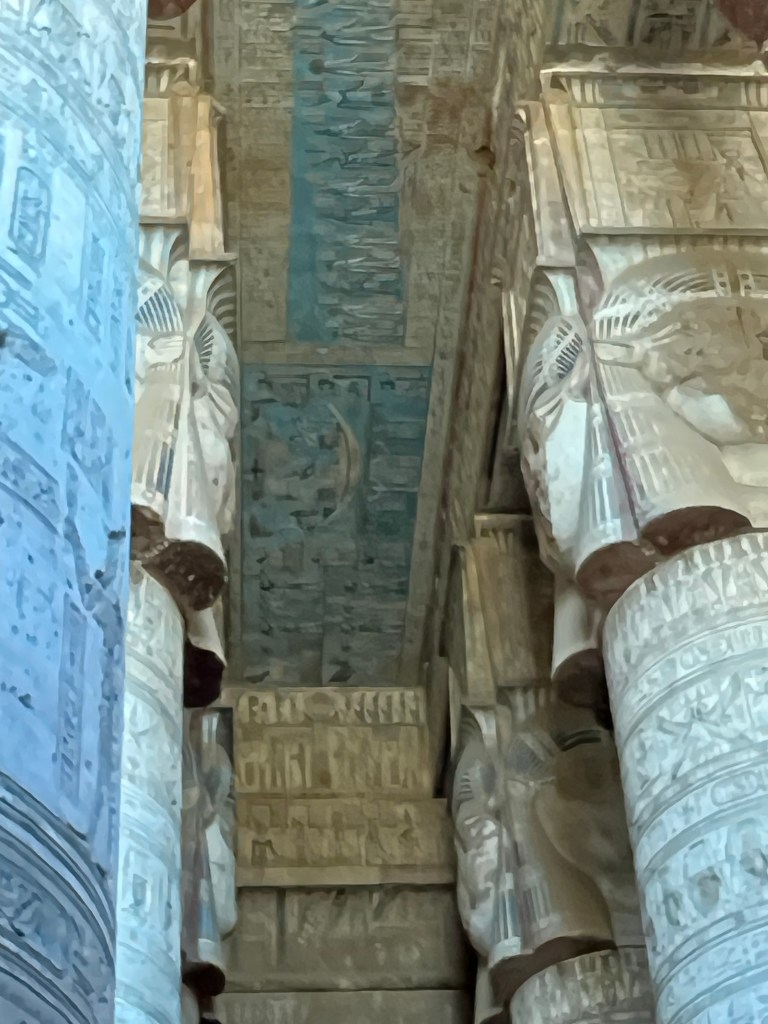
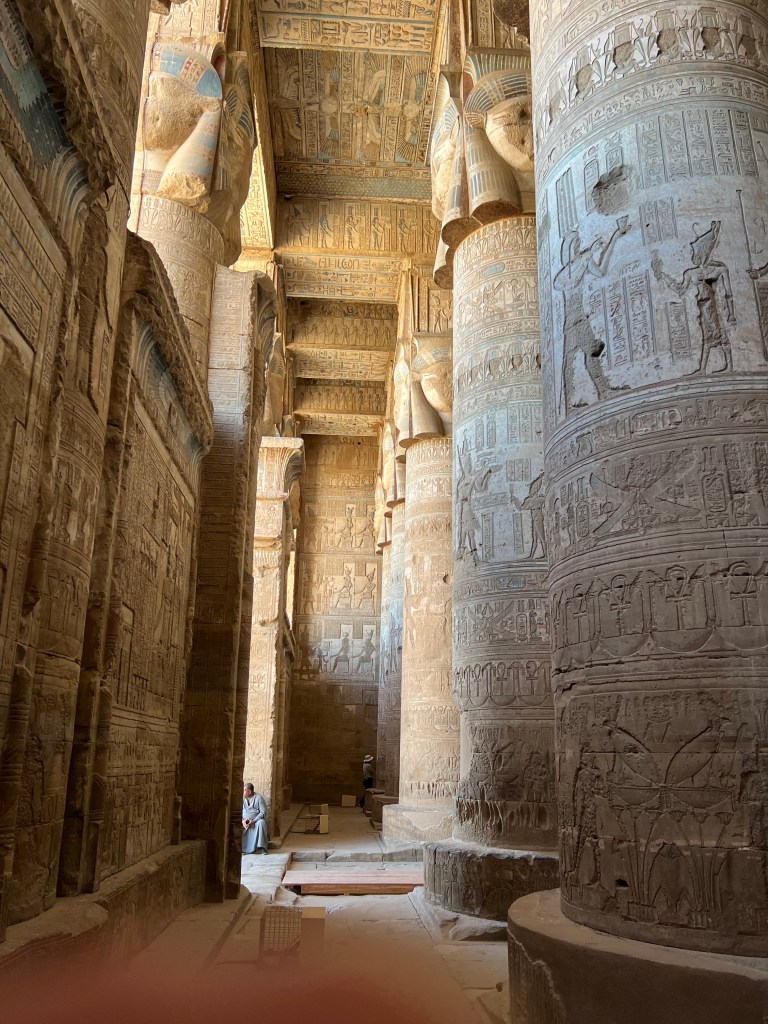
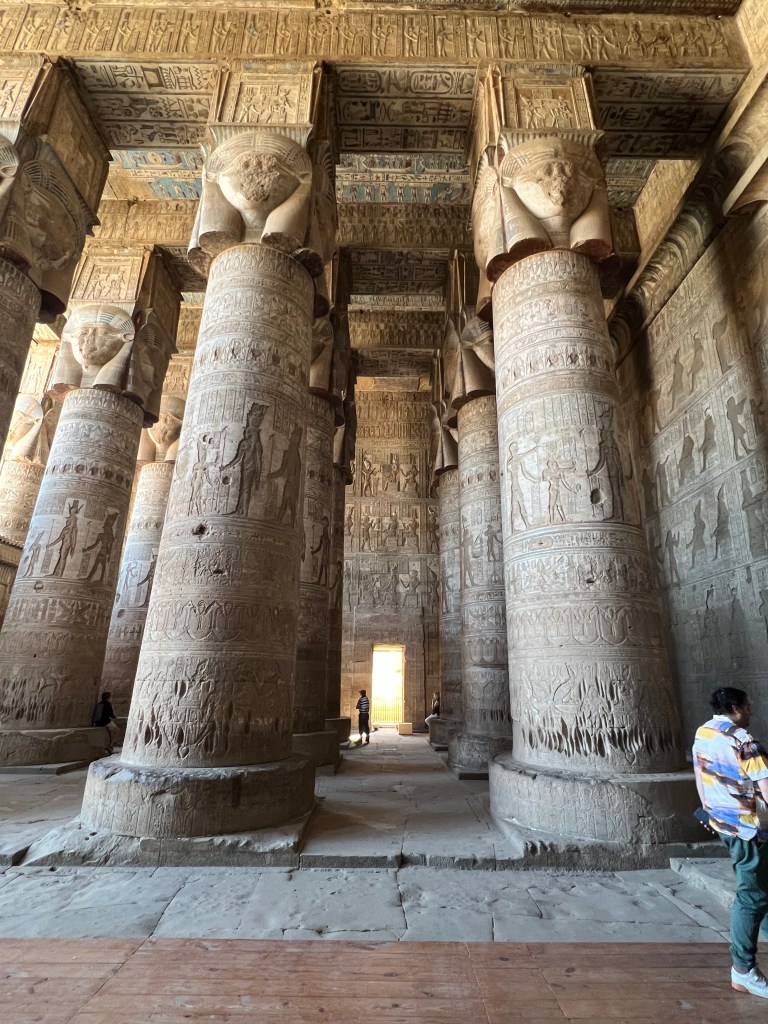
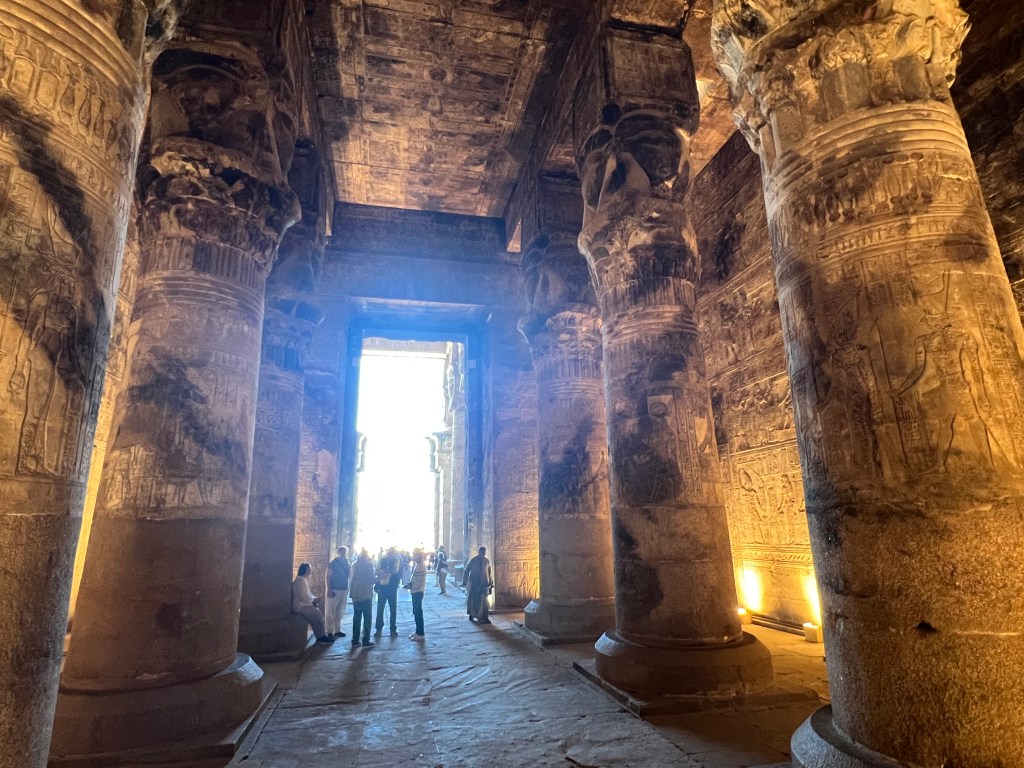
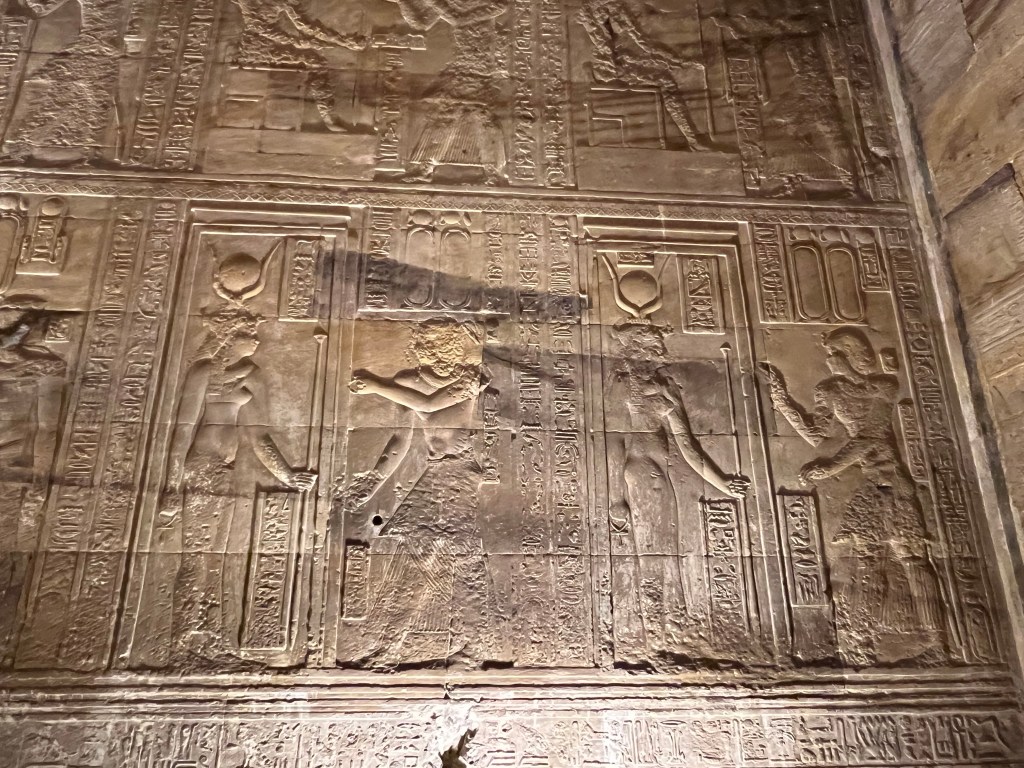
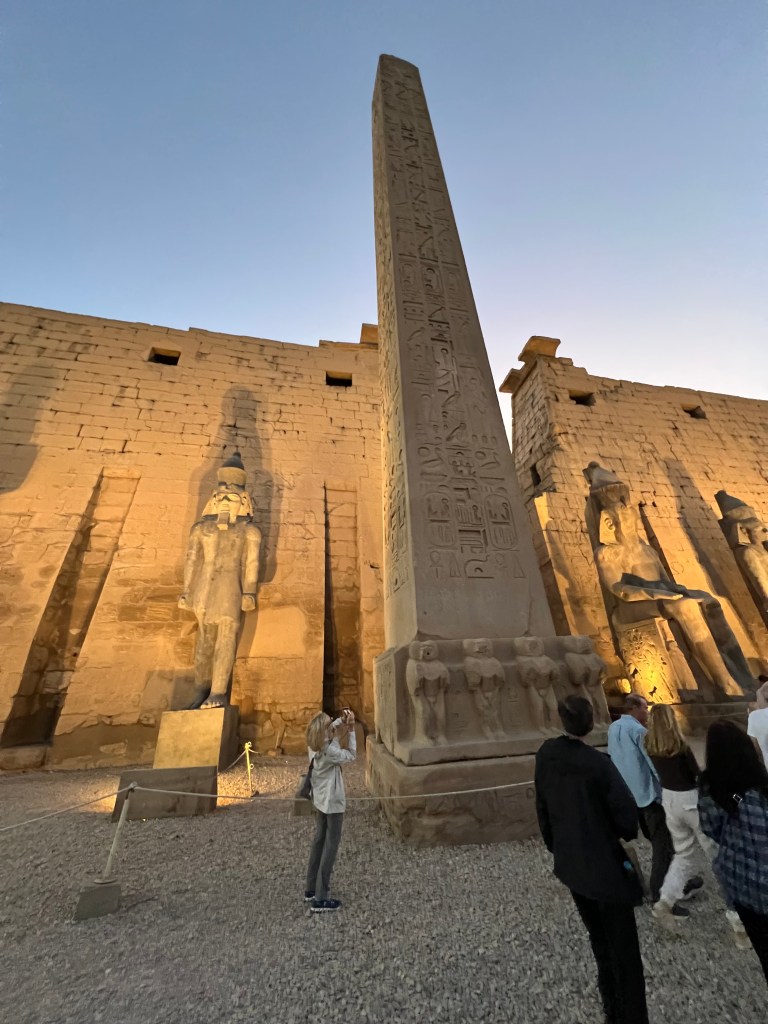
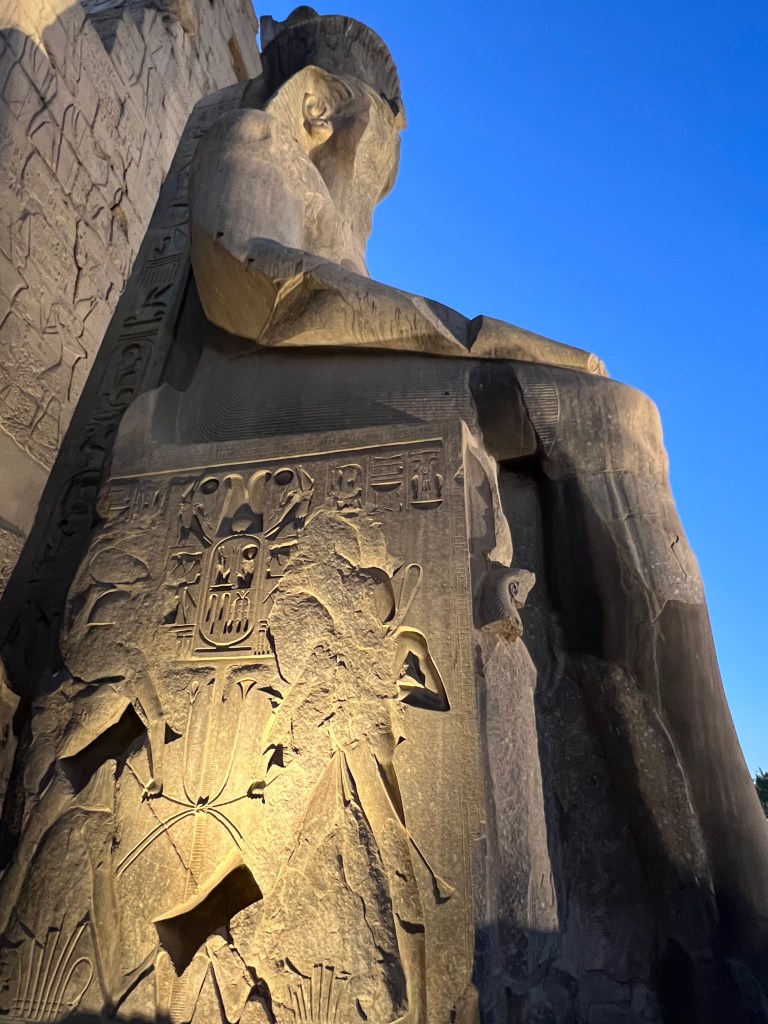
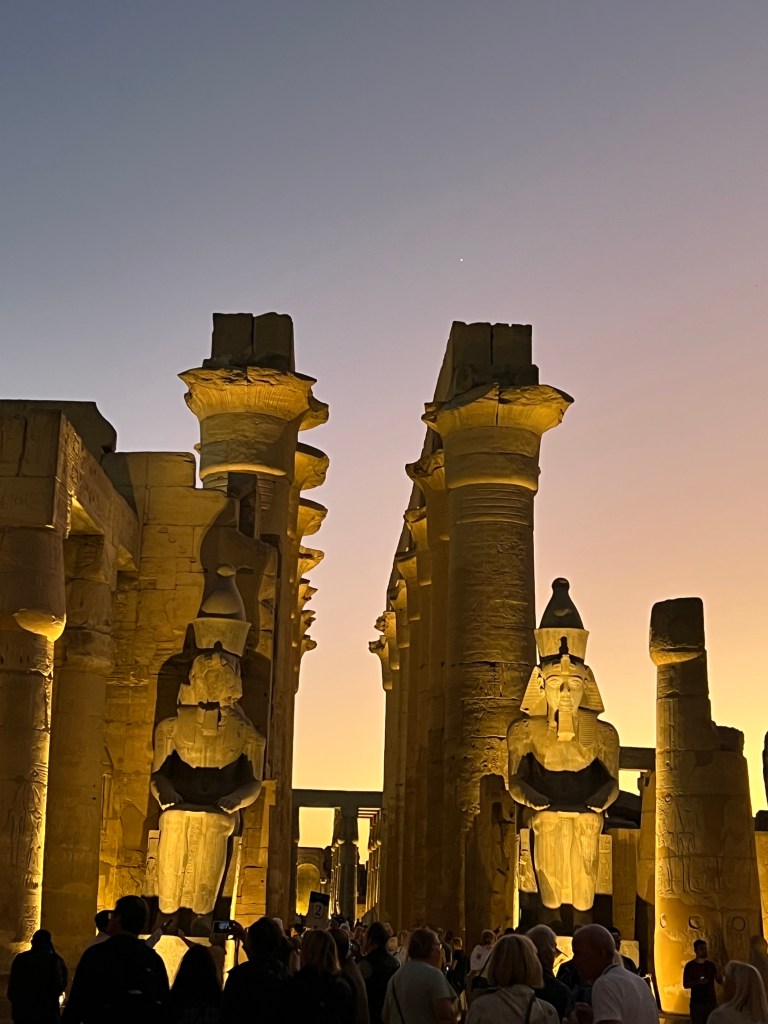
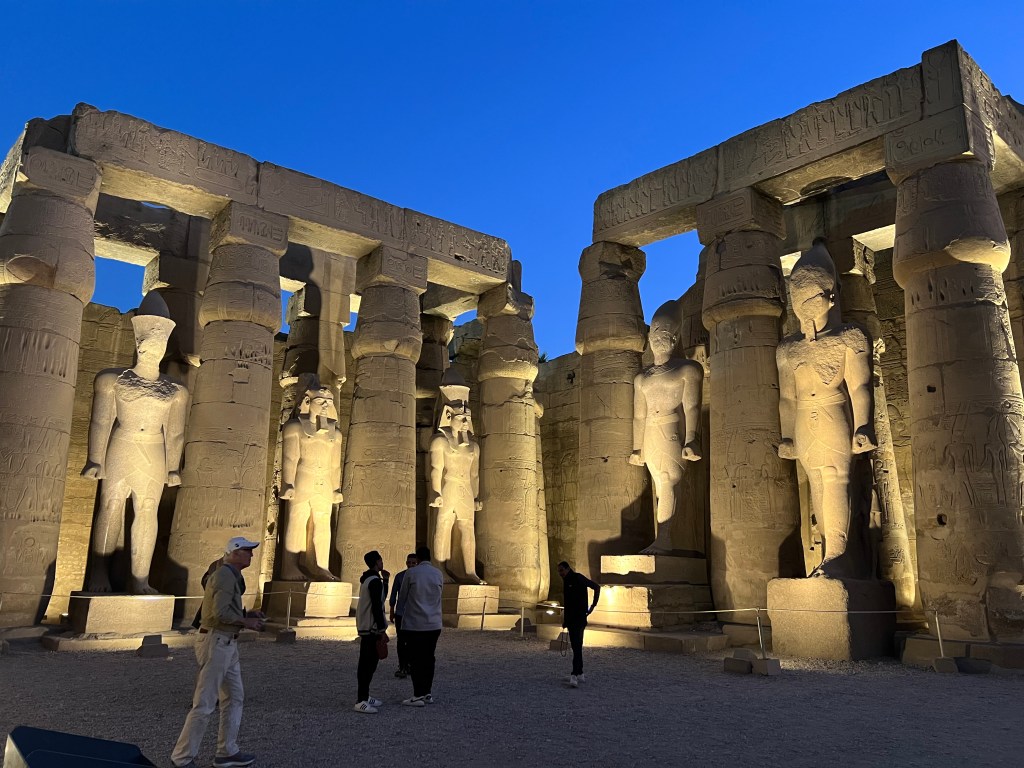
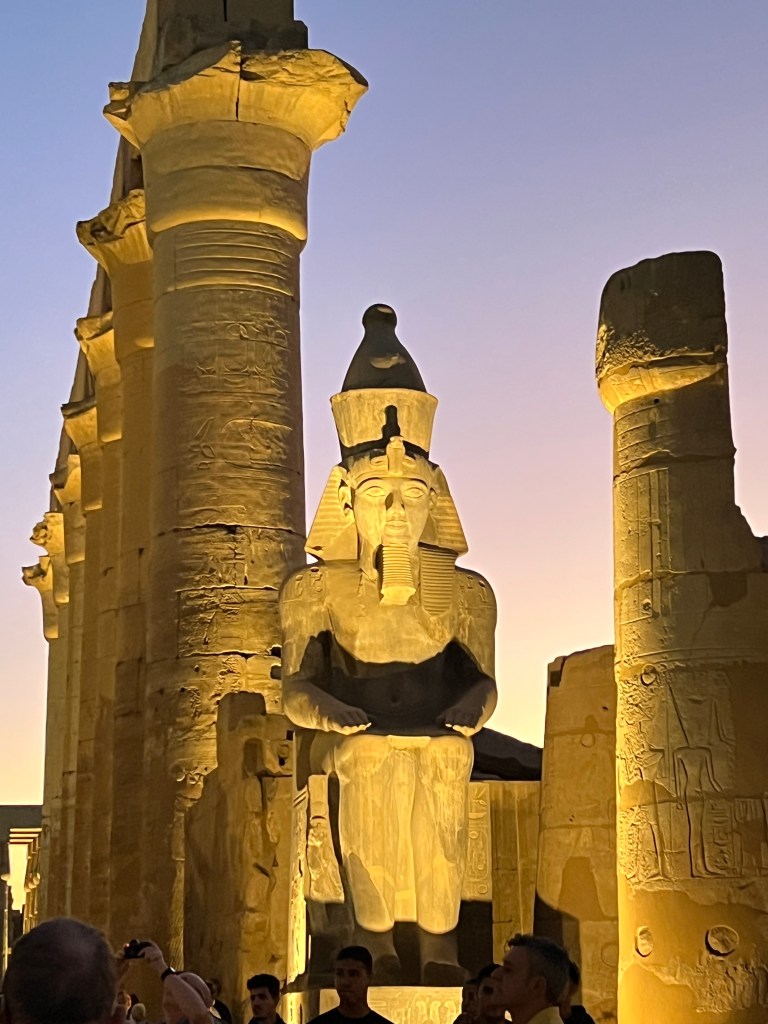
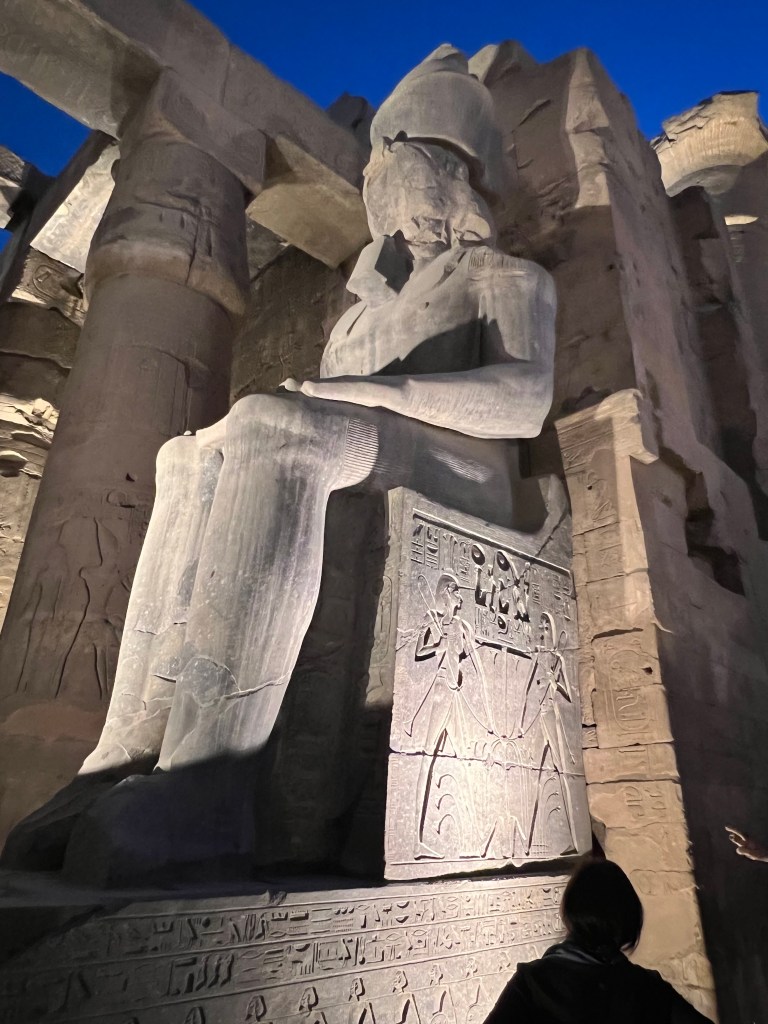
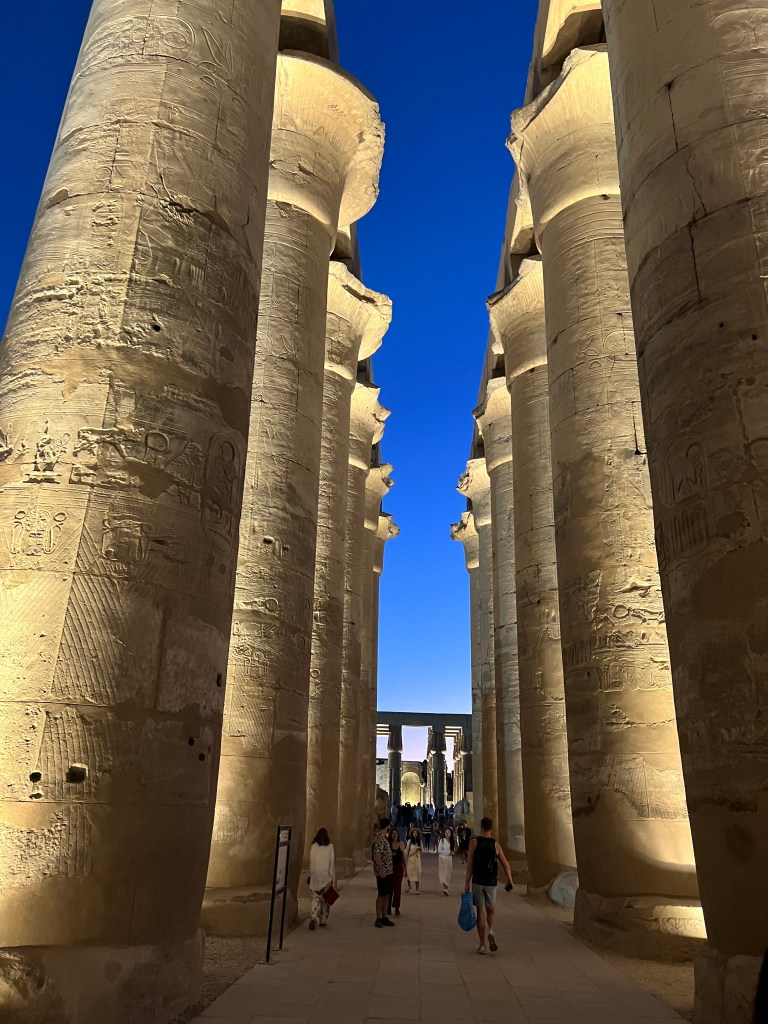
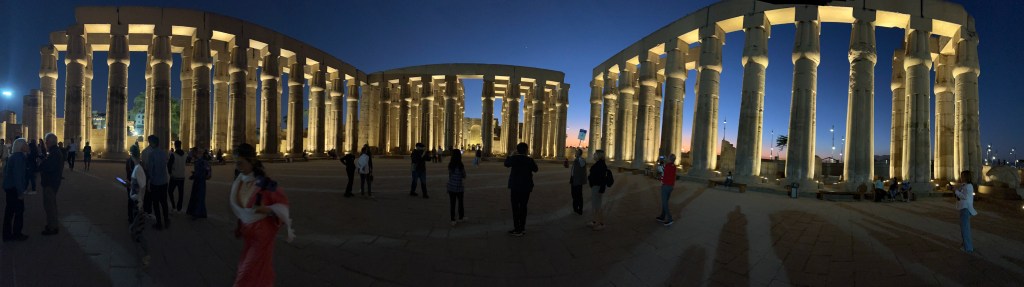
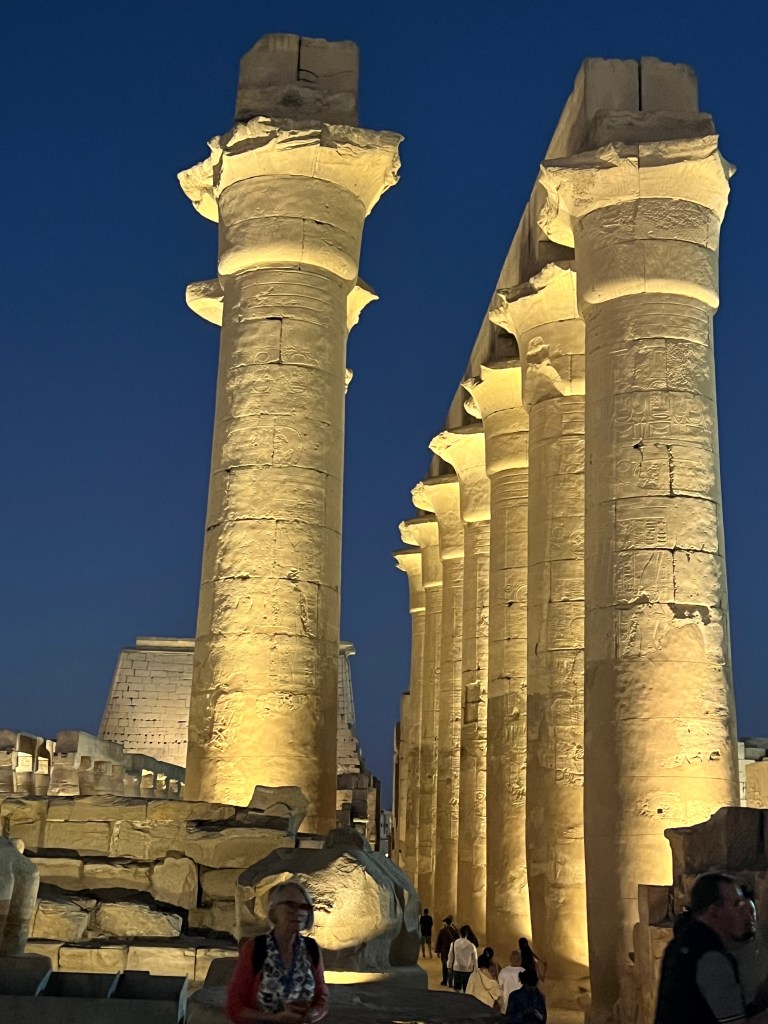
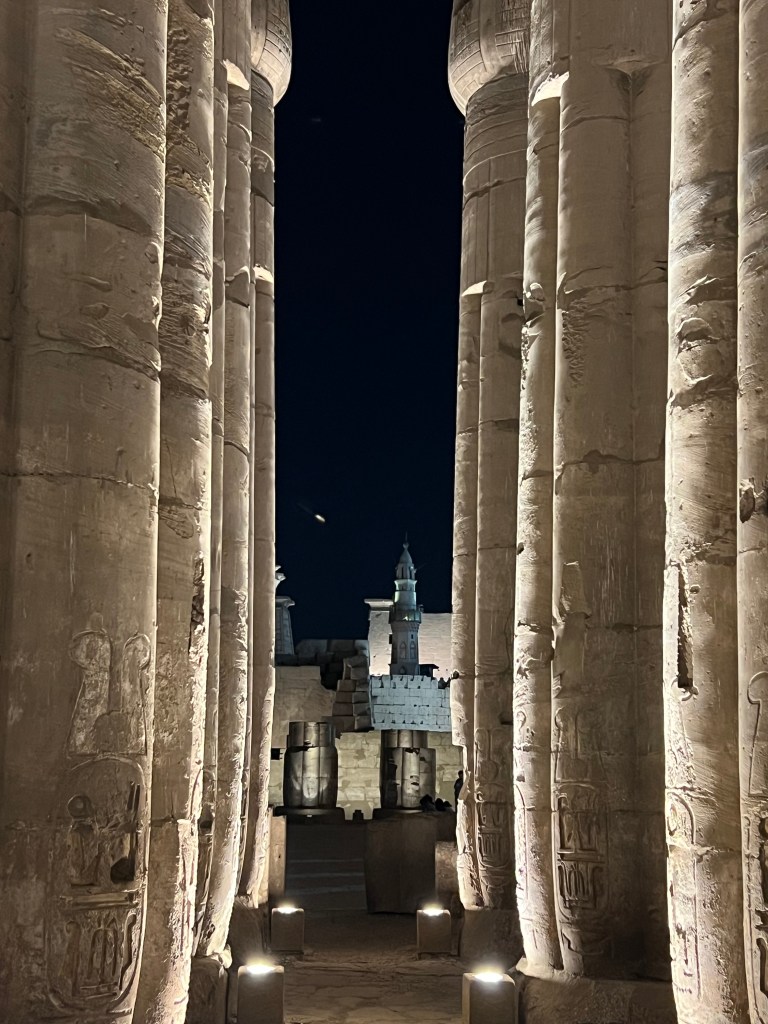
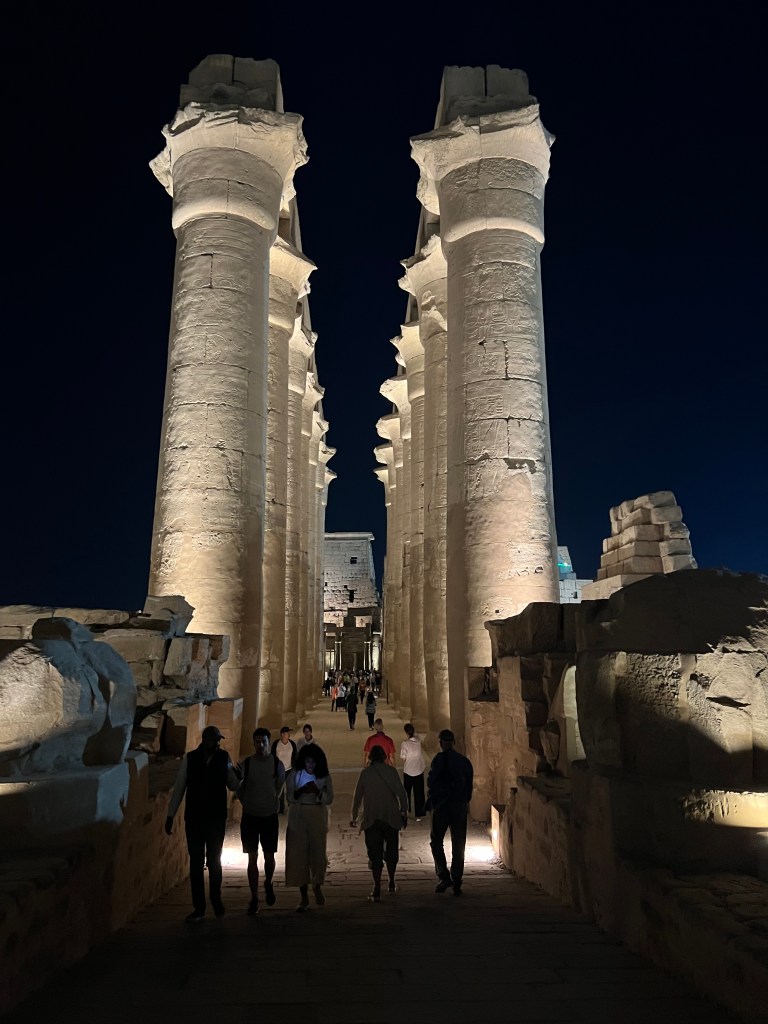
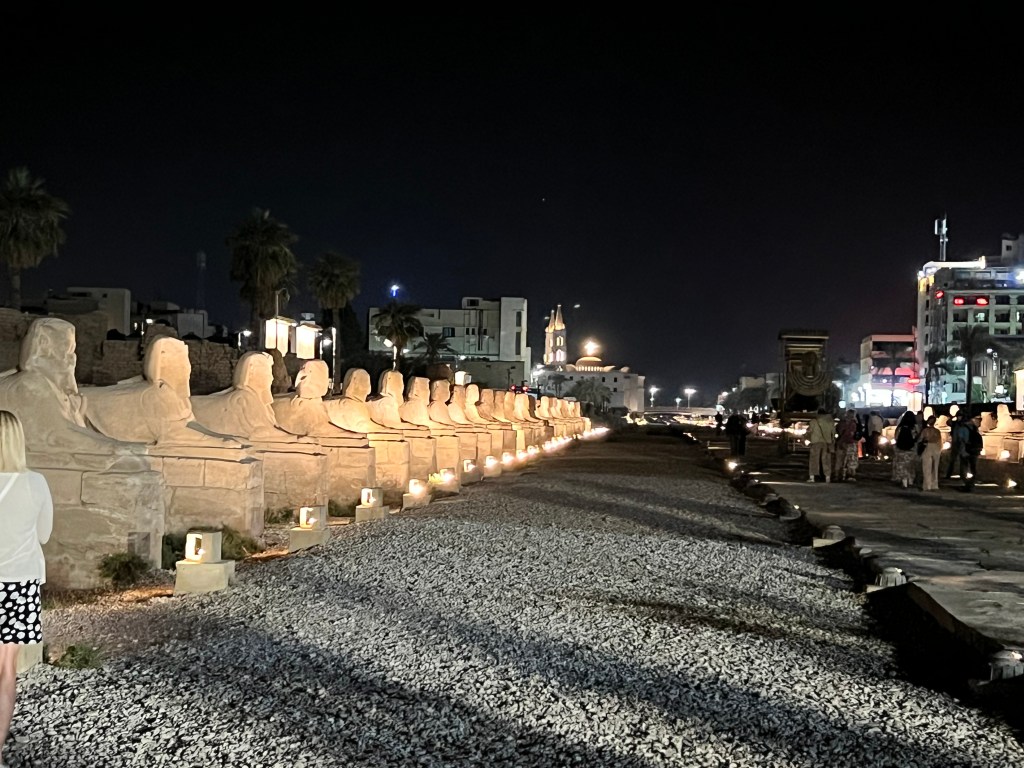
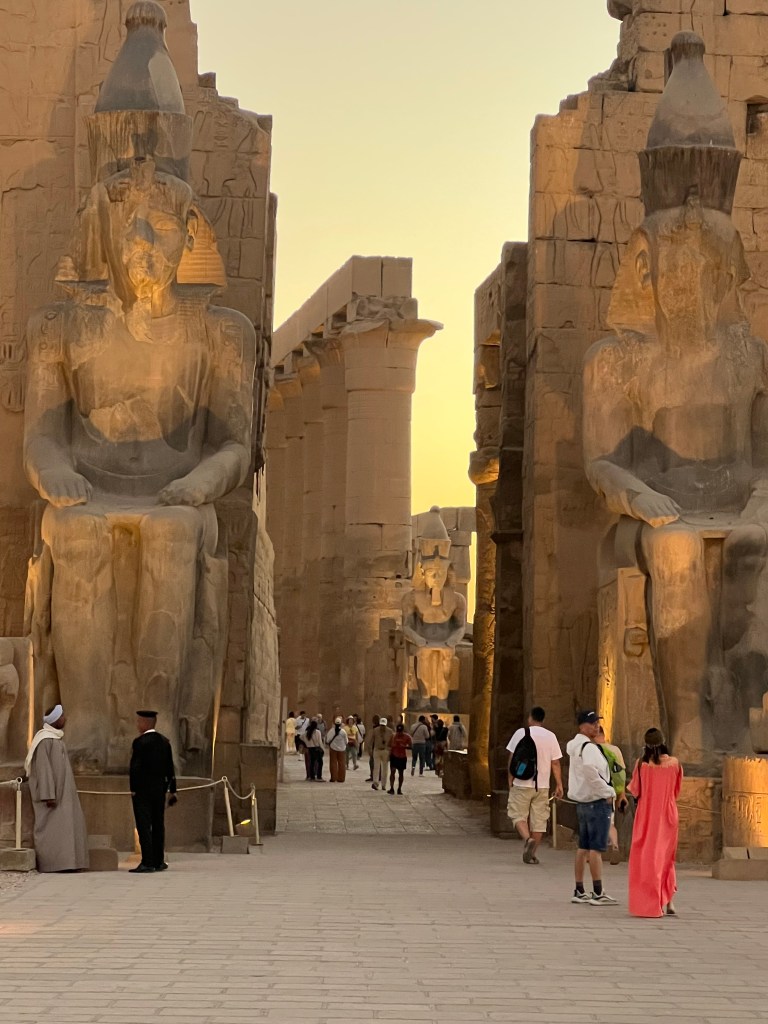
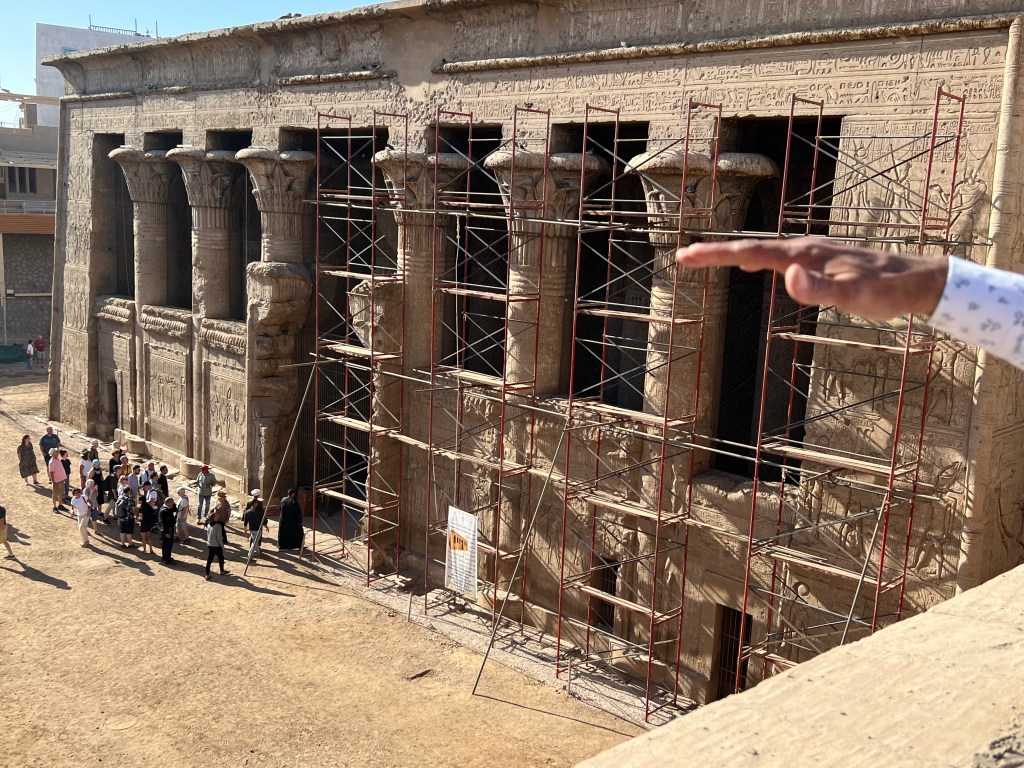
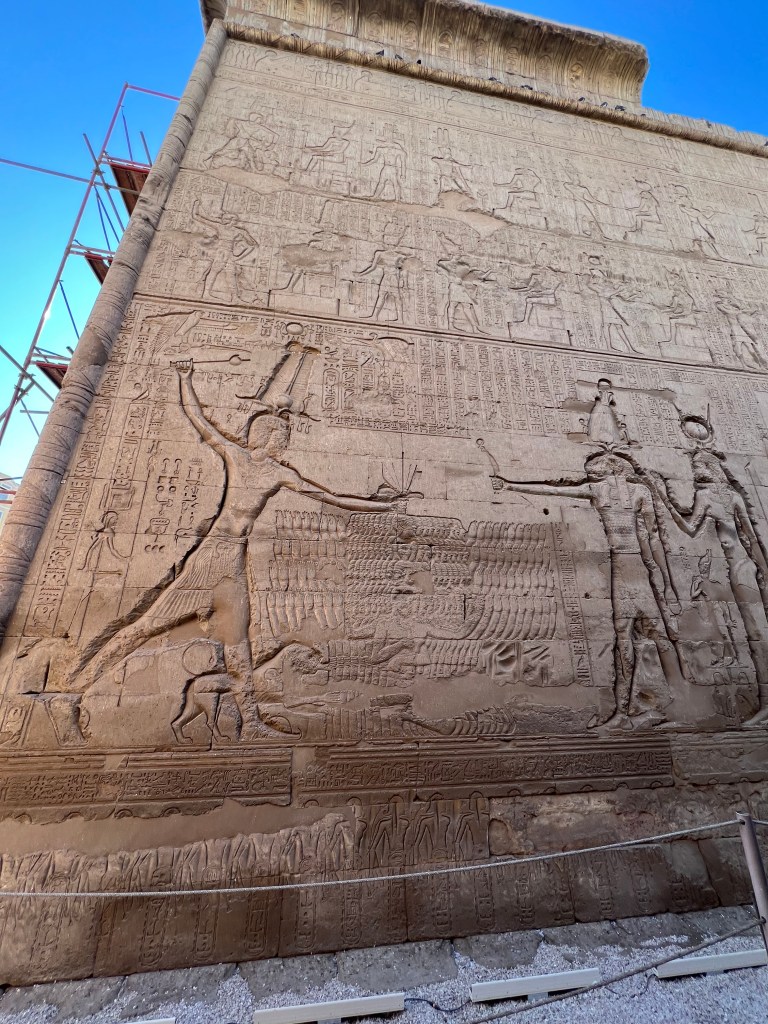
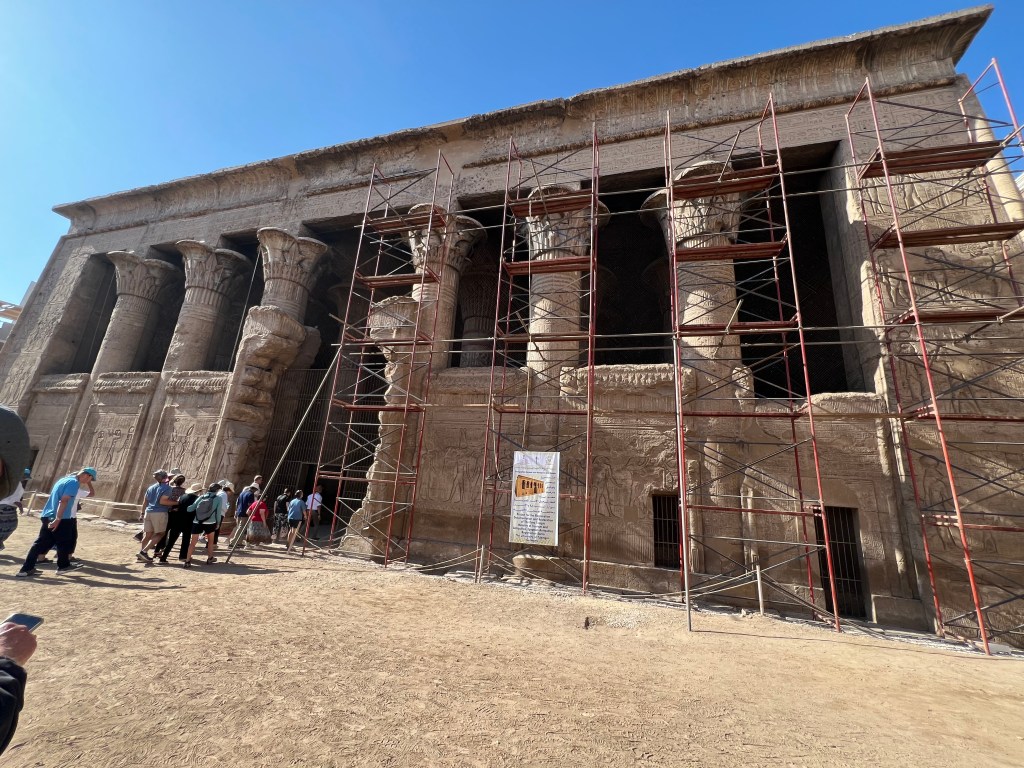
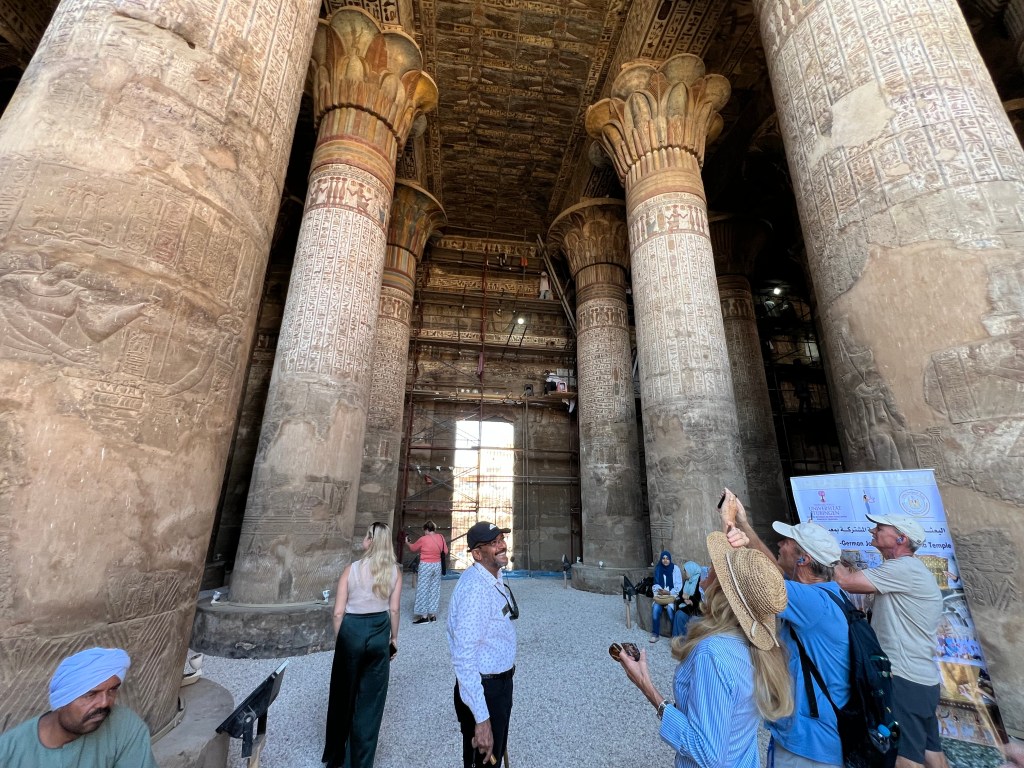
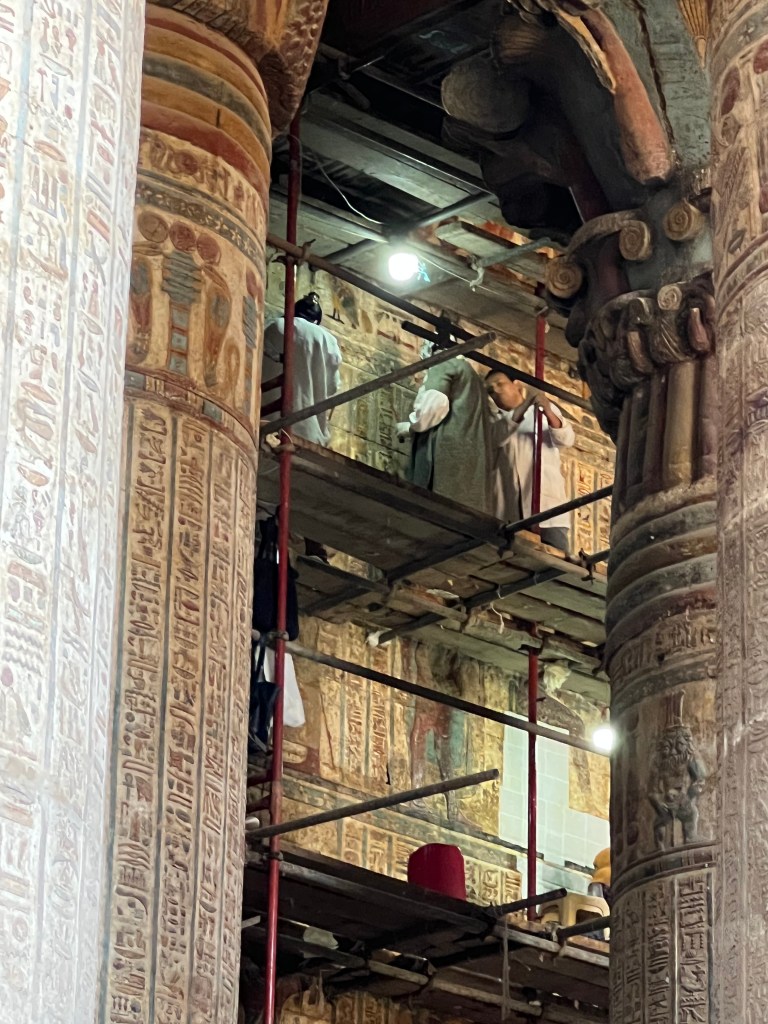
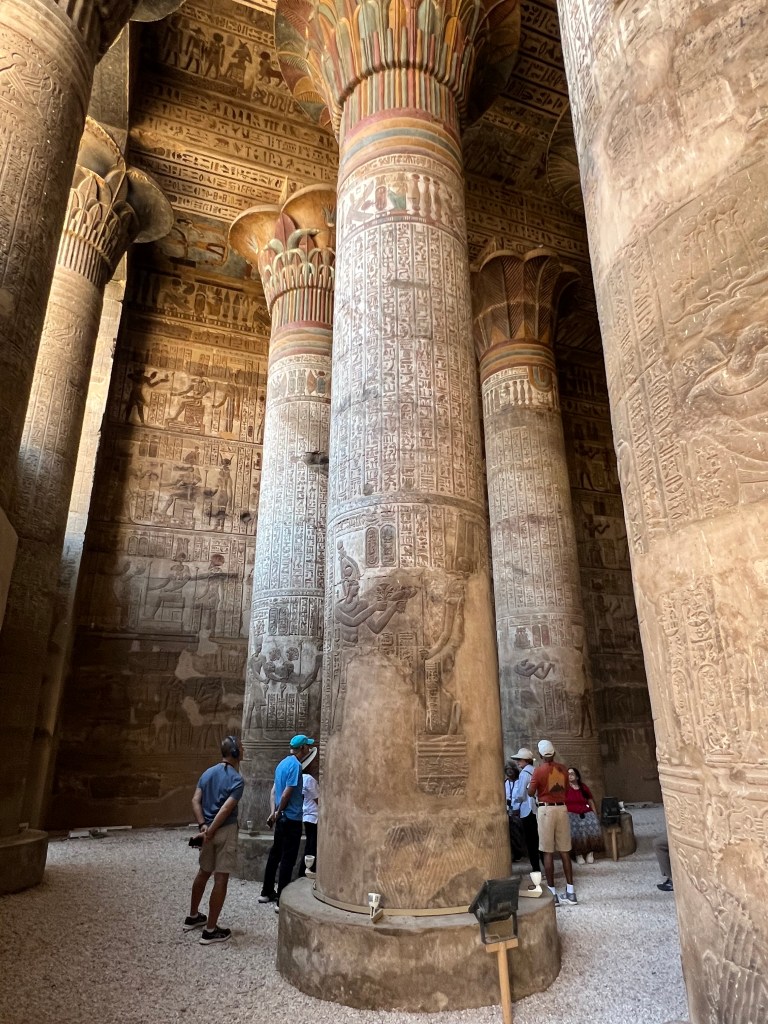
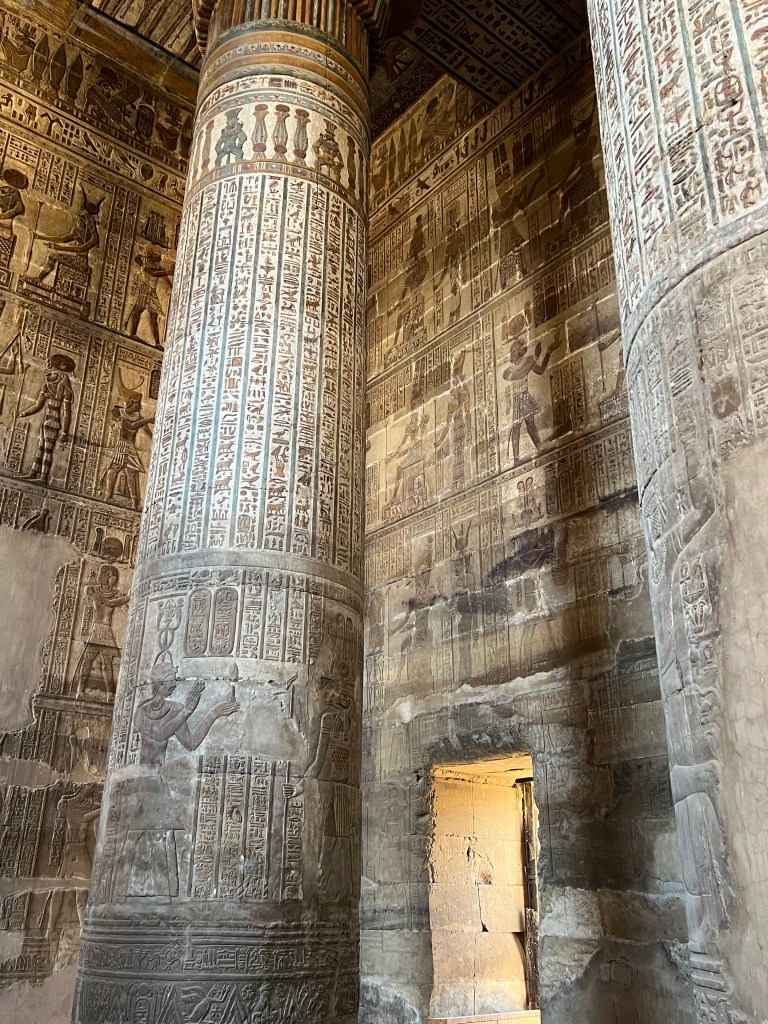
Day four we had a visit to the Temple of Hathor at Dendera, we sailed back to Luxor and in the afternoon we visited the Luxor temple, then a night at the harbor.
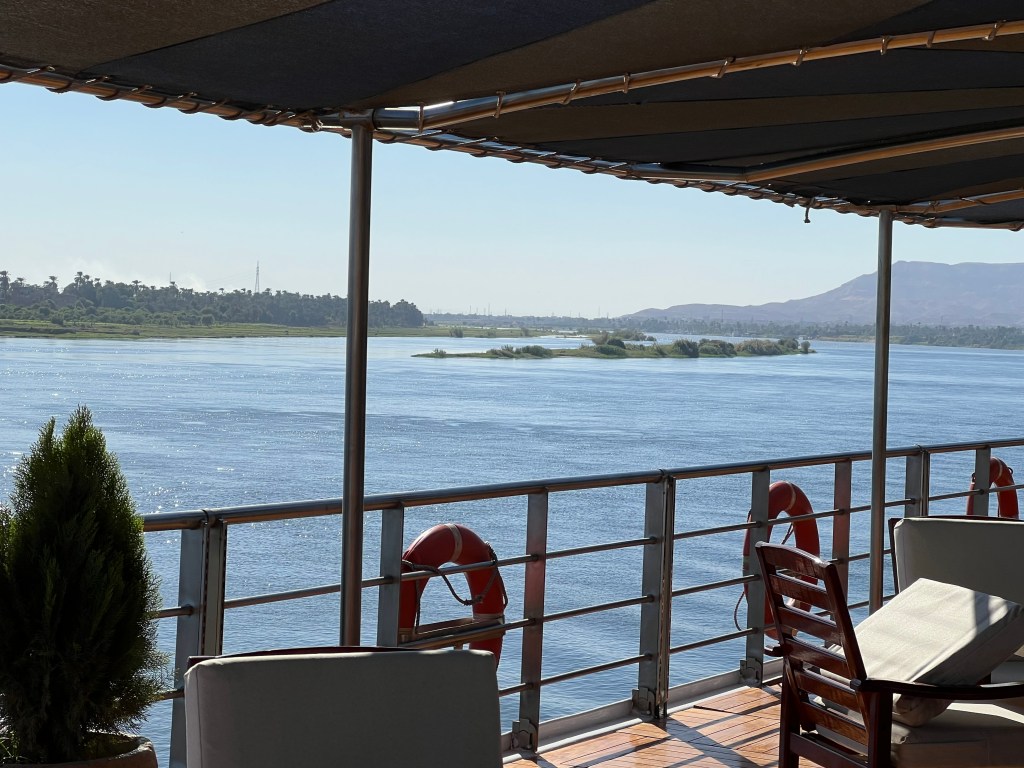


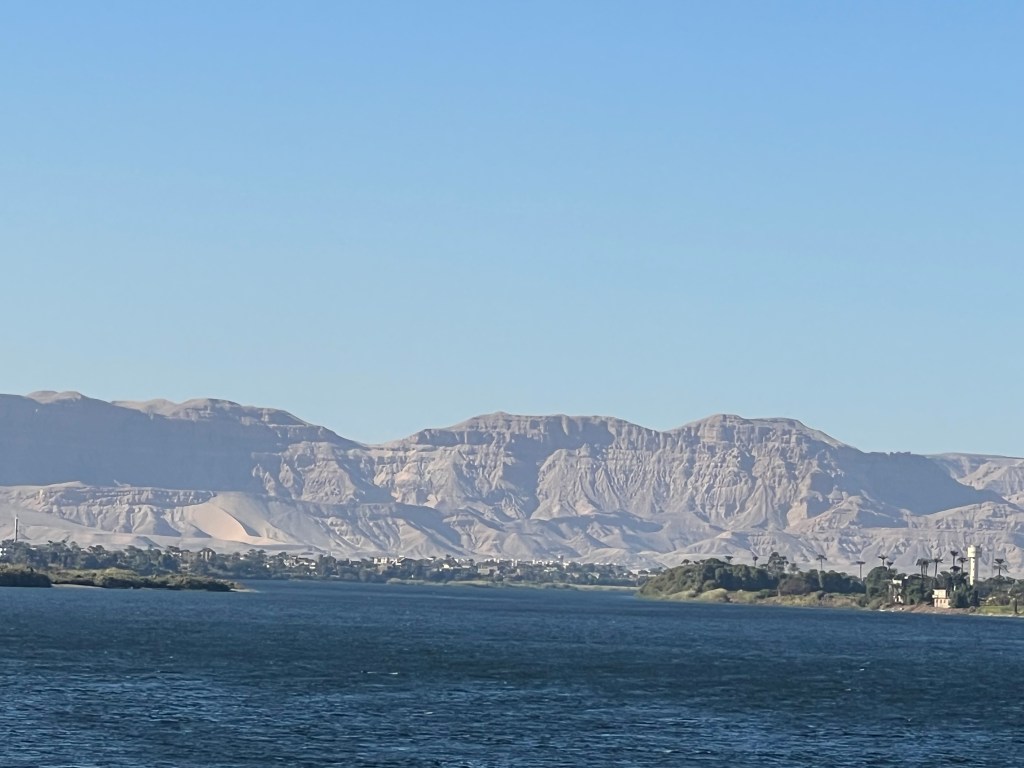
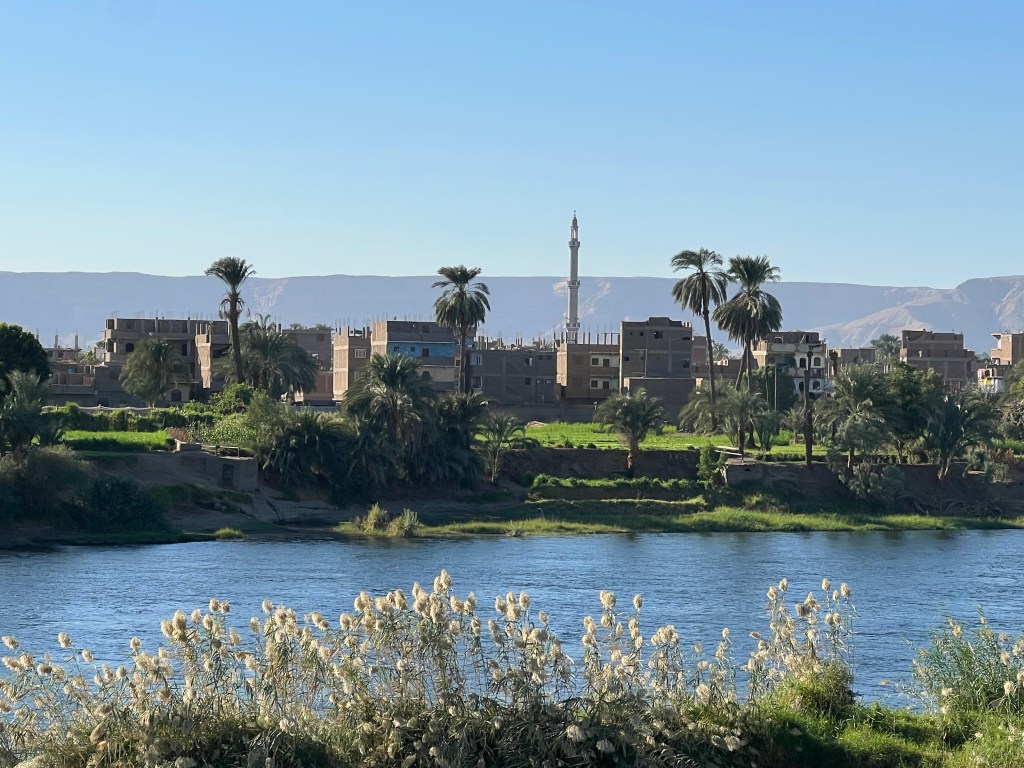
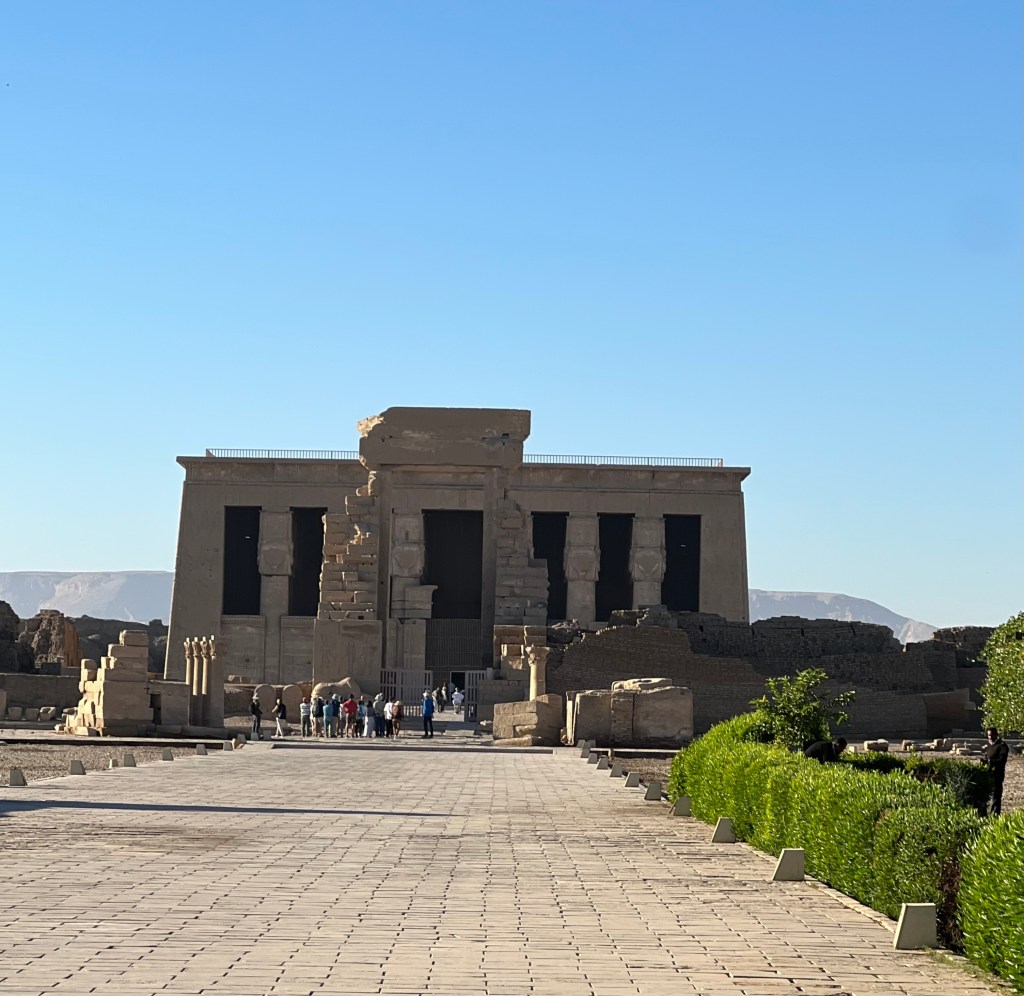

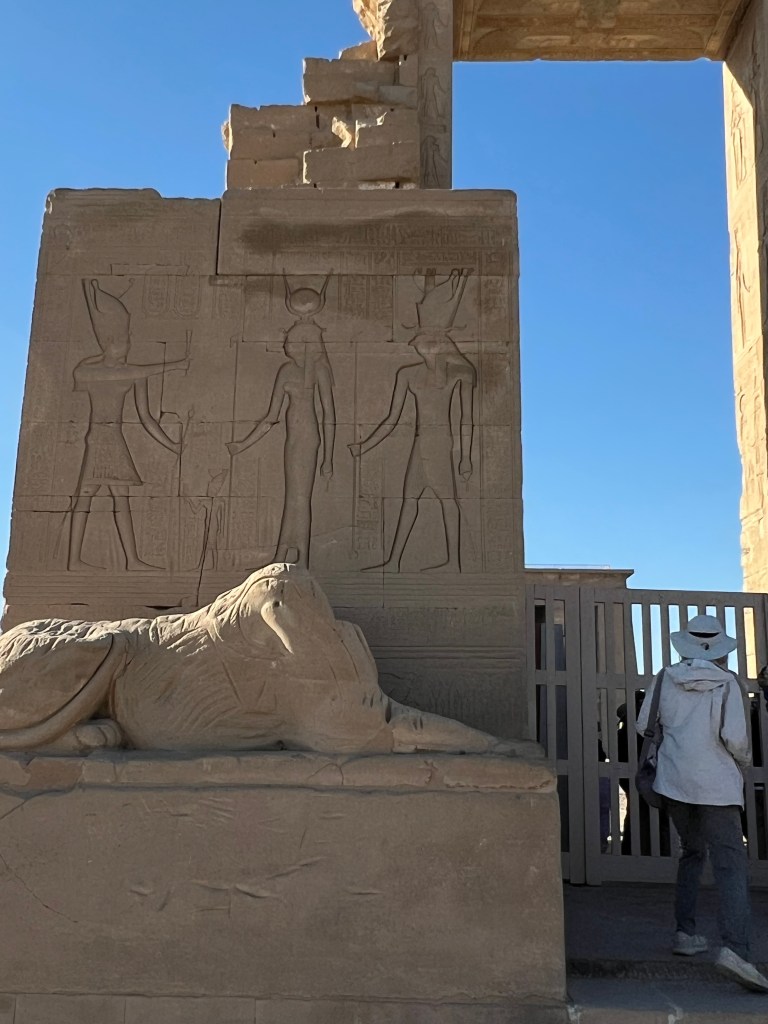
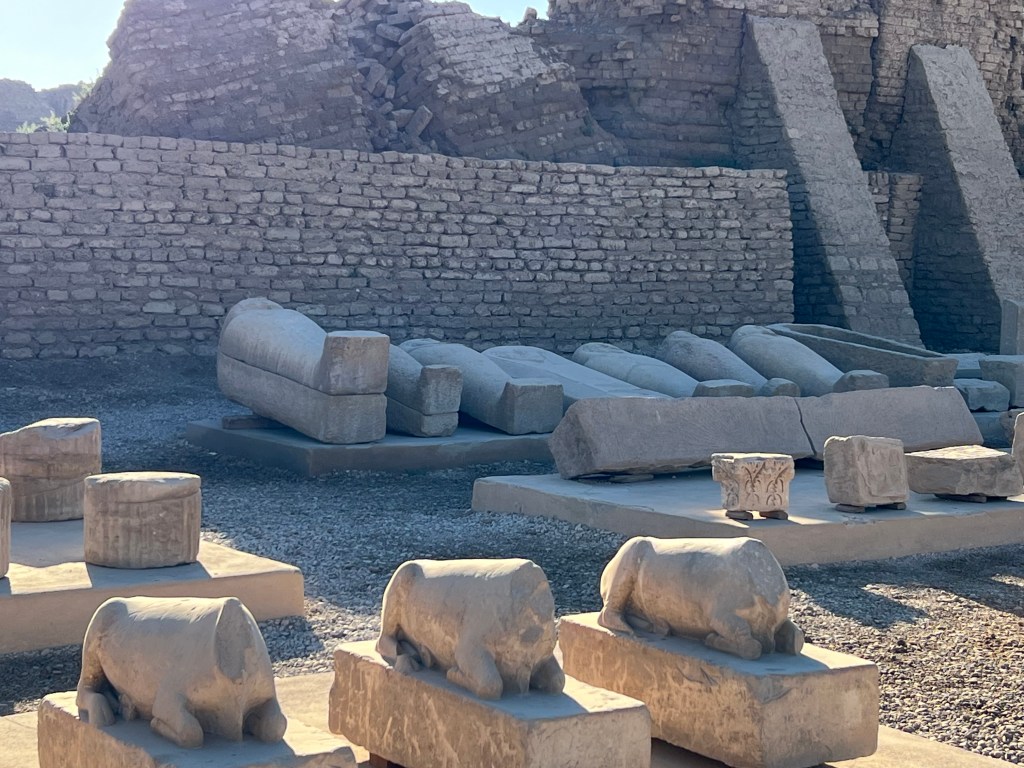


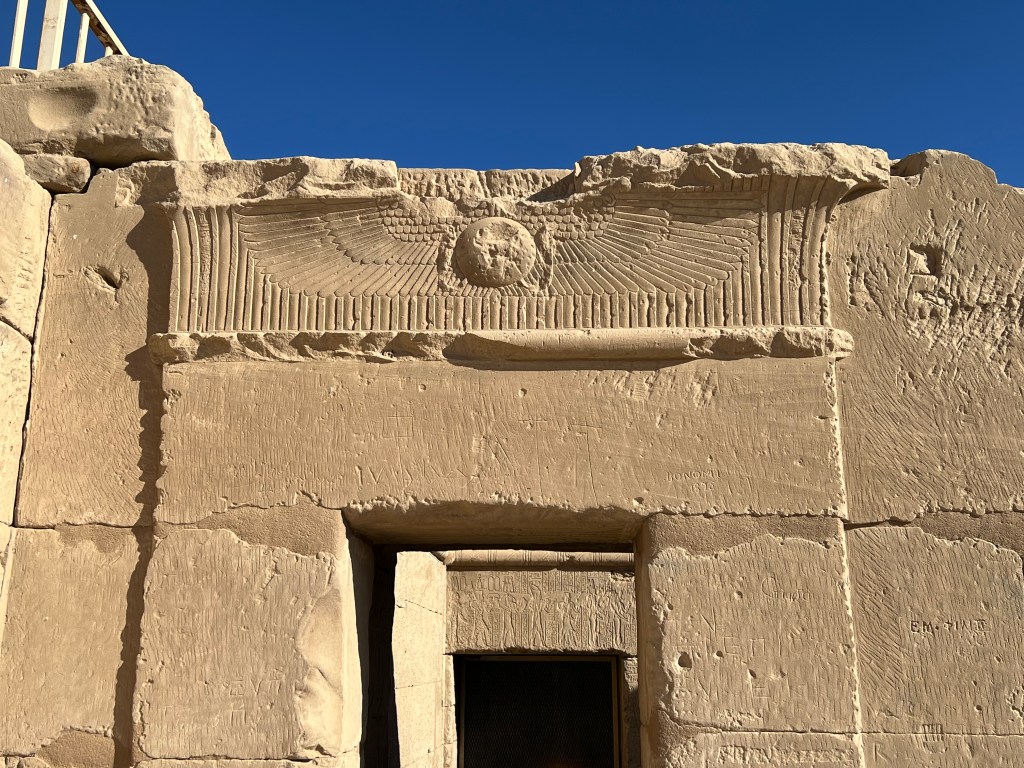
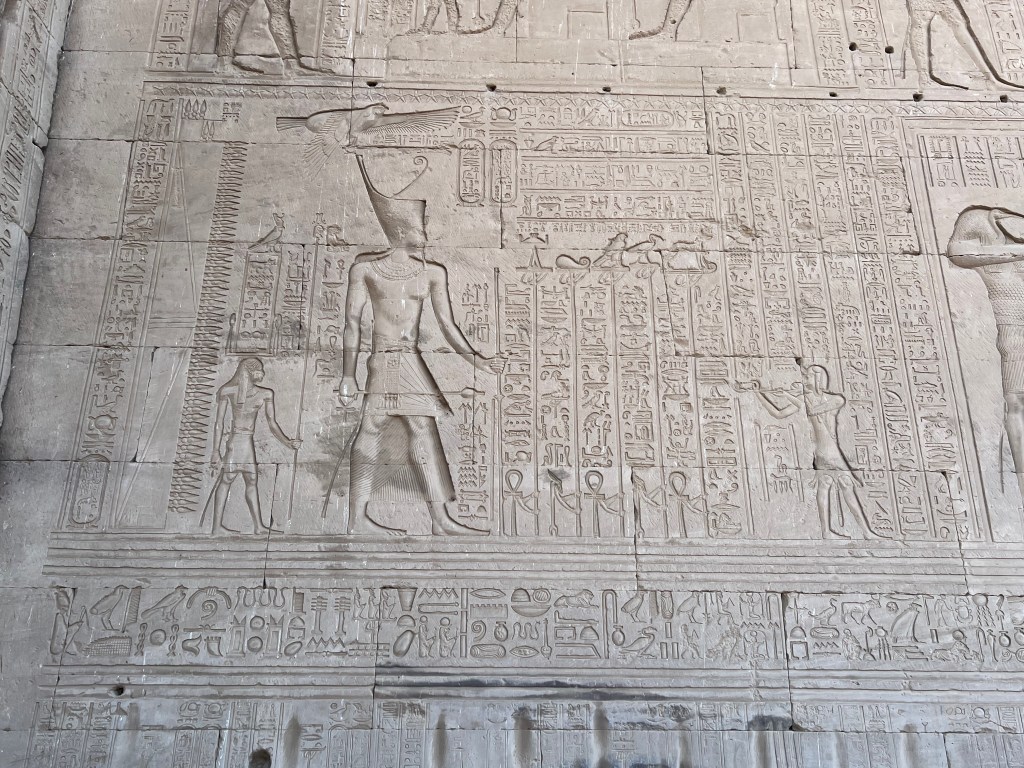
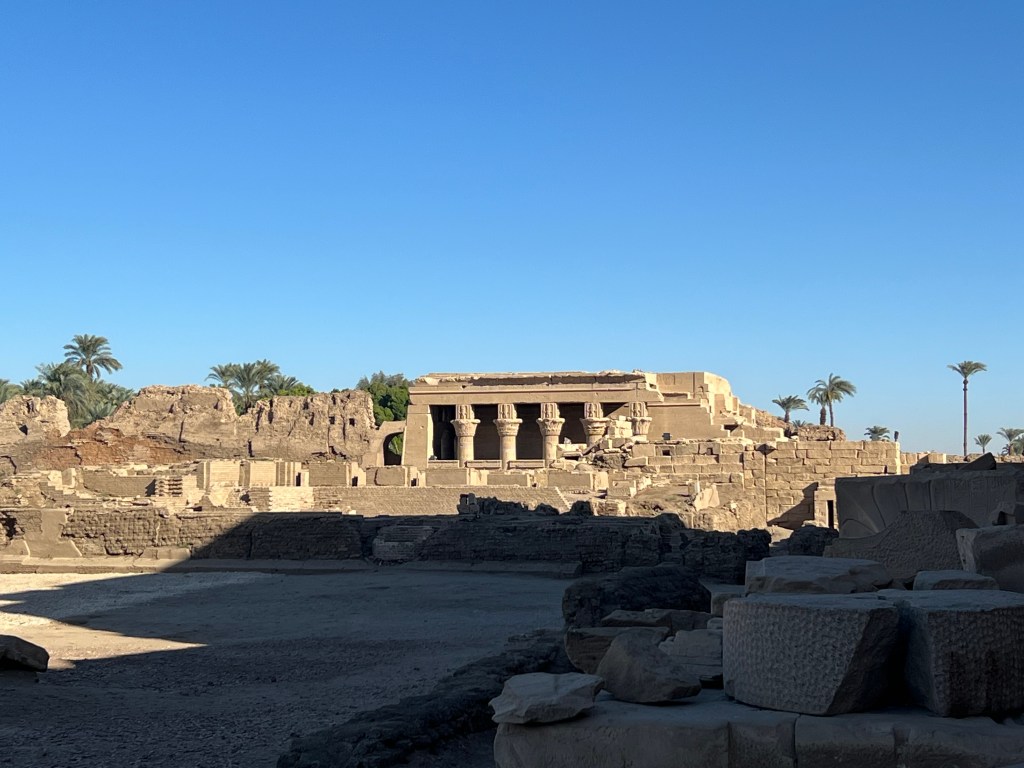

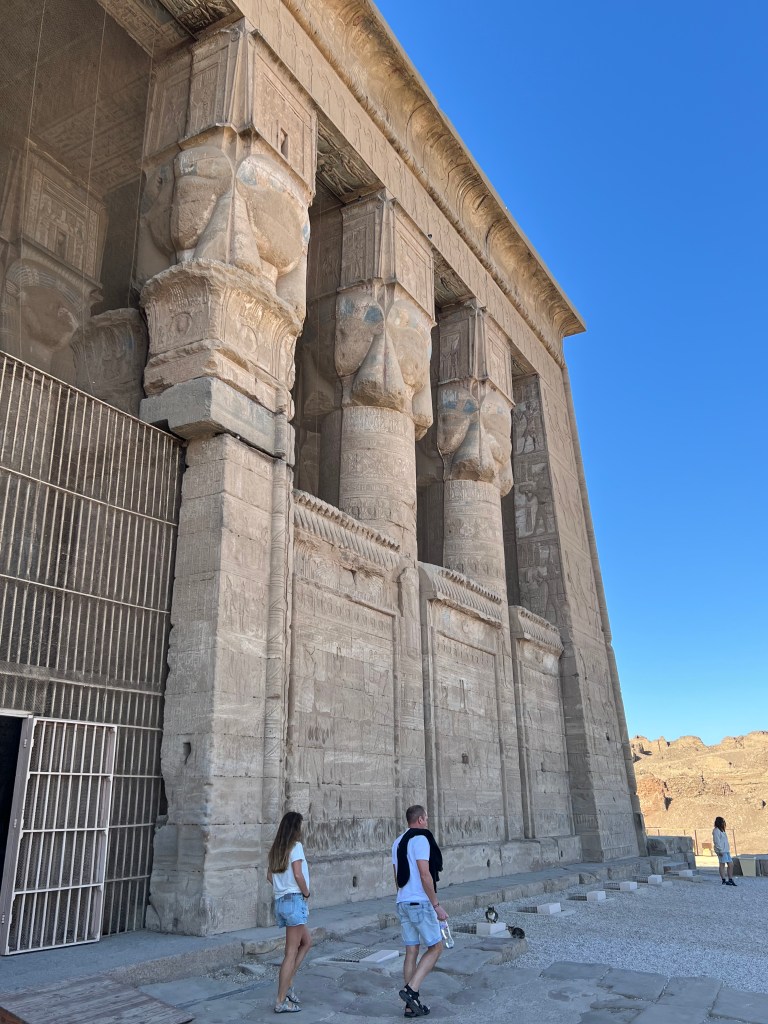
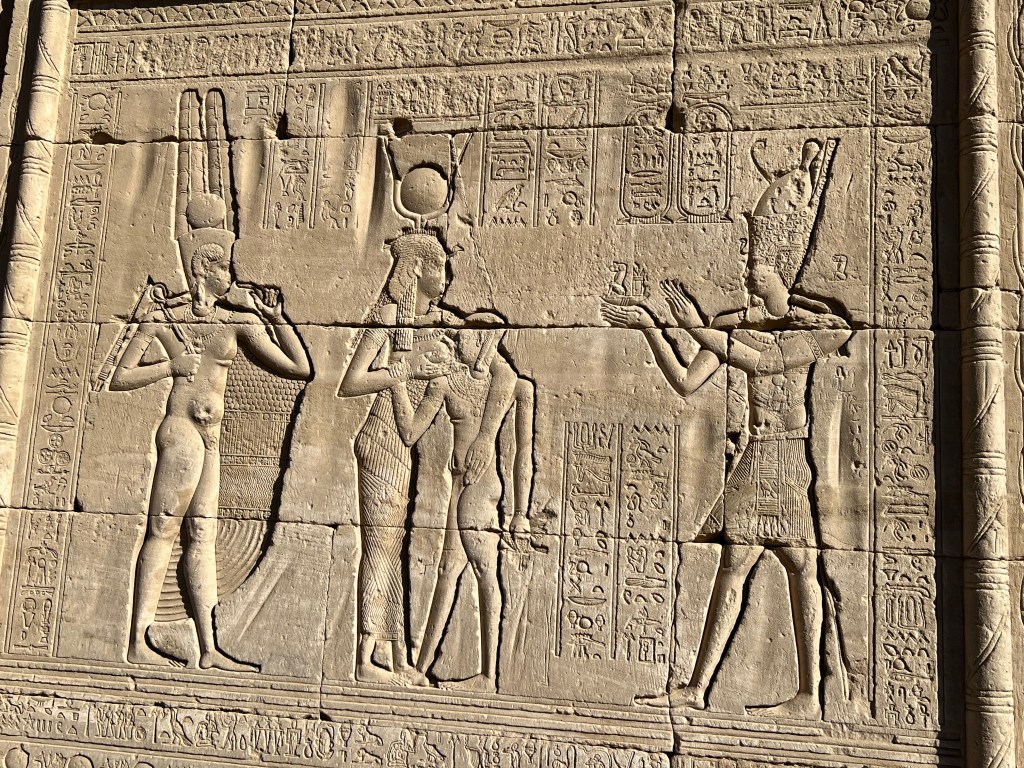

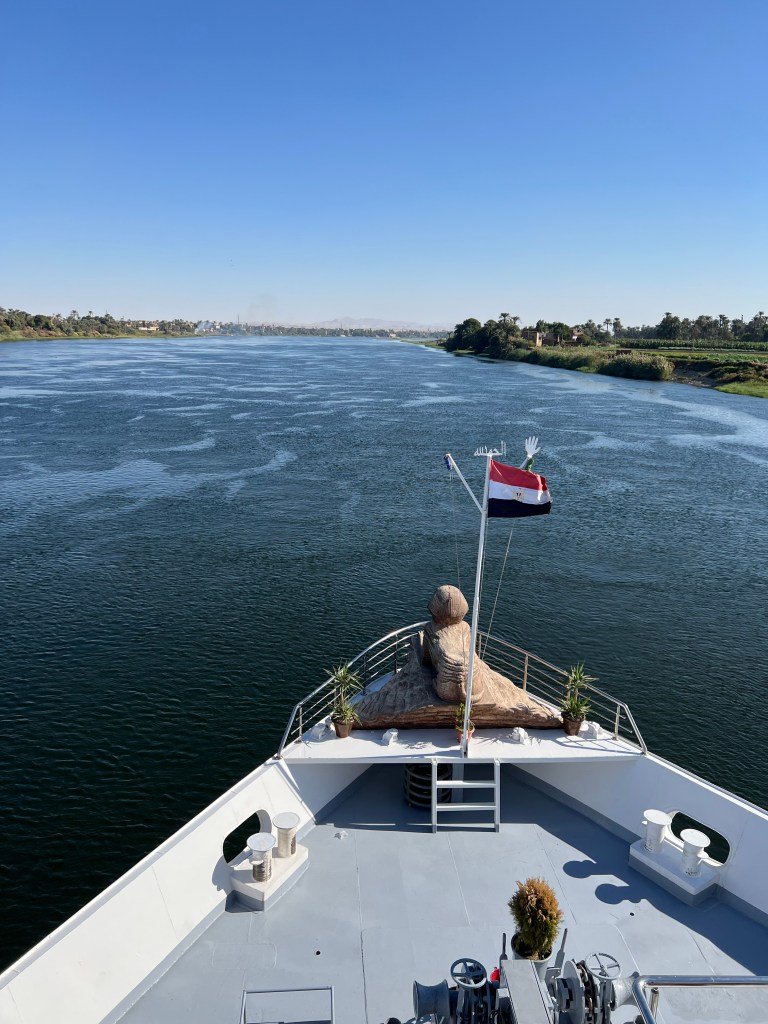
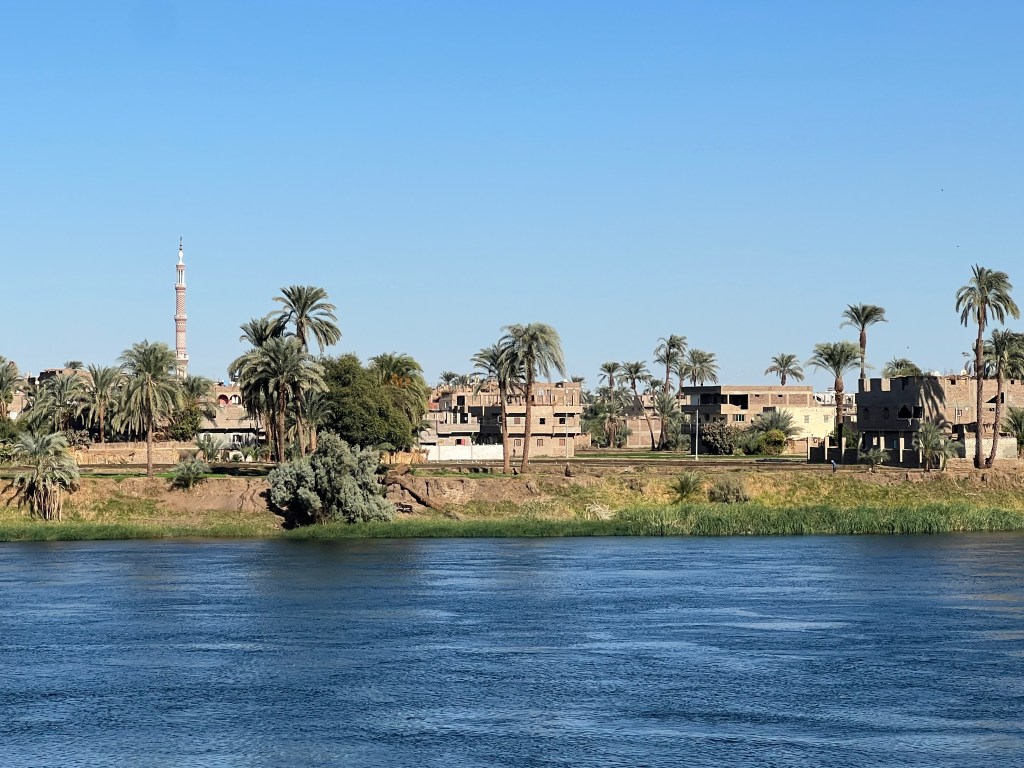
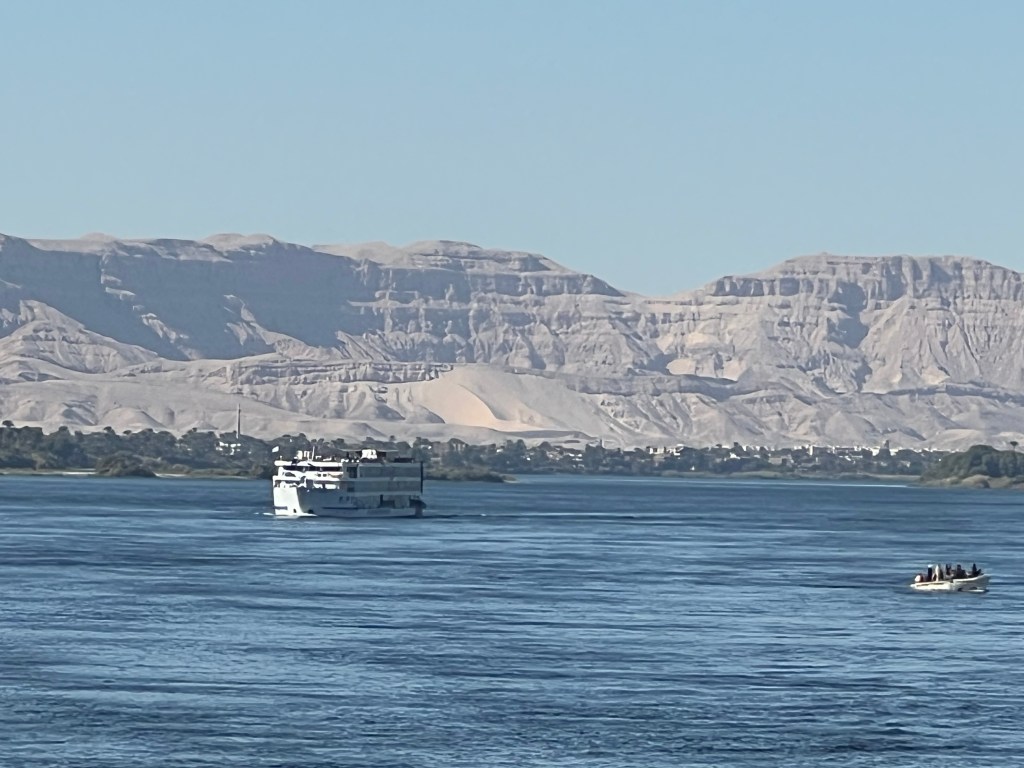
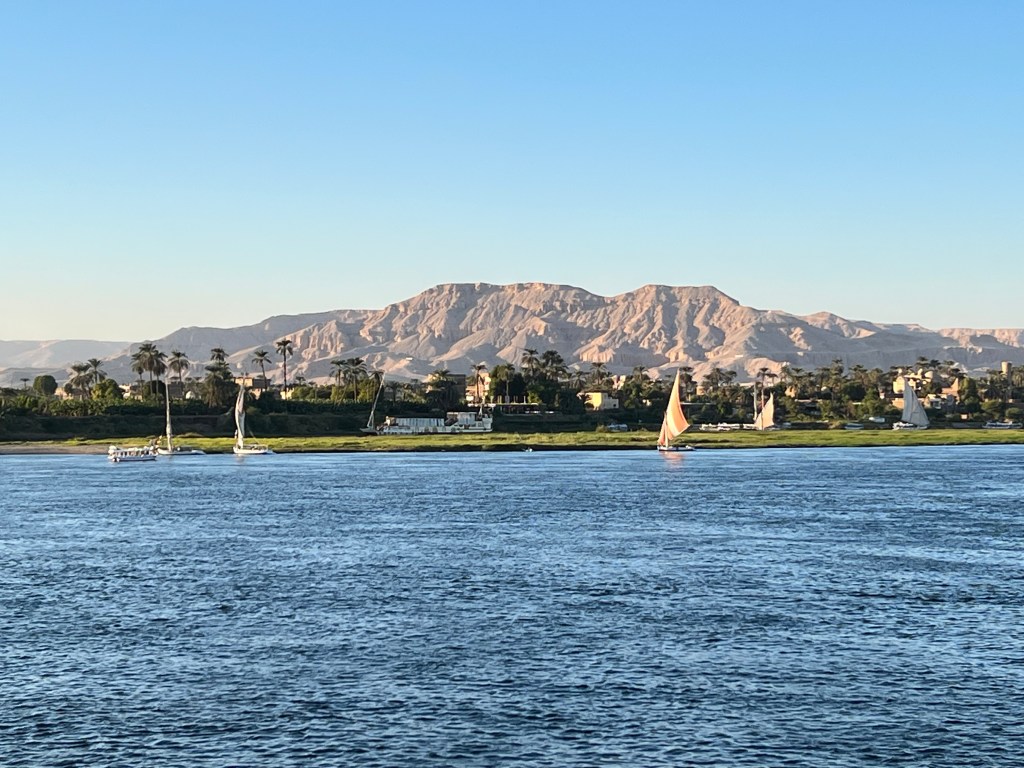

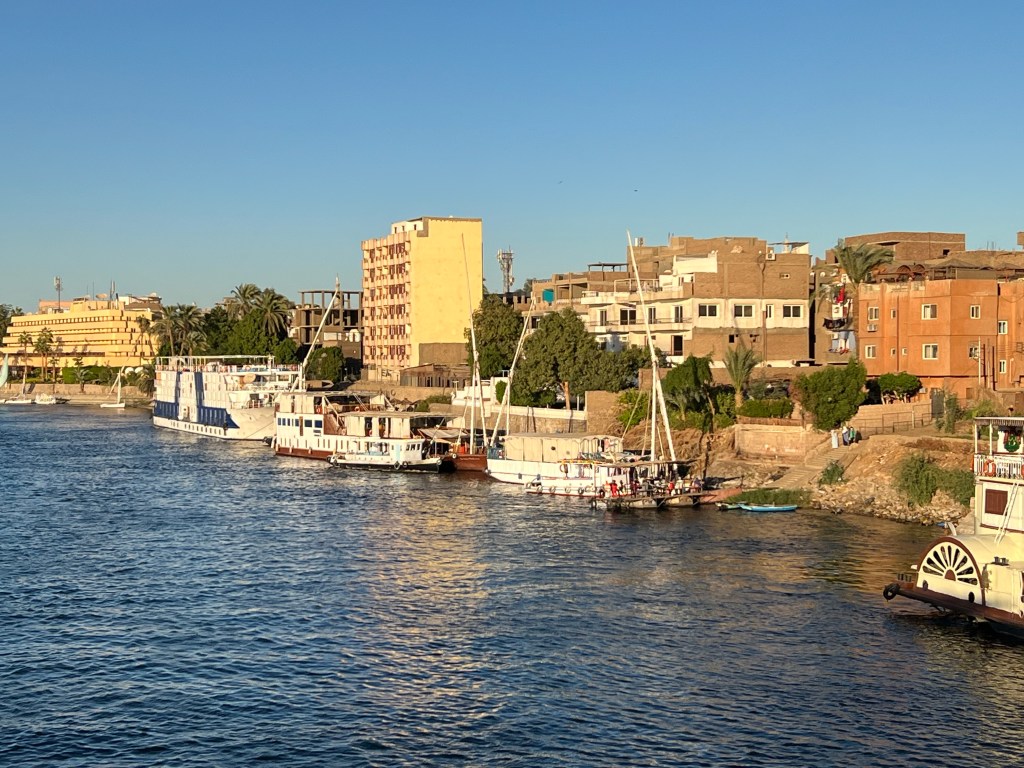


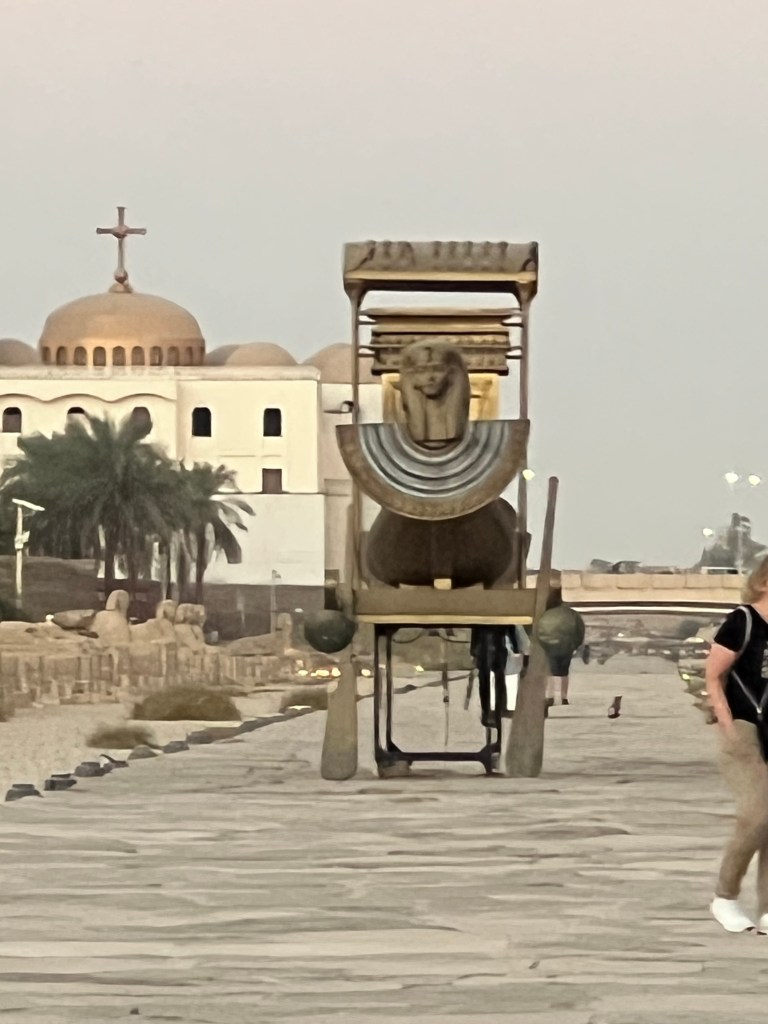

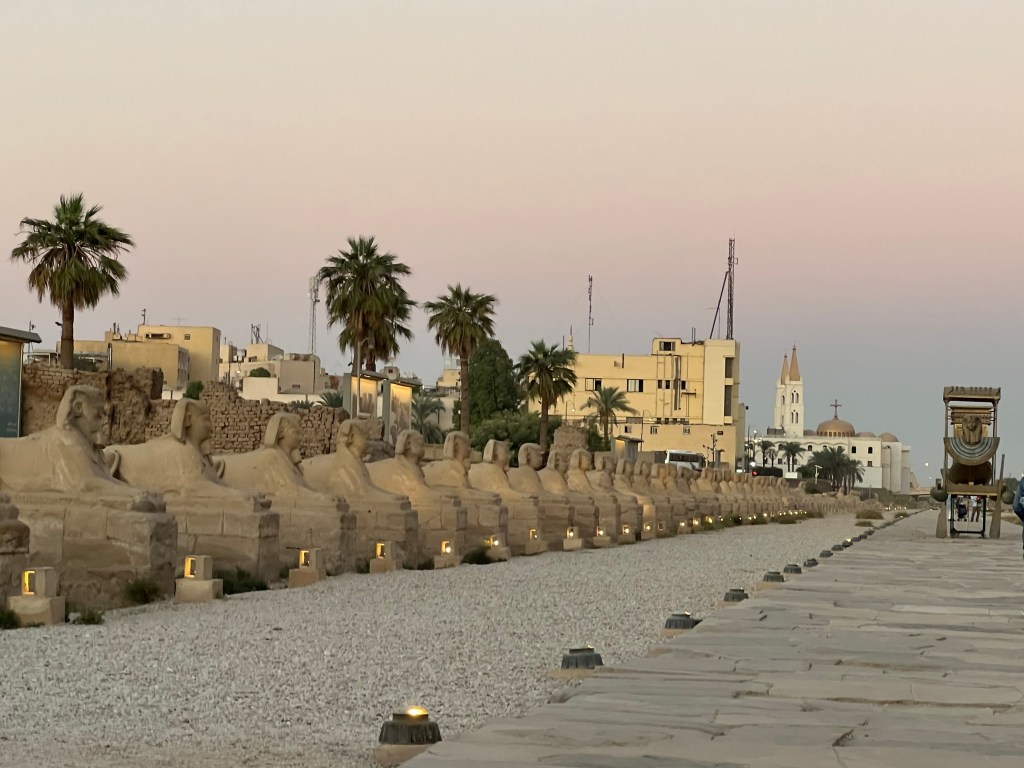

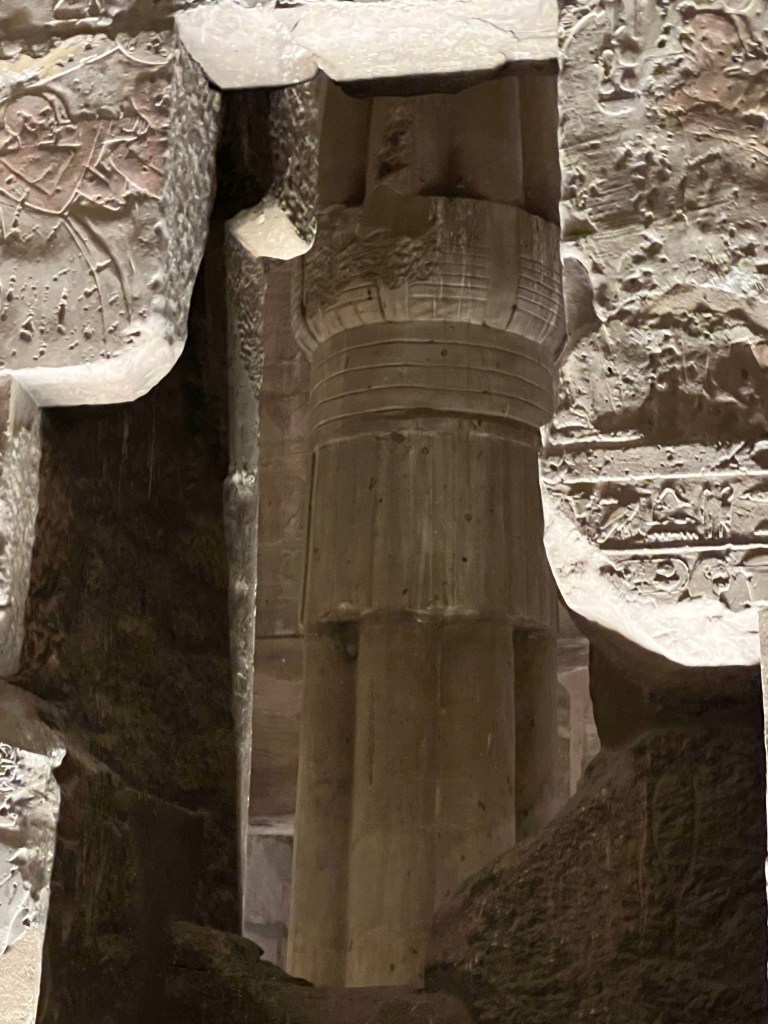
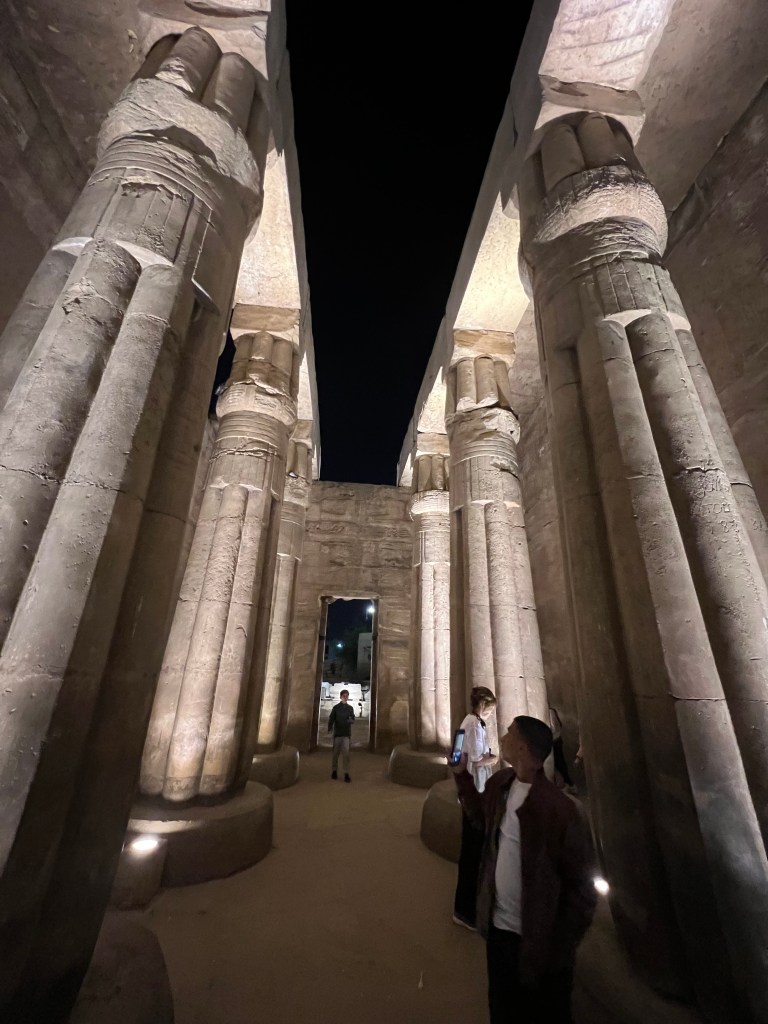

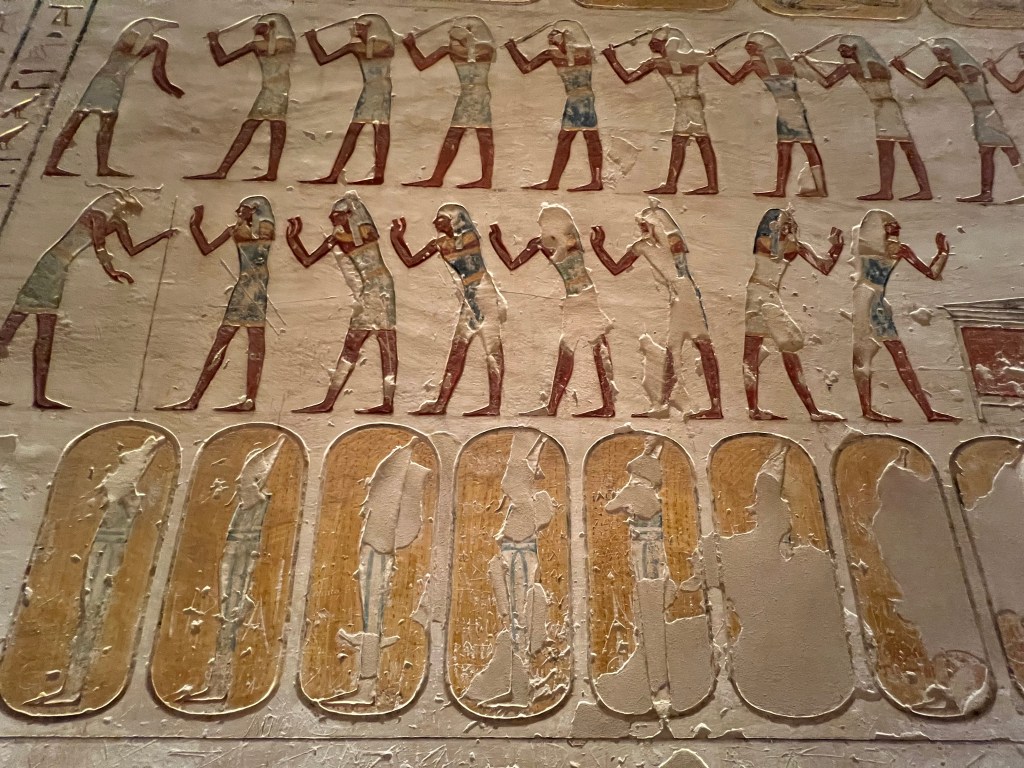
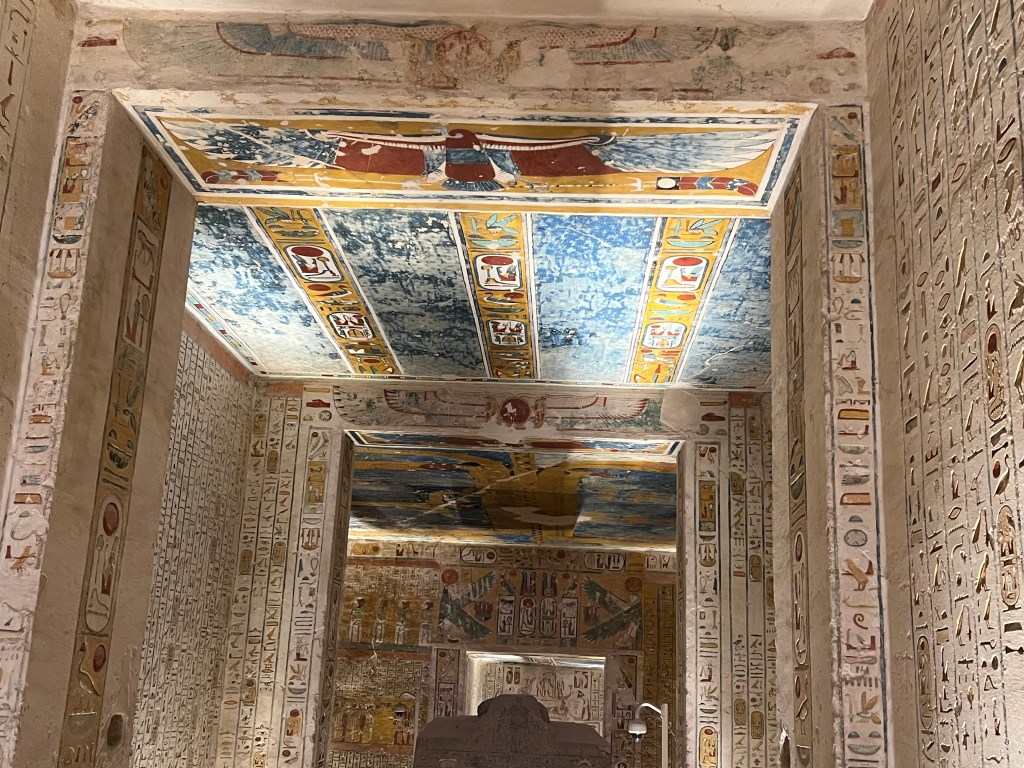
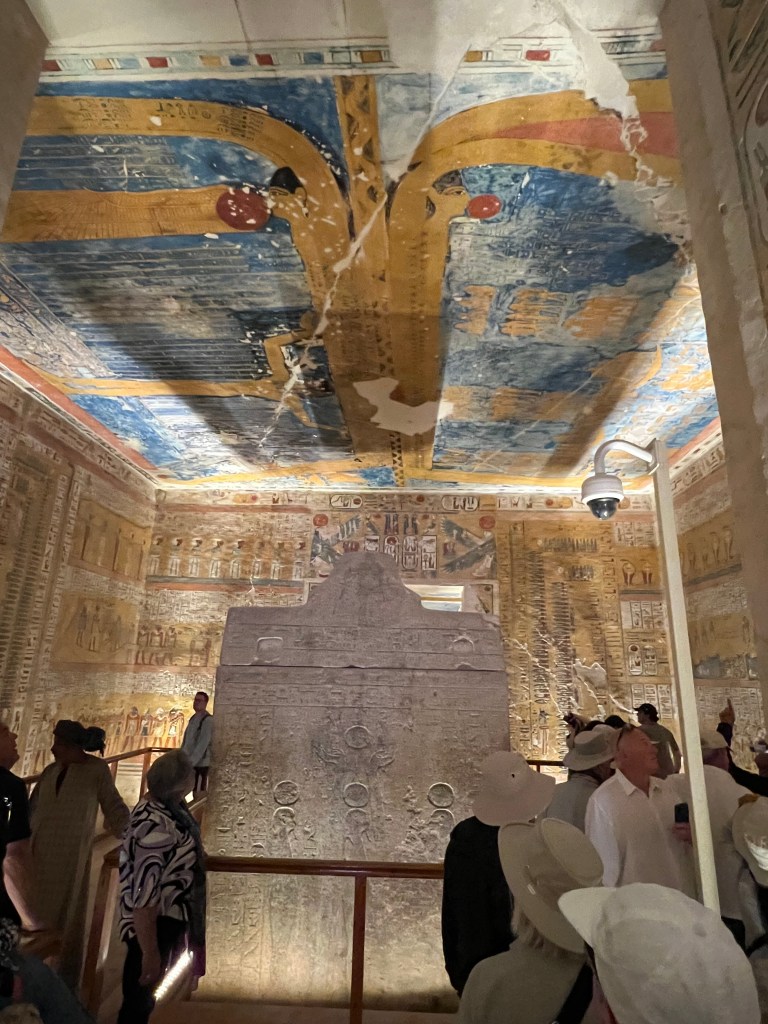
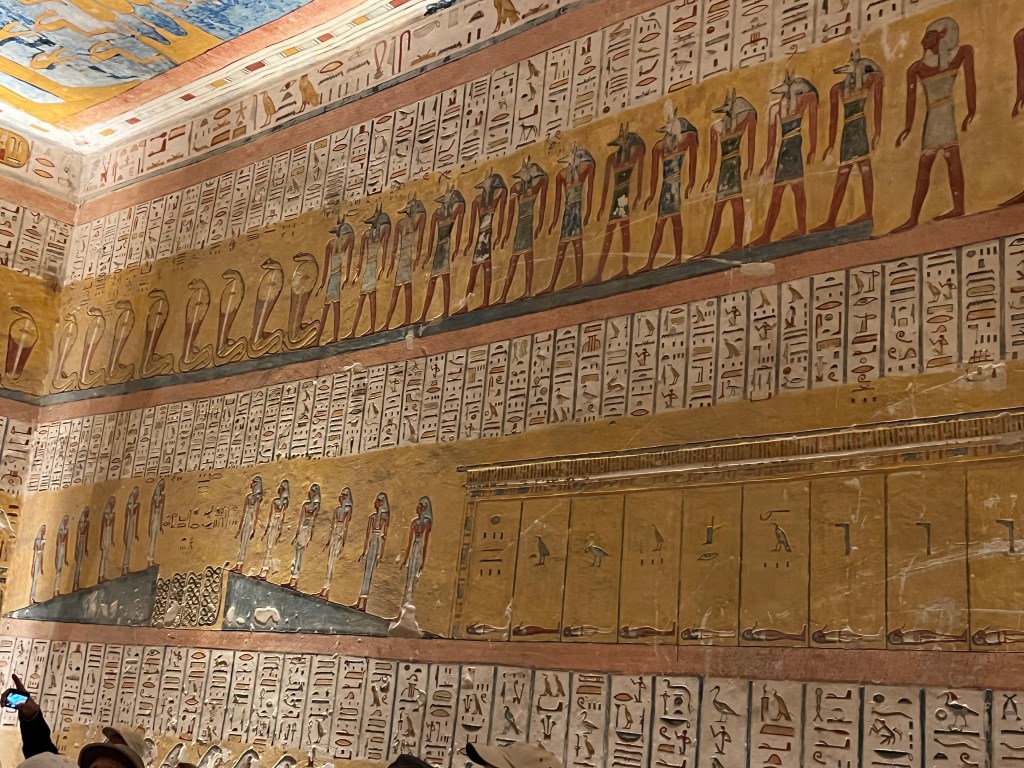
Day five we visited the Valley of the Kings, King Tut Ankh Amon’s tomb, the Hatshepsut Temple and Colossi of Memnon, before cruising on to Kom Ombo. In the evening they held a Galabeya Party, where we were treated to Egyptian music and encouraged to dress in the traditional garments worn there. It was an excellent way to get to know our fellow passengers as everyone relaxed and danced.
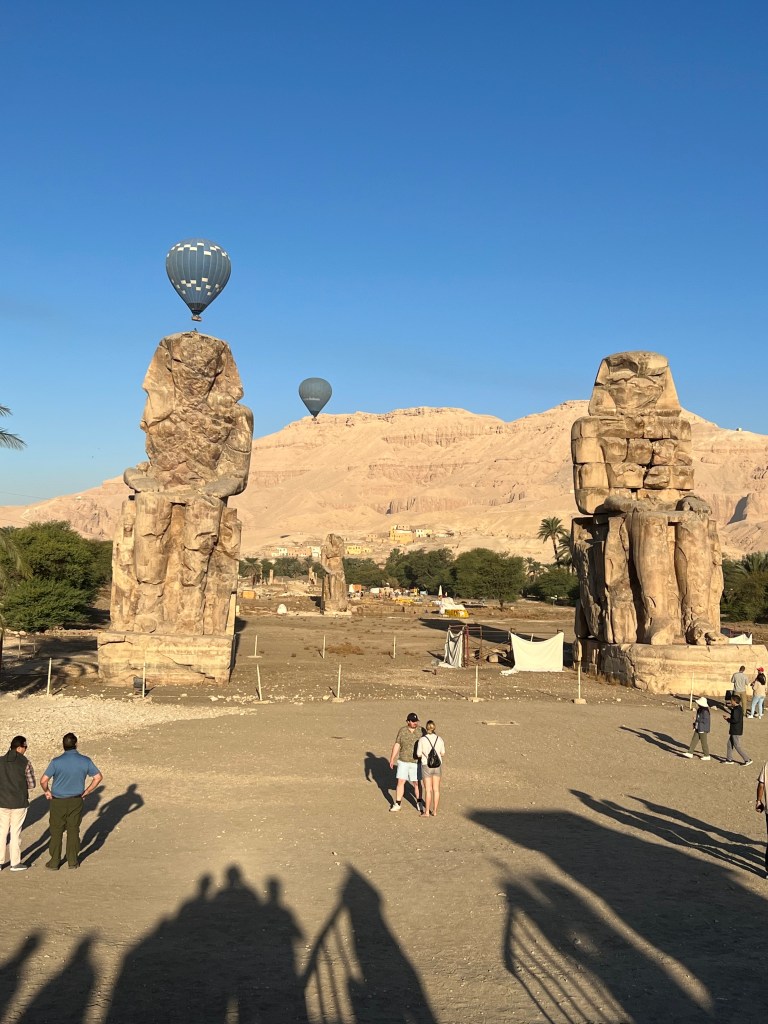
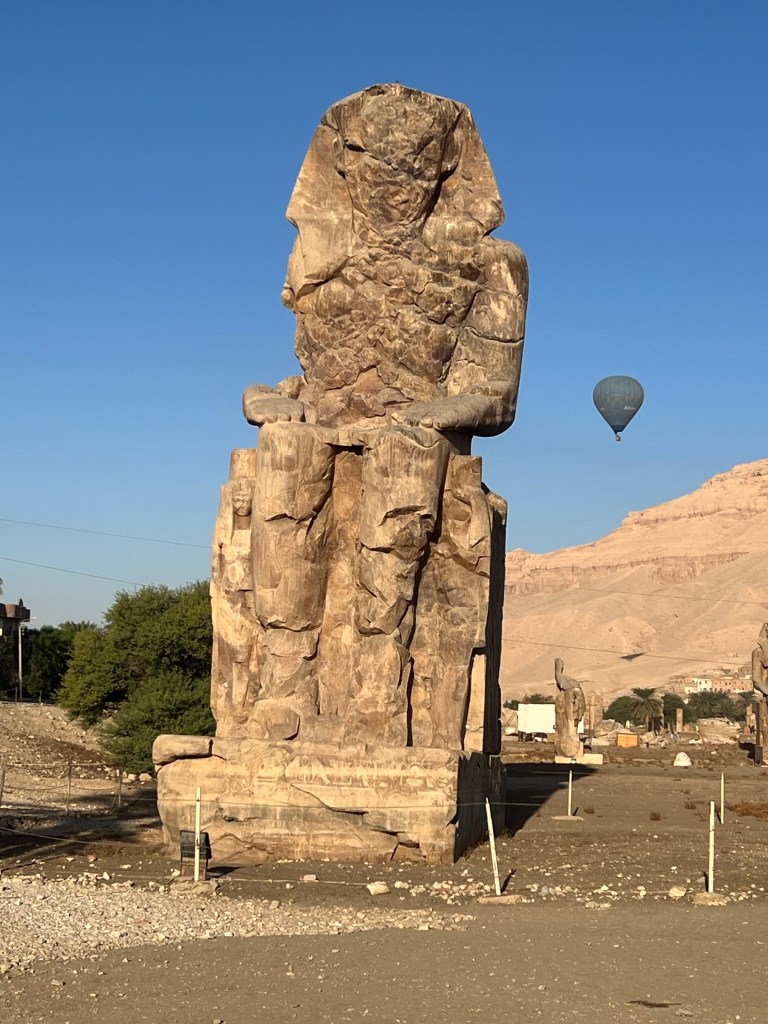
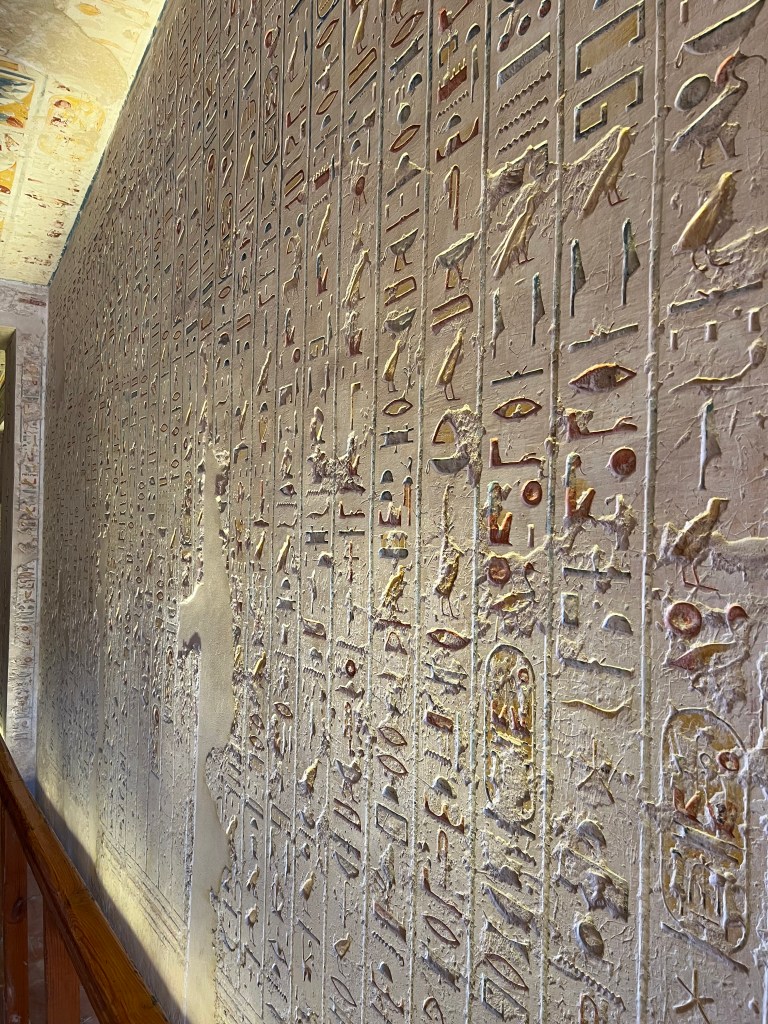
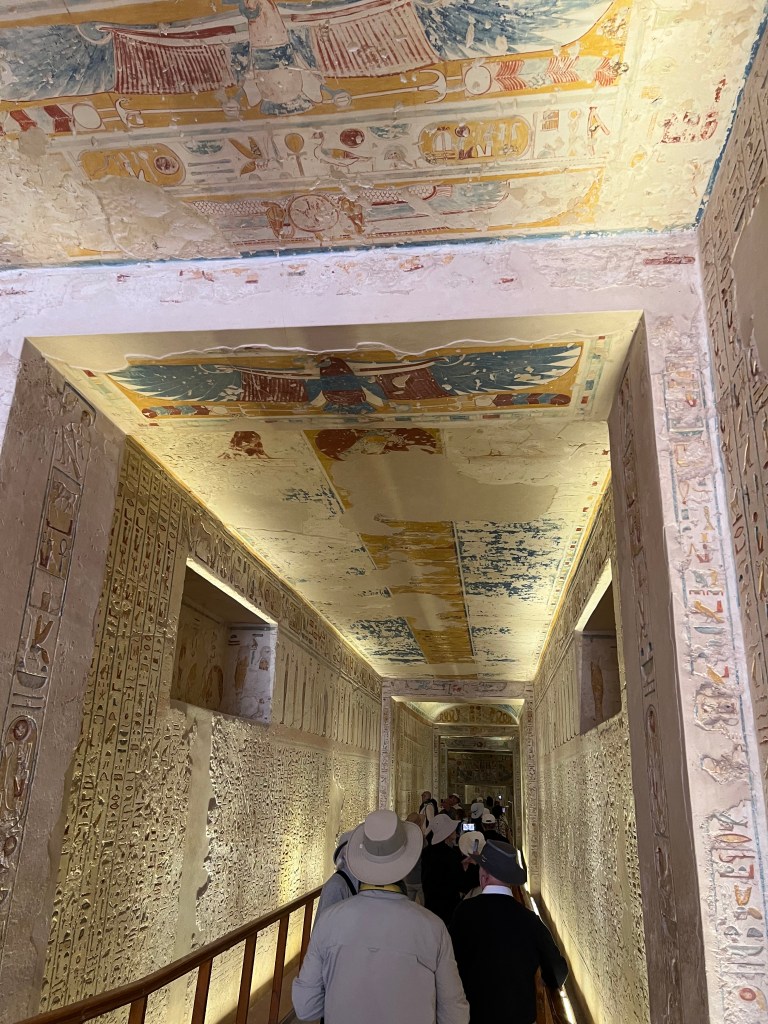
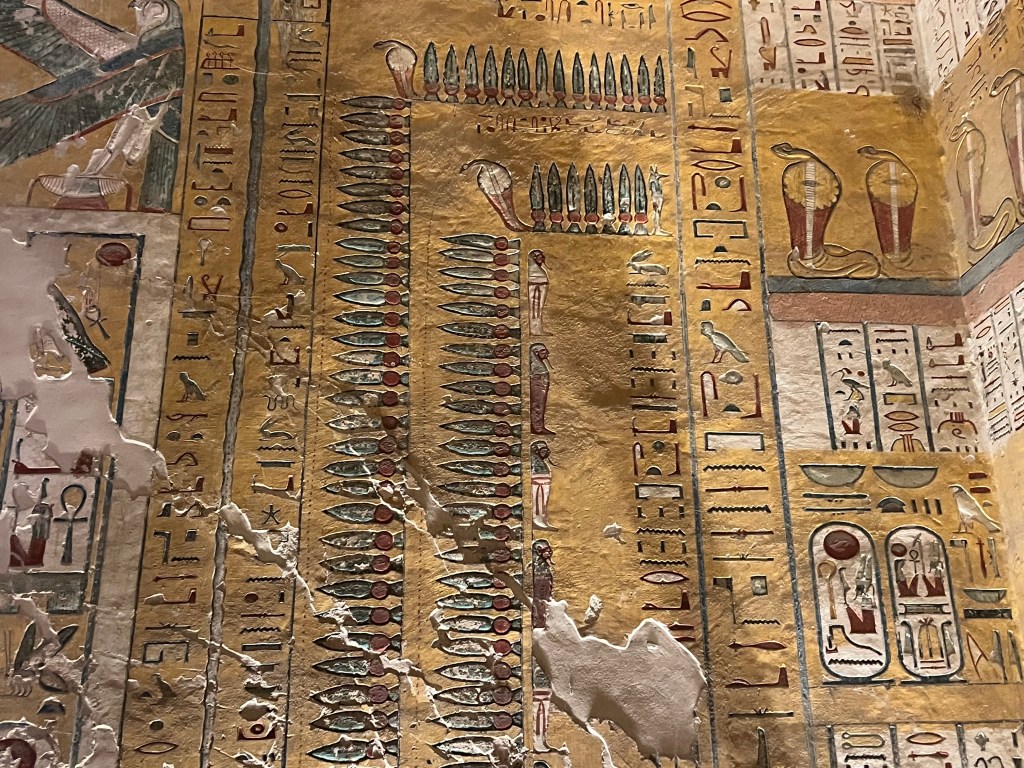
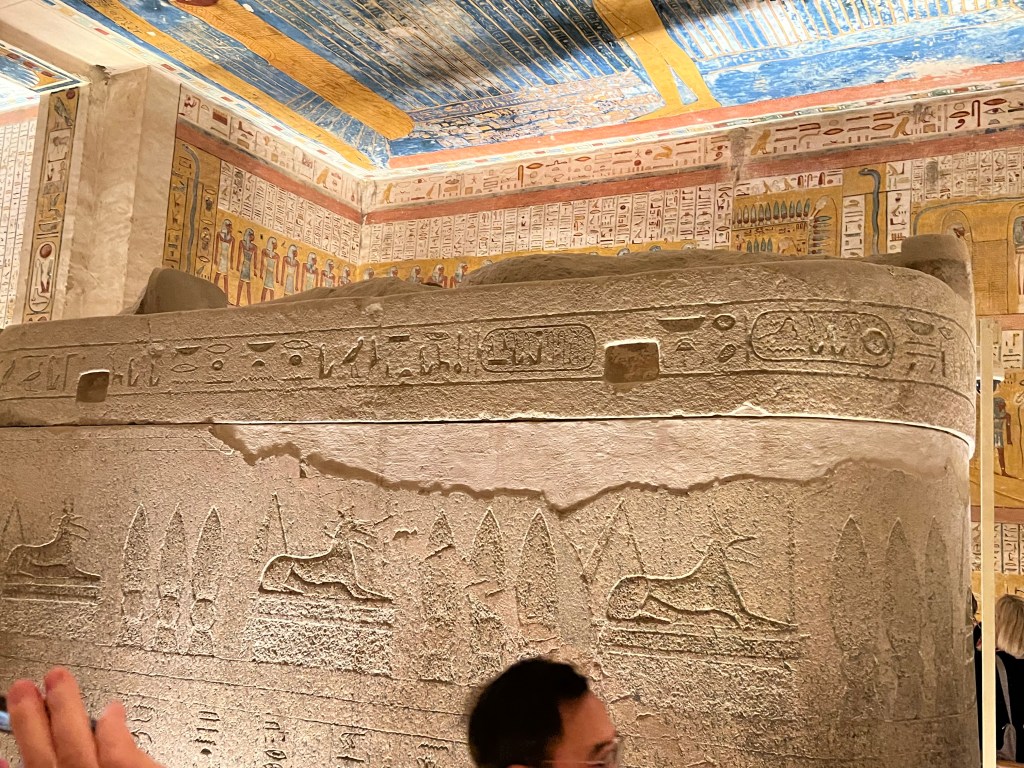


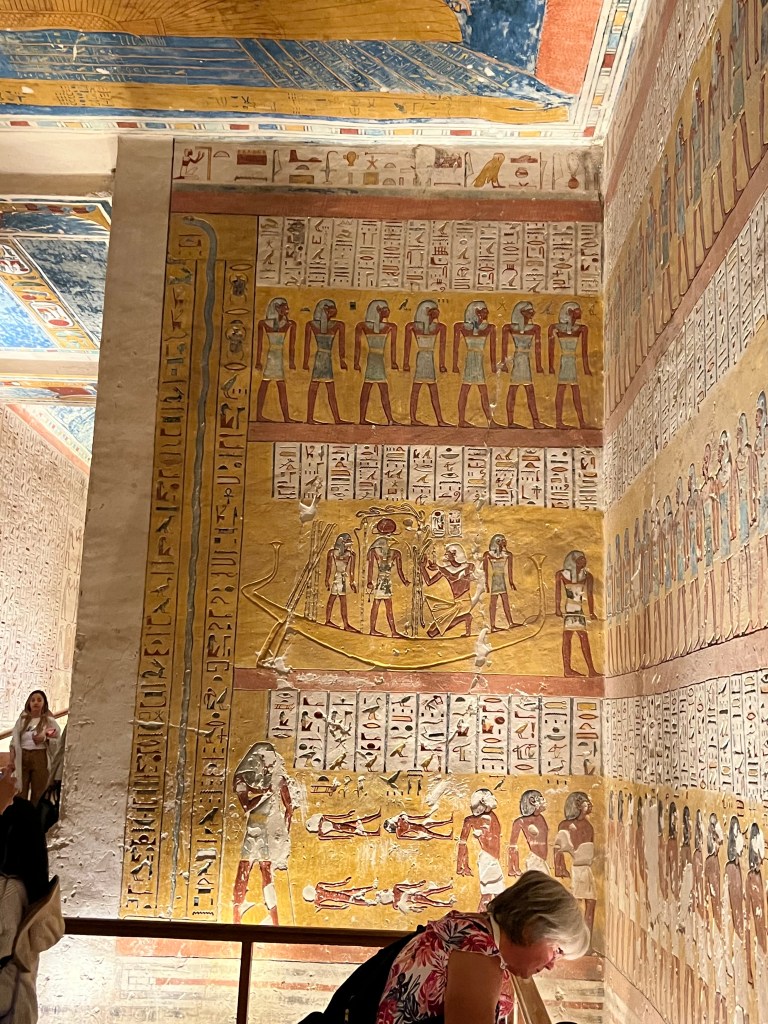

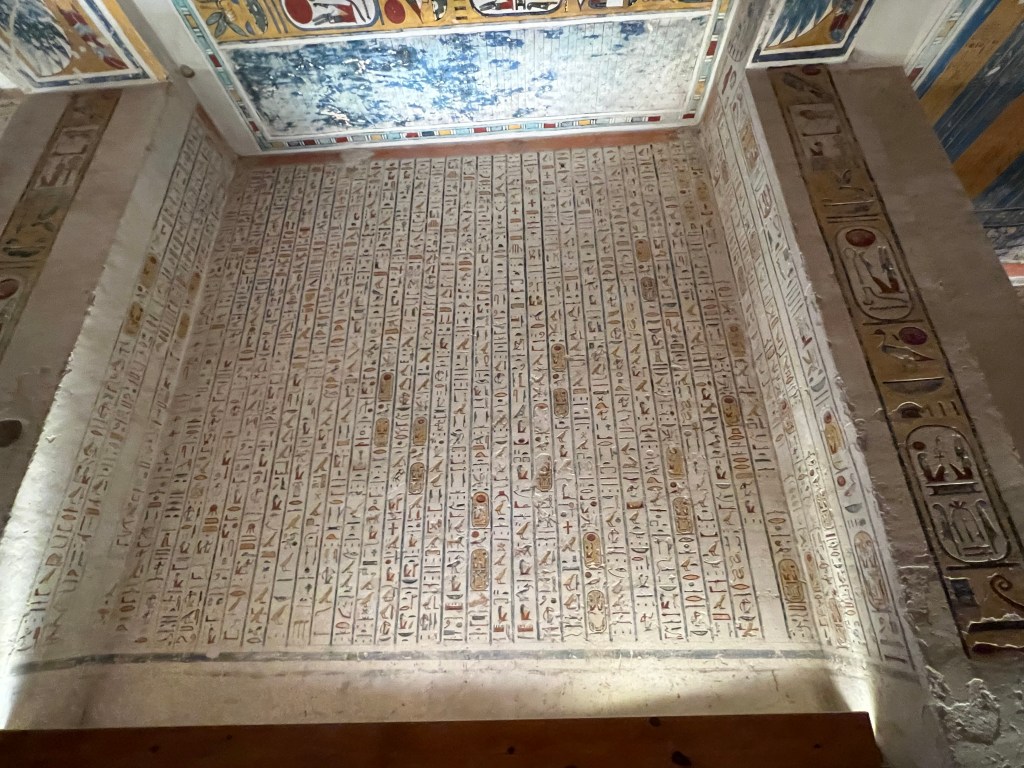
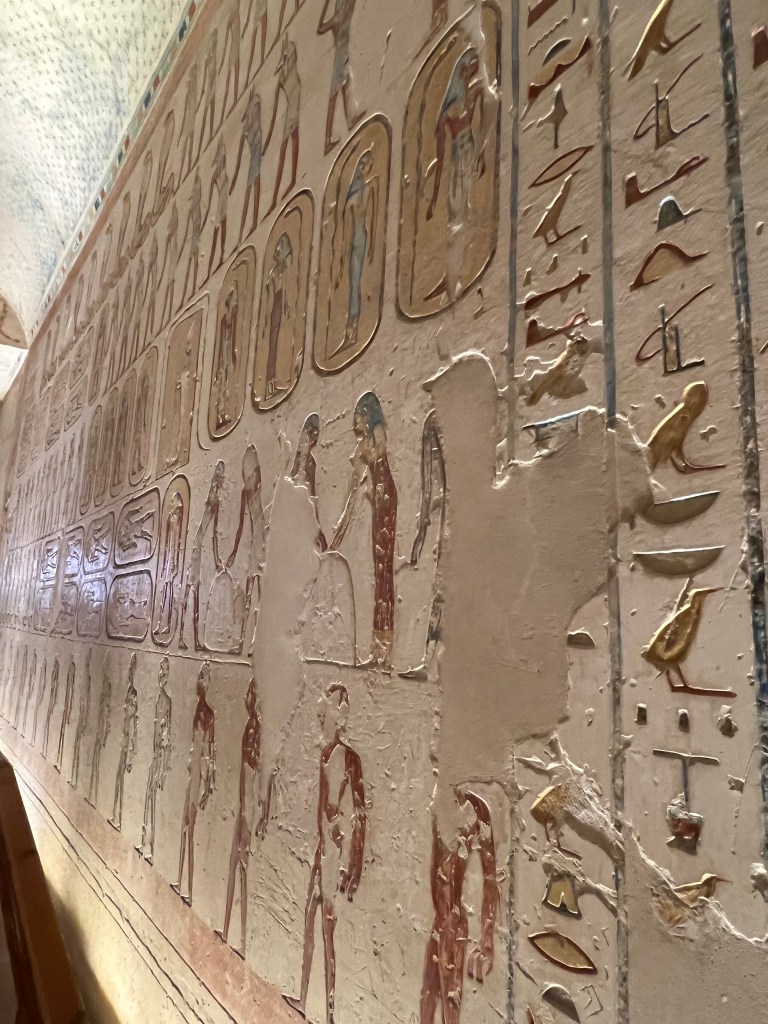
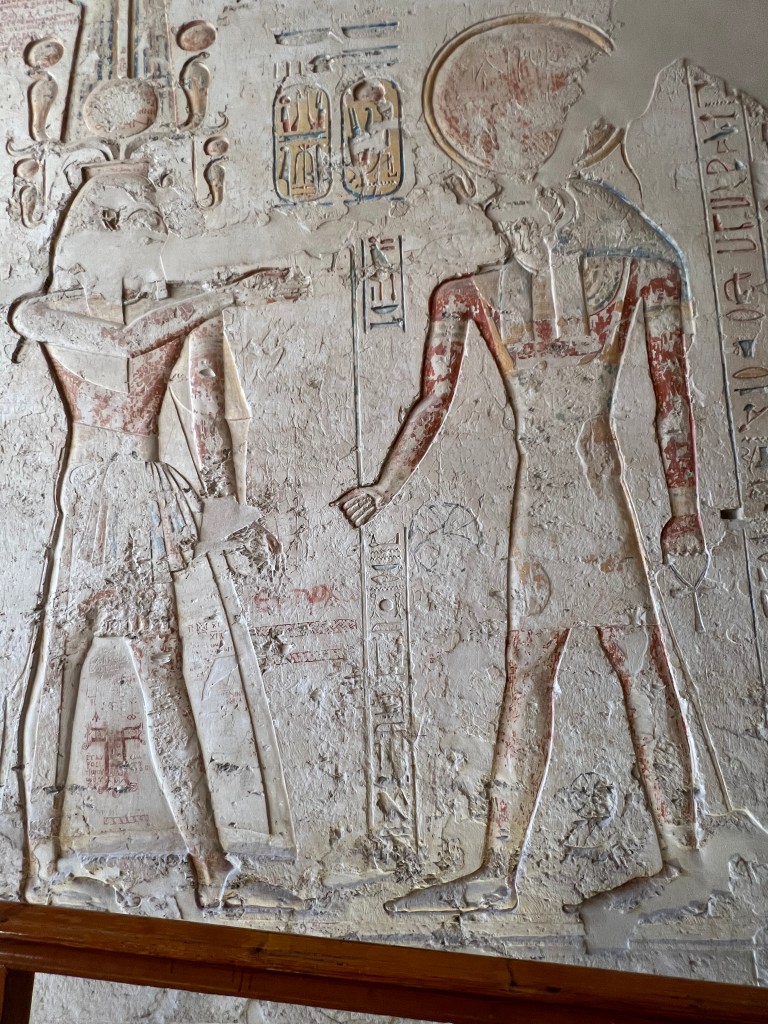

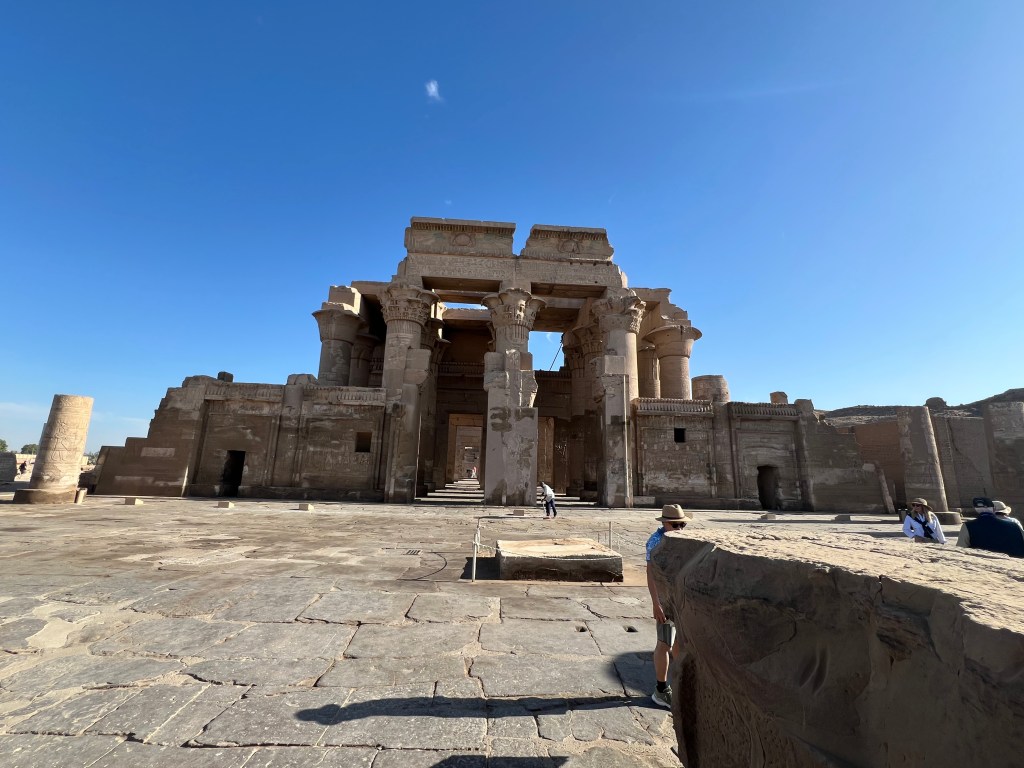
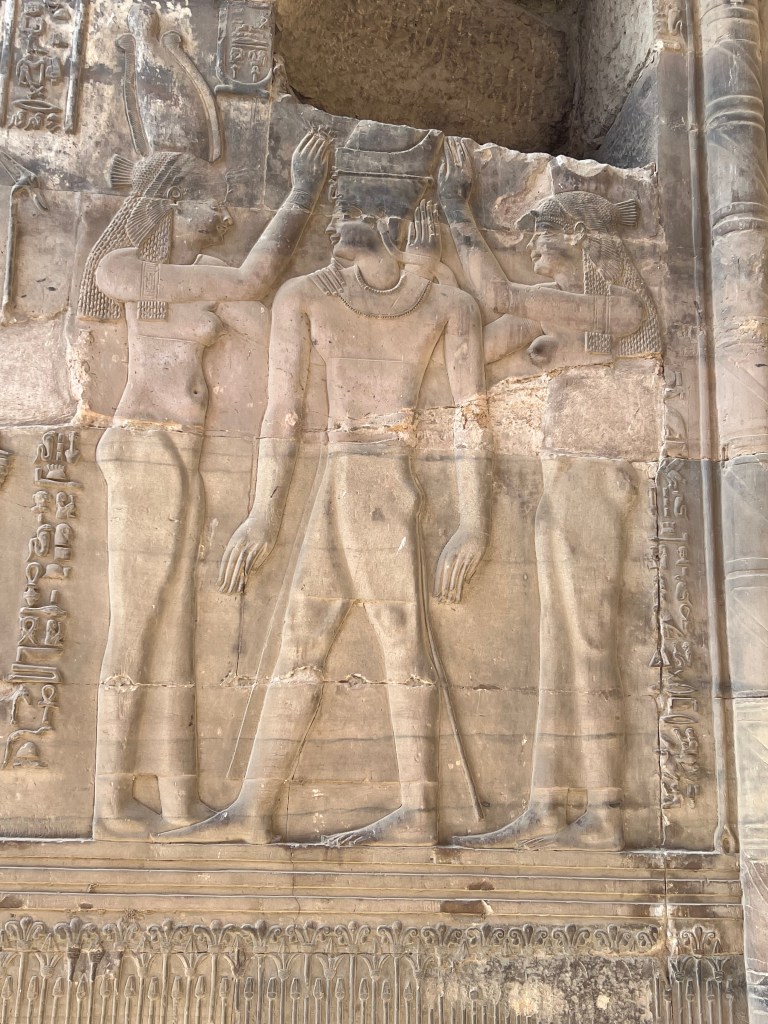
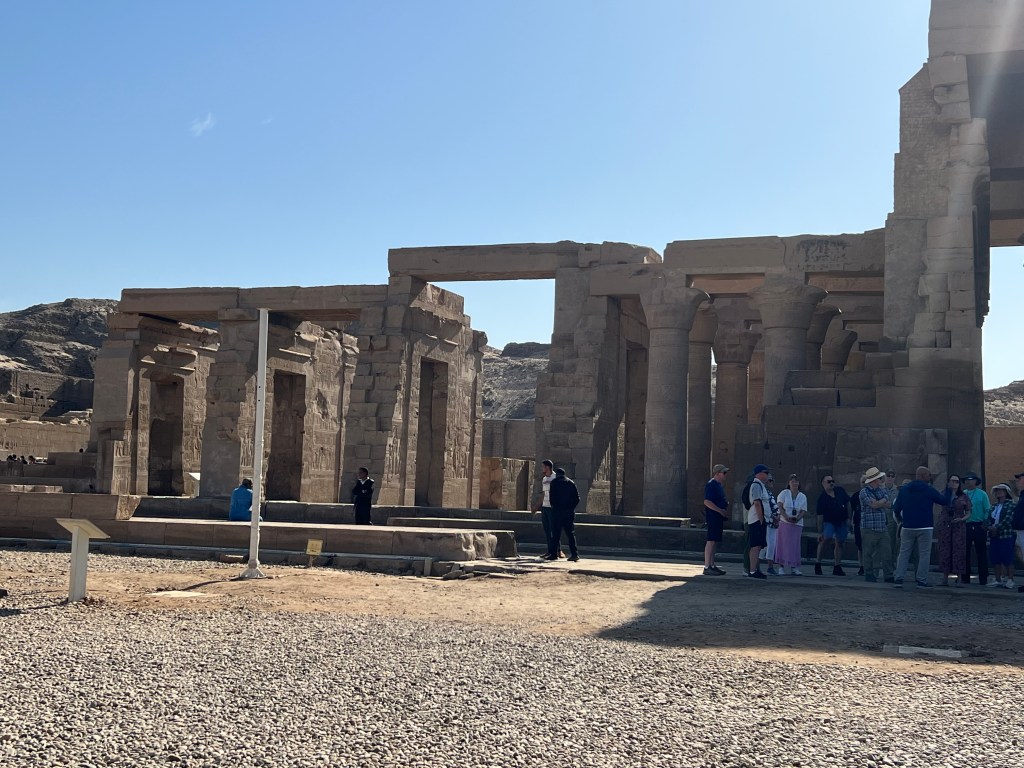
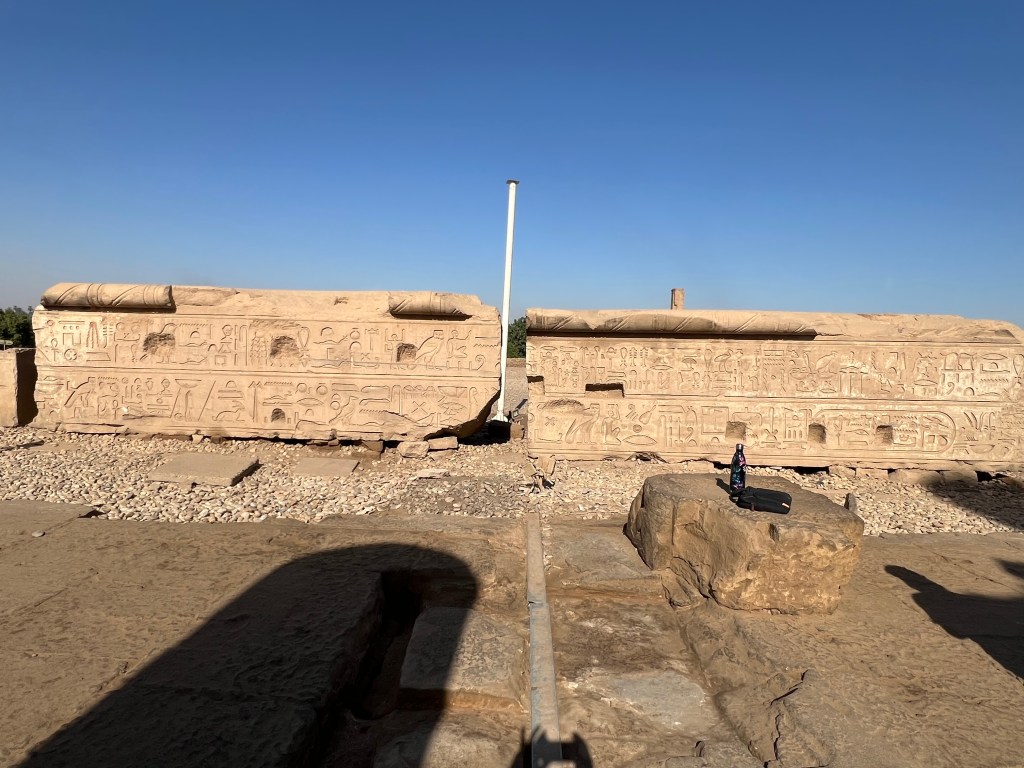
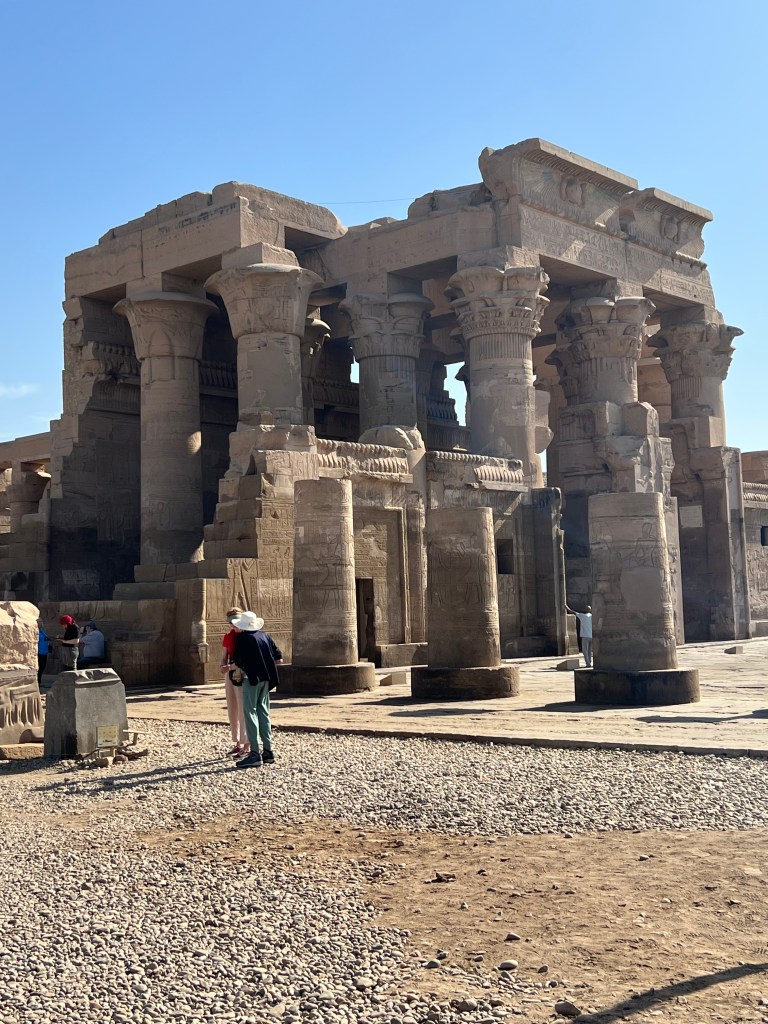
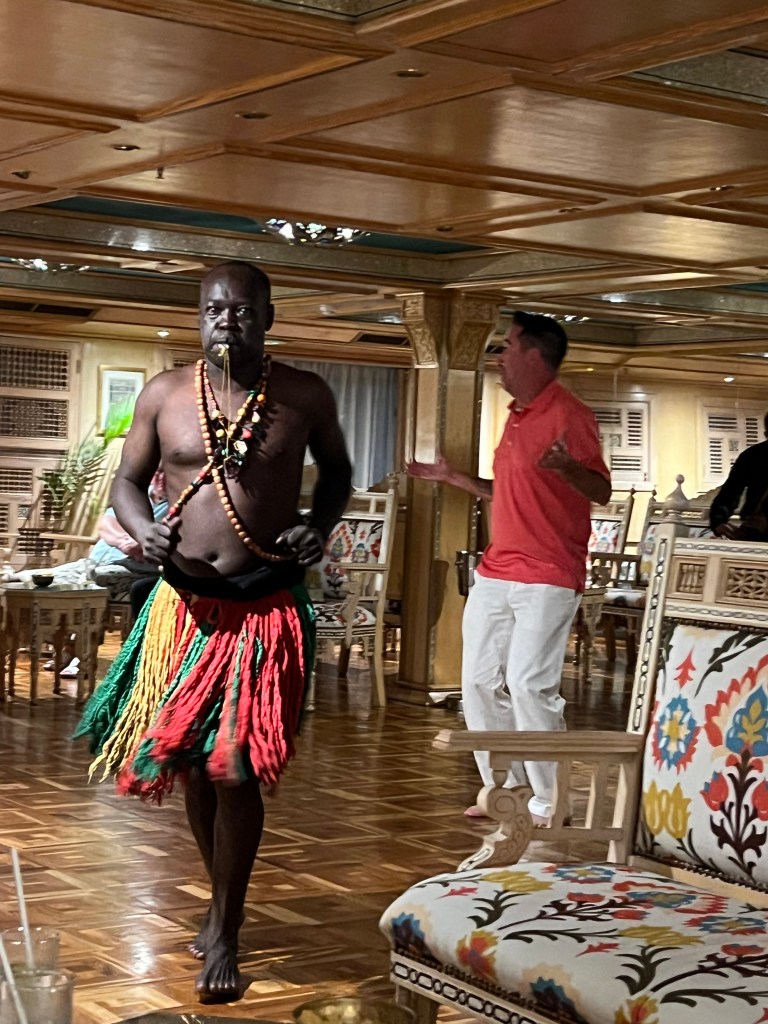
Day six, we visited the Kom Ombo temple and cruised to Aswan. A bird watching boat ride tour was scheduled but G and I wanted to relax so we hung out on the sundeck to enjoy the scenery and read. Then we made the mistake of taking a nap and missed the next trip to the old Cateract Hotel; quite famous and beautiful. It was the first of two things I missed and regretted. The evening show involved a local Nubian troupe who performed for us.
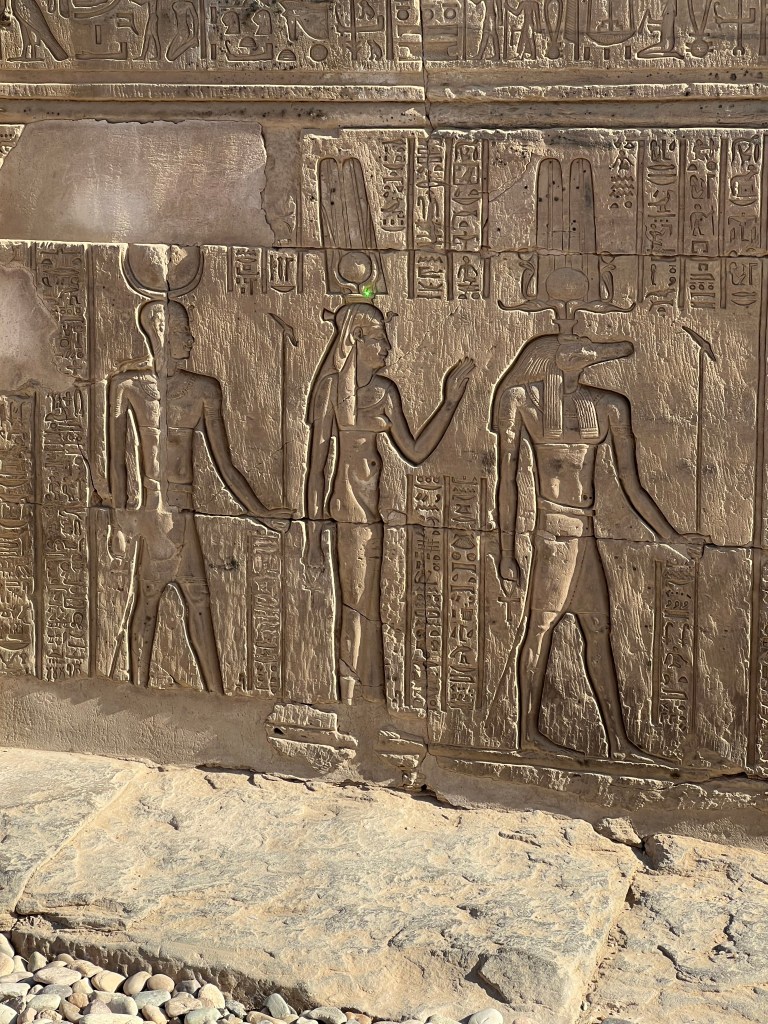
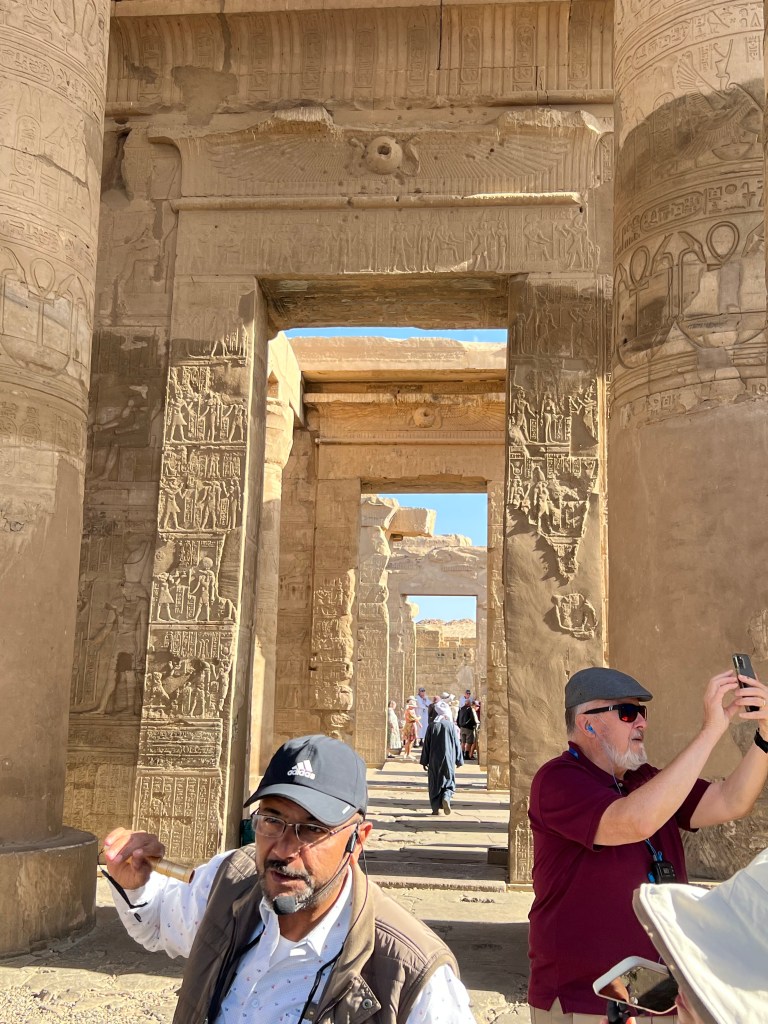
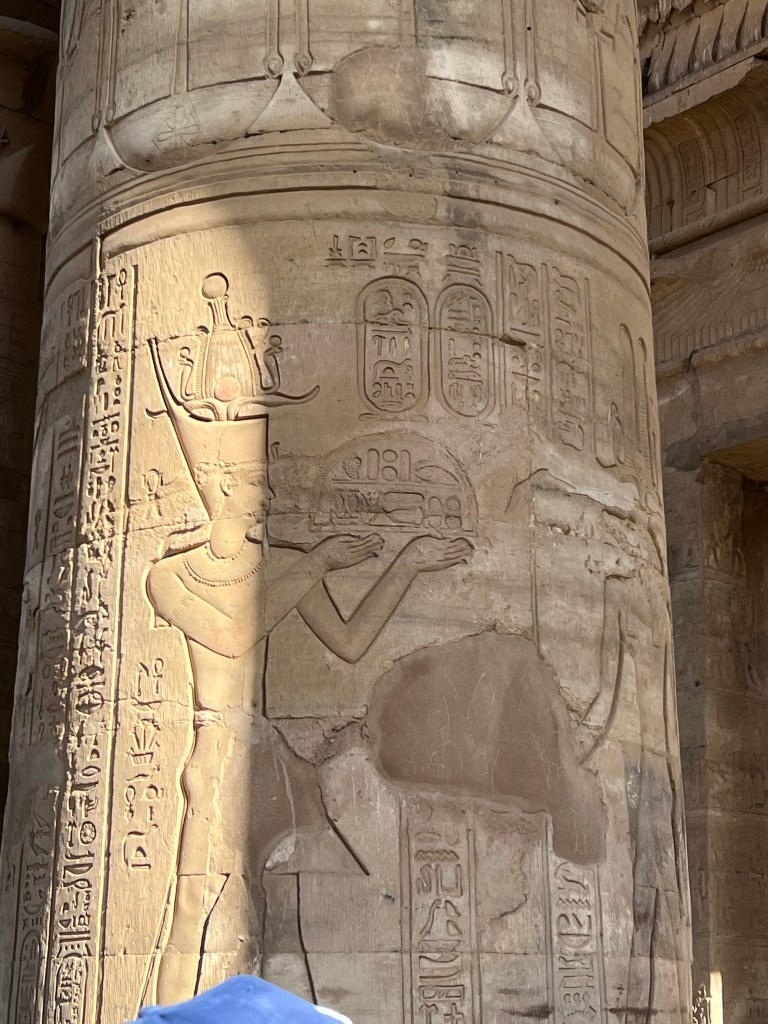
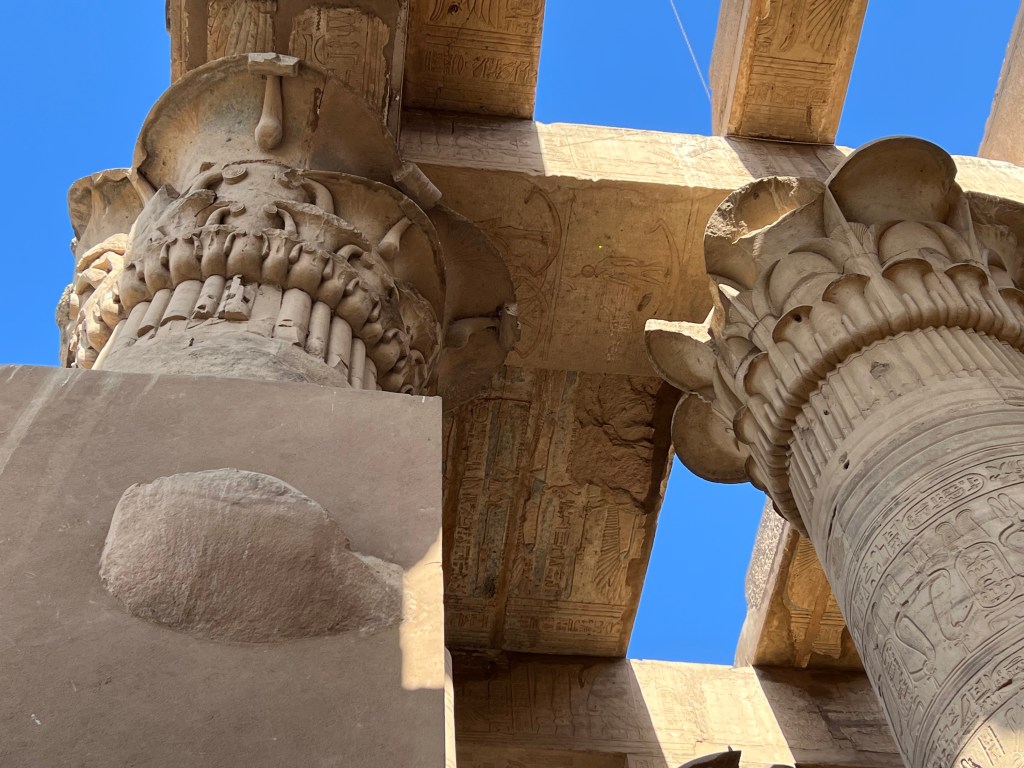





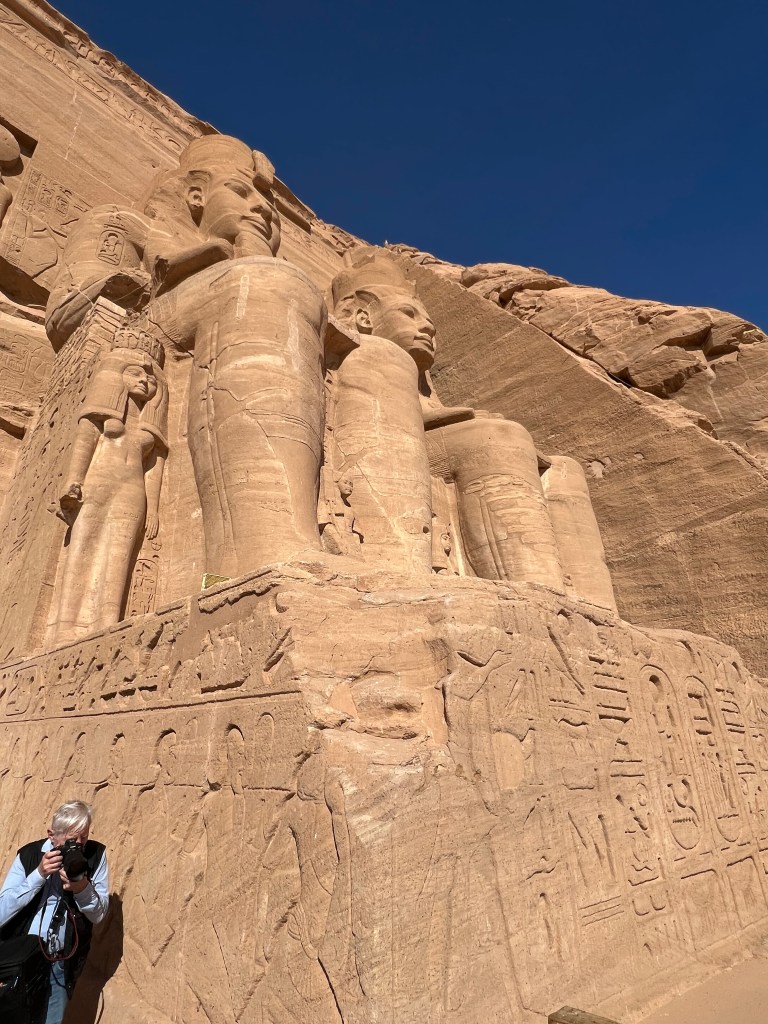
Day seven we went to the fabulous Abu Simbel temples which were unbelievably breathtaking. Never did I ever imagine that I would make this trip and see this spectacular site.


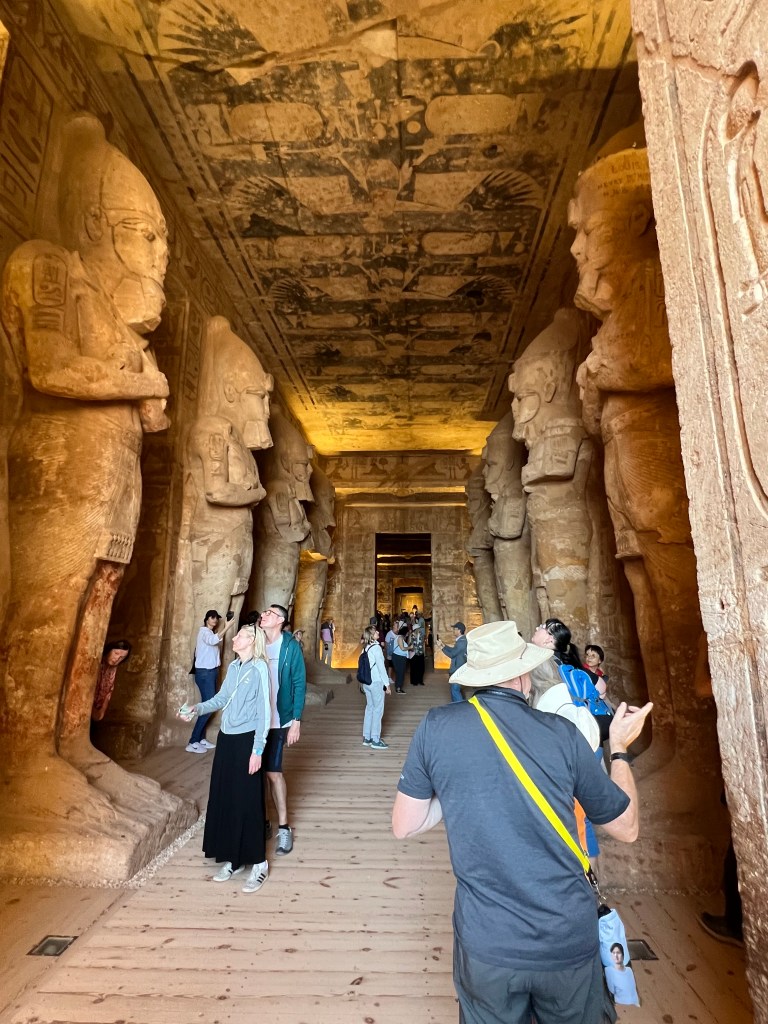


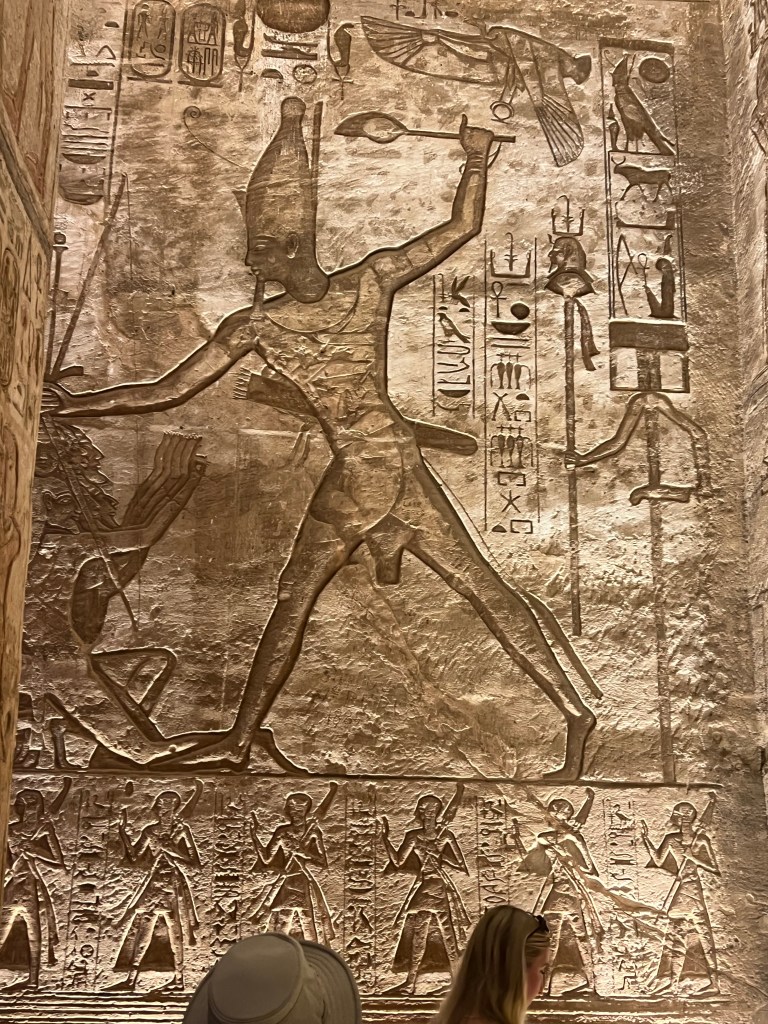


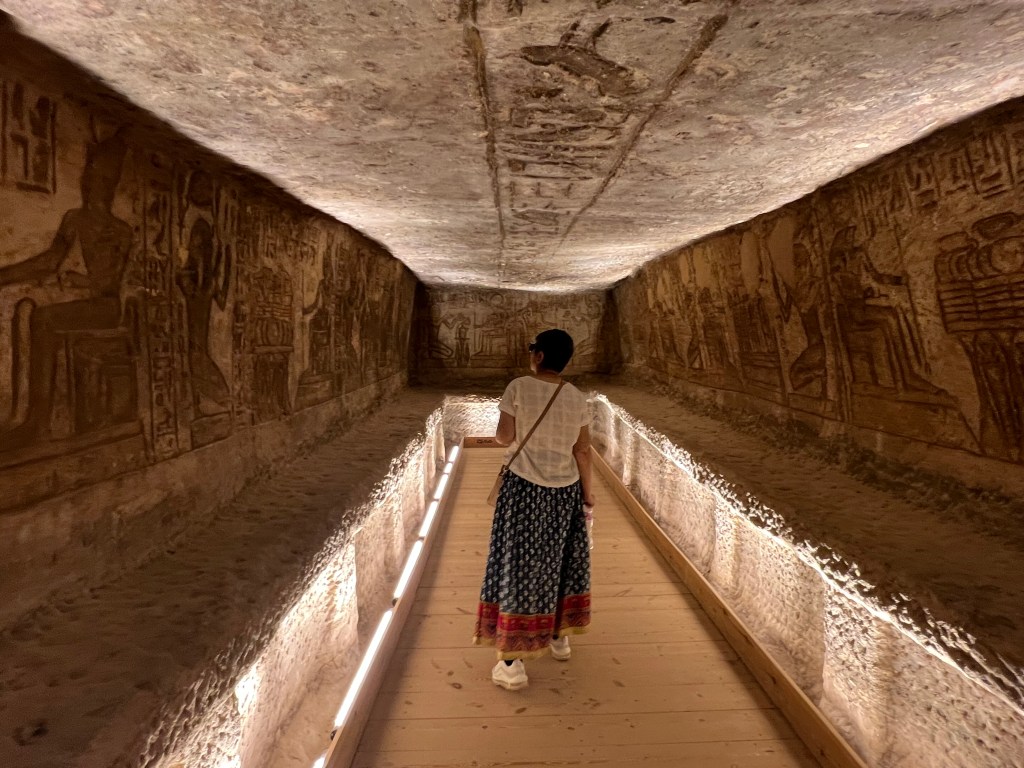
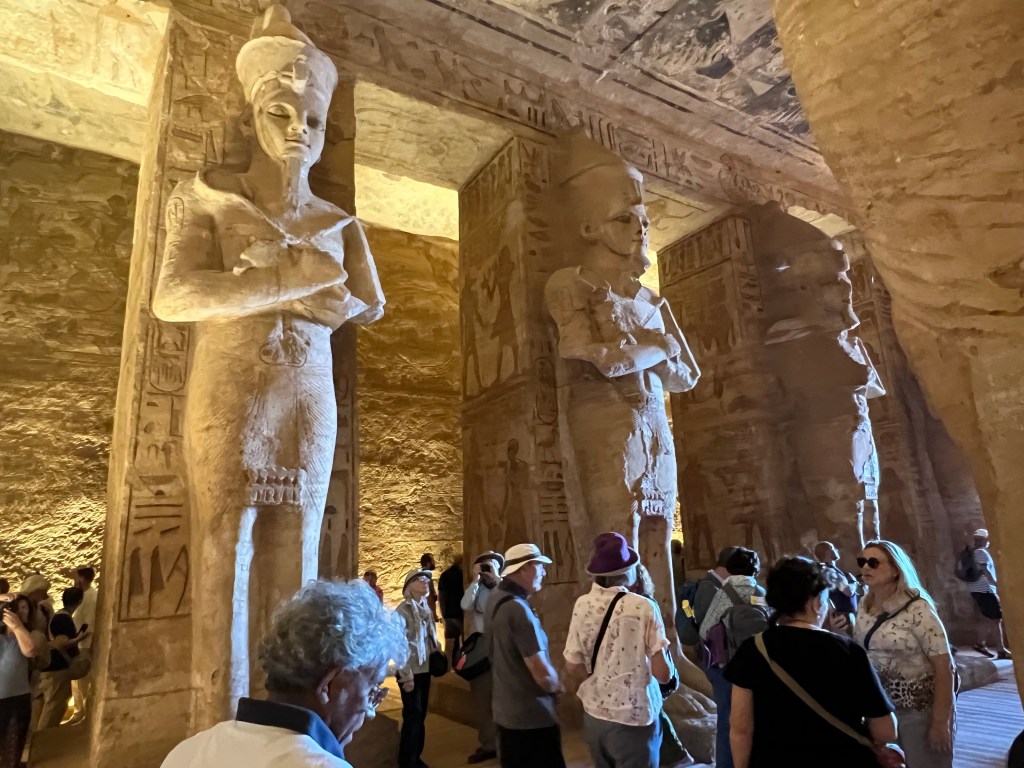
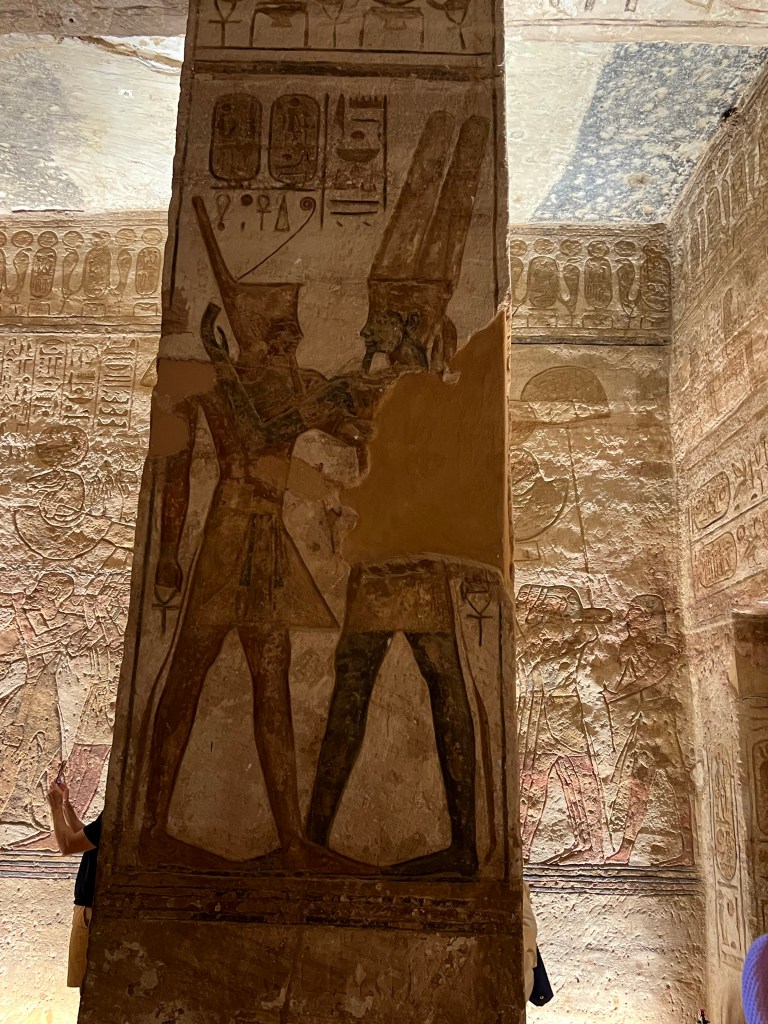
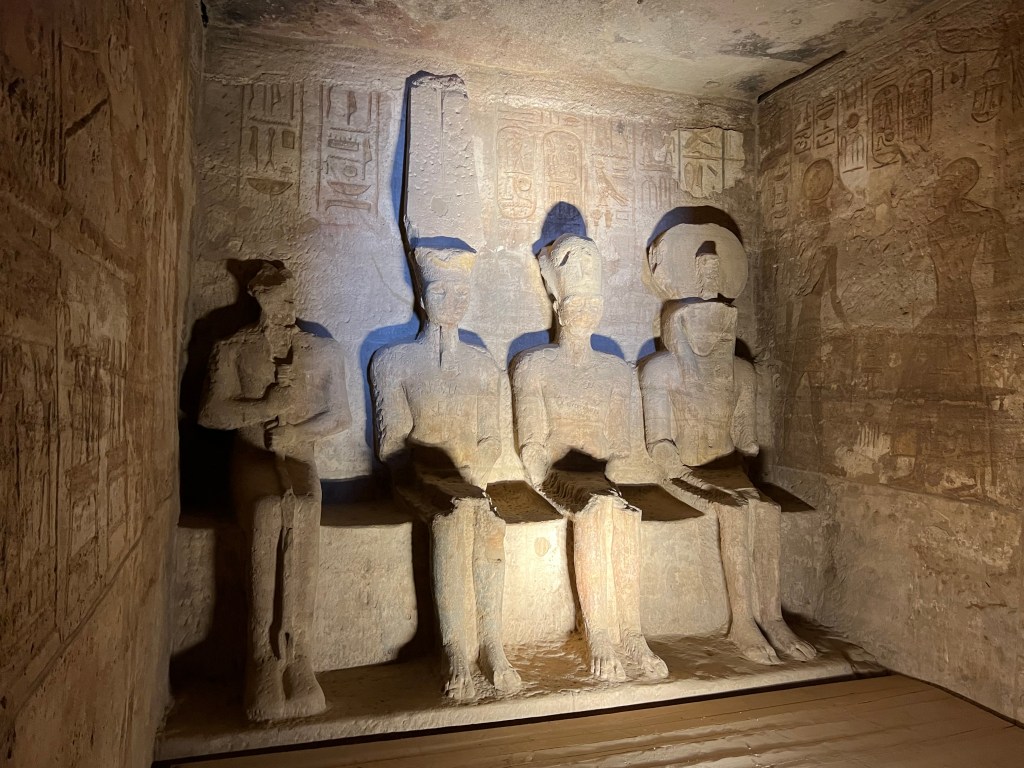

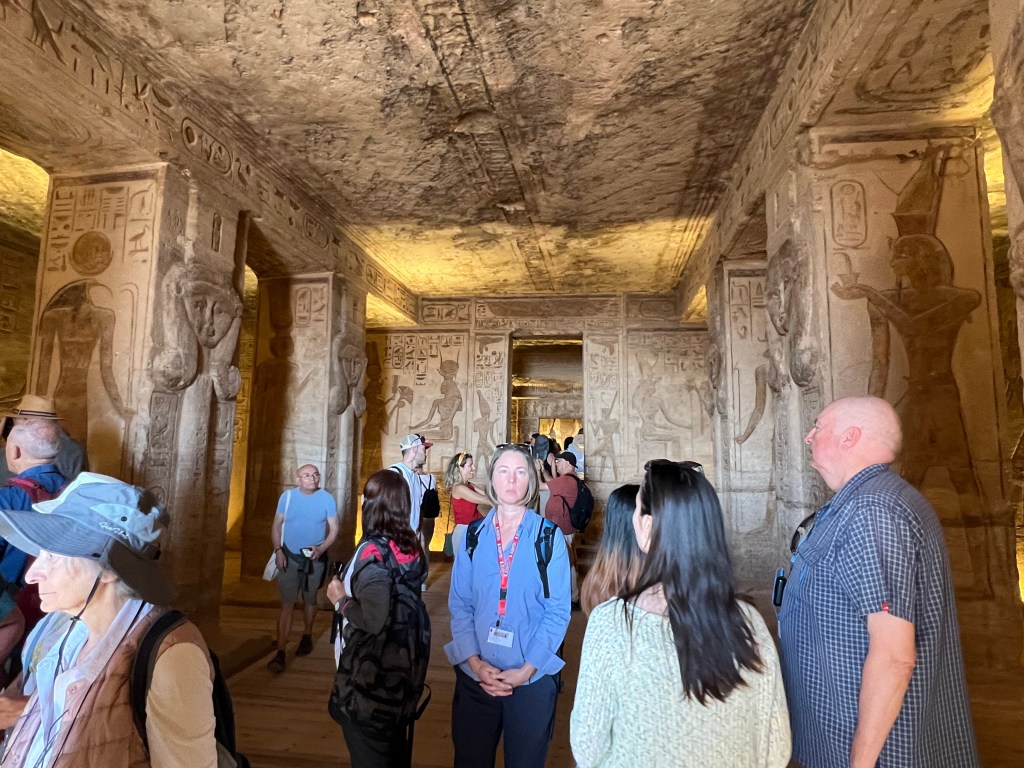
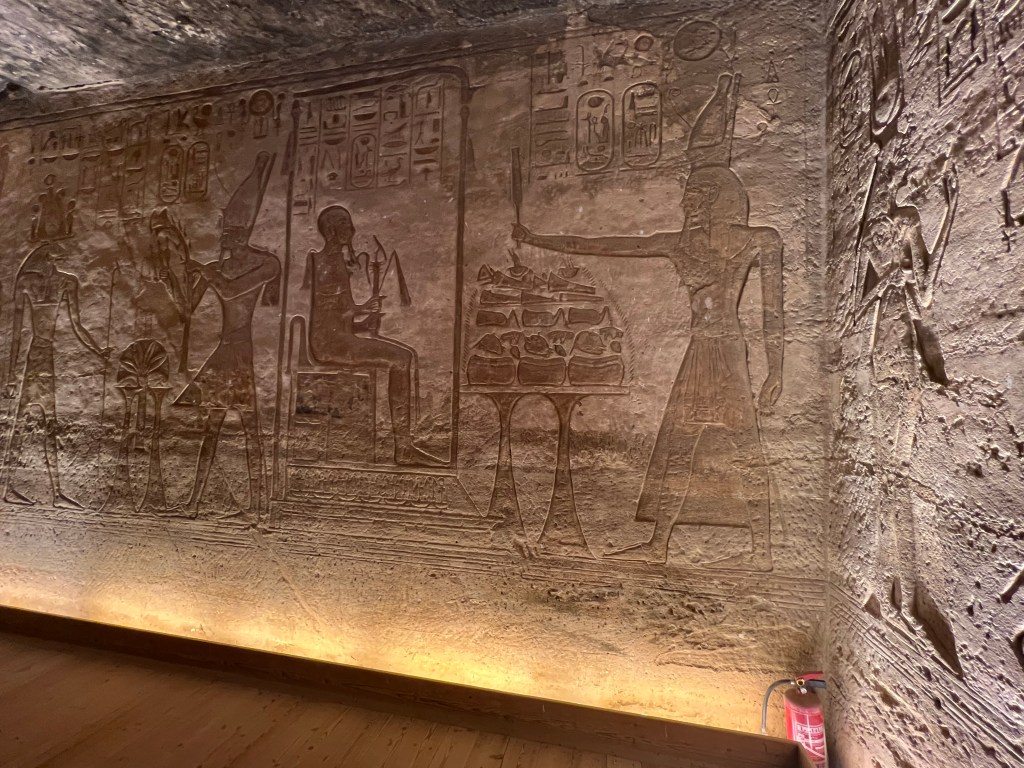


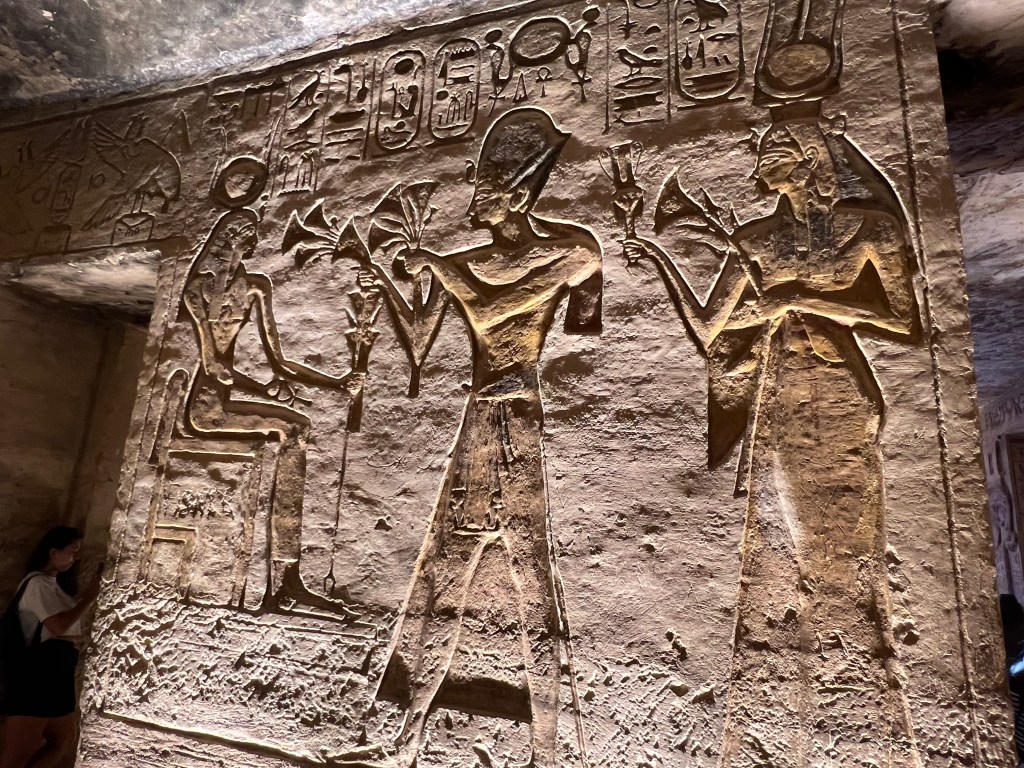
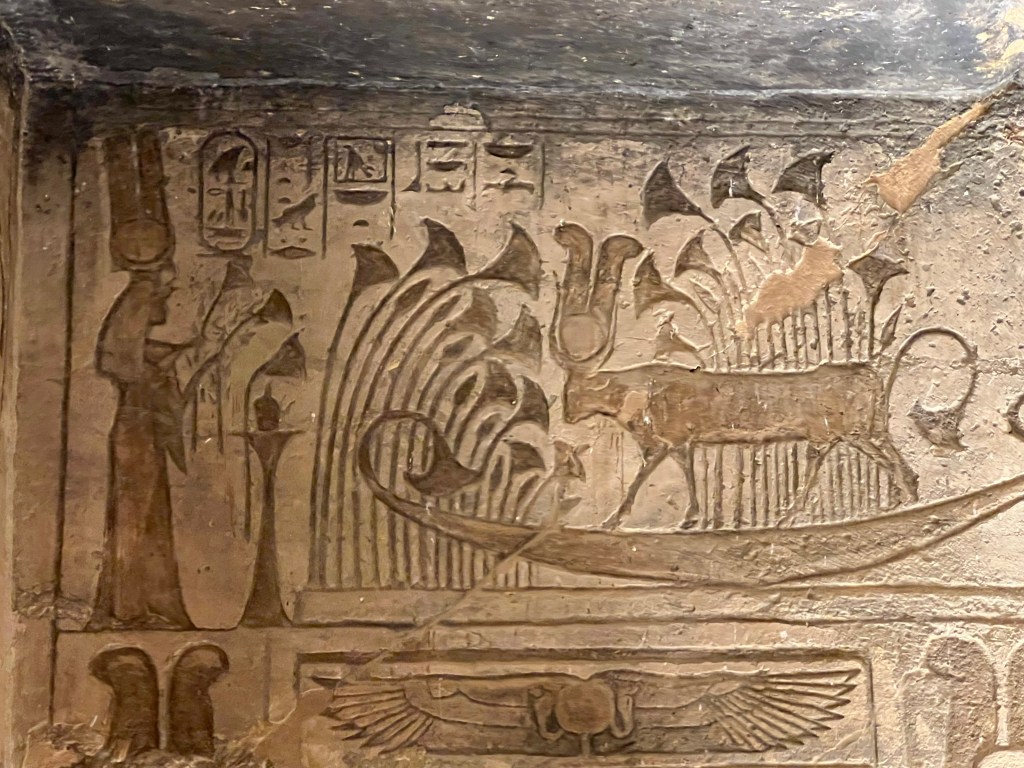
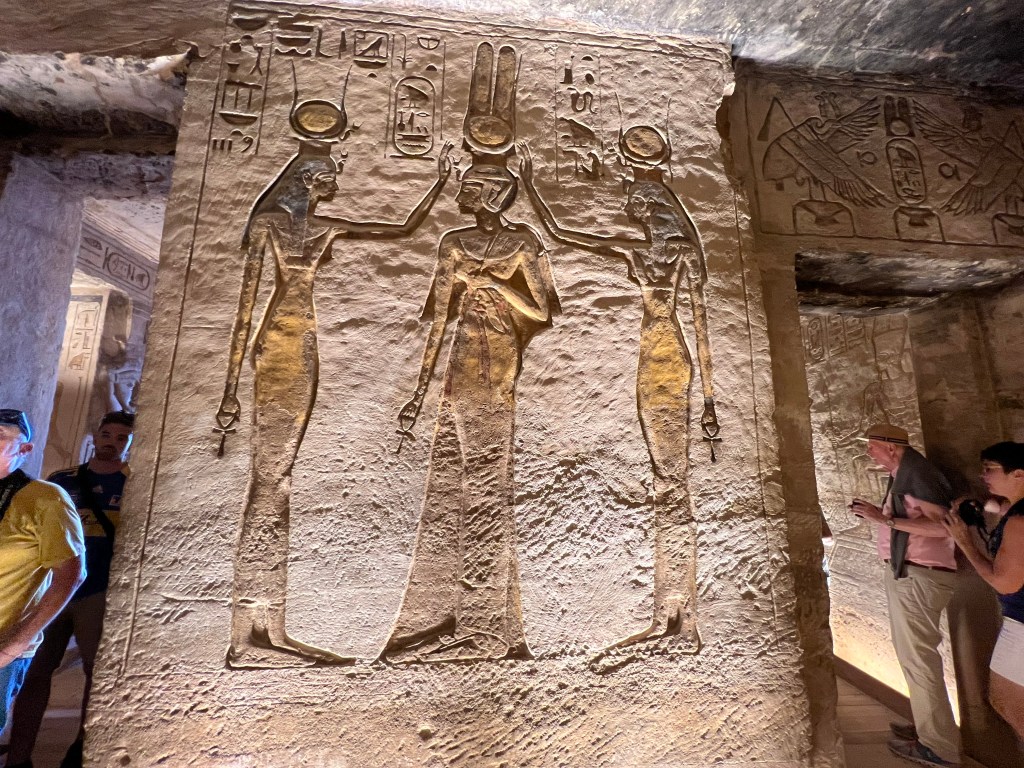
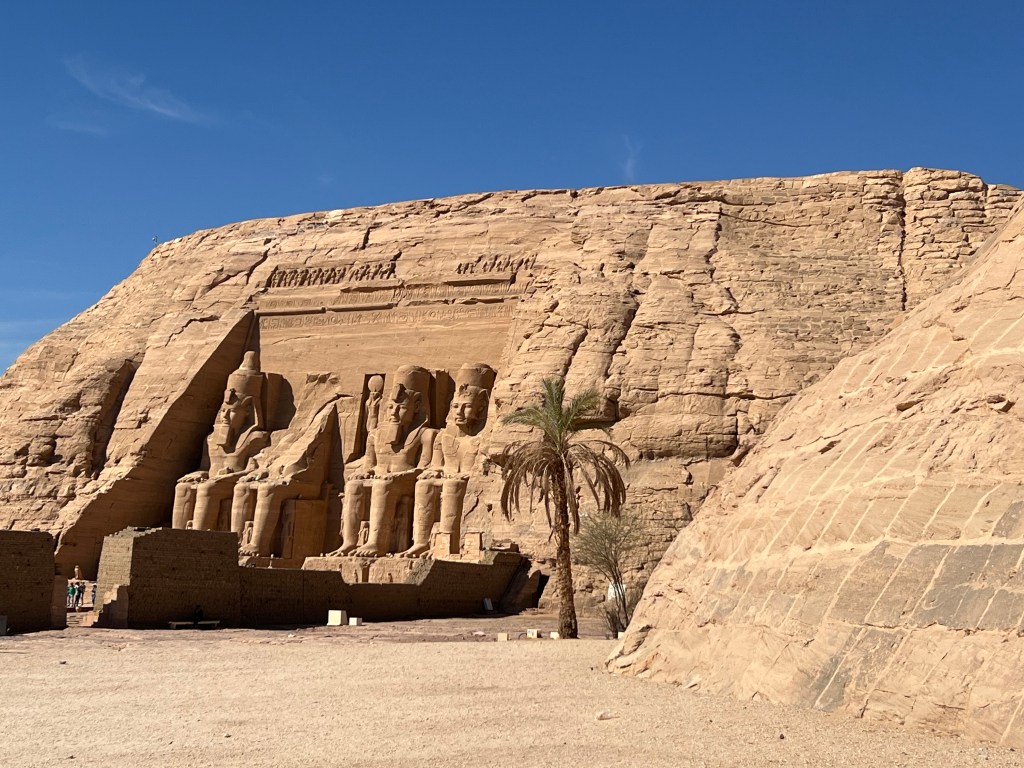
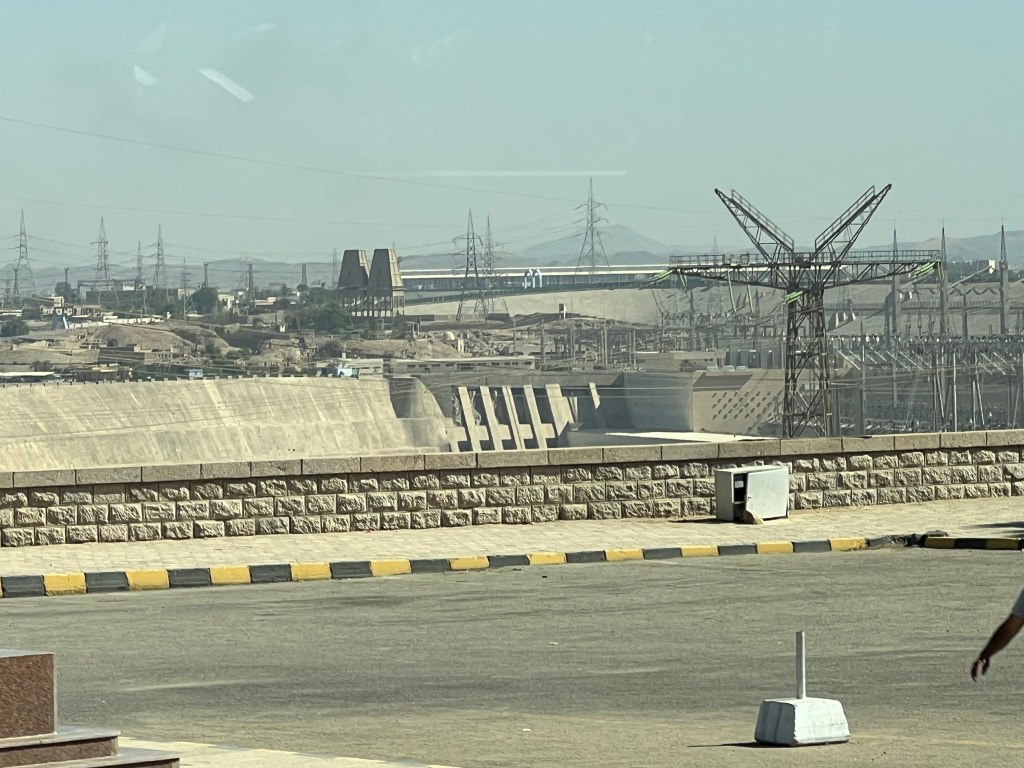
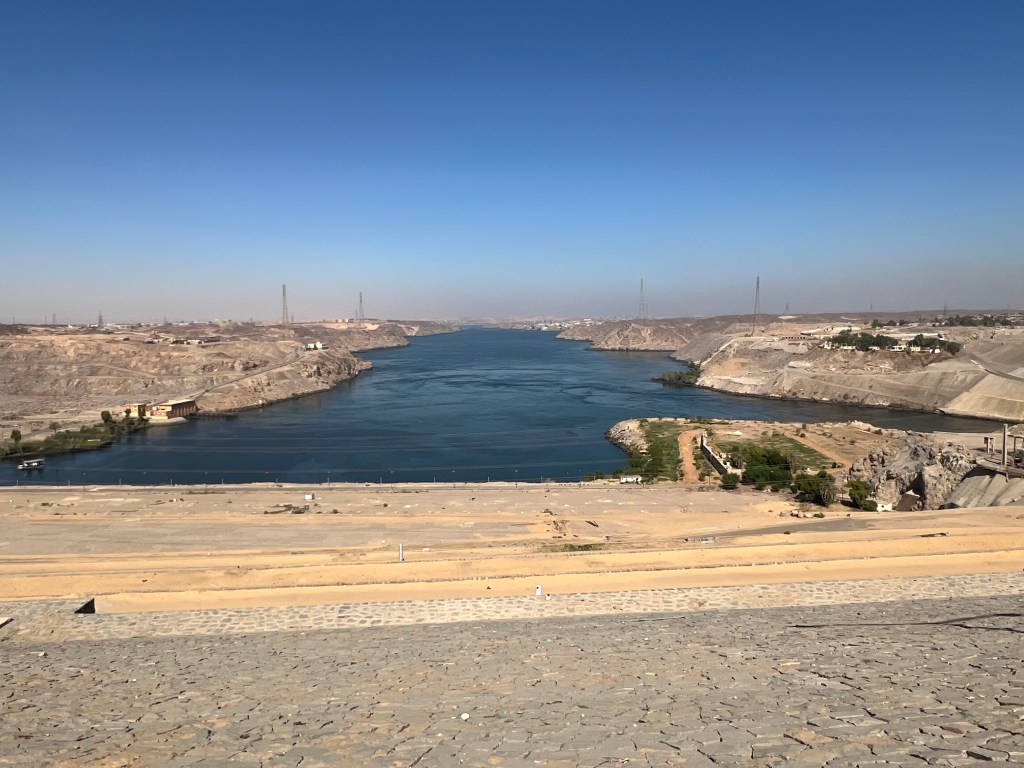
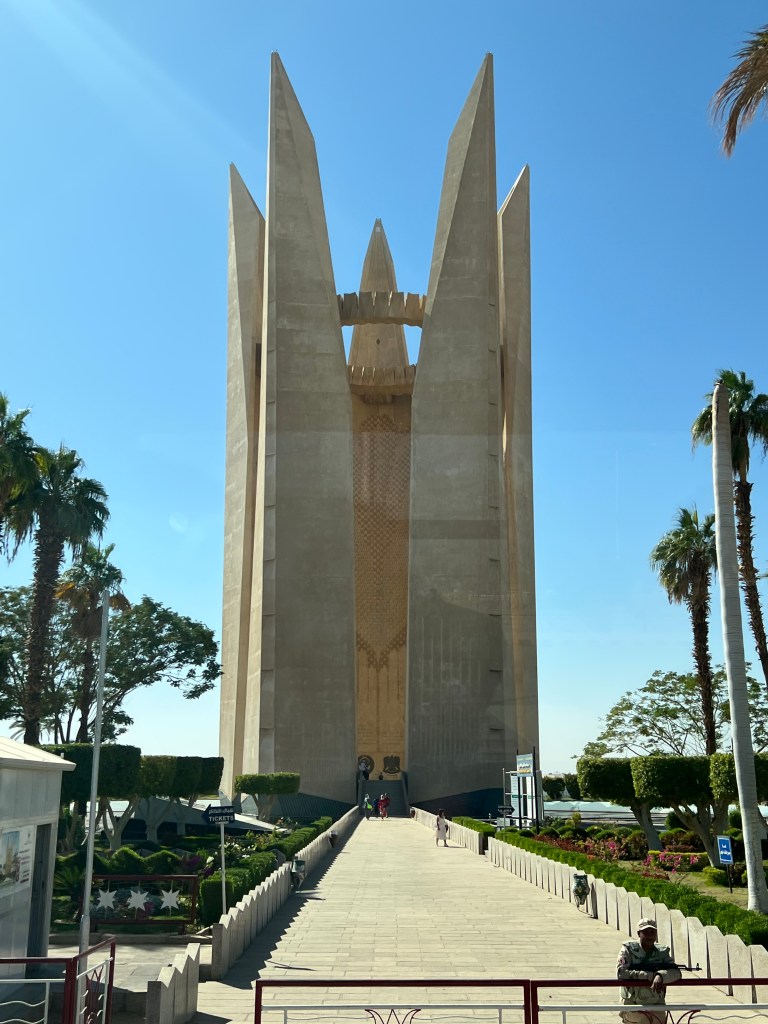
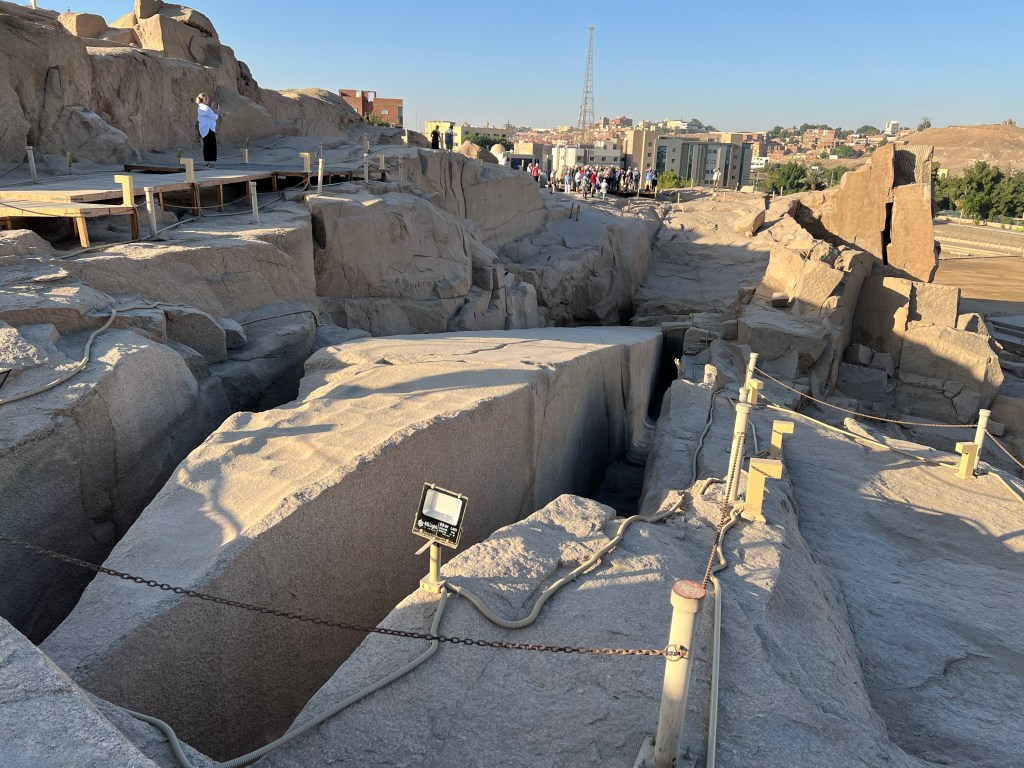
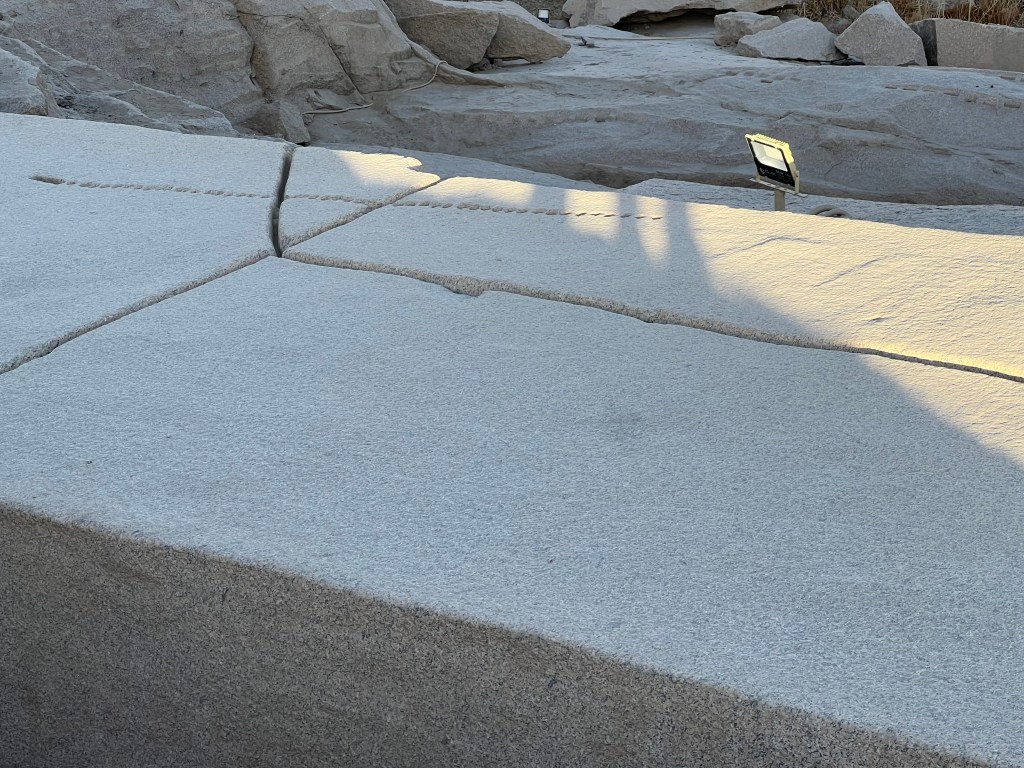
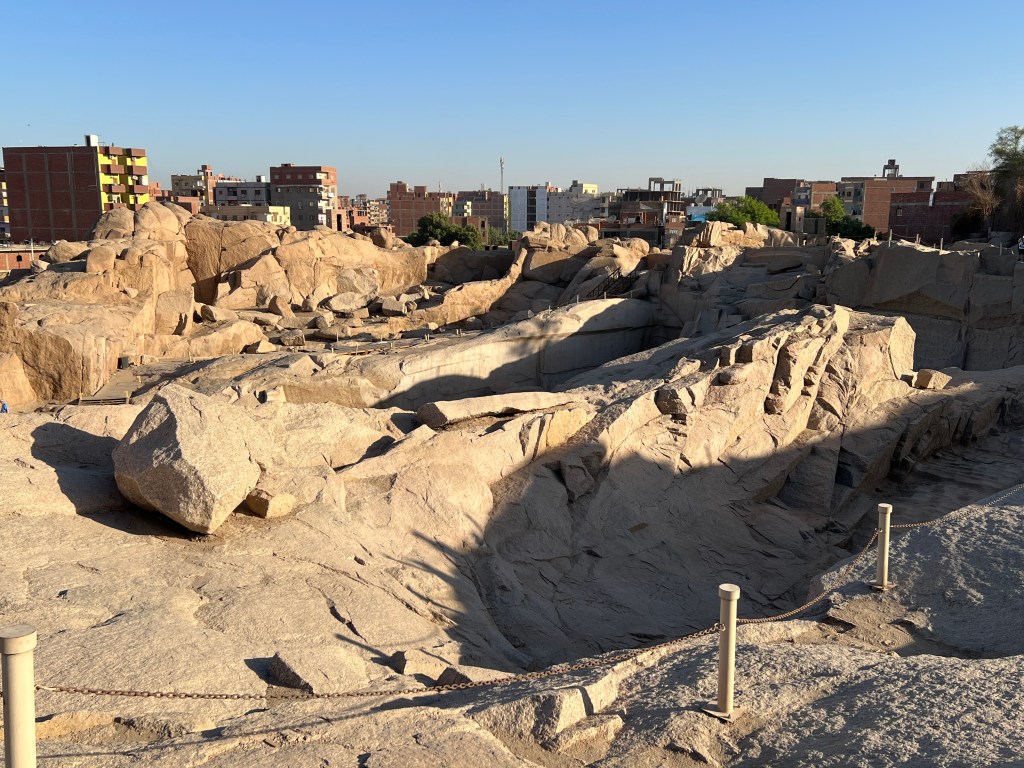
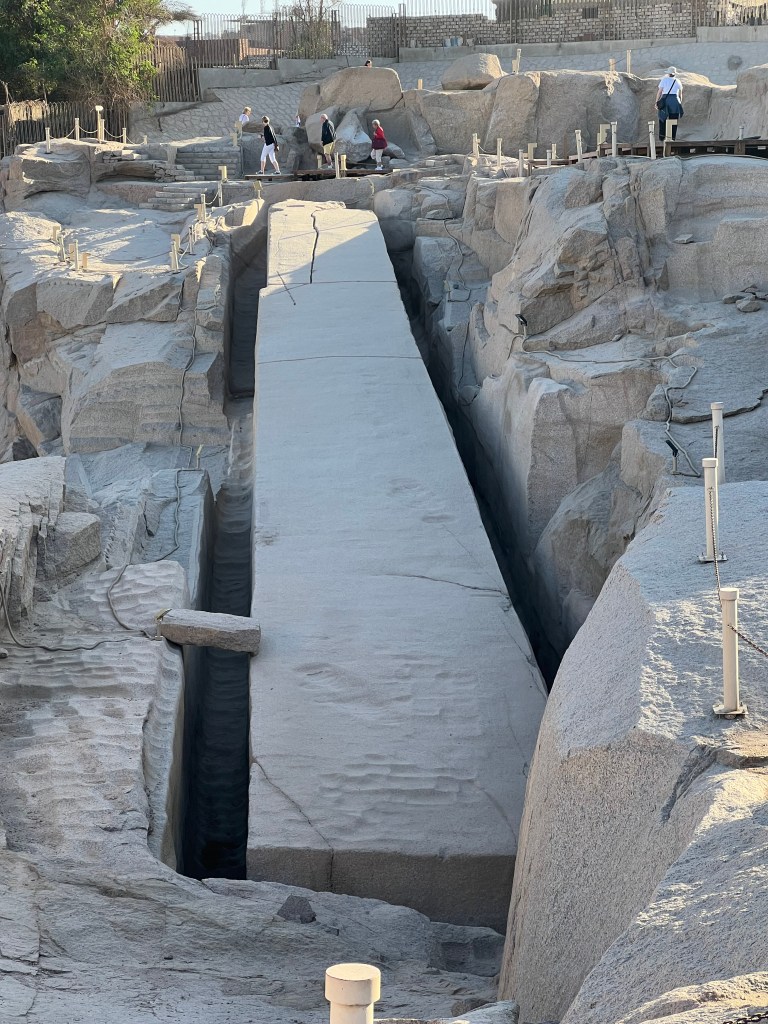
Day eight we visited the Aswan high dam, the isle that has the Phiae Temple and a huge unfinished Obelisk, which was left on the ground due to the granite block cracking as it was being formed. In the afternoon we cruised to Esna and stayed overnight there.
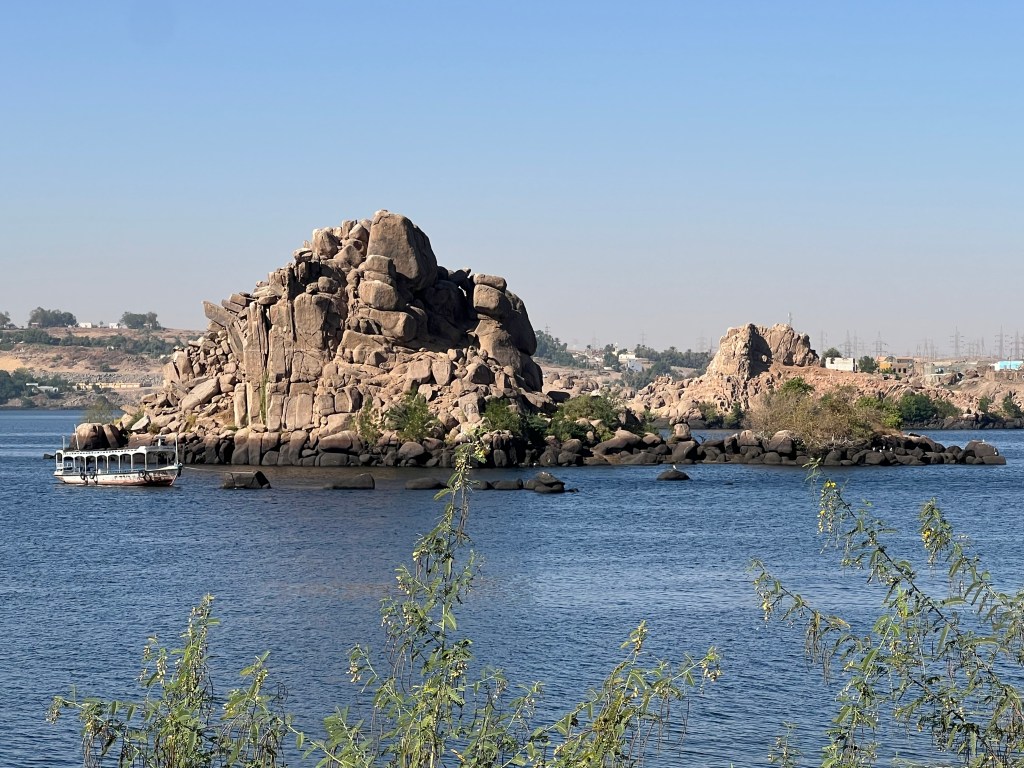
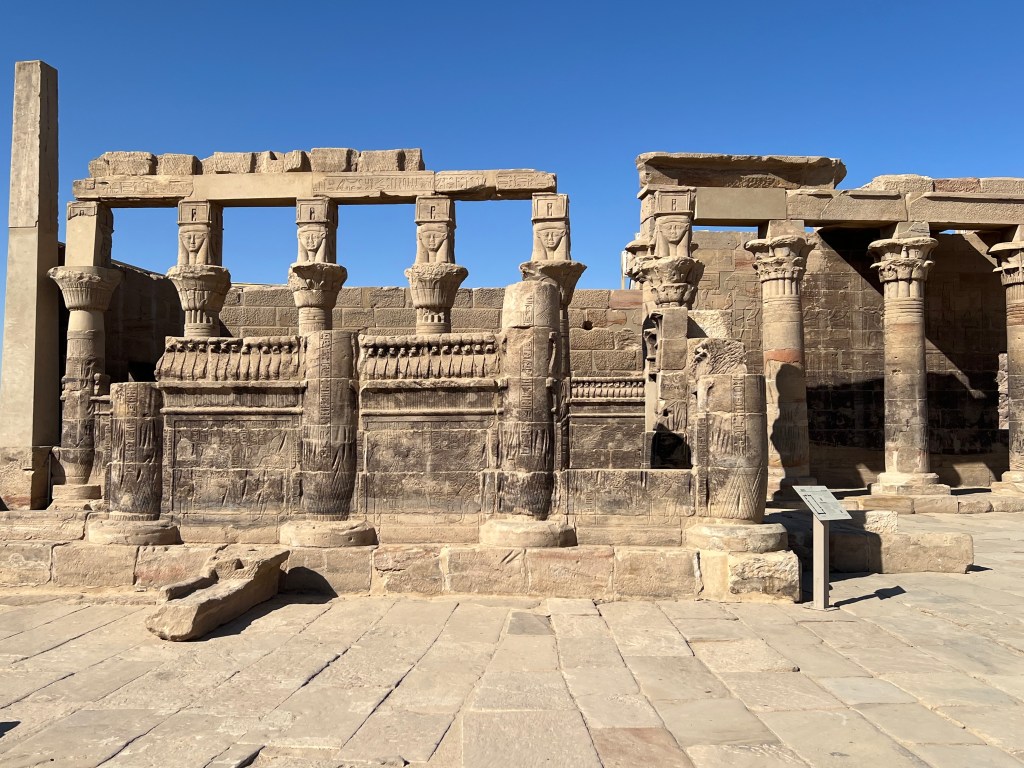
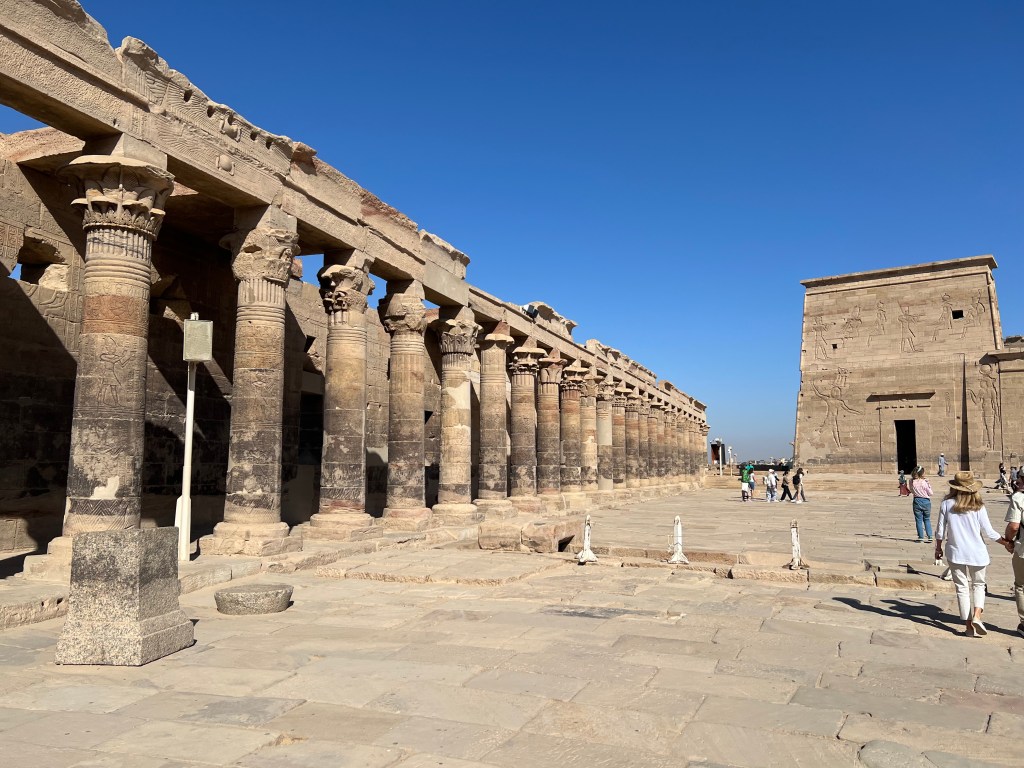

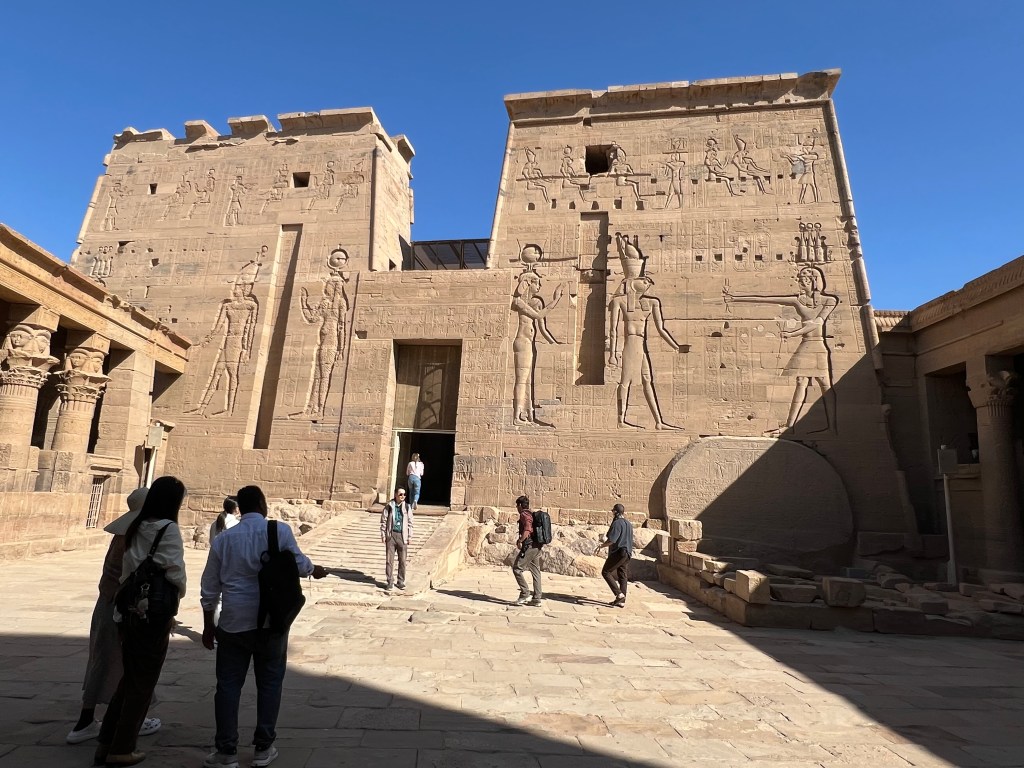

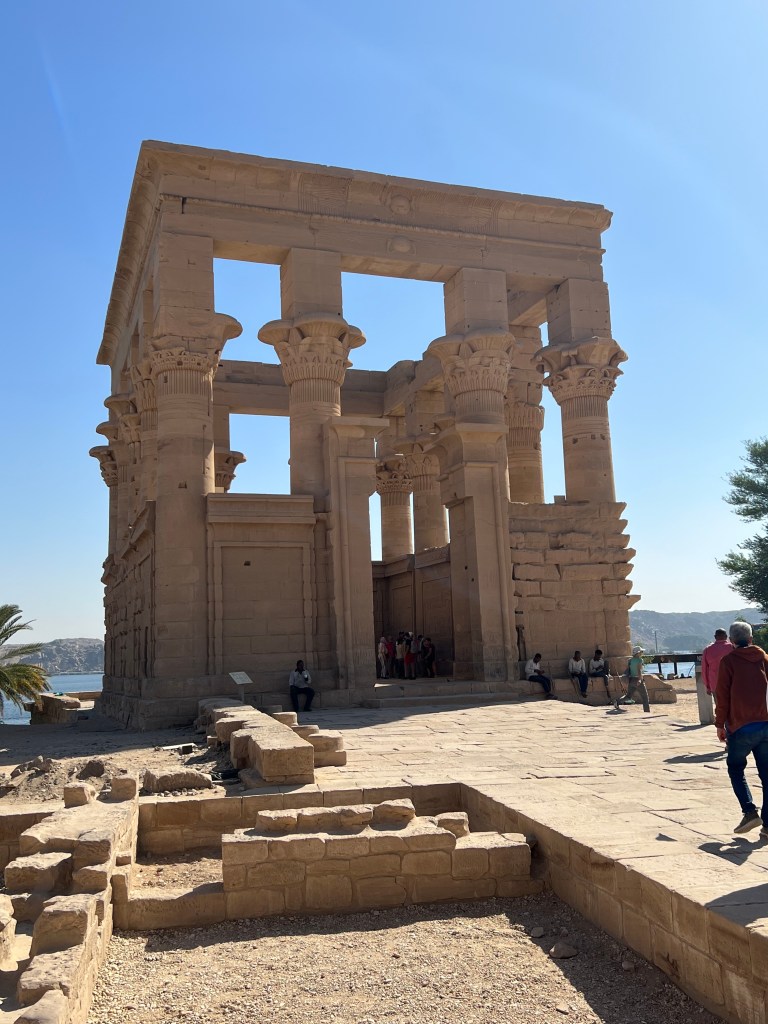
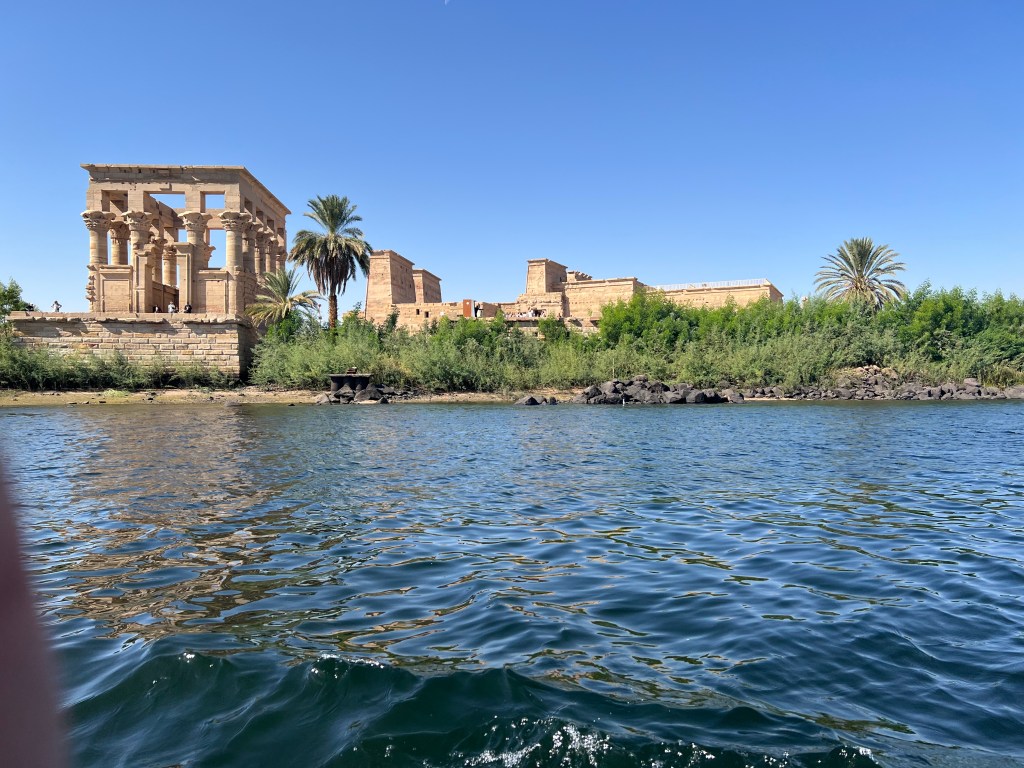



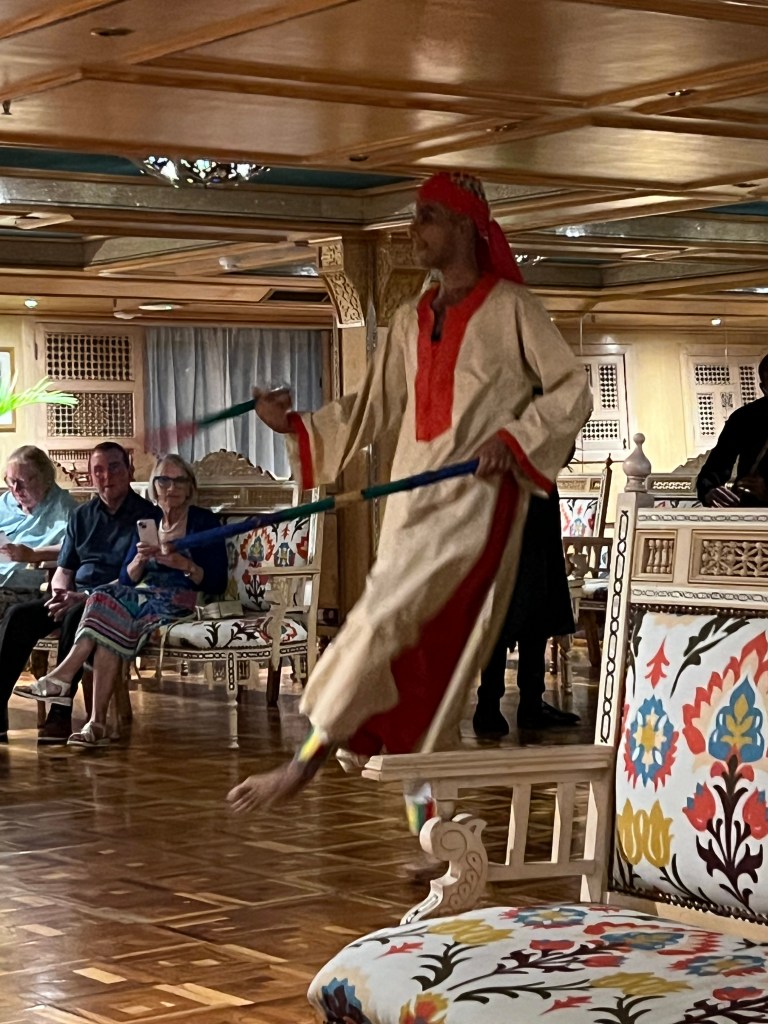
Day nine we visited the Esna Temple, cruised to Luxor and then had an afternoon visit to the Luxor Temple. These sights were phenomenal and our heads were beginning to spin trying to keep the long list of pharaohs and epic periods straight. Mohamed would tease the group as we continued to utter long strings of “WOW”. The evening held a folkloric show, including a whirling dervish, as always extremely entertaining. We overnighted in the Luxor port.



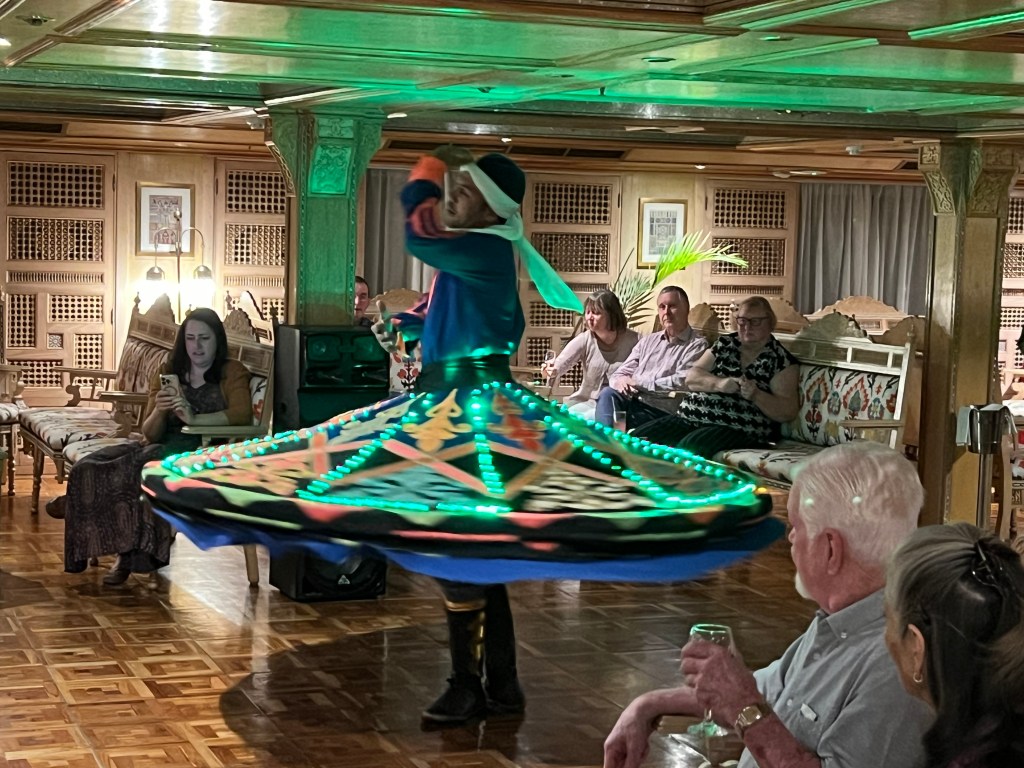
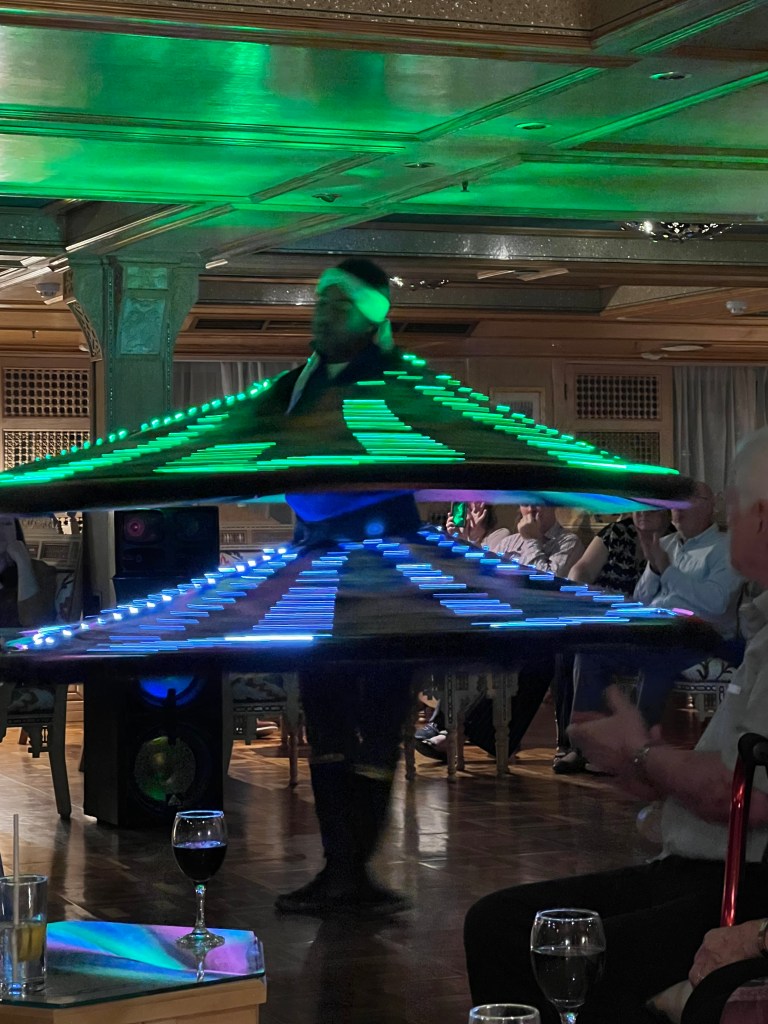

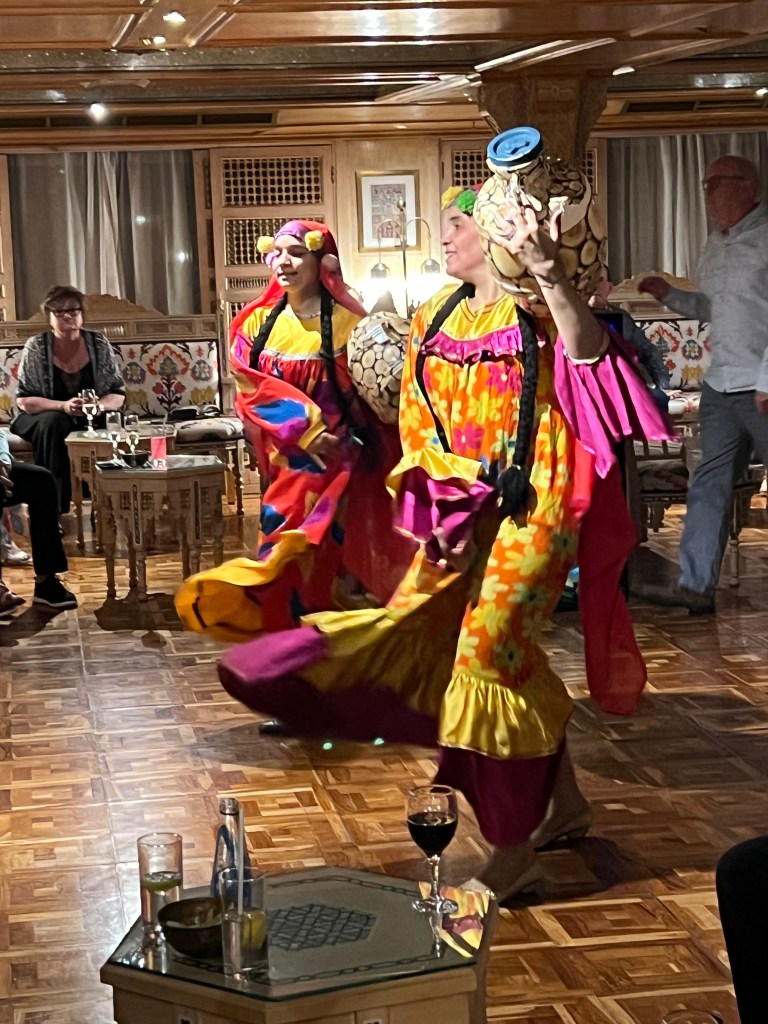
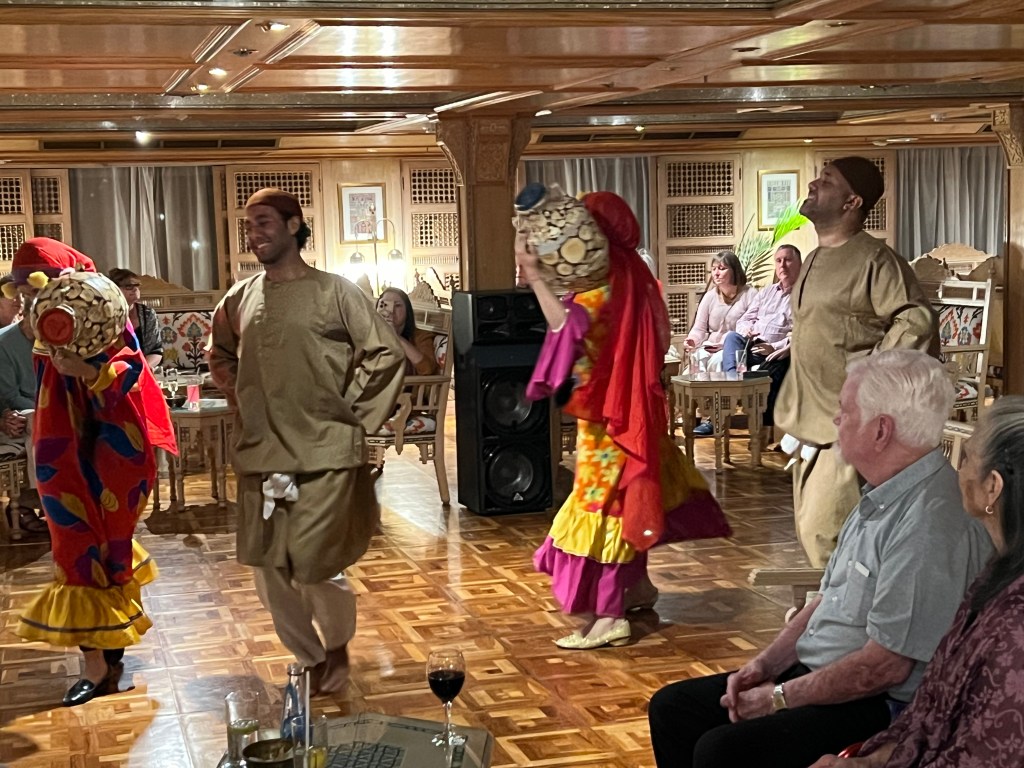
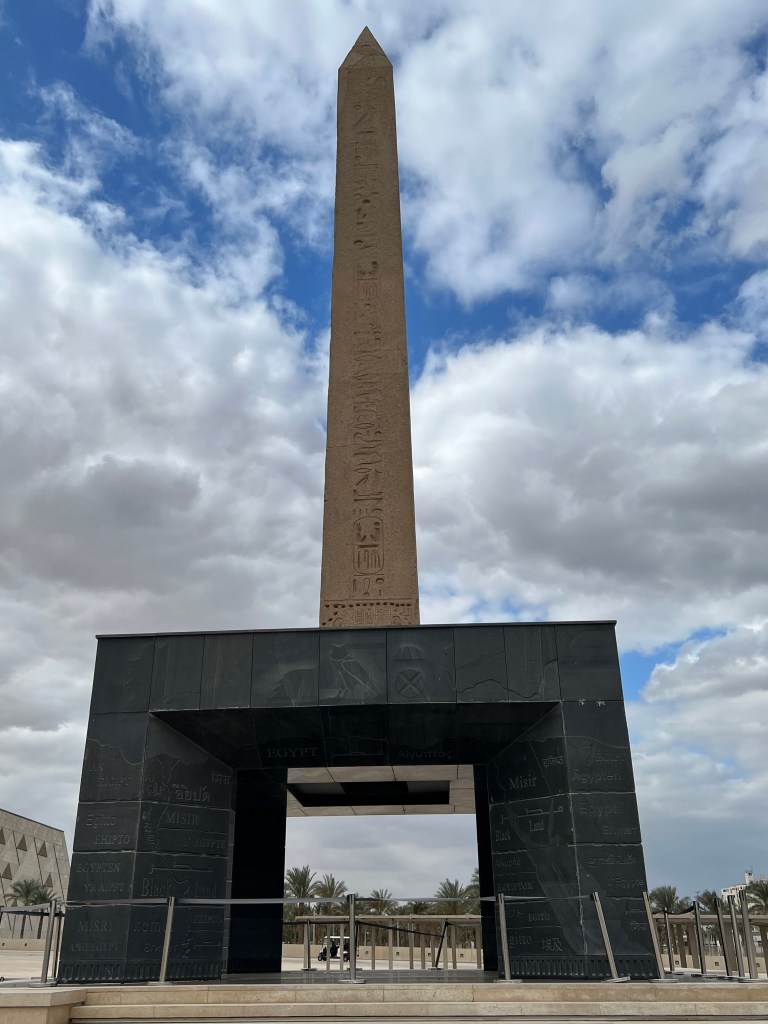
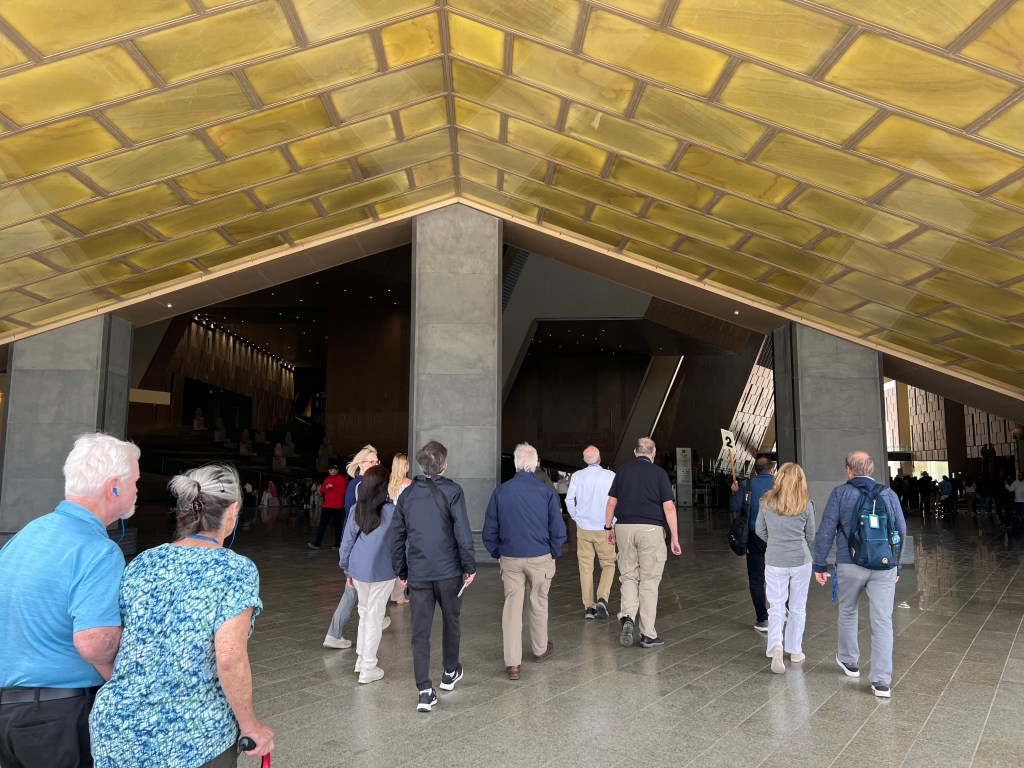
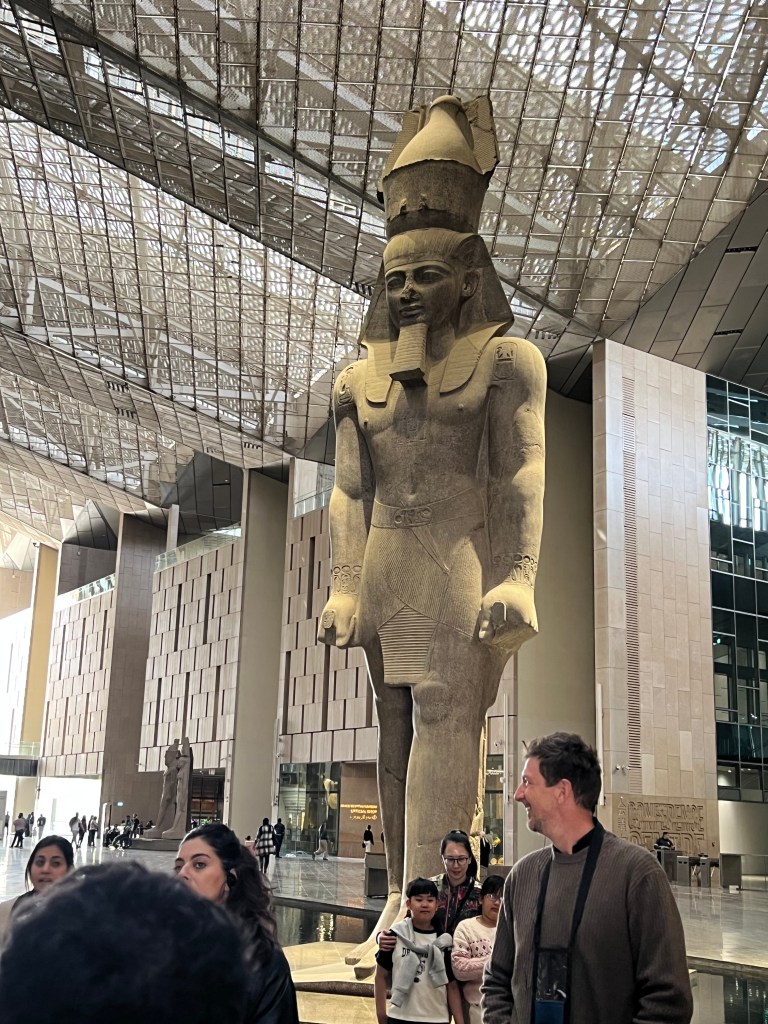
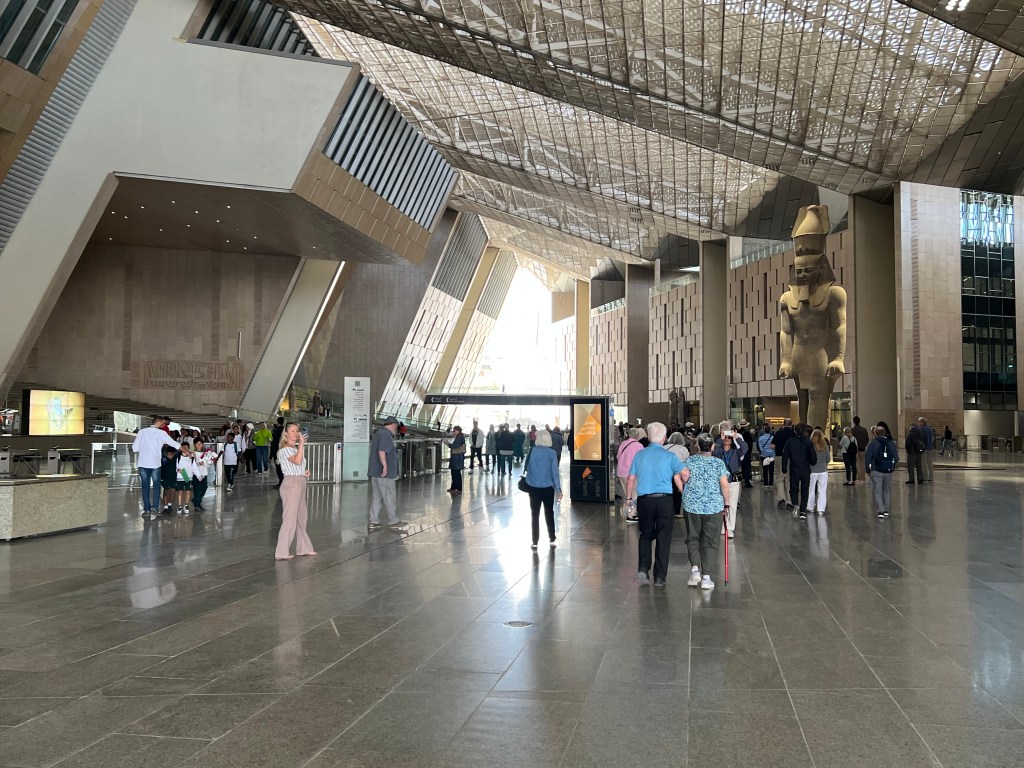
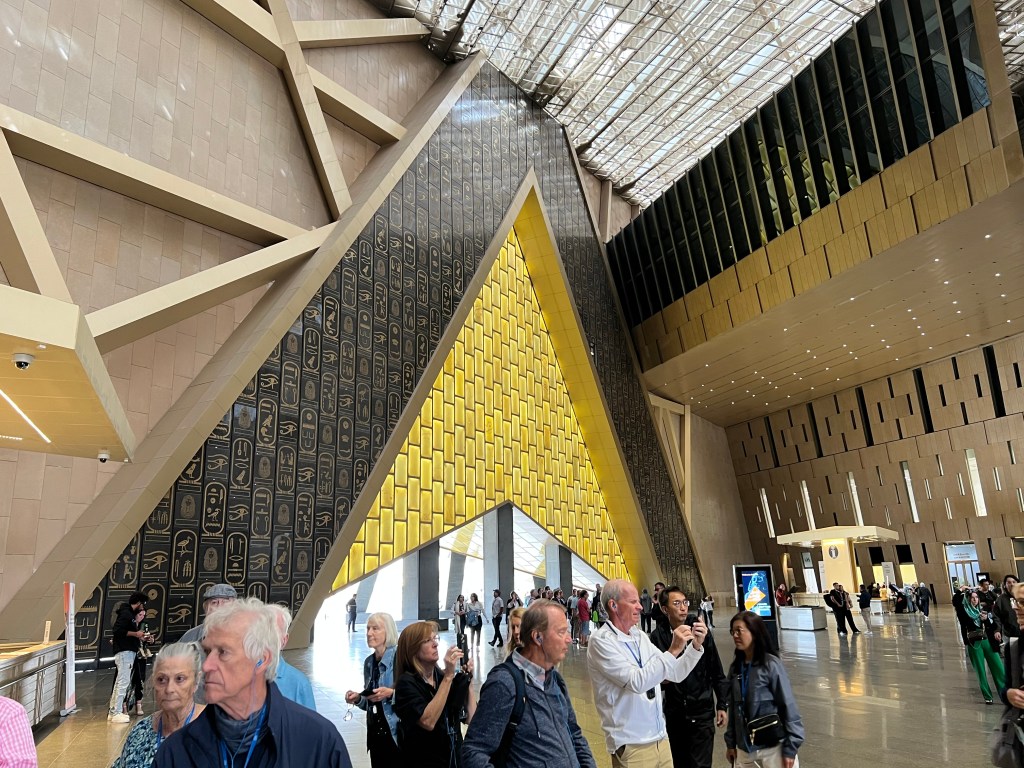
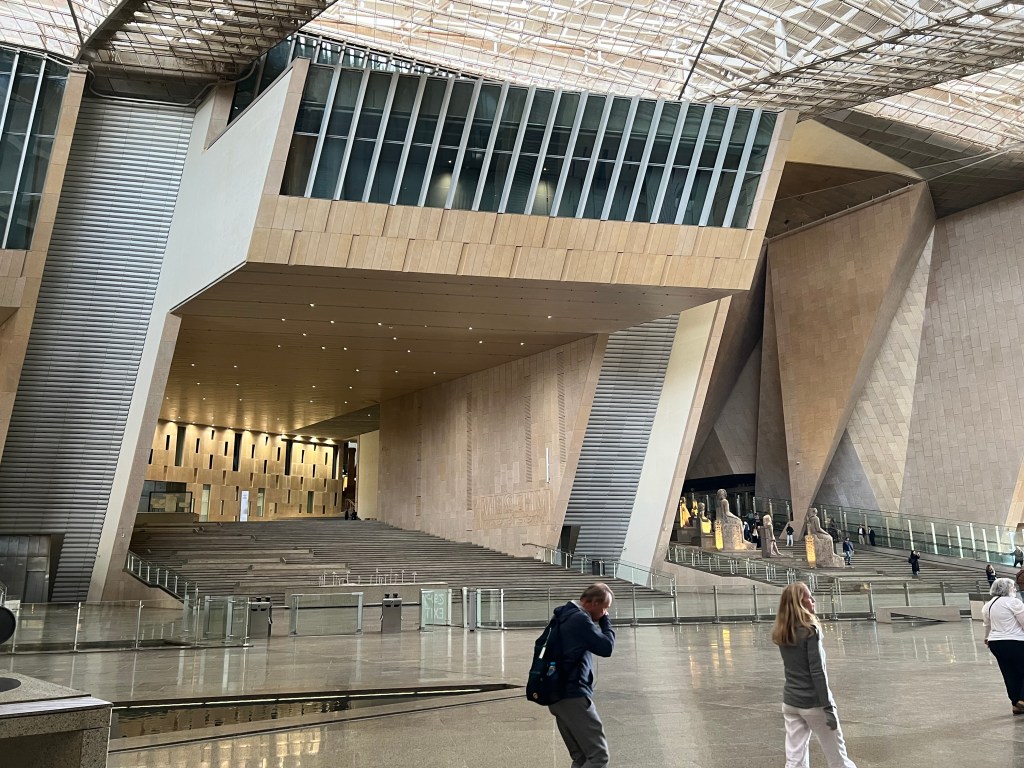
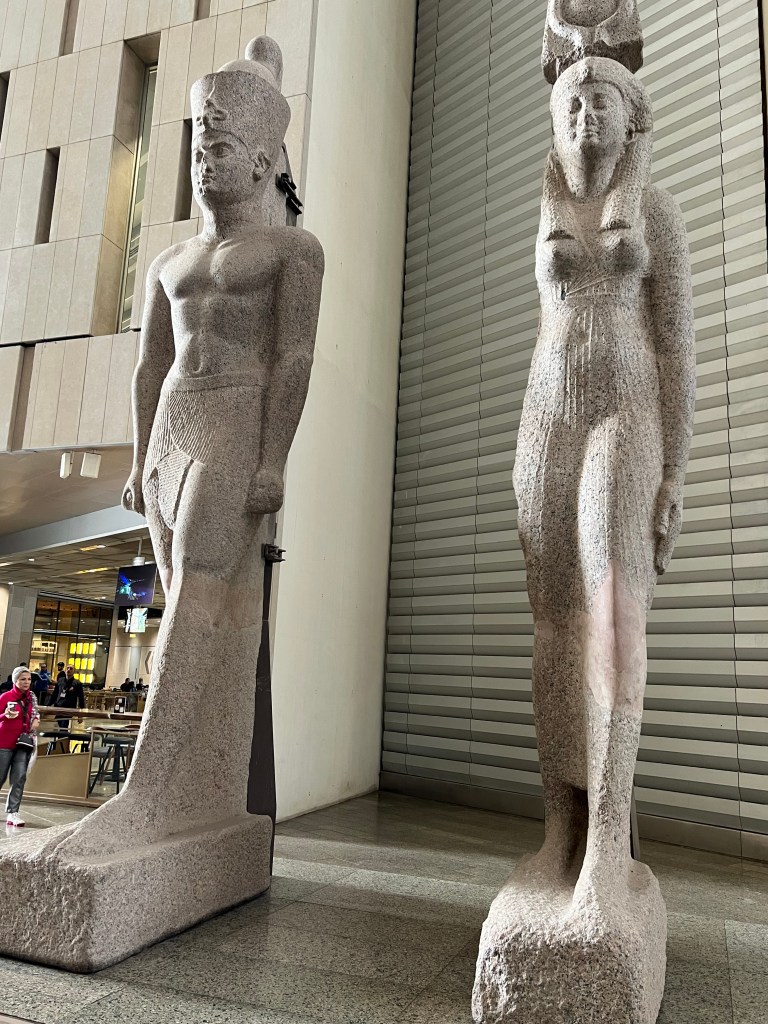
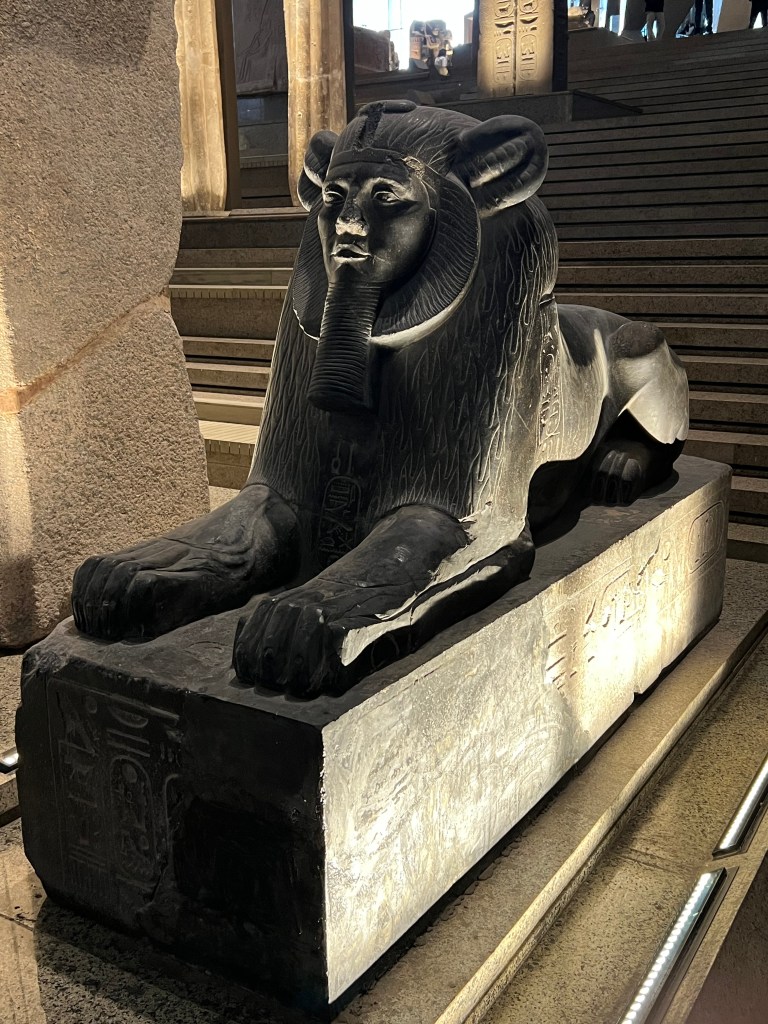
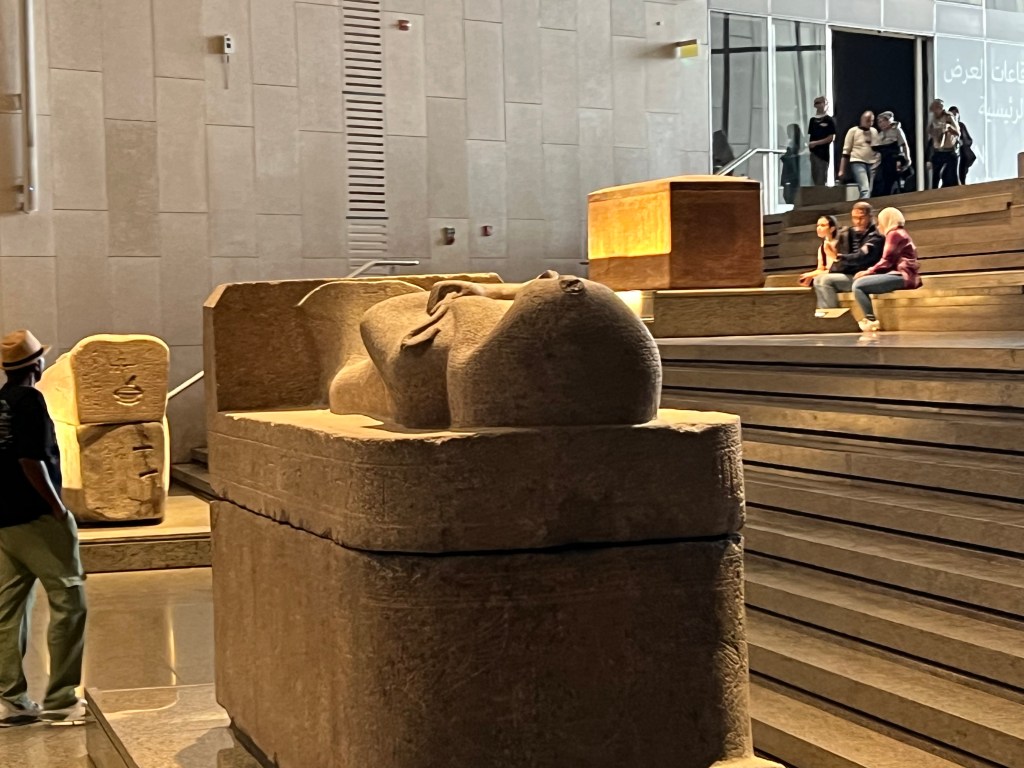
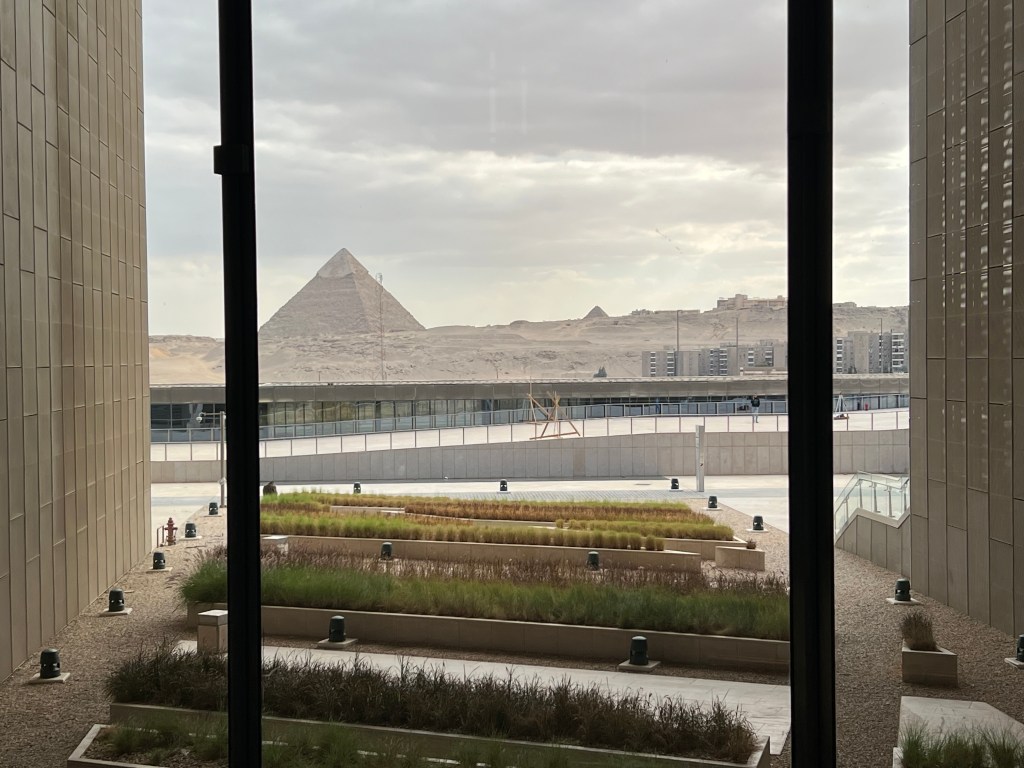
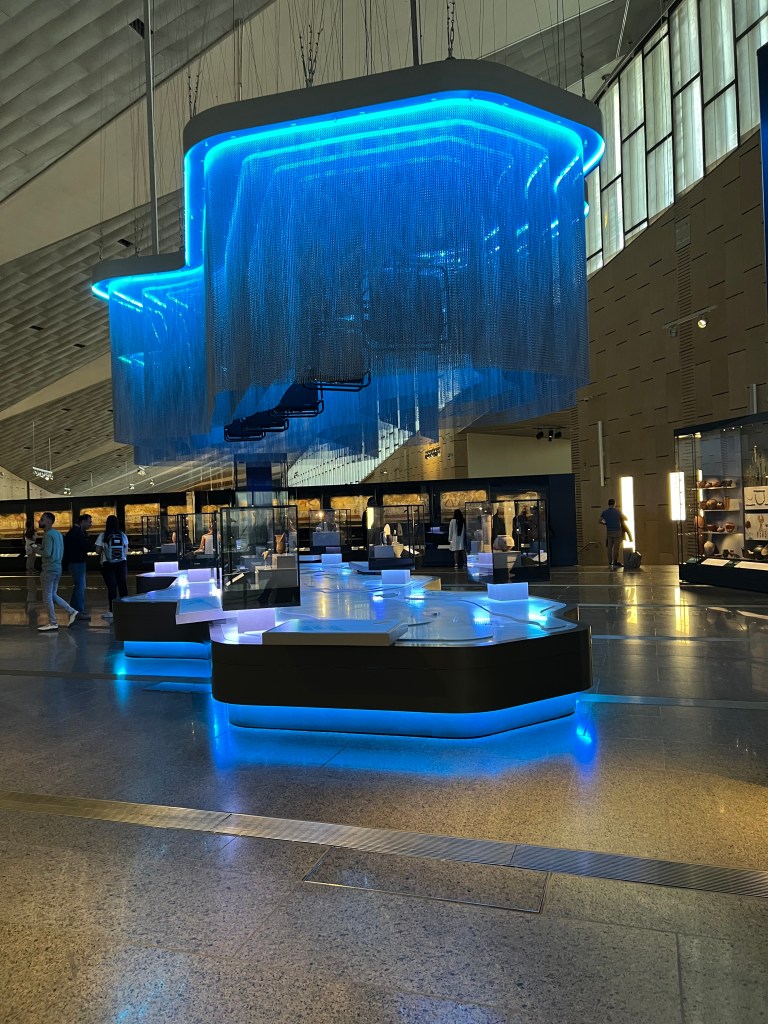
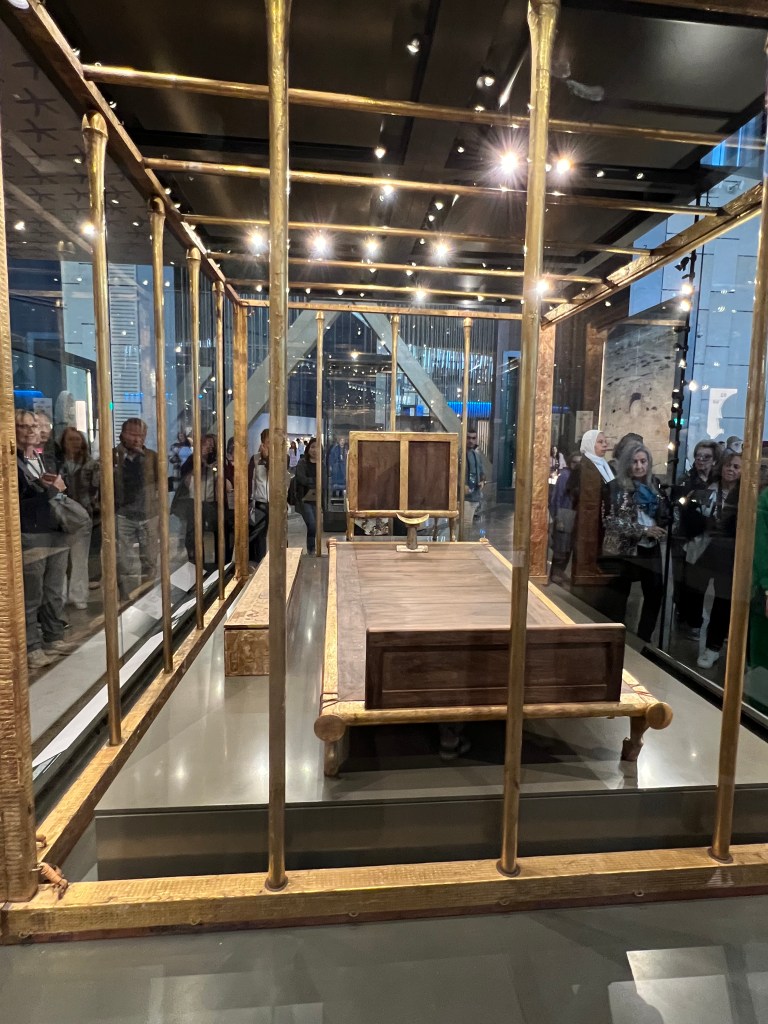
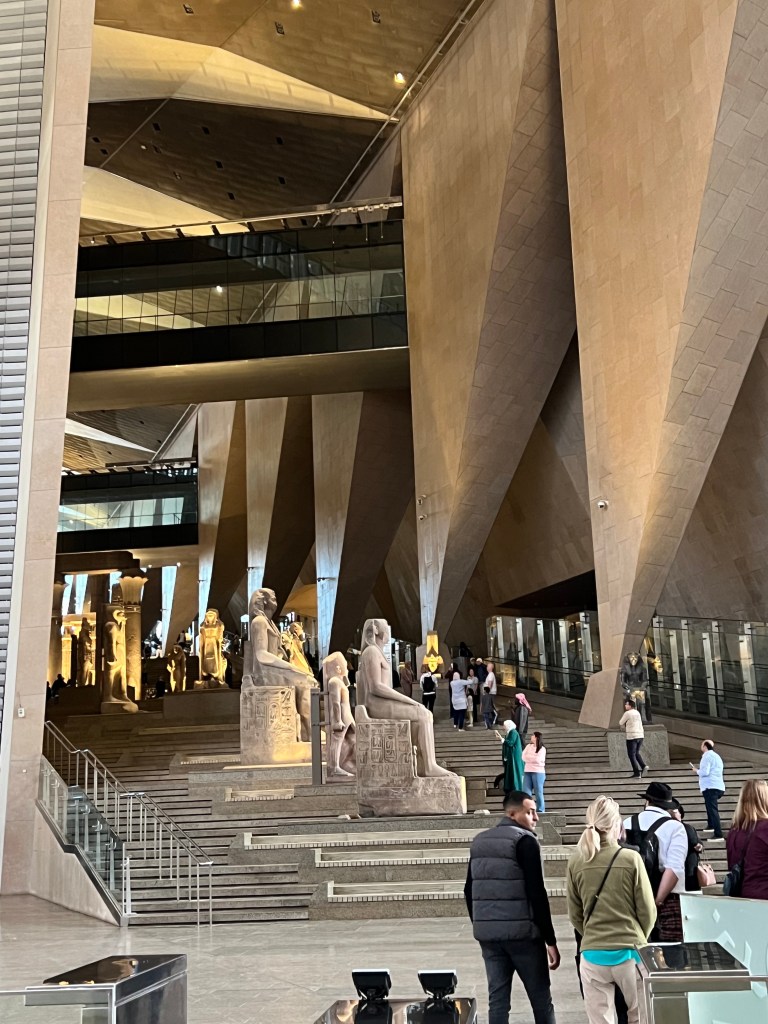
Day ten was a travel day. Up early, per usual, check off the boat, trek to the airport for a flight back to Cairo and either check into the Four Seasons Hotel or go off to the Great Egyptian Museum (GEM). G and I split off. I hated to miss GEM, but I was feeling the effects of travel. Although the GEM is only partially opened, it is an incredible experience and will soon hold all of King Tut’s treasures and monuments that are at the Egyptian Museum.







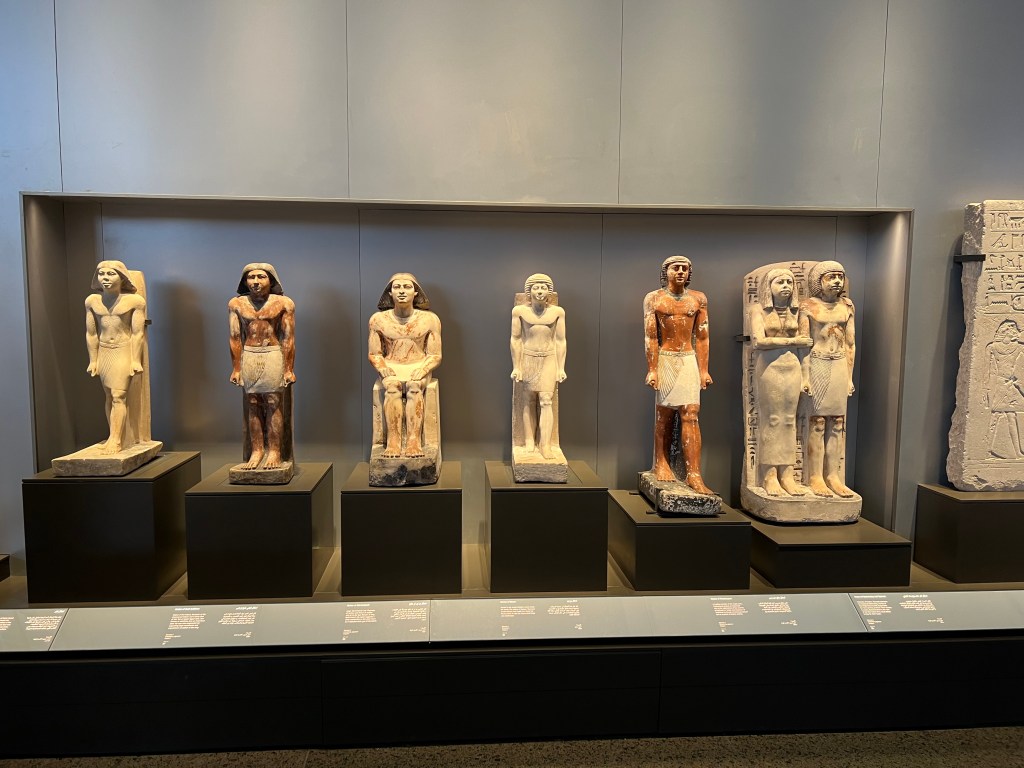

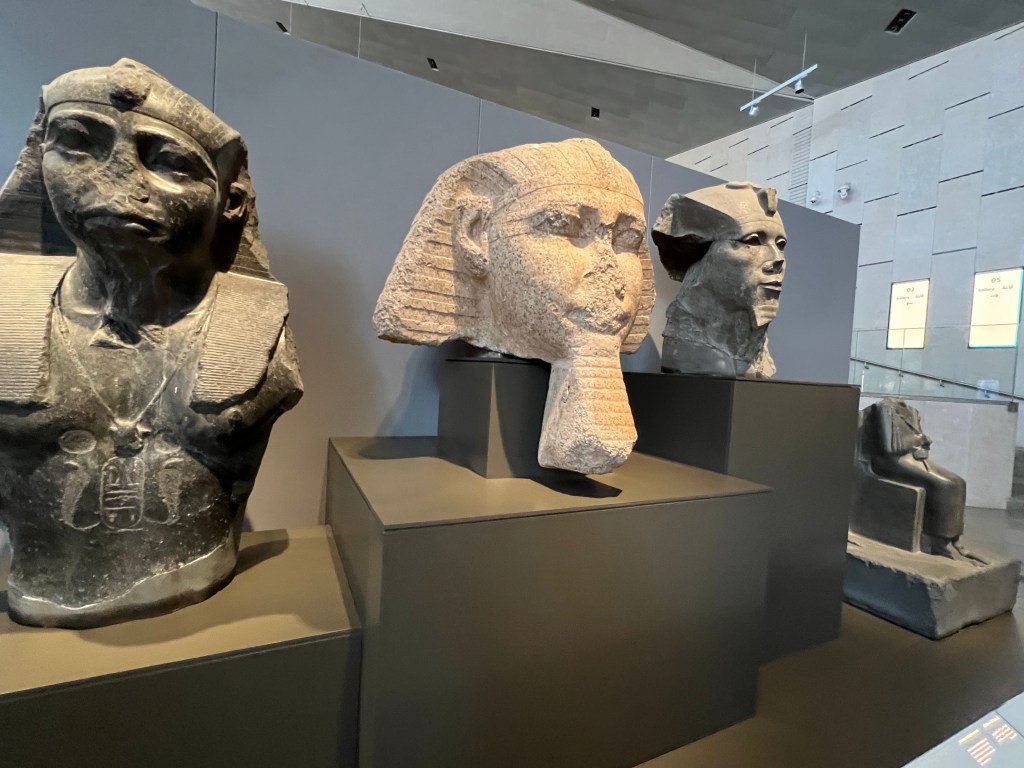
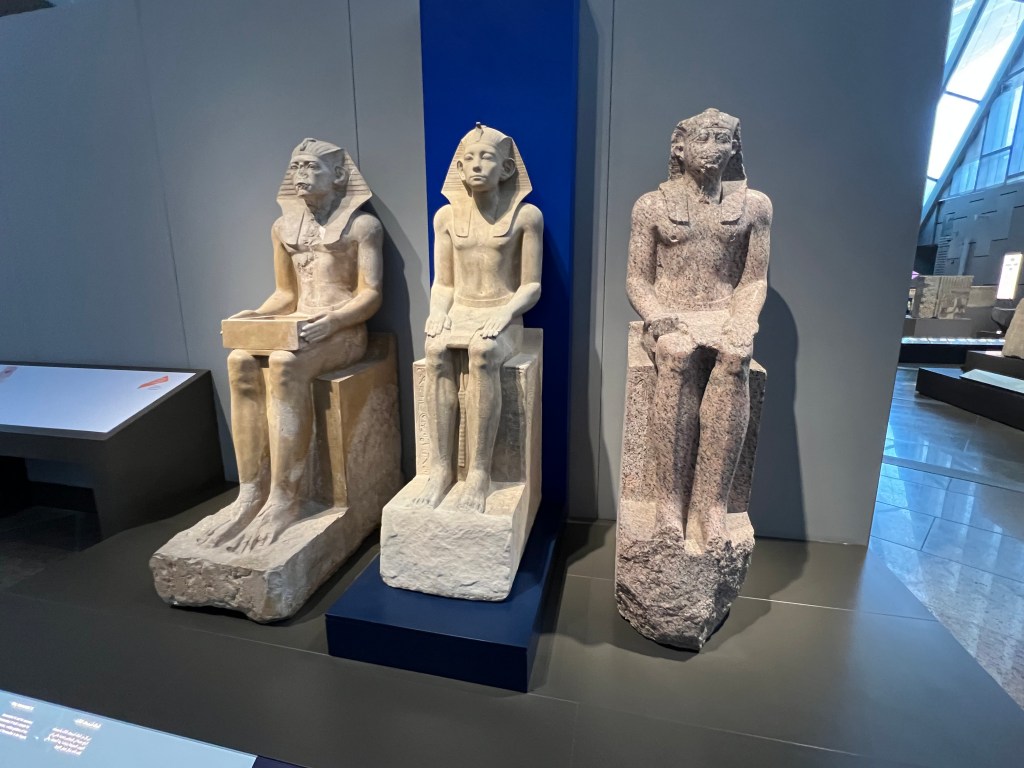
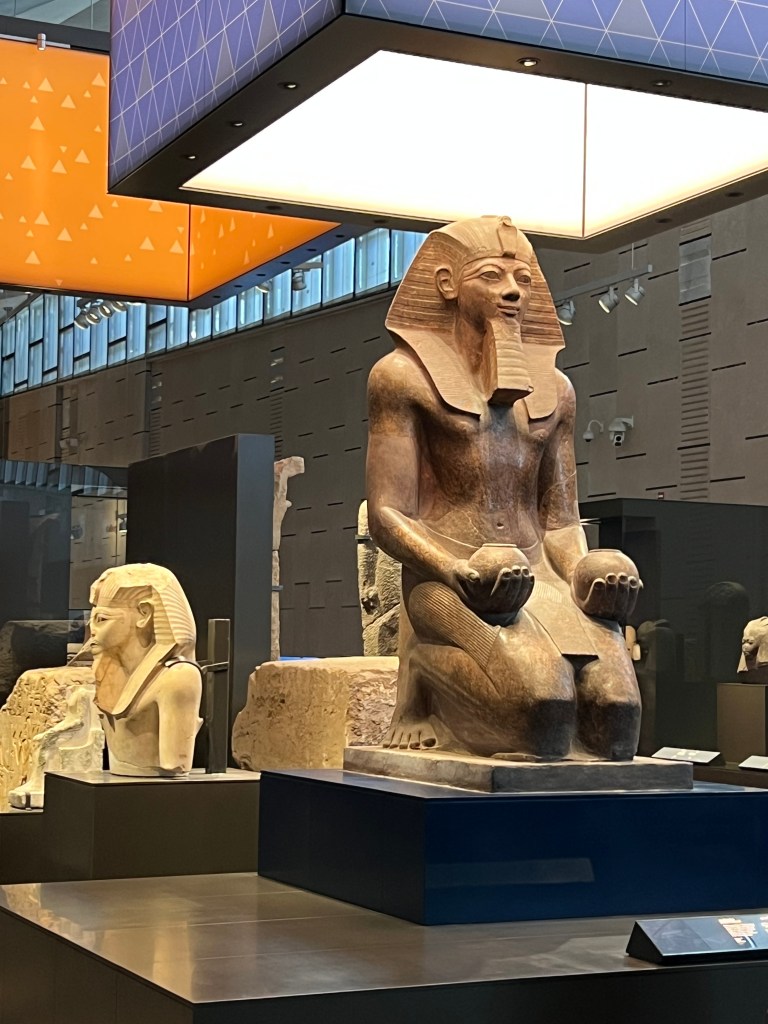

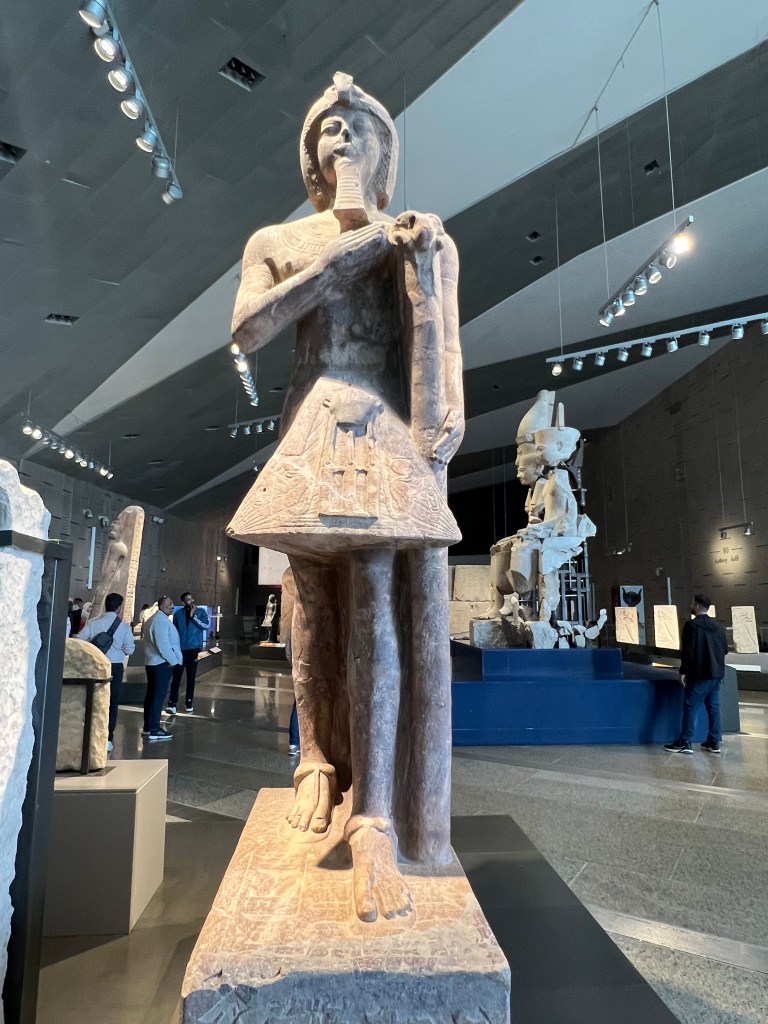


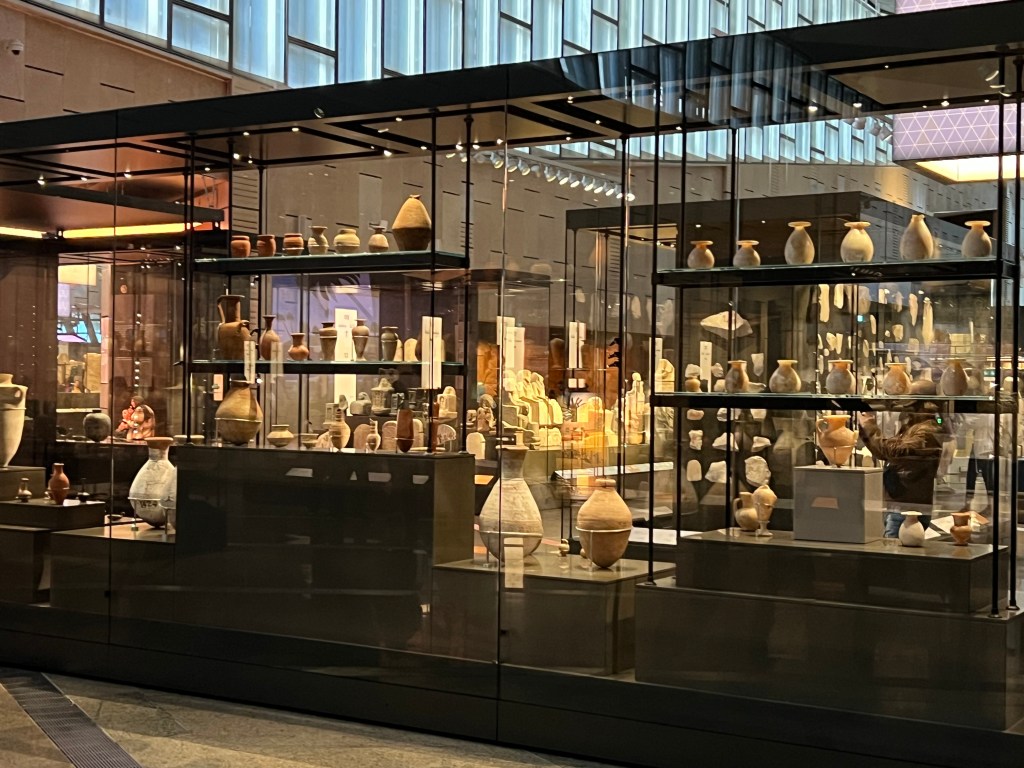
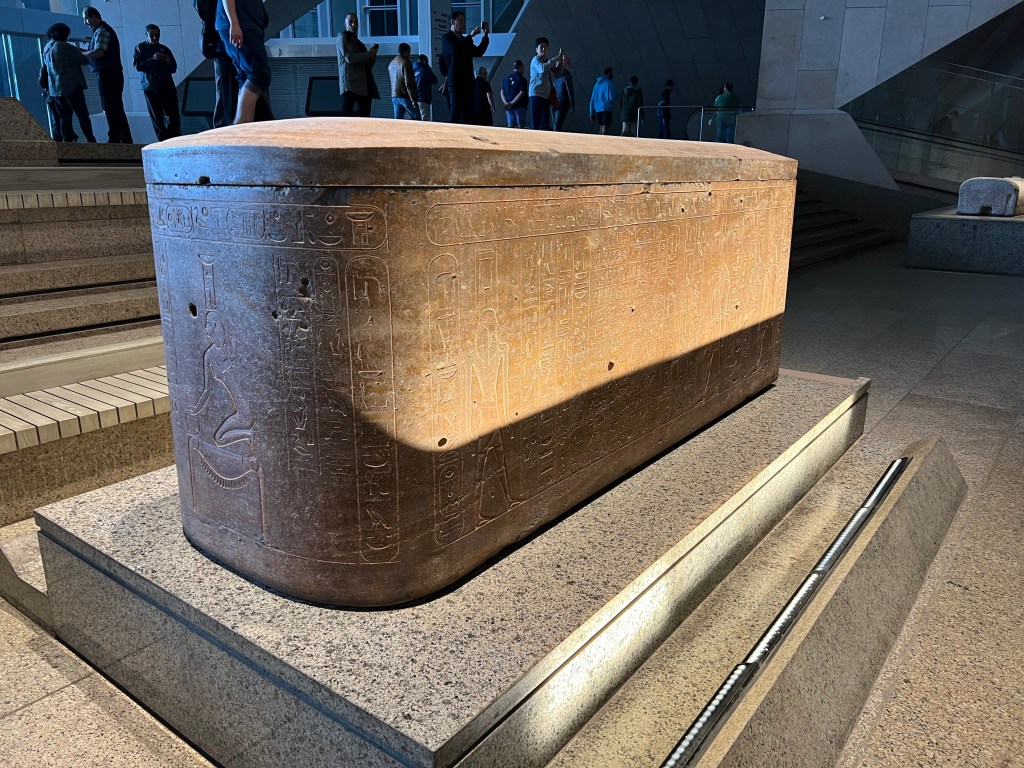
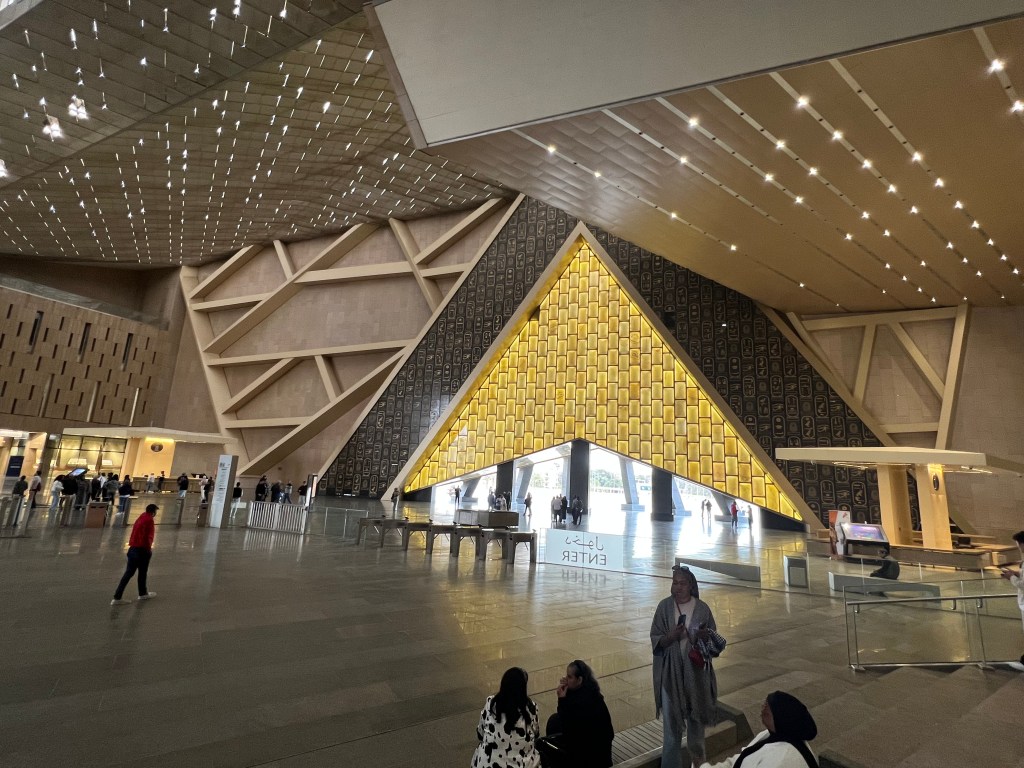

By this time we’d gotten to know our bus group pretty well and were exchanging information to keep in touch. In Lille, we have friends who are slightly younger than us and they joke that they are keeping an eye on our progress because it is a blueprint of what they can expect next as they age. In our private discussions on this trip, G and I were watching those in the group who were older than us, for the same reasons. We were grateful to be able to travel and to be able to DO the traveling. Those older than us would sit out certain things because of the vigorous climbs or the steep descents of various sites. One couple we befriended told us it would be their last cruise because one of them had developed dementia and was on the decline. As the old saying goes, ‘There for the grace of God…’. We are incredibly grateful for our good fortune and our opportunities, which we are reminded of in these clear examples.

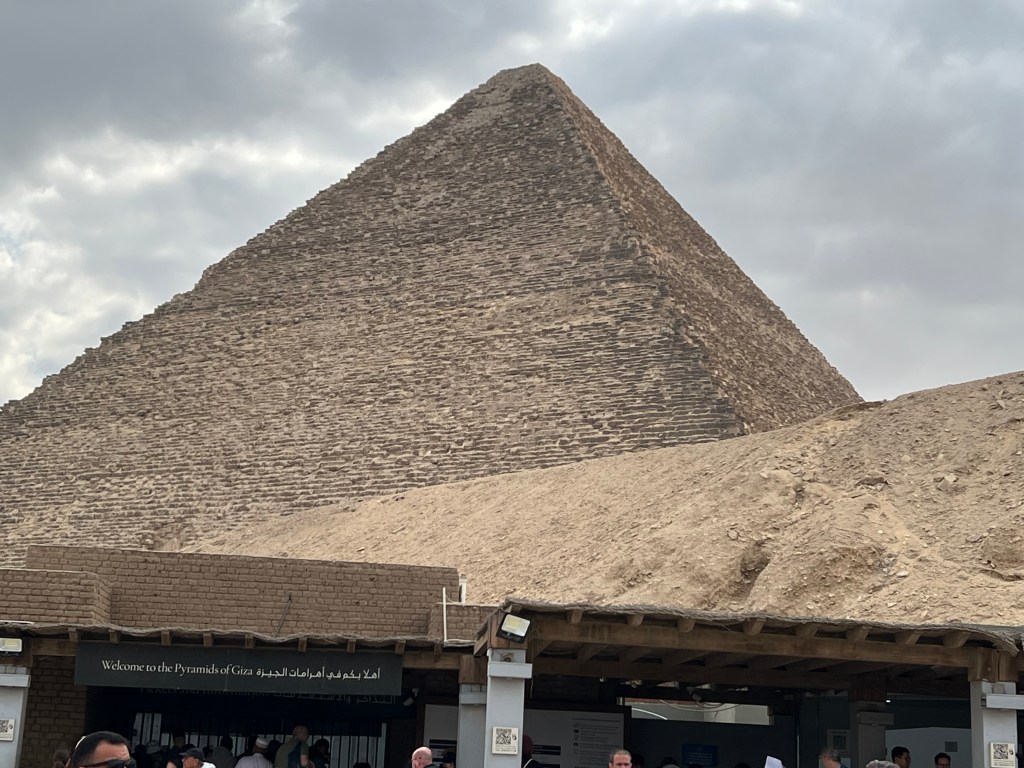
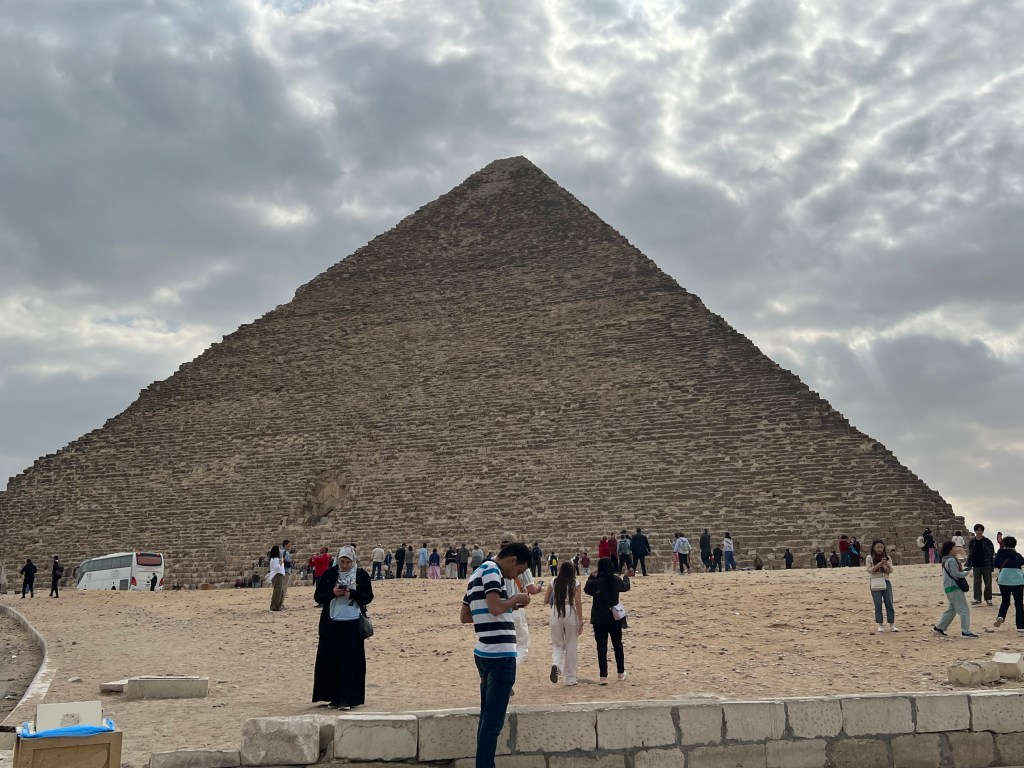

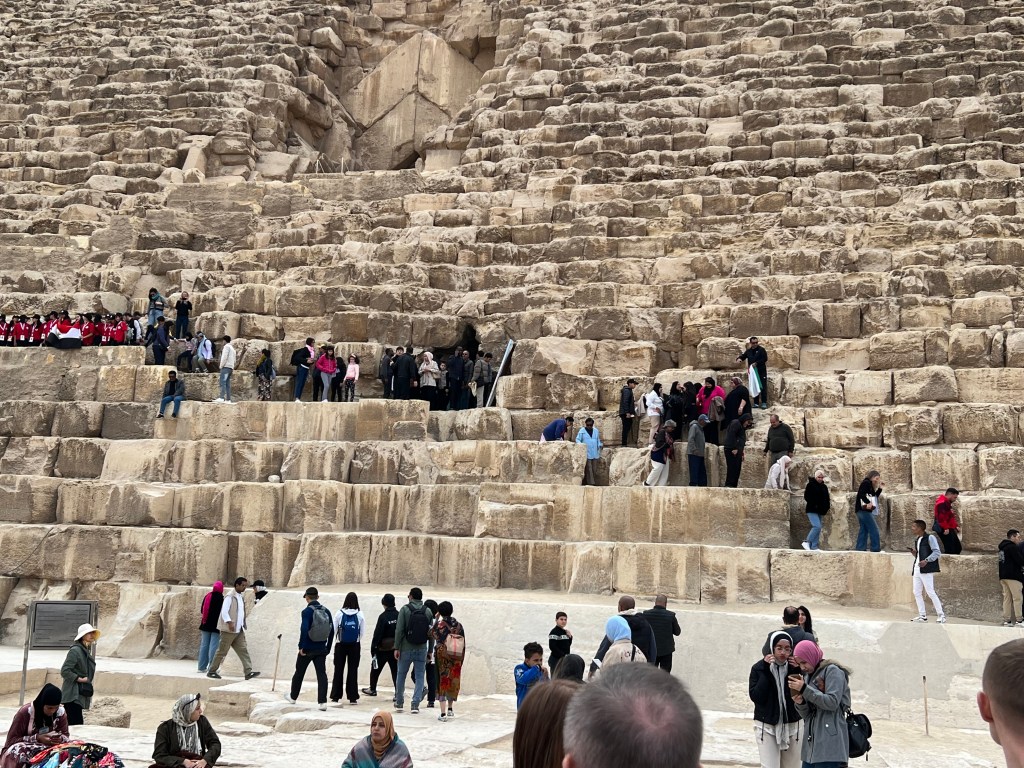

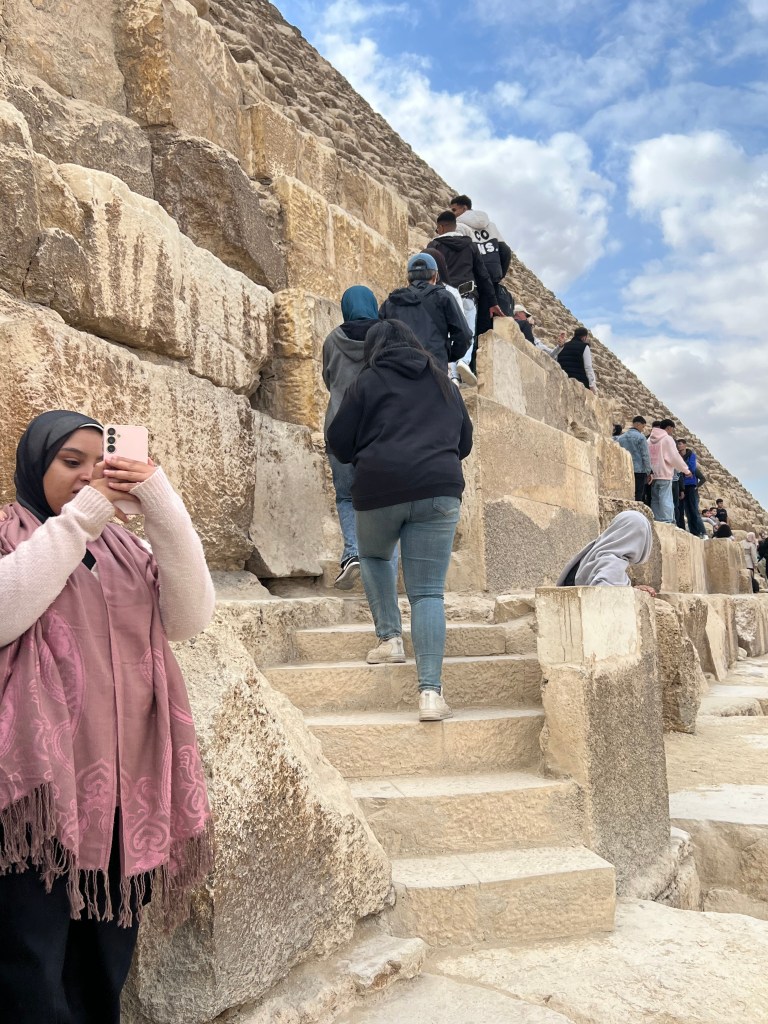
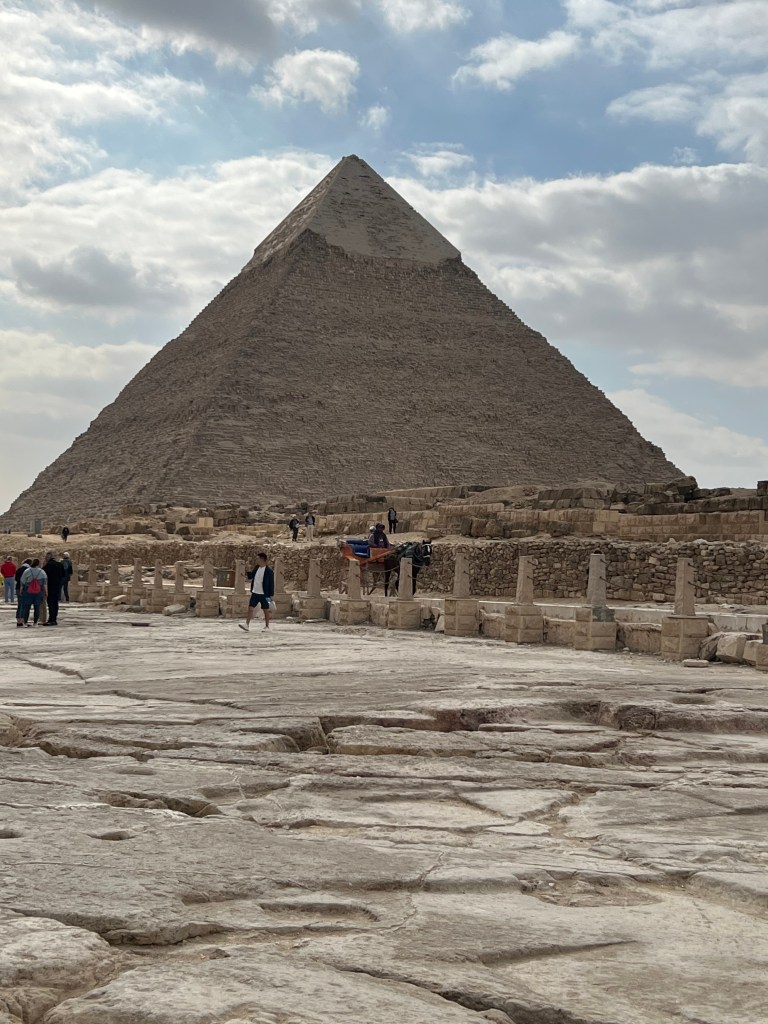
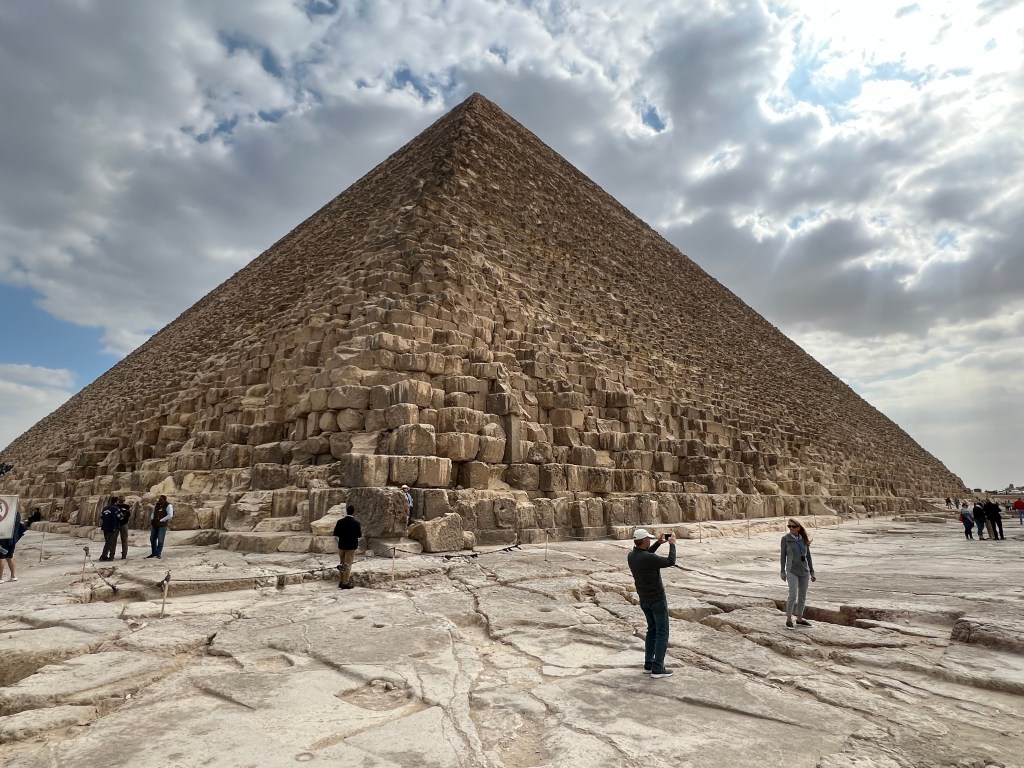

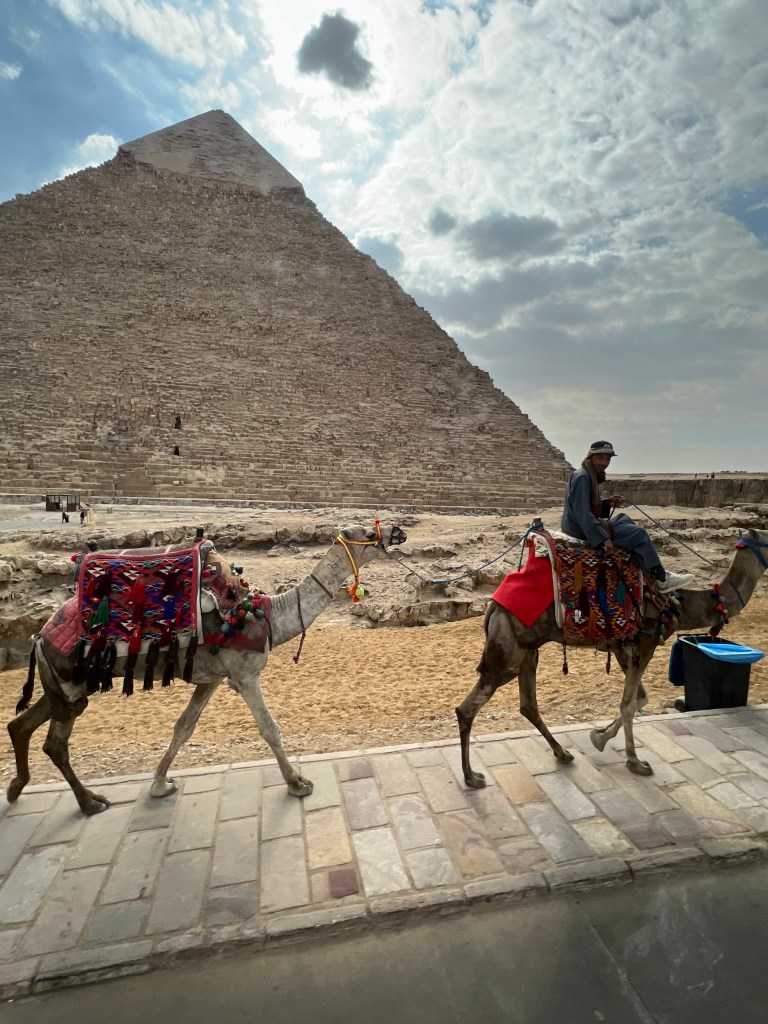

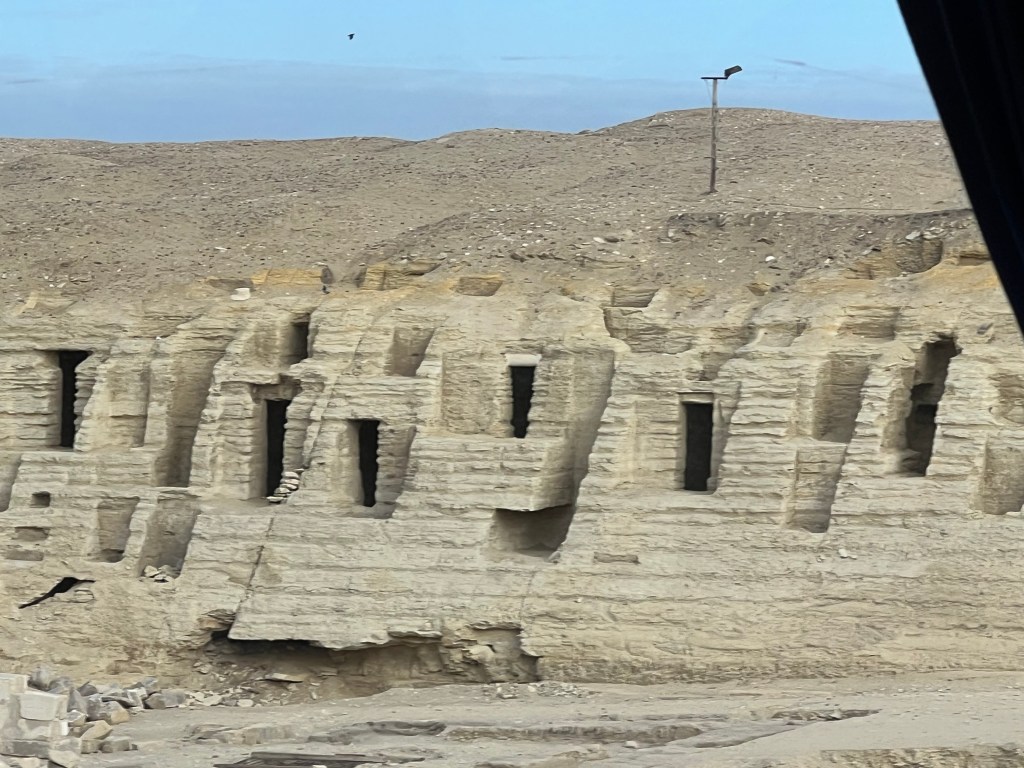
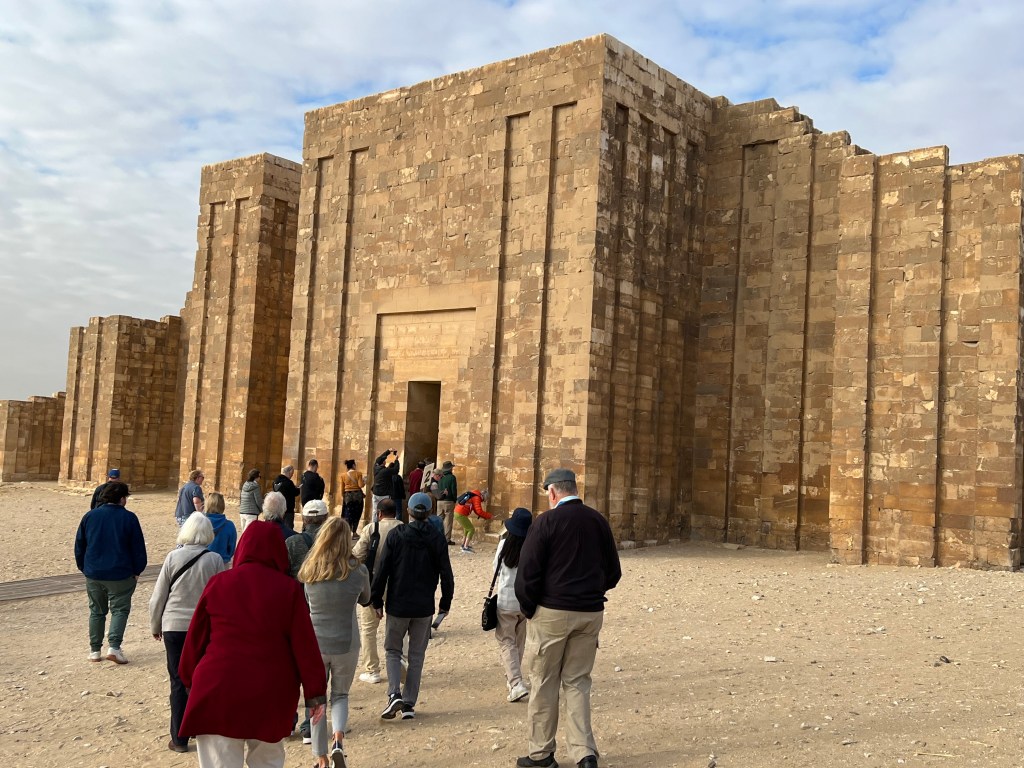
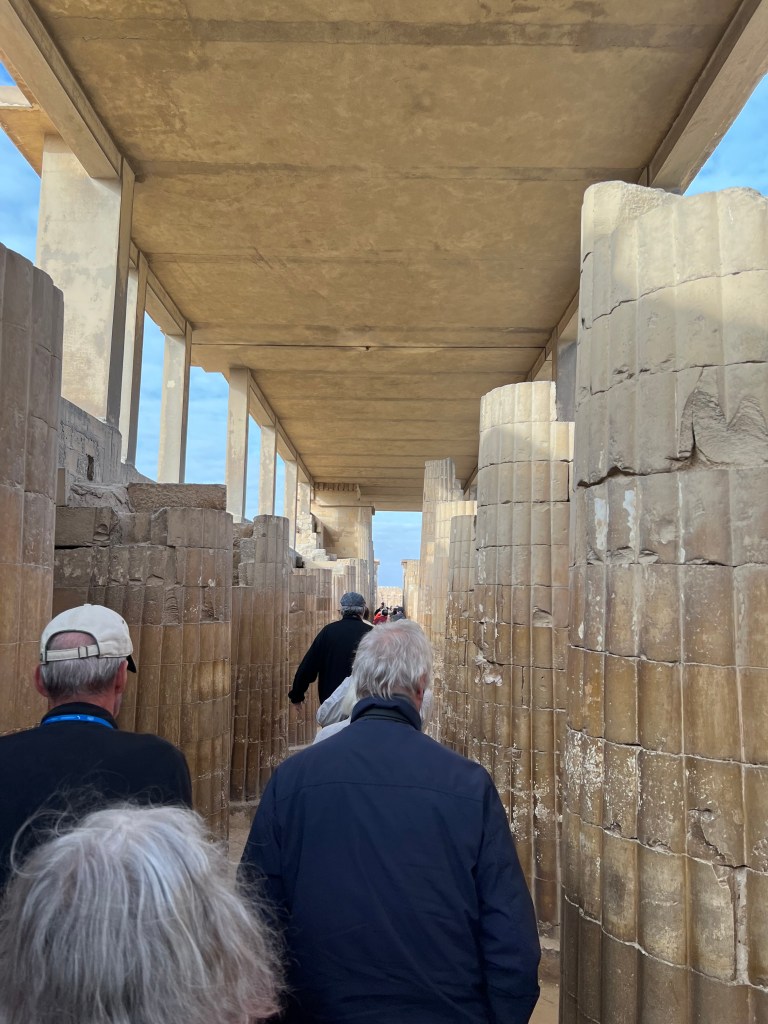
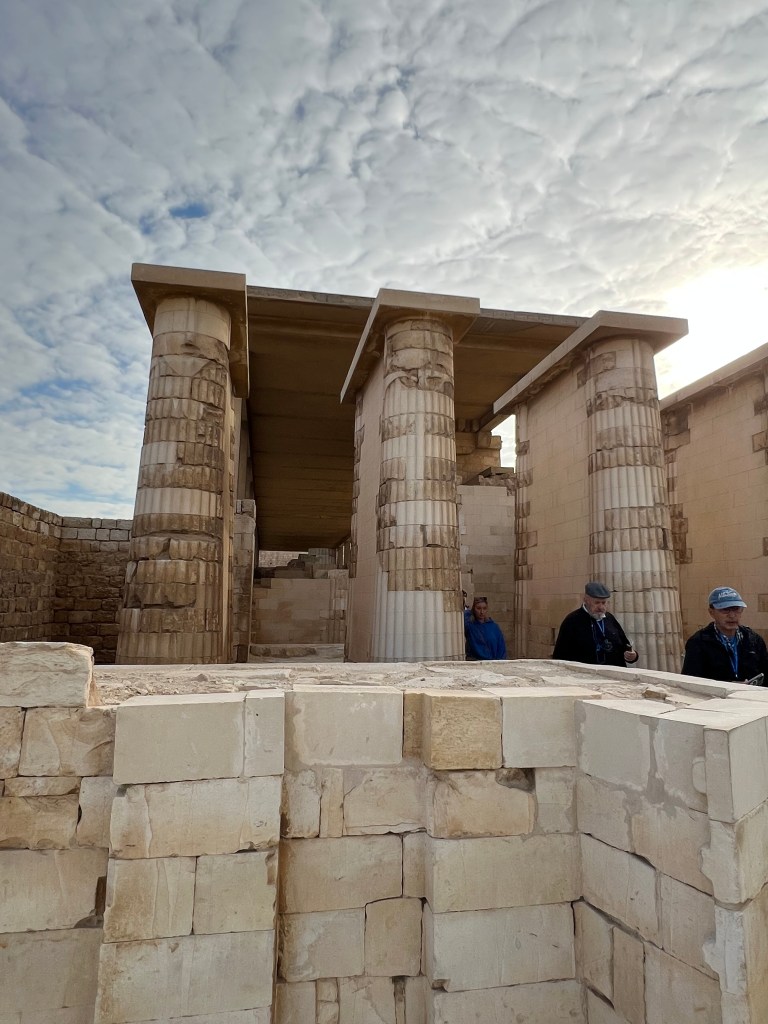
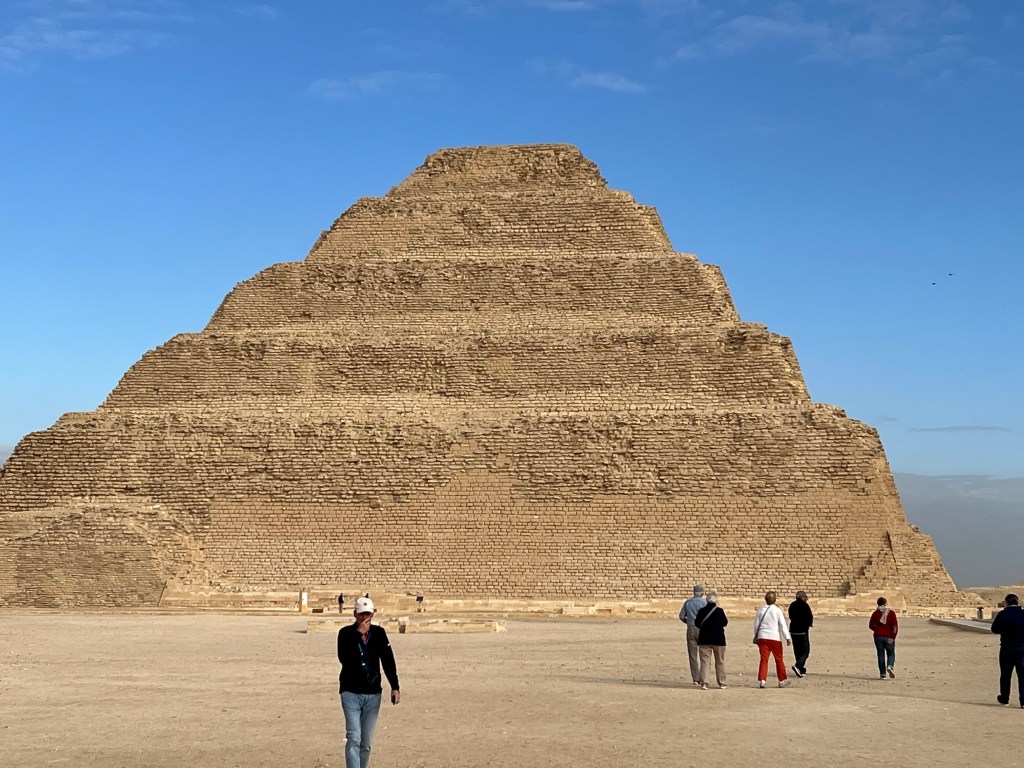
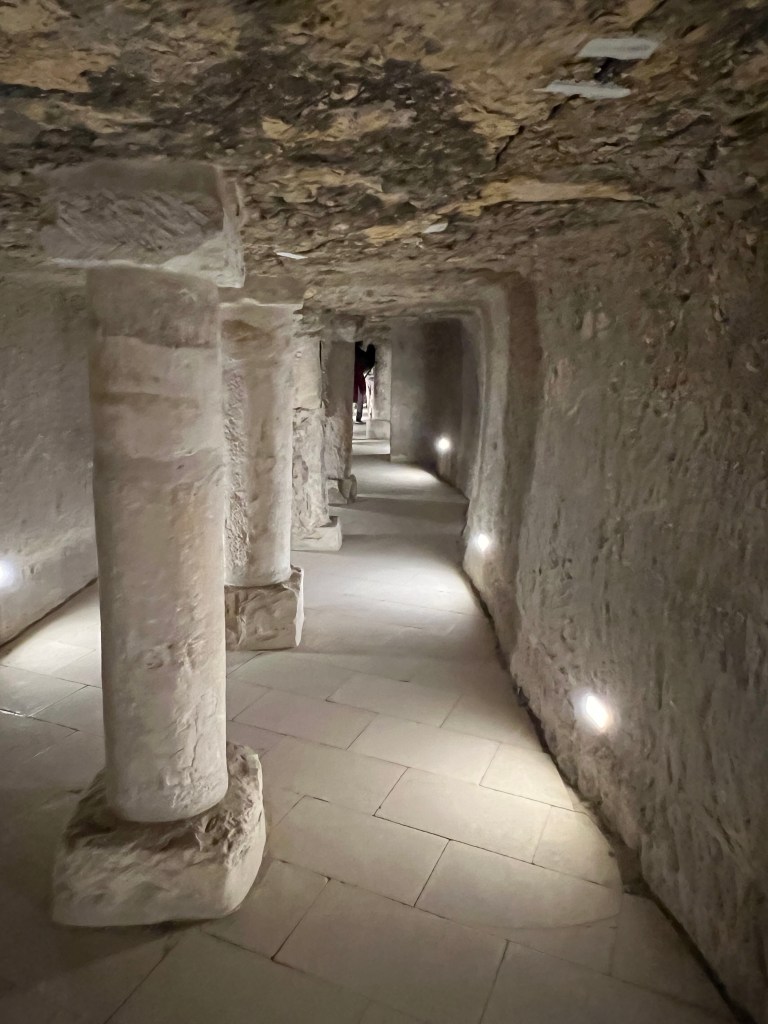
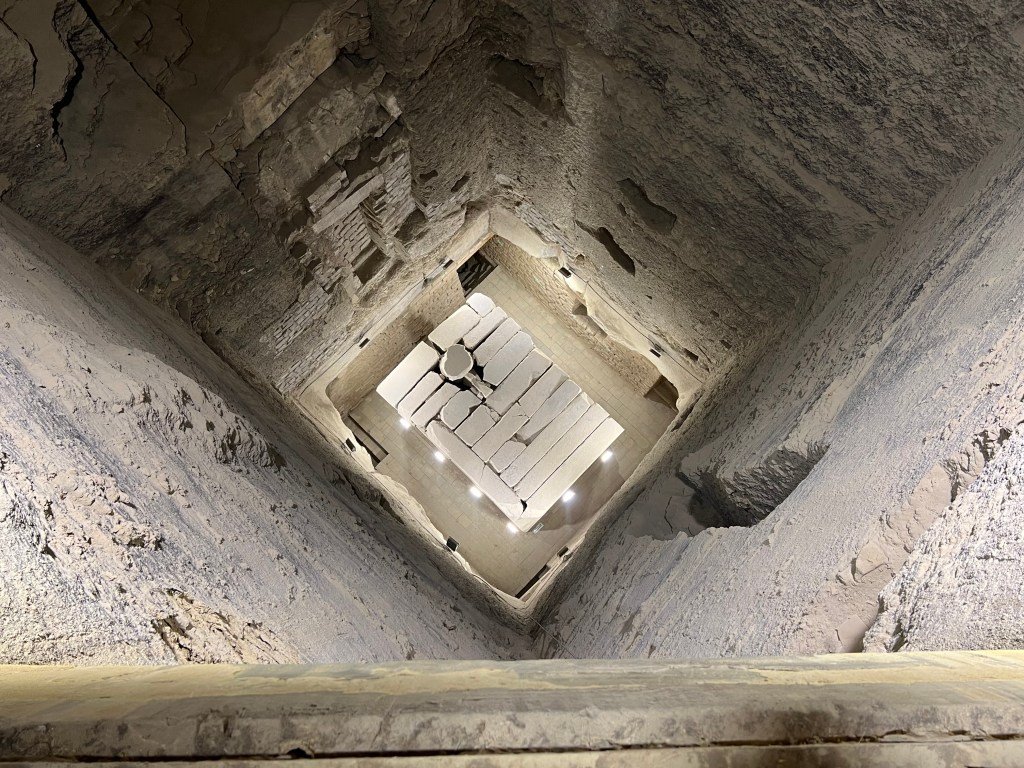
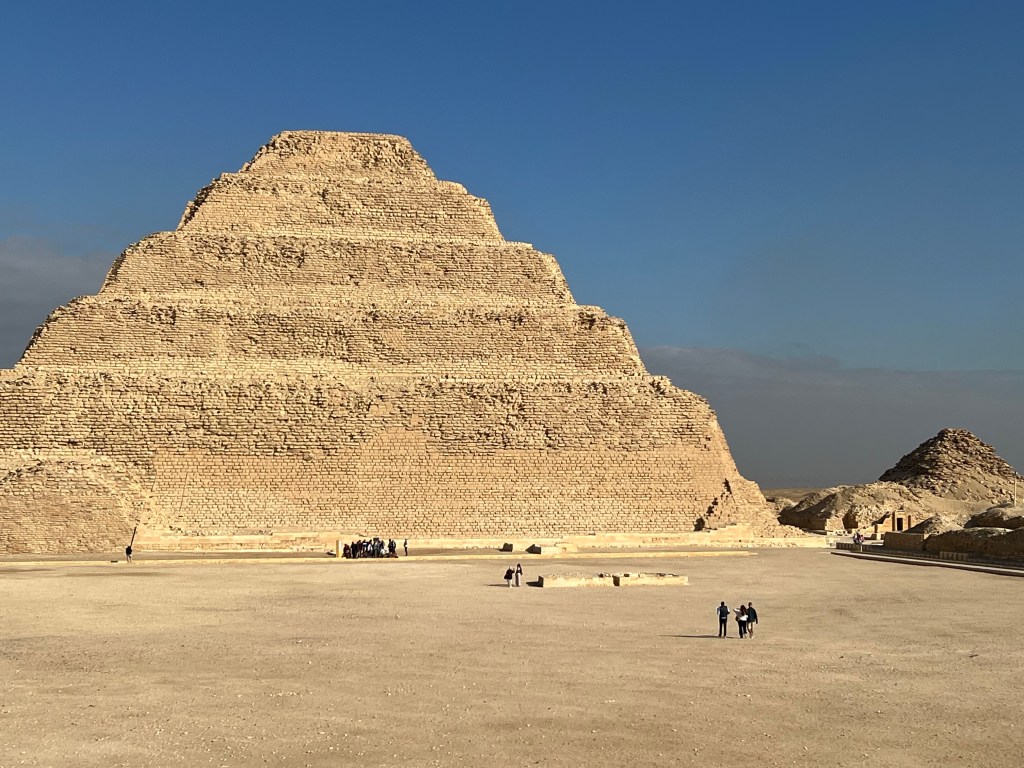
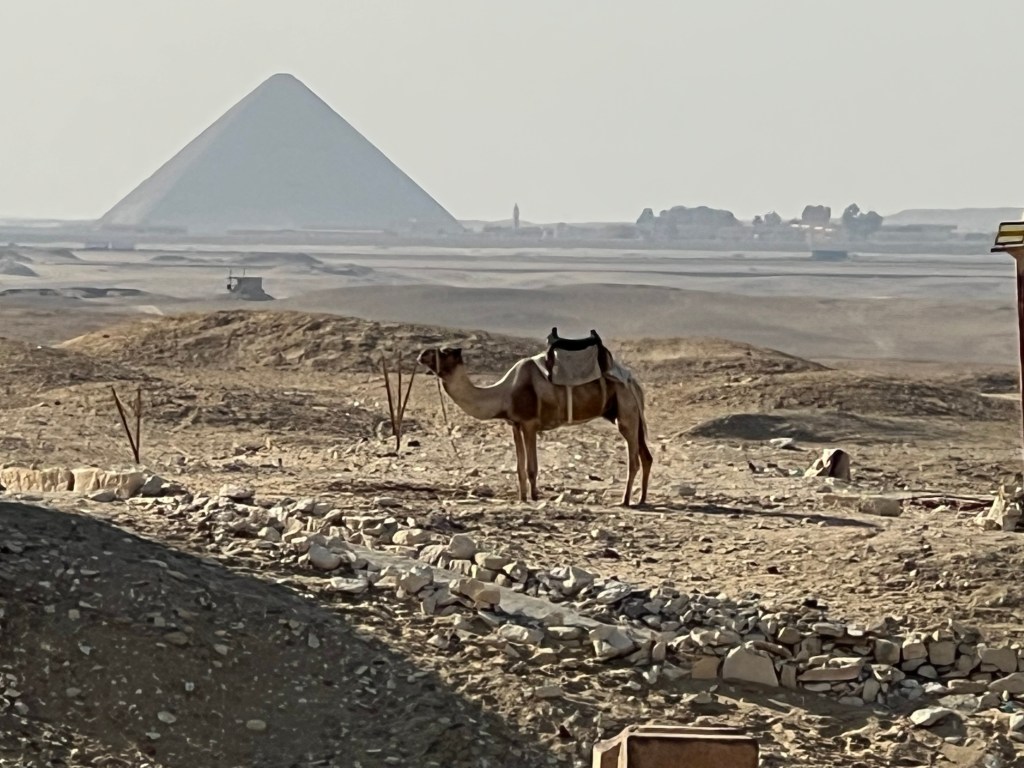
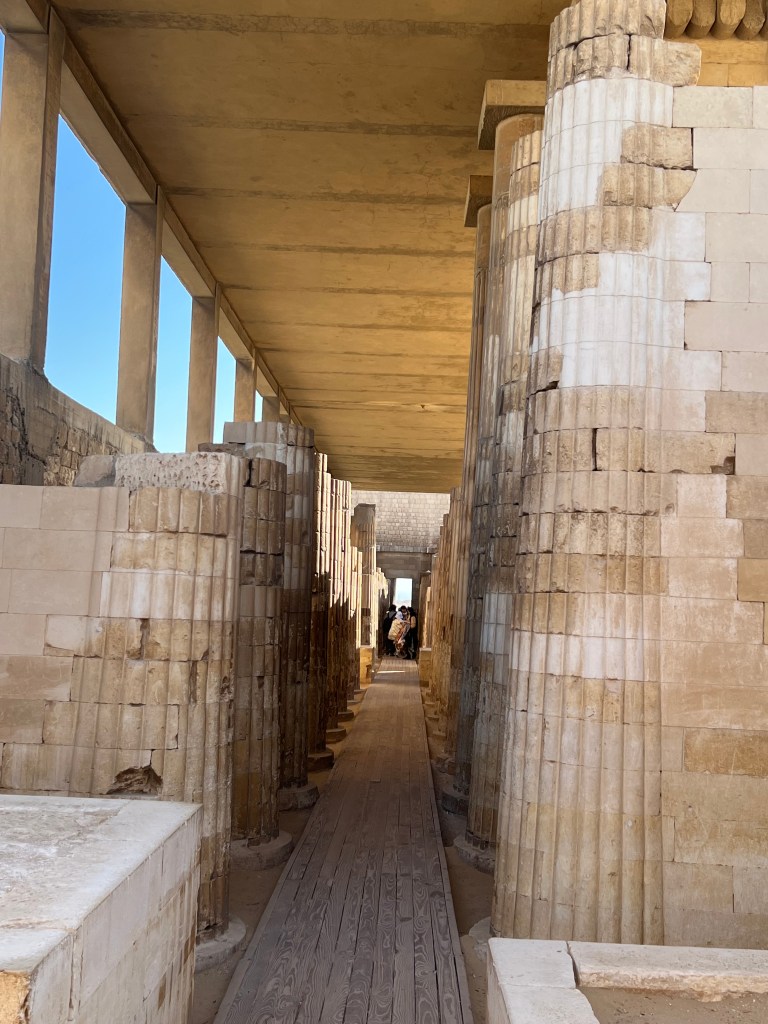
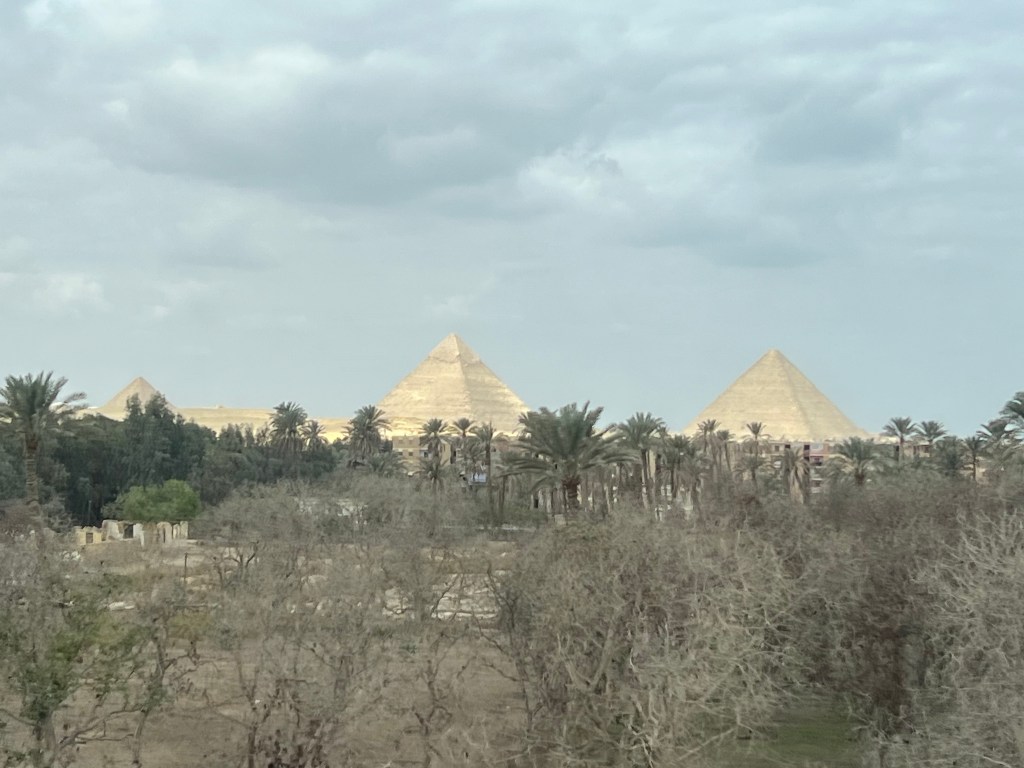
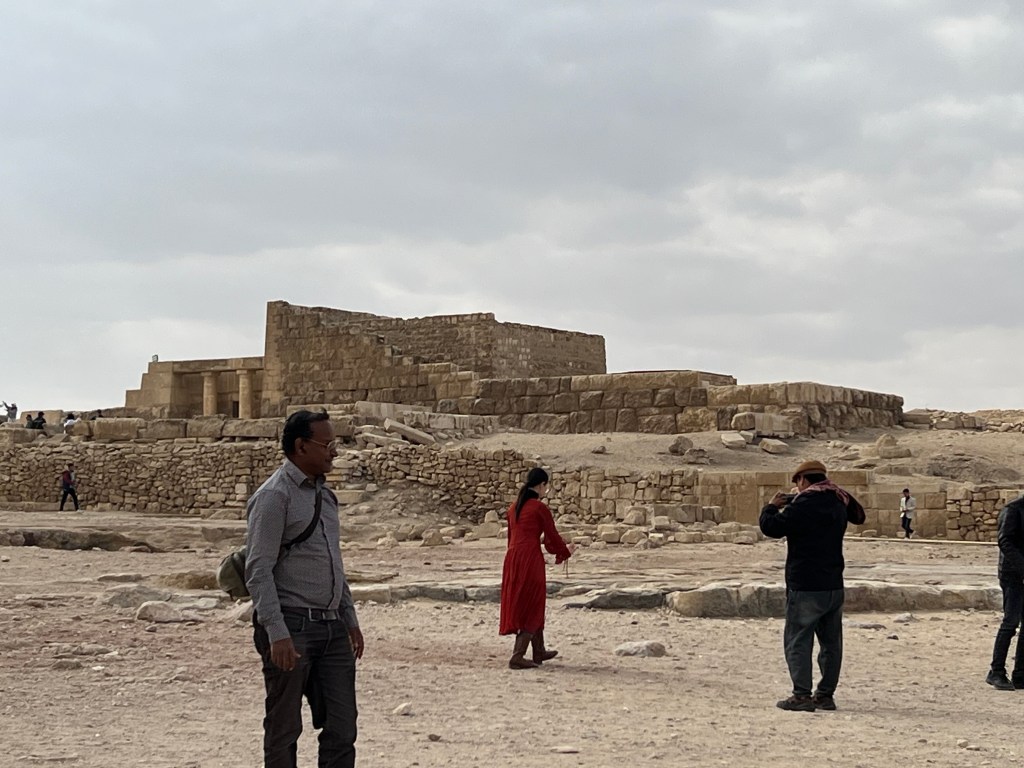
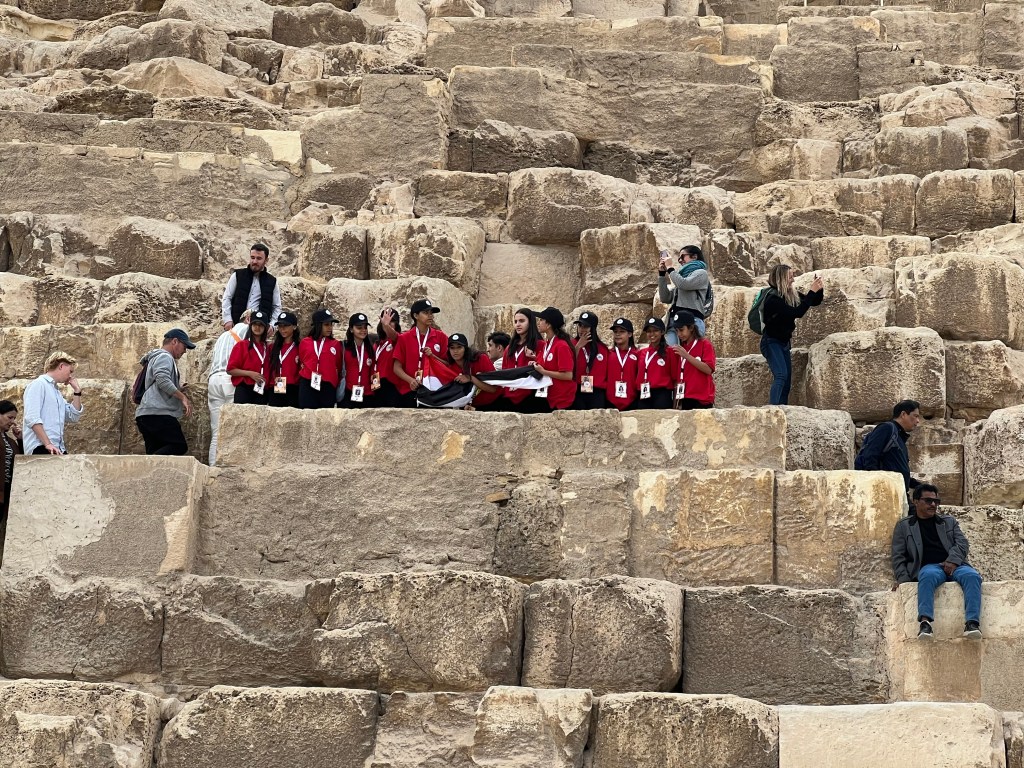
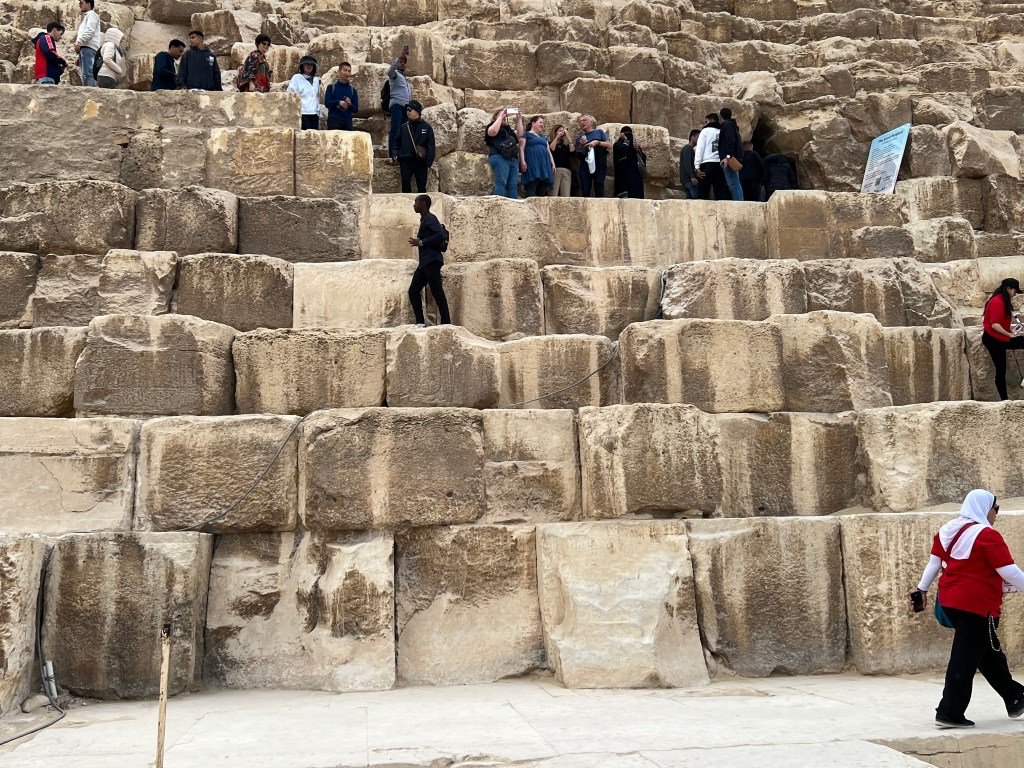
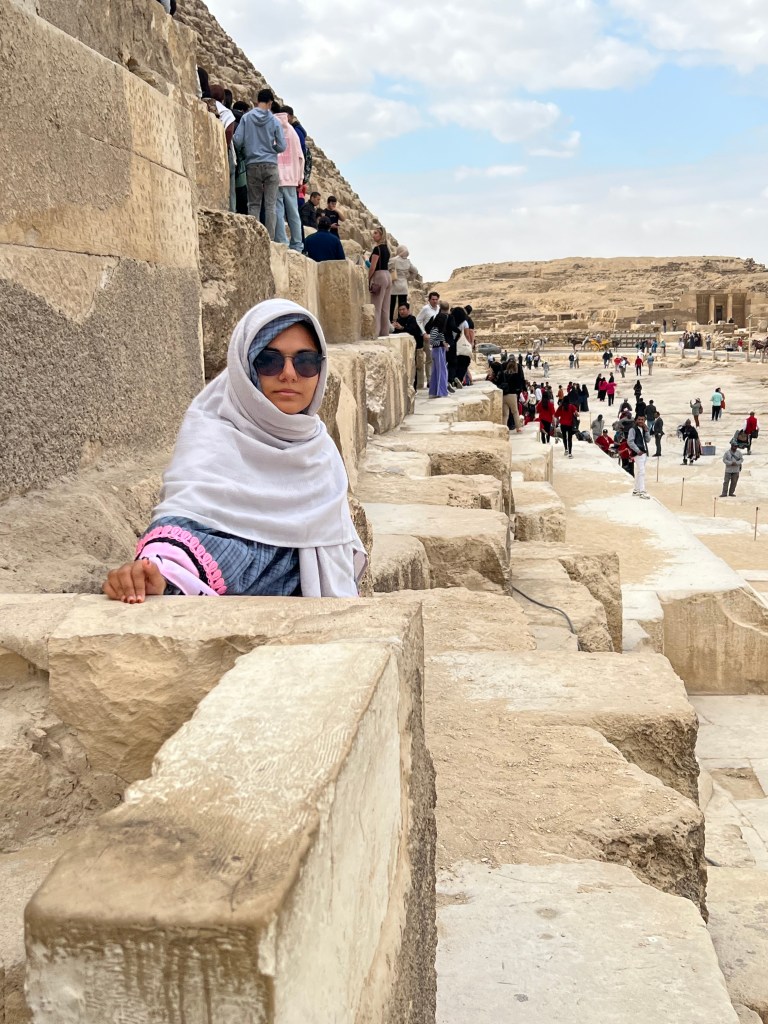
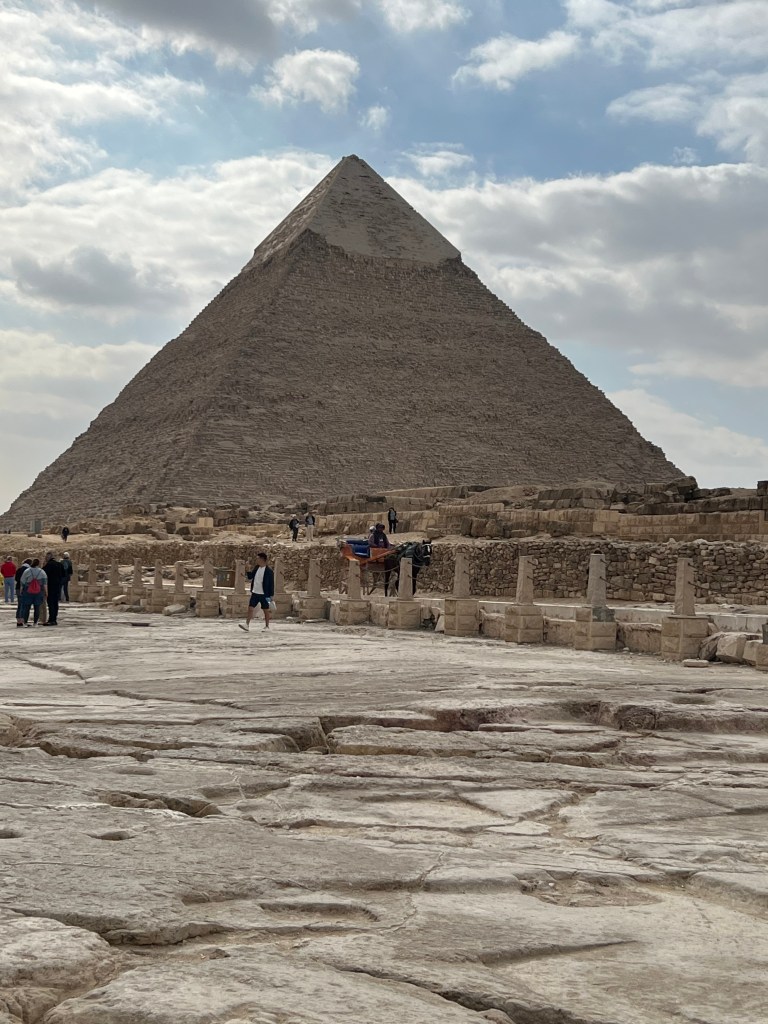
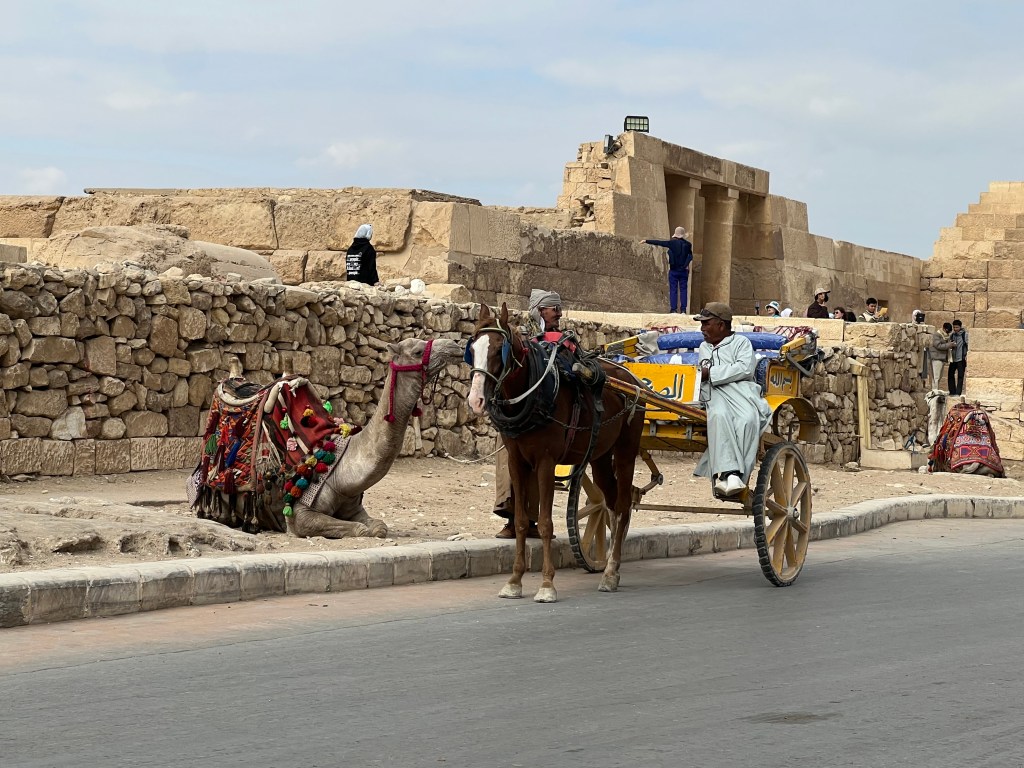
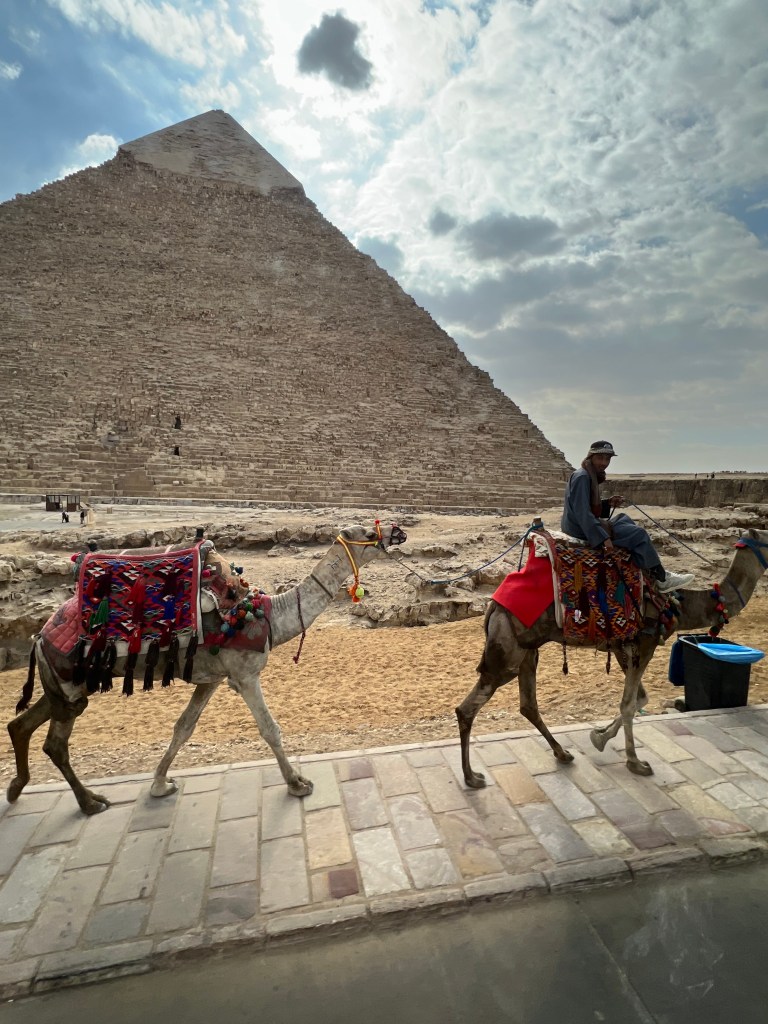
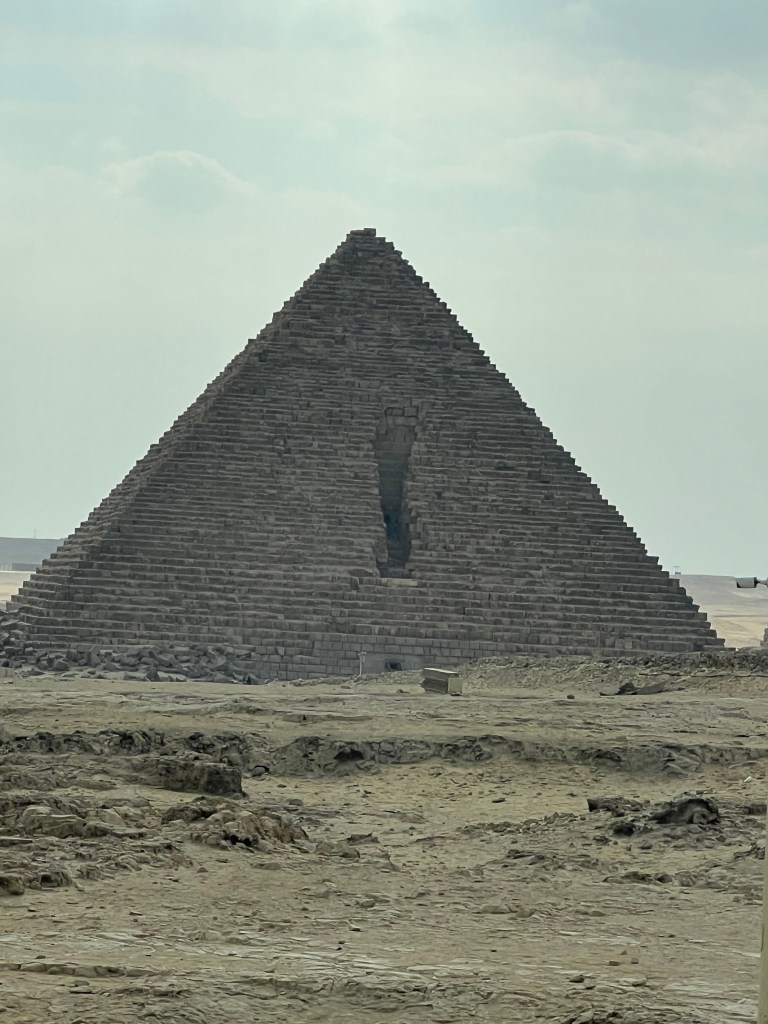
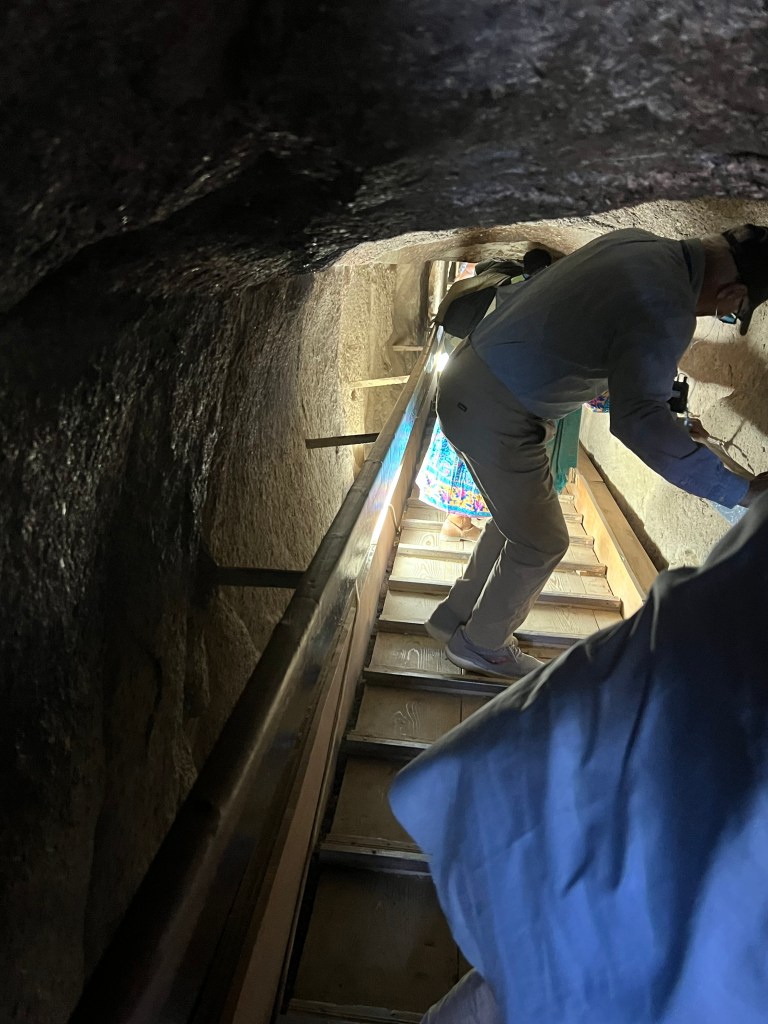
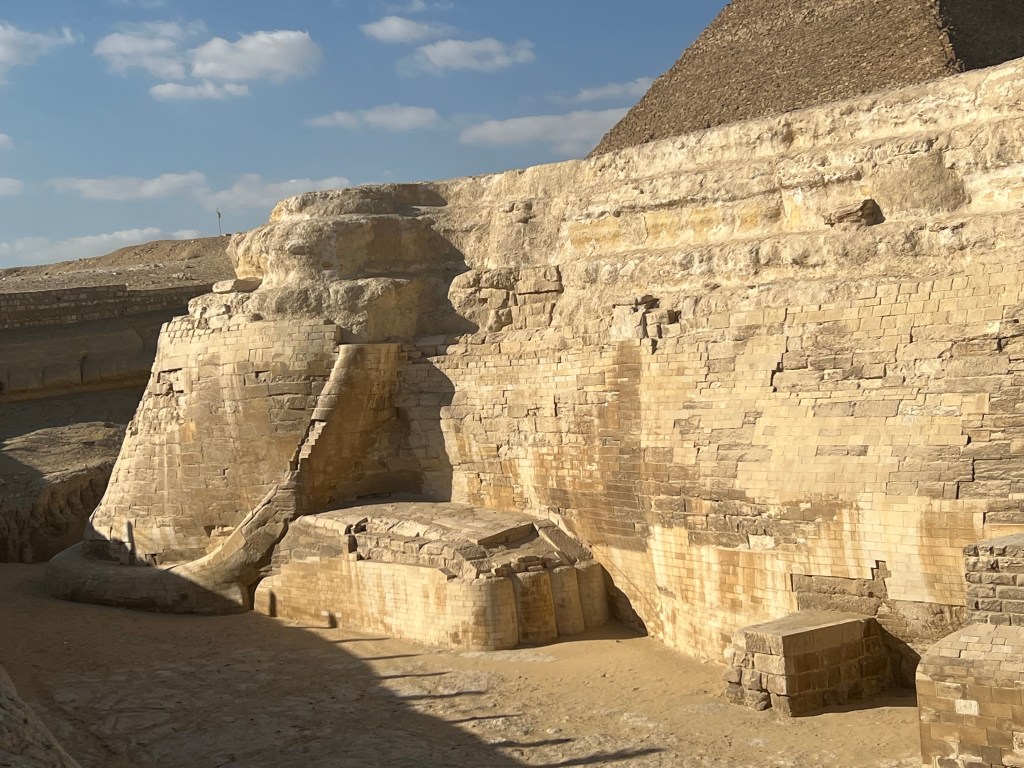
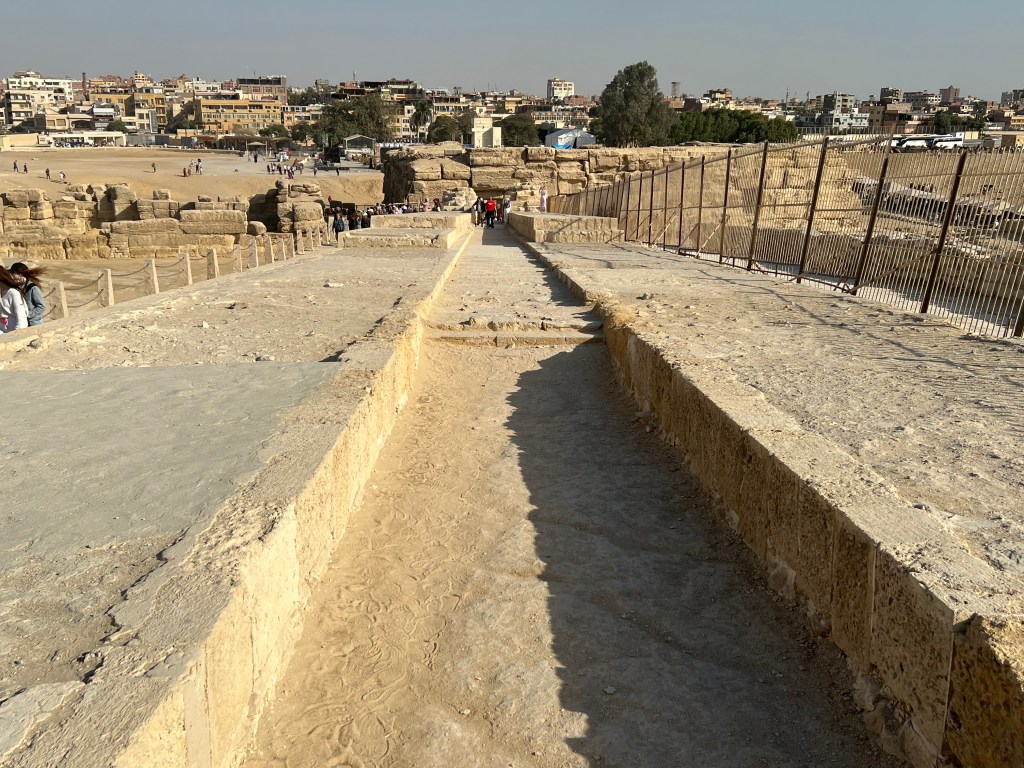
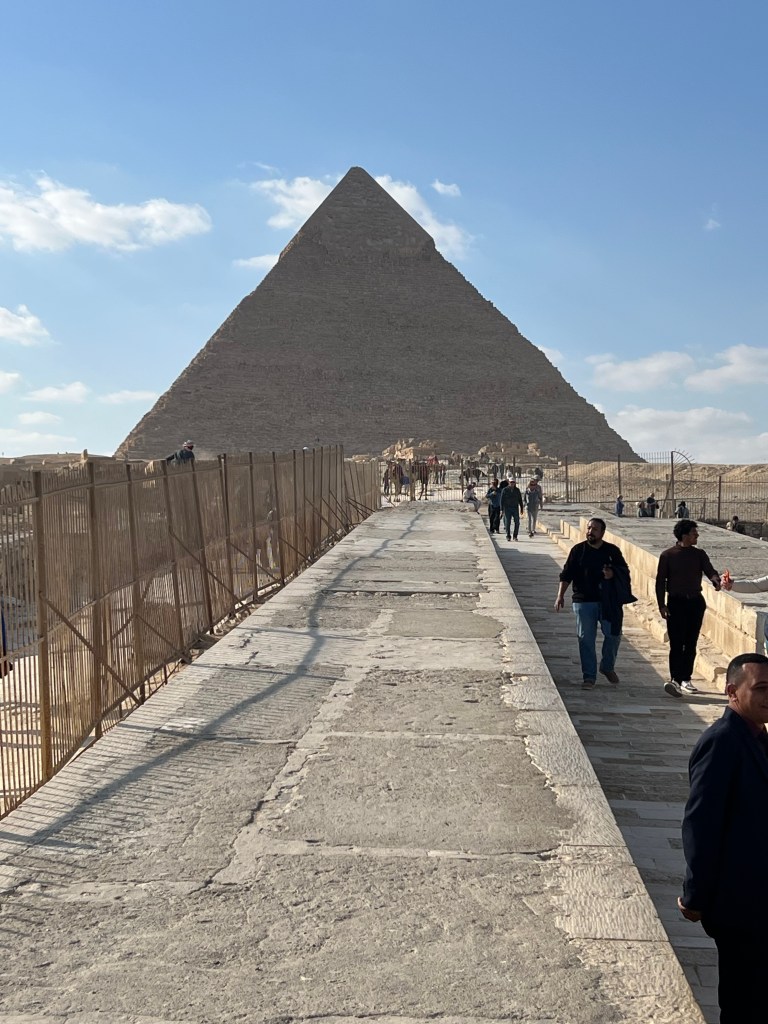
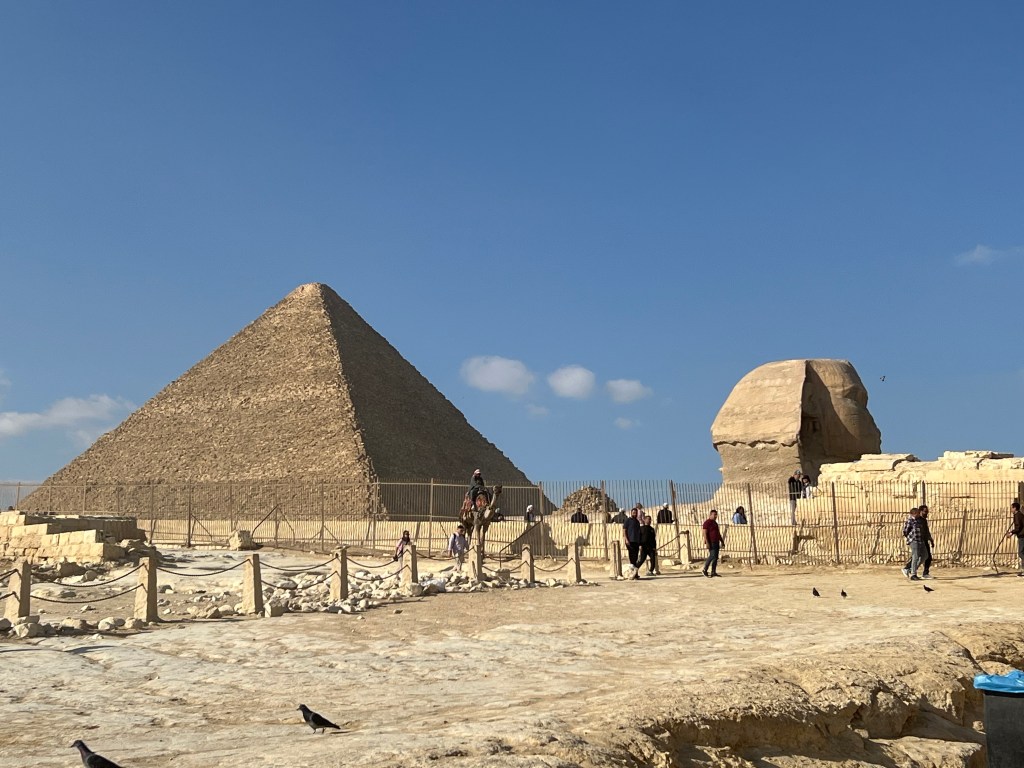
Day eleven was my personal highlight. Although Abu Simbel was over the top, this day we saw the Sphinx and the Pyramids of Giza. Entering in the gate to Sphinx, it was blocked from view until we turned the corner as we stepped to the top of the stairs. Then we came in full view, at the height of the Sphinx head. It was as big, as grand and as majestic as one can imagine. My heart dropped to my toes, I was so taken back. Mohamed explained that due to the deterioration caused by the elements, it was slated to be moved and placed in an enormous glass box. Although completely understandable, it was heartbreaking that its presence would be reduced. I am so thrilled to have seen it and to have seen it before this occurred. The Pyramids were phenomenal and we kept pinching ourselves over the fact that they were there – IN FRONT OF US. This whole experience was for me, the feeling I would expect to experience if I were to see live dinosaurs, as in Jurassic Park. Just beyond my imagination and a sensory overload. We were actually able to enter the Pyramid of Sakkara. The descent was quite difficult as we were forced to stoop and sidestep the entire way, until we reached the burial chambers. Some people could not complete the descent and some were forced to retreat upon reaching the chambers due to the close air.














We returned to the hotel, completely spent and after freshening up, we took to seeking out the people we’d come to know, to bid our farewells. Unfortunately we didn’t get to see everyone as all were headed out the next morning at different times, to fly to a variety of destinations. We were up at 4 am, out to the airport by 5, plane almost 2-hours delayed to leave at 9:30 am. Grateful that we were in the lounge for our wait. We landed in Paris around 4 pm. An hours train trip to Lille and we were in the apartment by 5:30 pm. We’d gone from the daytime temperatures of 75-80 degrees to 45° in Lille. We were exhausted and drained but boy-oh-boy, it was quite the adventure.

The next night we dined with our great American friends, Caren and Bret, to celebrate Thanksgiving at a favorite restaurant Le Lion Bossu. Not hard to get reservations because naturally no one else was celebrating Thanksgiving. A hearty dinner and catch-up was just what we needed. Another ‘WOW’ – it’s already December and the holidays are upon us !!
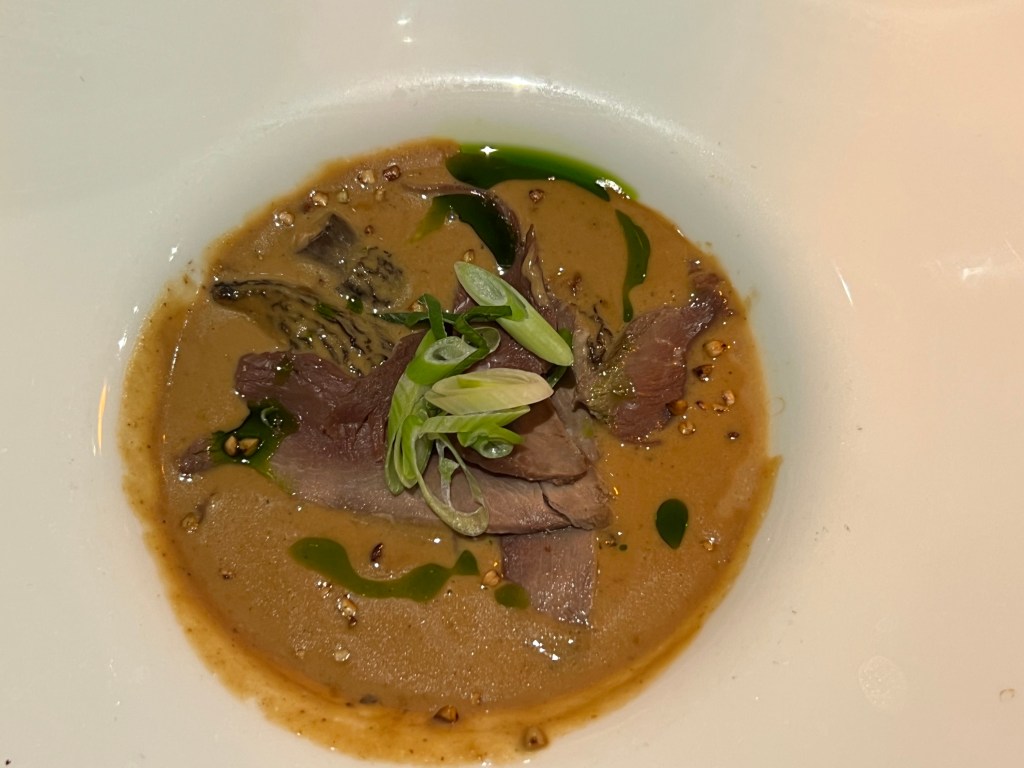
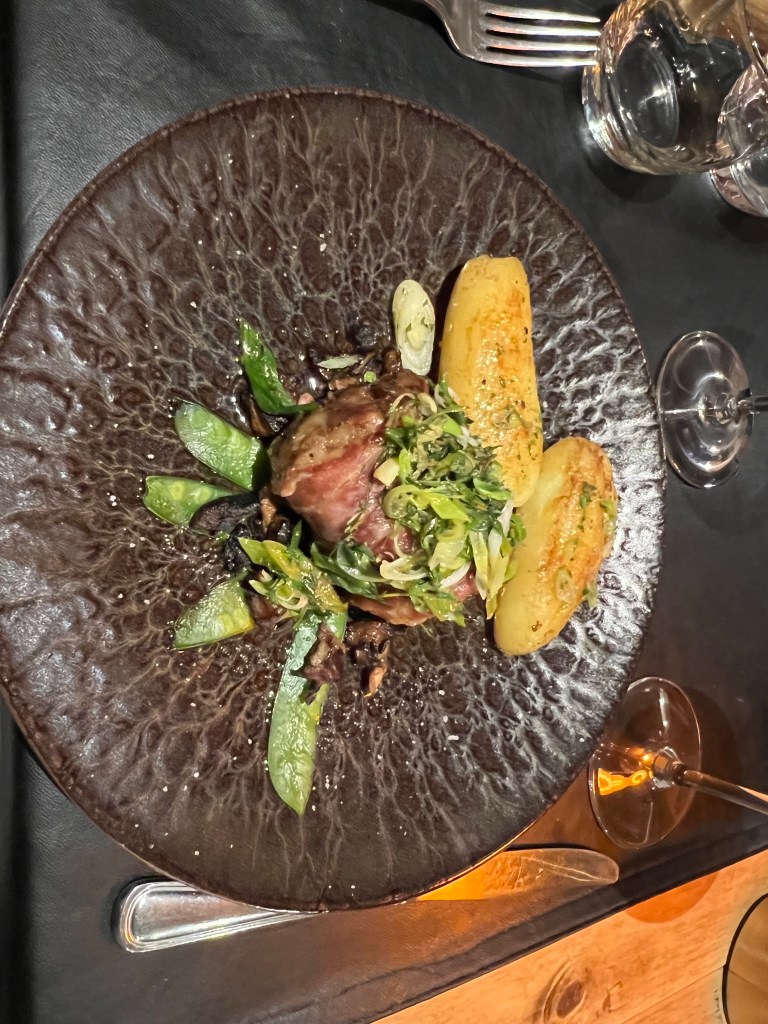
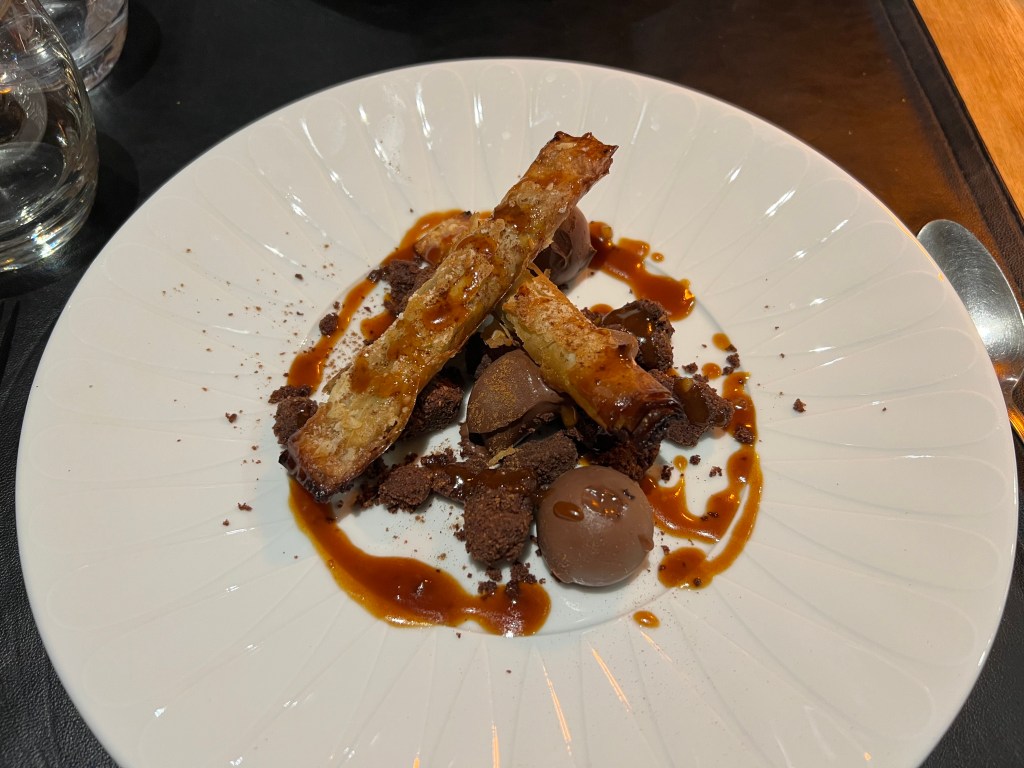

Apologies for all the photos! There are so many more we could have shared but we know it gets tedious for you. Needless to say, once in a lifetime.
 twokiddosoverseas.com
You must be logged in to post a comment.