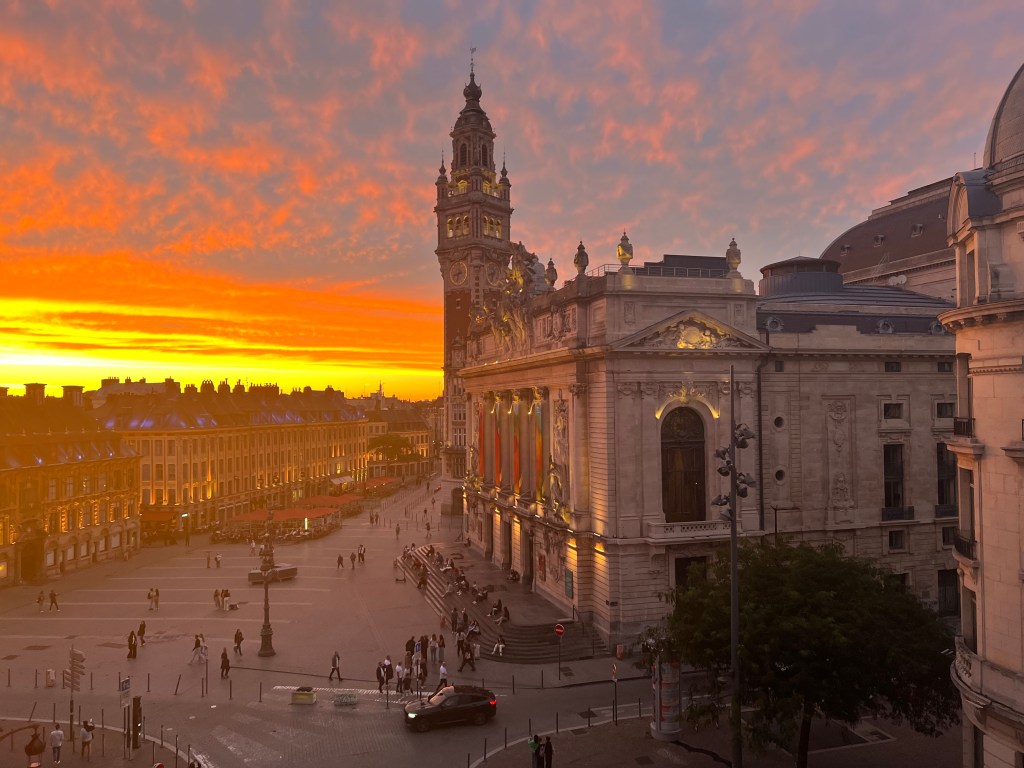
Sadly, summer weather basically lasted 6 weeks of 70F degree weather with that one day spike which had us pull out the A/C. The Indian Summer weather I’d hoped for did not materialize as the steady 60°-70° day time degrees moved to 55°-60°’s. We folded up our balcony table to store until next spring and watched the sunsets arriving earlier day by day.
In fact it was cool enough to have me hankering for chicken pot pie. I’d never made it but after an internet hunt was able to produce one to properly usher in fall. The recipe I tried was an absolute bear and took a total of 4 hours from start to finish. After much cussing and declaration of ‘NEVER AGAIN’, I replaced the original, intricate crust instructions, making my own, simpler one, using up the leftover filling. That went much smoother and cut the time in half. Let’s hope the rest of the fall goes better.

It was a month of medical check-ups and small home projects but we did manage a trip to visit friends, Caren and Bret, in Delft. They live in Lille but rented a place for 6 months there to try it out as a permanent residence. The permanent relocation issues revolving around visa and taxes proved to be too much and they have decided to remain in Lille. We went for a few days to see this little picturesque town which had captivated their interest.
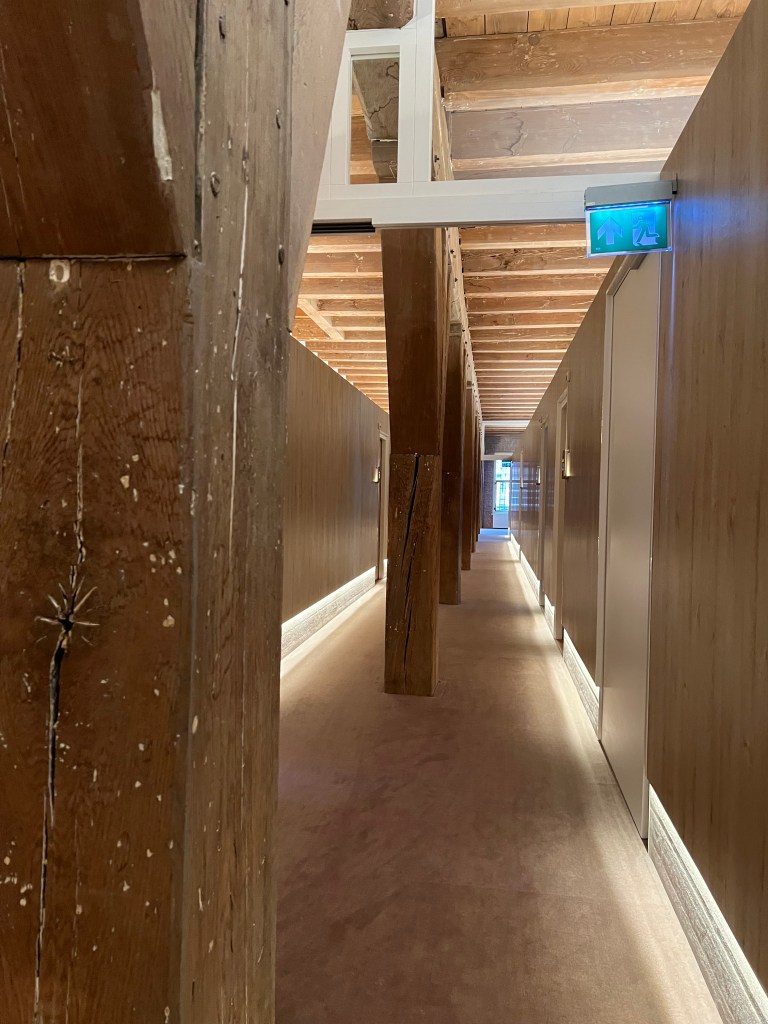
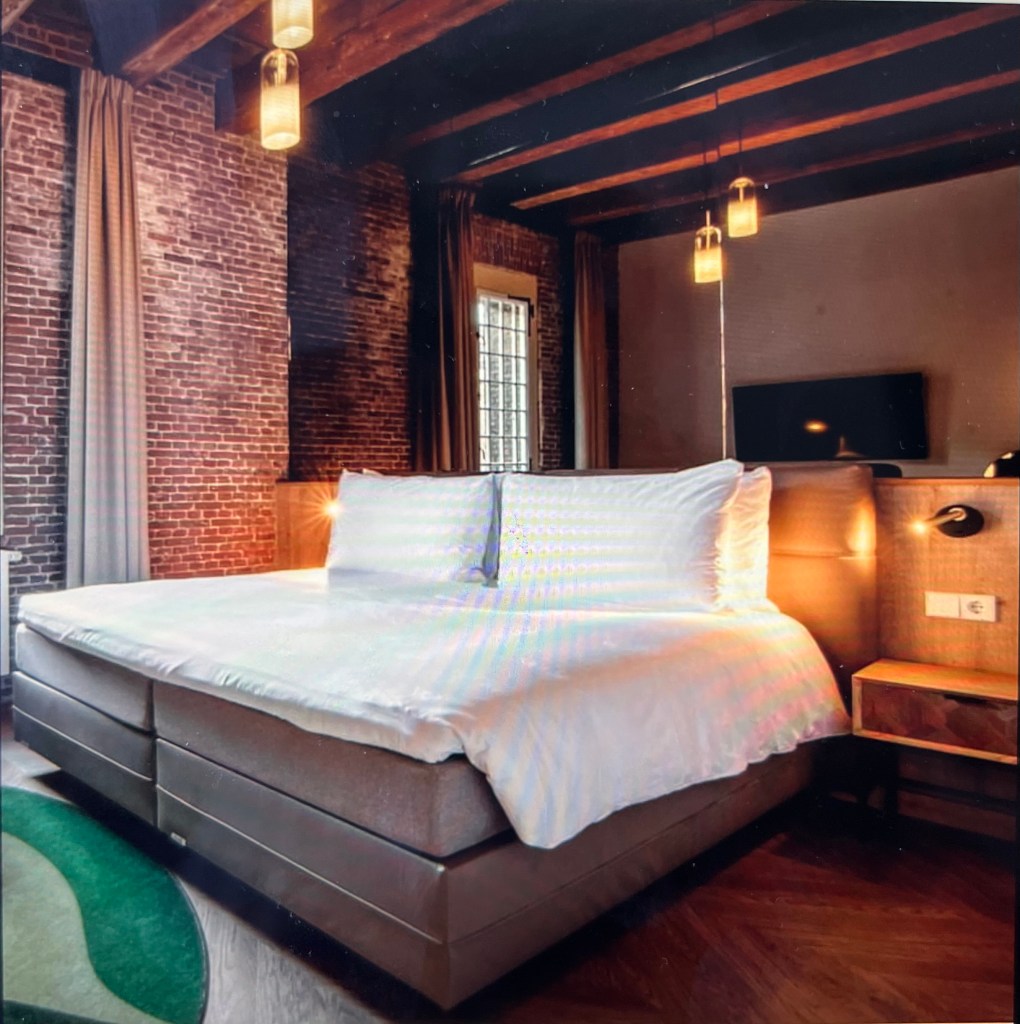
We chose to stay at the Hotel Arsenaal because it had A/C, which turned out to be overly optimistic on our part. The Hotel Arsenaal Delft takes its name from the original purpose of the building, an arsenal. The hotel is interesting historically and it has been updated beautifully, retaining the original beams and structure.


So if you’re interested in the History: In 1601 the building was commissioned by the States of Holland and West Friesland and was erected on the southern tip of two waterways that eventually feed into a Rotterdam distributary of the Rhine River. After it was built, the Arsenaal housed many cannons, firearms, ammunition, and other weapons. Over the years, the Arsenaal became filled to the rafters a few times, and so extensions were made, such as a gatehouse (1660) and Armamentarium plus stockrooms (1692). The most recent extension was in 1802, when the East India warehouse was added to the complex. In 1897, it was decided to move the artillery material from Delft to a site near the Hembrug in Amsterdam. With that, the Arsenaal lost its centuries-old core function. Just after World War II, the Arsenaal acquired a new function as a jail for ‘wrong Dutch’ (collaborators). It was one of the 130 internment institutions in the Netherlands with the nickname ‘scum house’. The Armamentarium was mainly for female prisoners. However, in 1948, this former internment camp was also closed and the Ministry of War assembled a collection of military objects there. The Army Museum took over the building in 1959 and plans were made for a major restoration and renovation. The Army Museum’s ambition was to display all its collections in the Arsenaal. This ambition was achieved in 1989 when the Army Museum opened in Delft. 2005 saw the last notable change to the building for a time with the addition of a new entrance building. In the following years, plans were made to house the National Military Museum at a totally new location. This was found at the former Air Force base at Soesterberg. In 2013, the museum in Delft closed and in 2022, the Hotel Arsenaal opened.


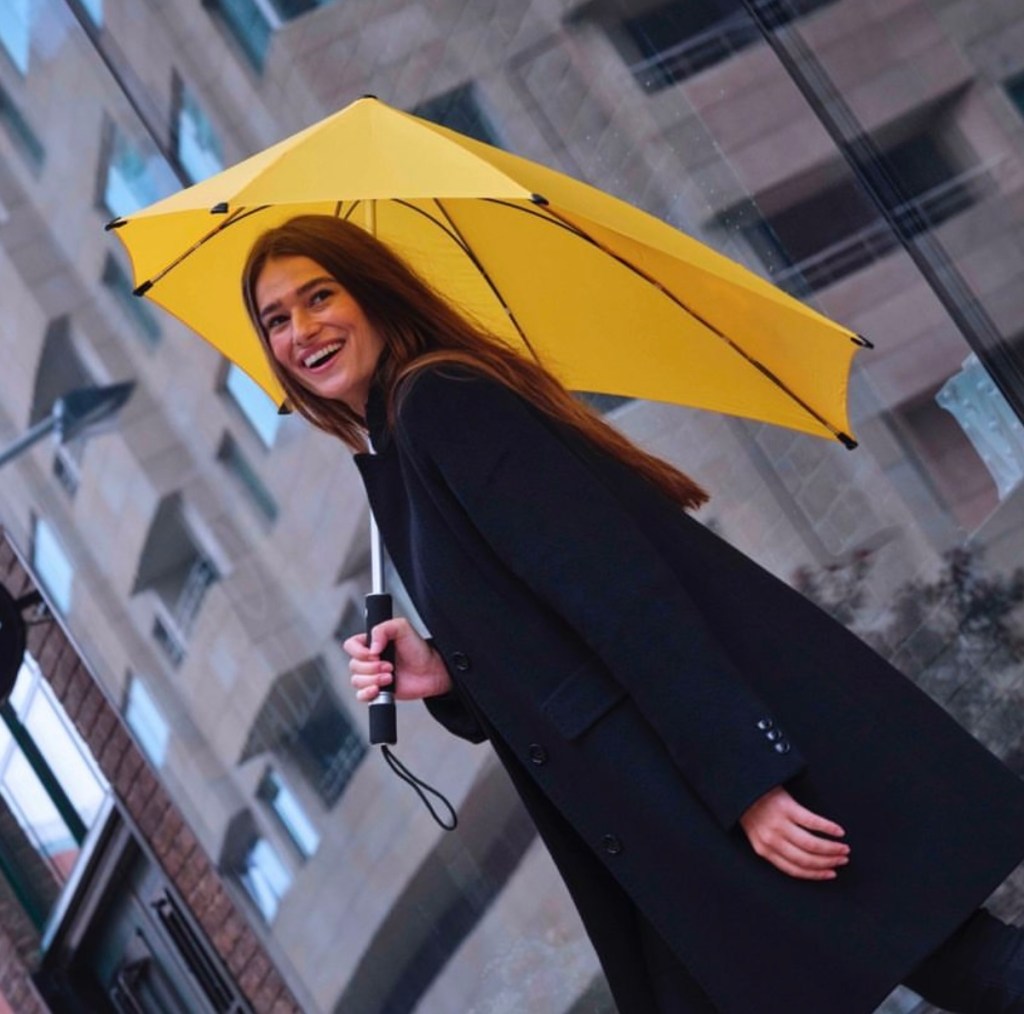
The good news on the trip is that C&B were kind enough to walk us through their favorite places. The bad news was it was the worst weather they’d experienced in the six months they’d lived there. It truly poured the entire time forcing us to use the hotel’s umbrella as our travel one was simply inadequate. At one point, tucked inside a cosy pub looking out at the deluge, Caren drew our attention to someone who was using an unusual shaped umbrella – she knew a Dutch university had designed; a Senz, internationally awarded and touted to withstand wind gusts better and keep water from leaking on your backs. It was so unique that when we returned home, we pulled up the online link Caren sent (senz.com) and ordered one, fit for two people.


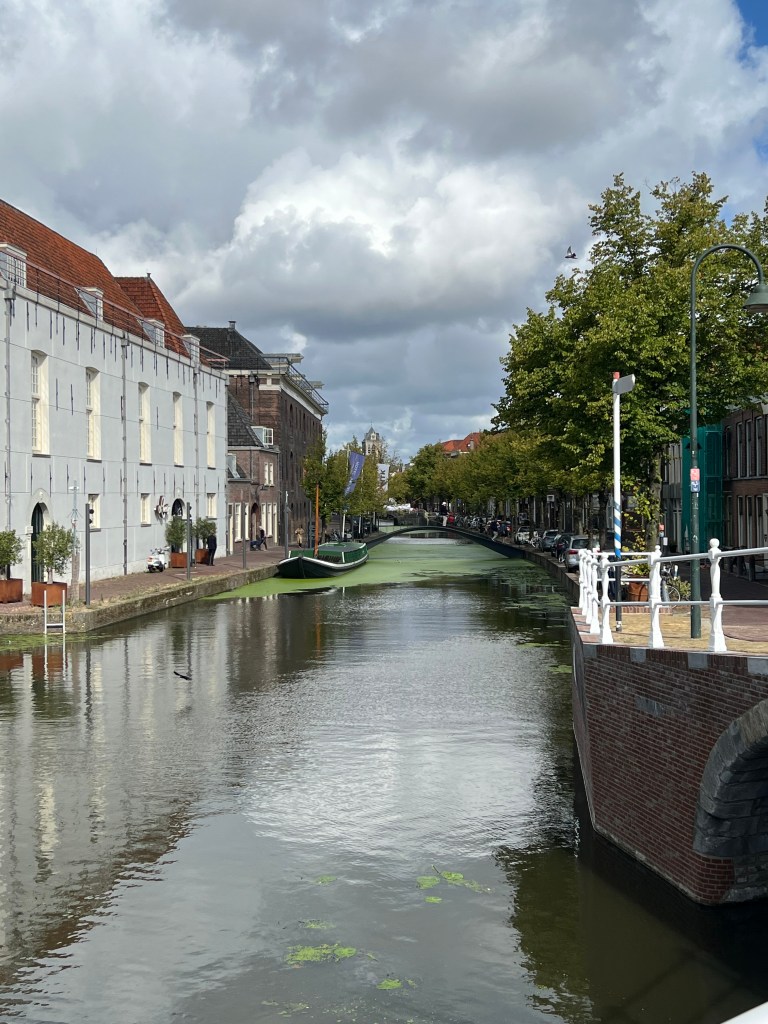
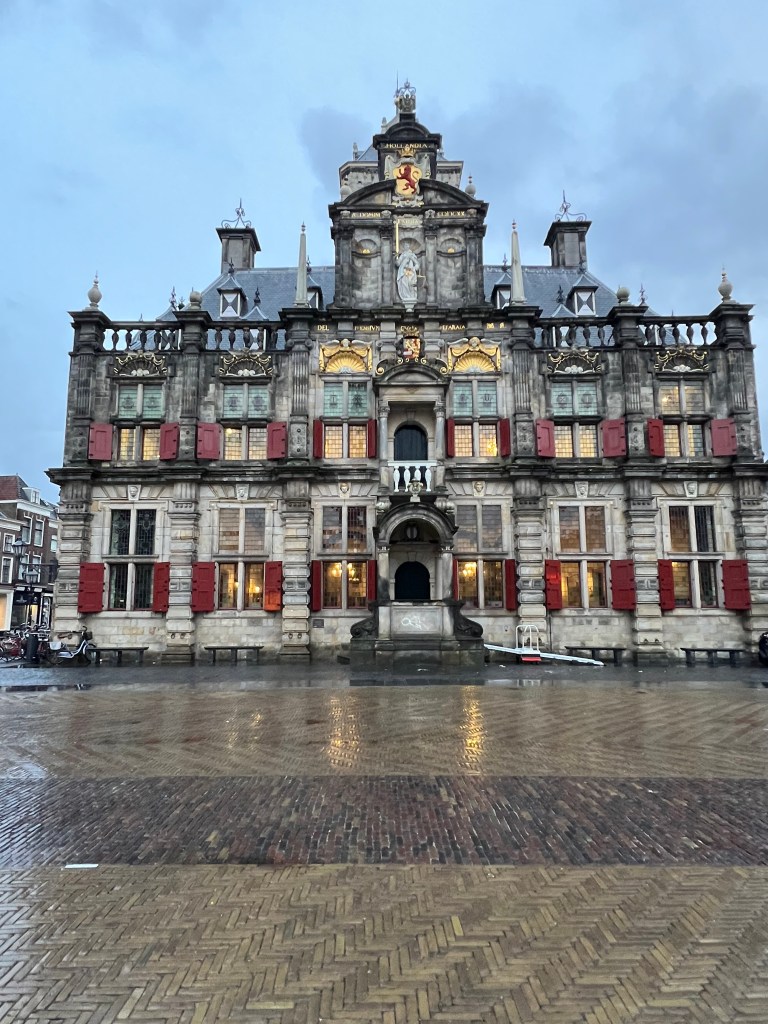
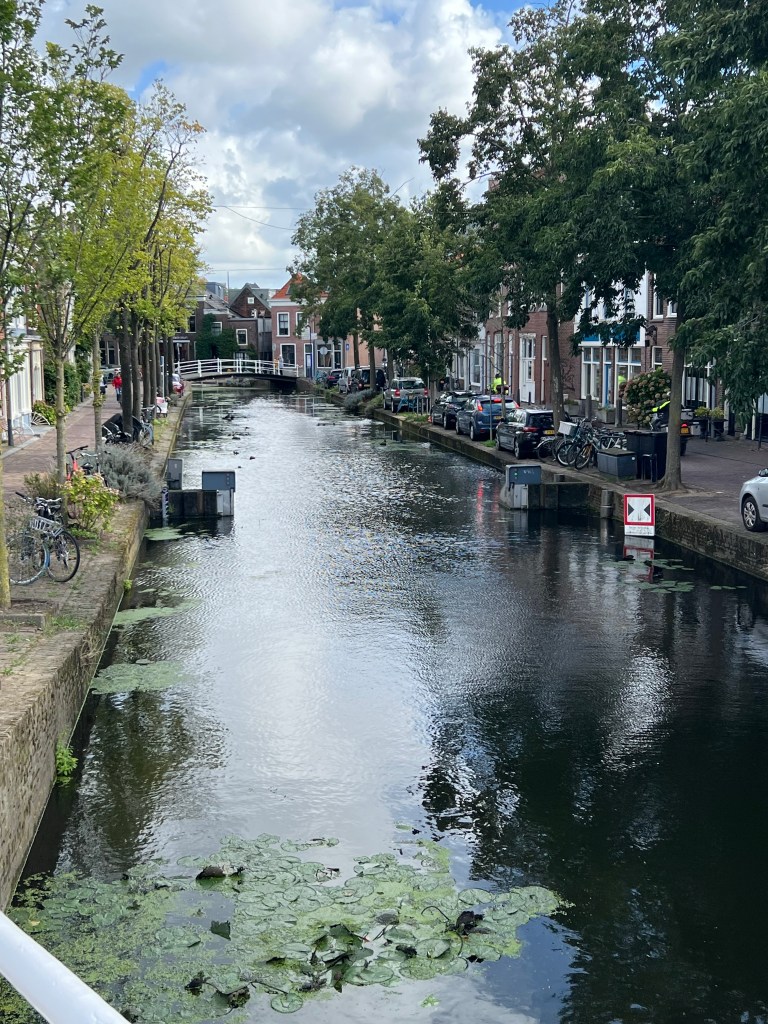
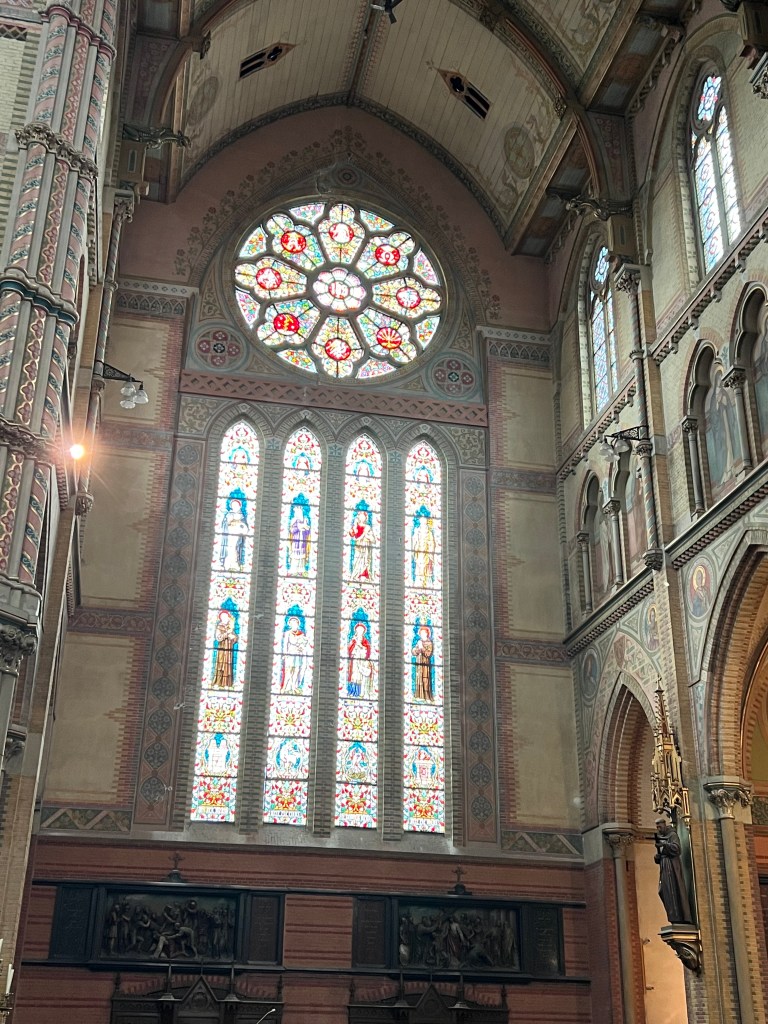
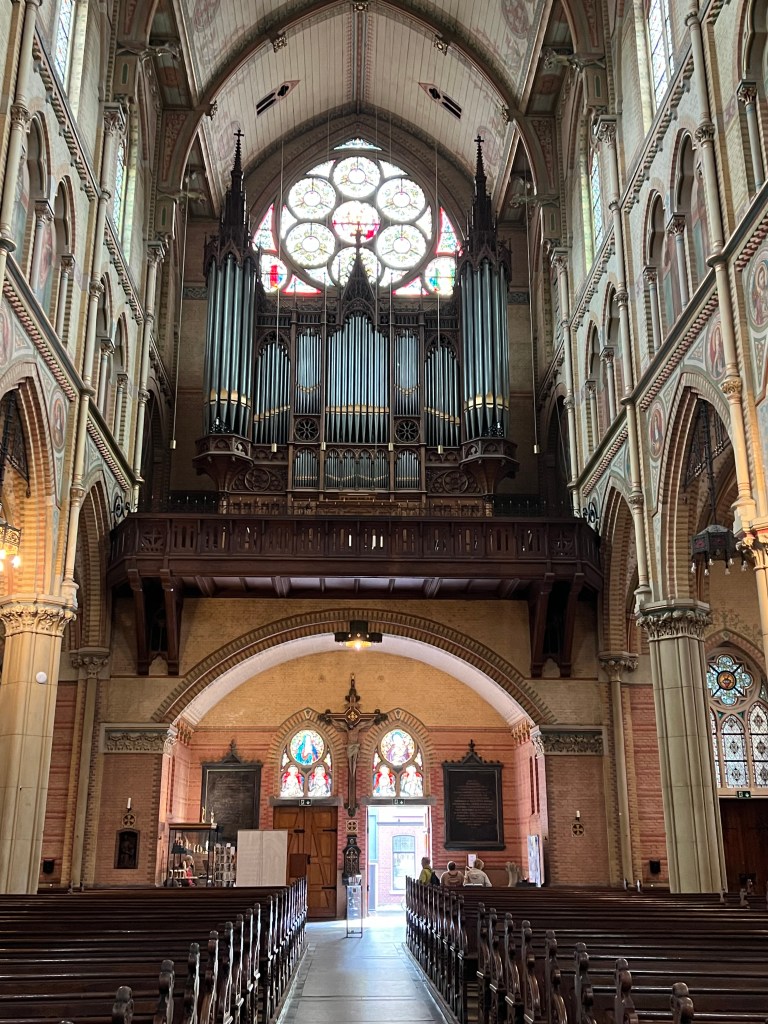
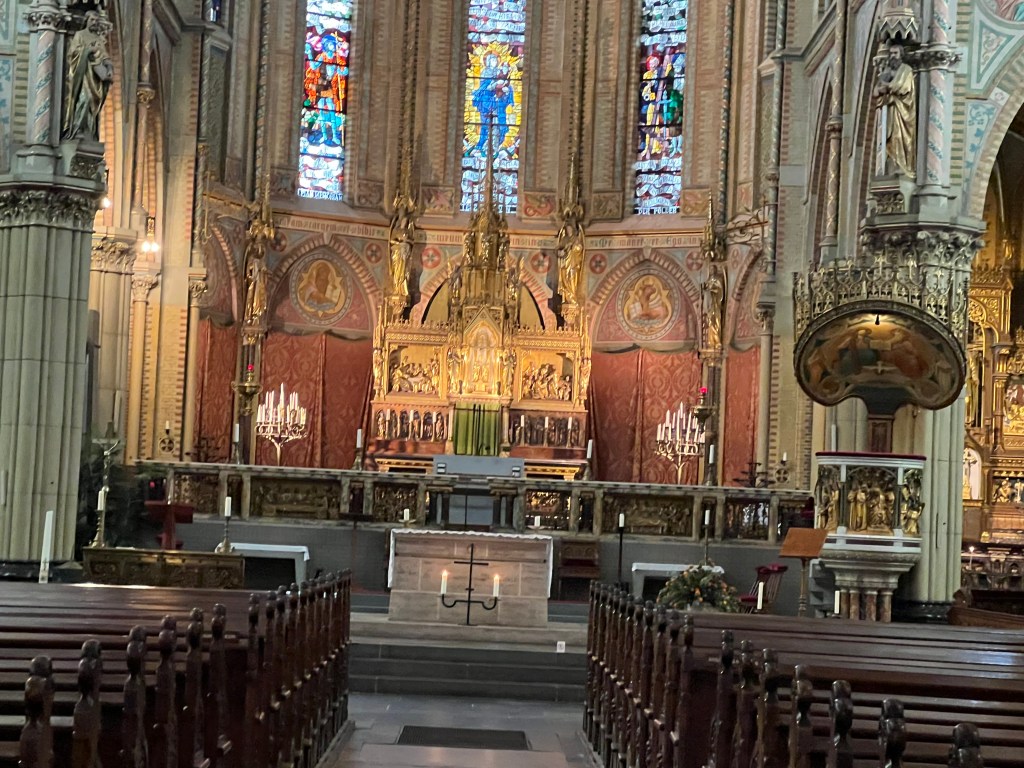
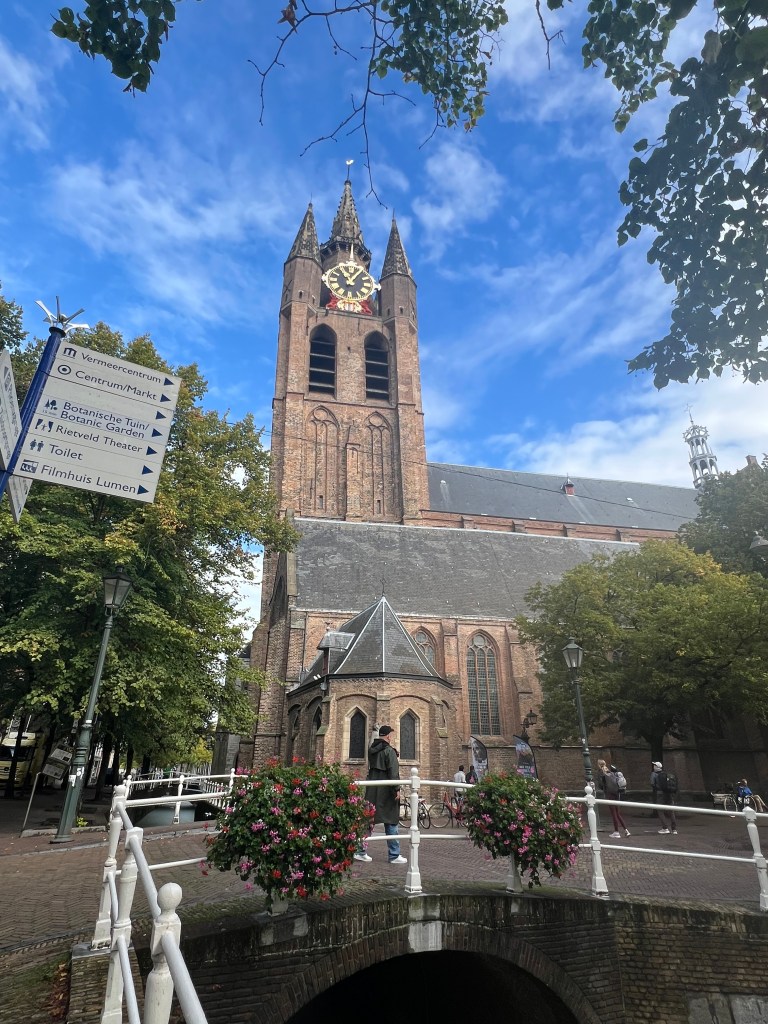
In between the rain, we walked through the winding canals and beautiful bridges, enjoying the Delft architecture mixture of Medieval, Renaissance and Baroque, with its steeply pitched gabled roofs and ornate bricked patterns. The bricked streets were much easier to traverse than Lille’s rough cobblestones and like much of Pays-Bas, bicycles are the main transport – vastly outnumbering cars. We also toured one of Delft’s several churches during a heavy downpour.
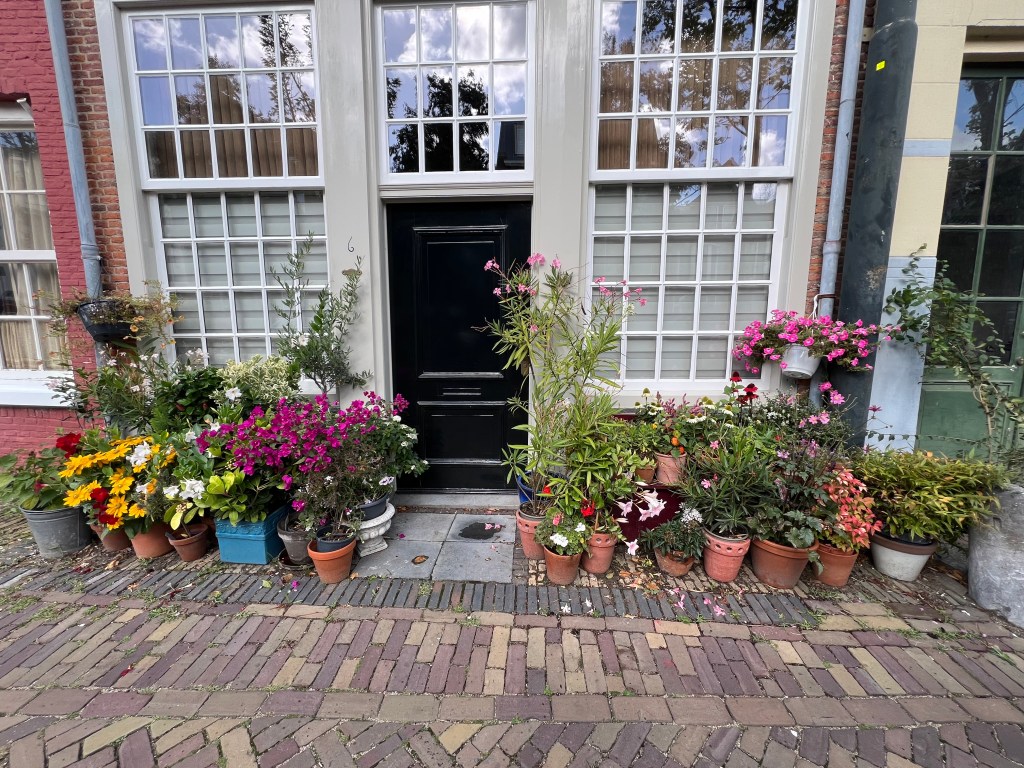
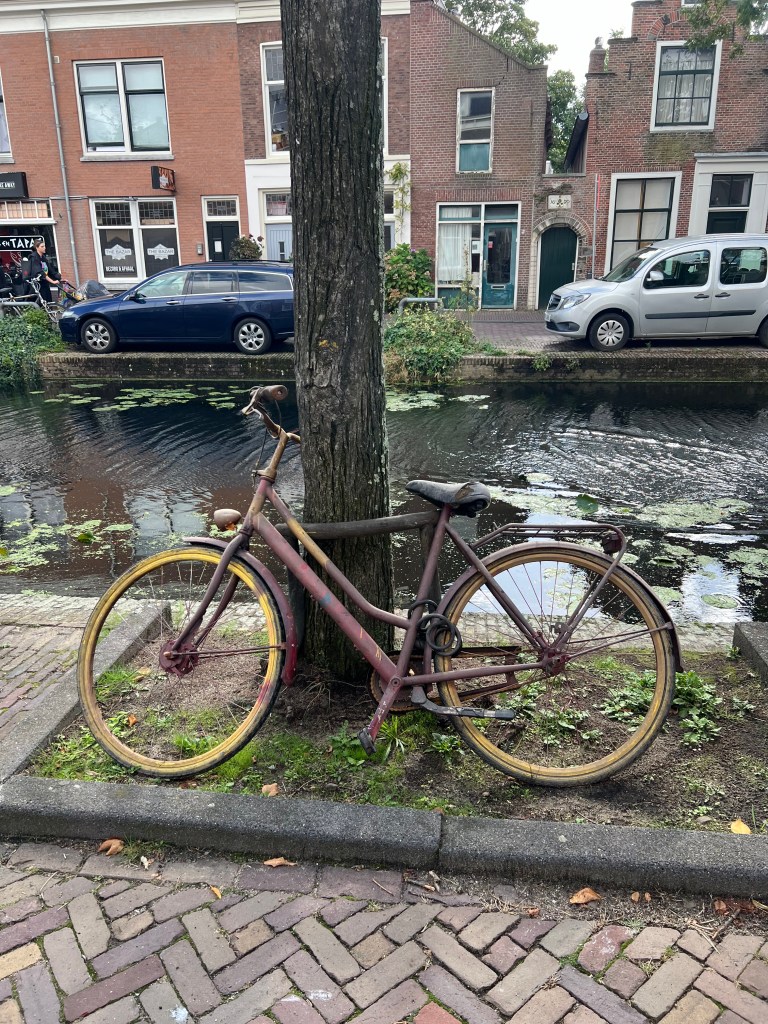

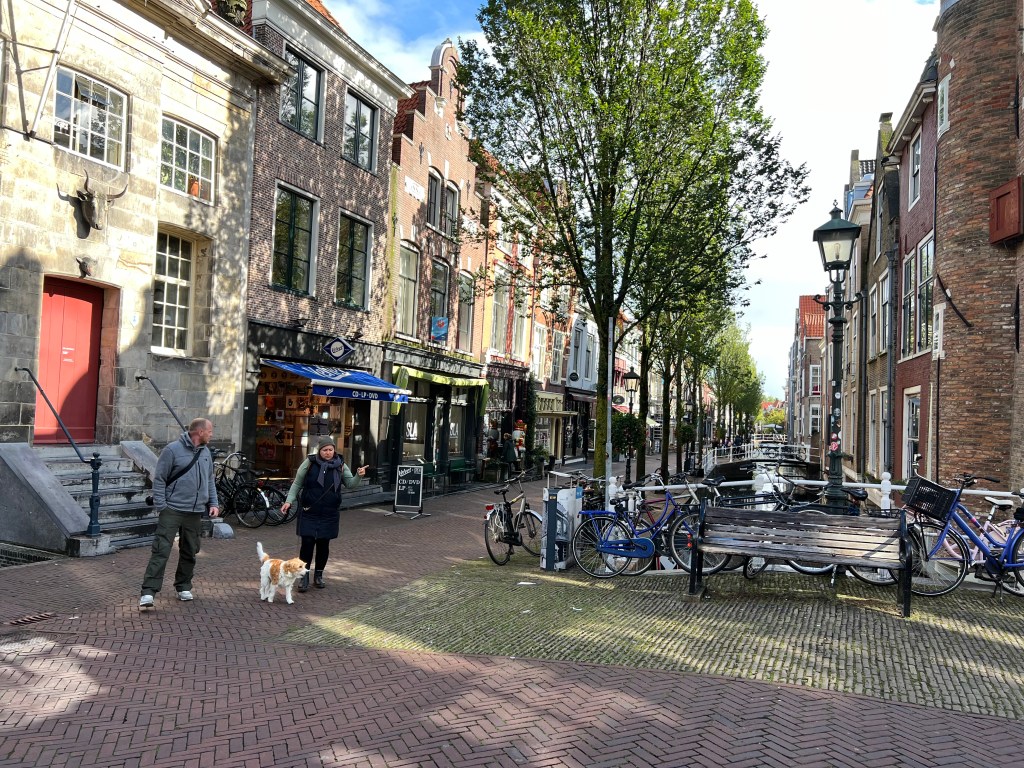

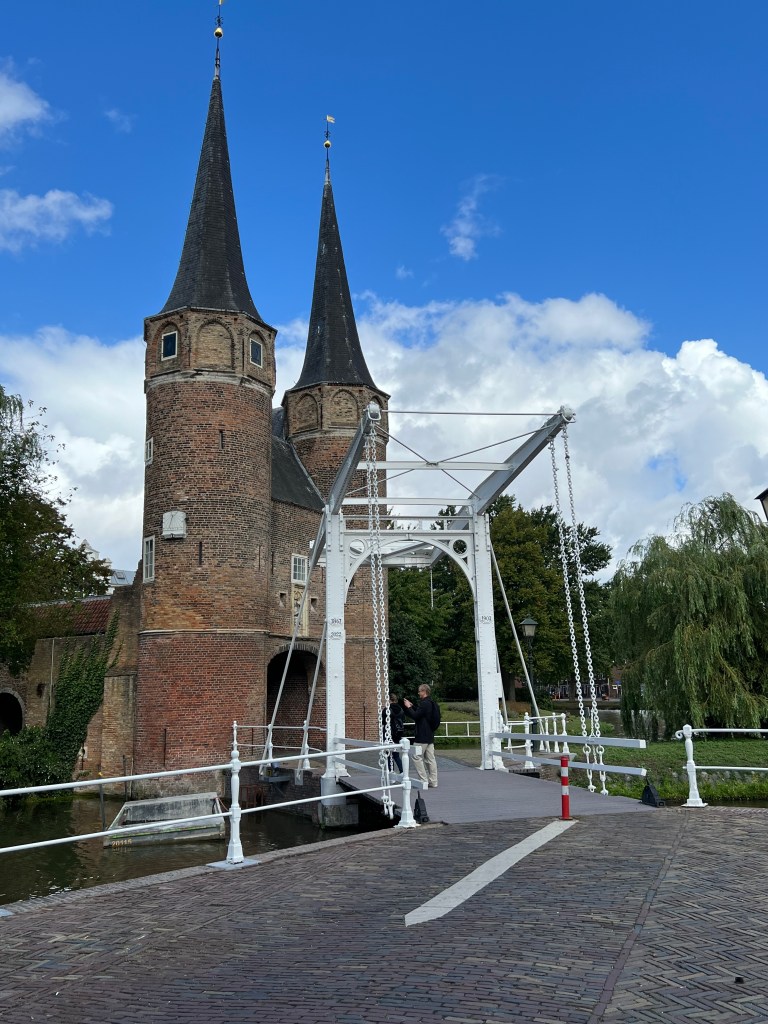
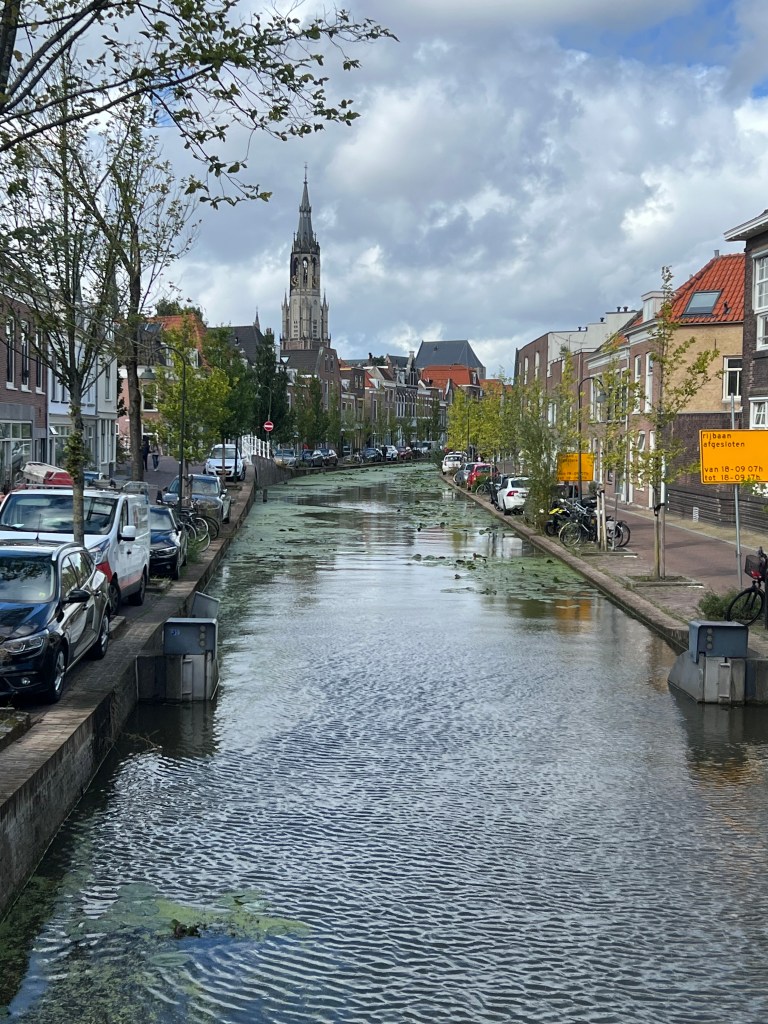
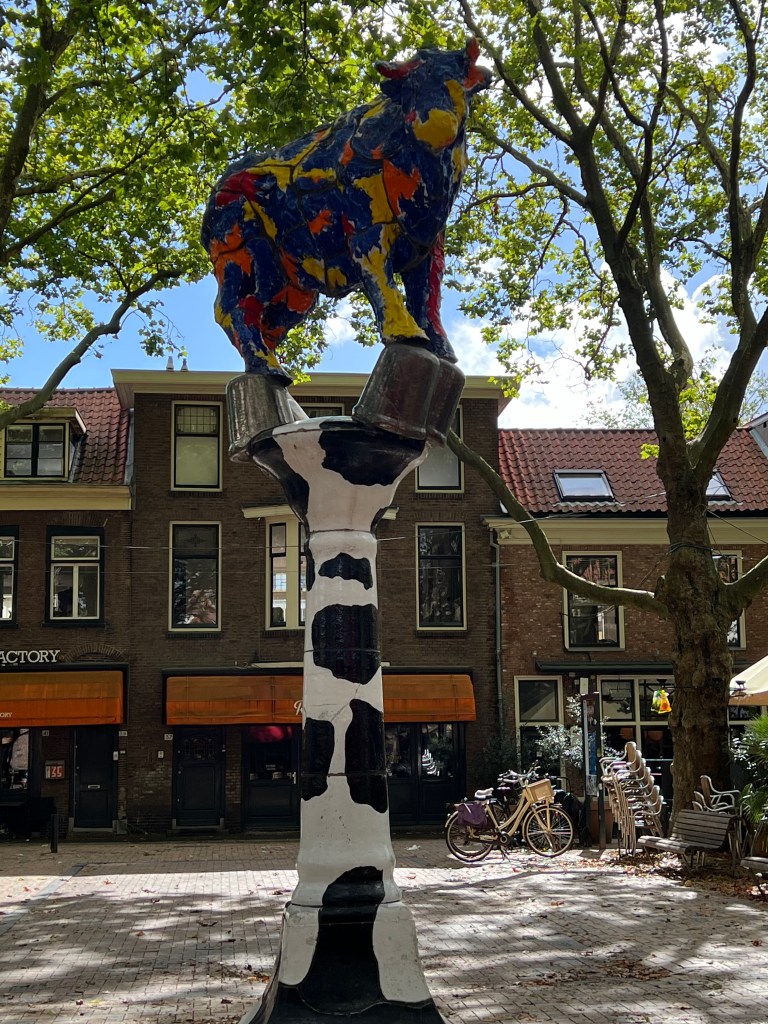
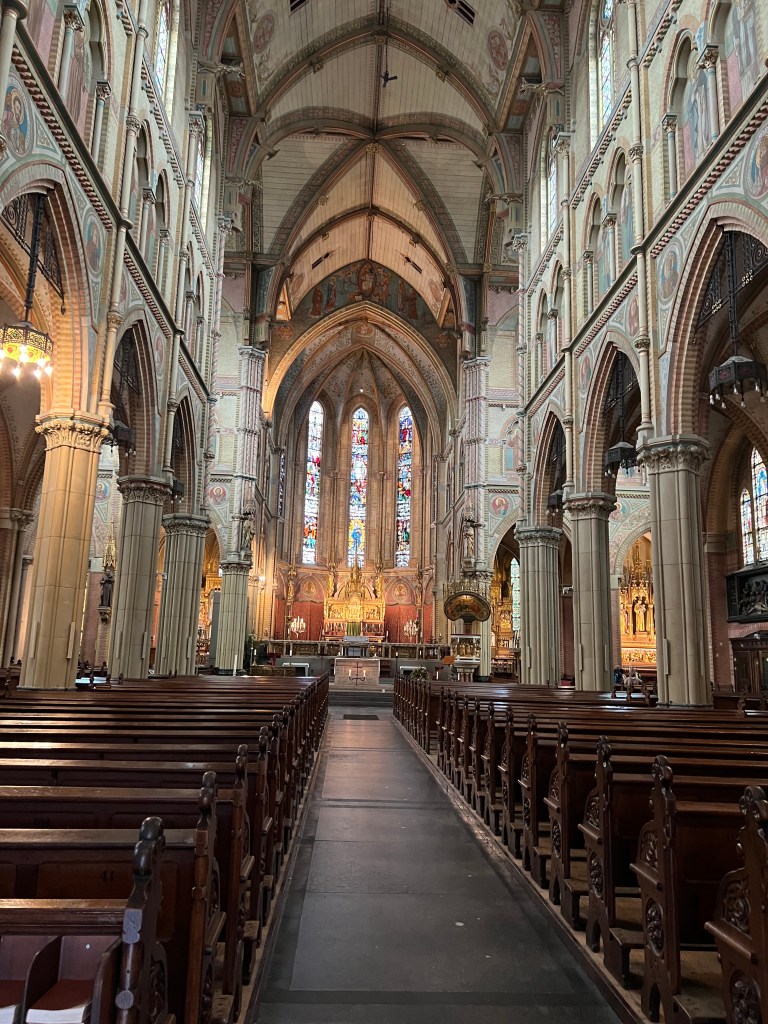

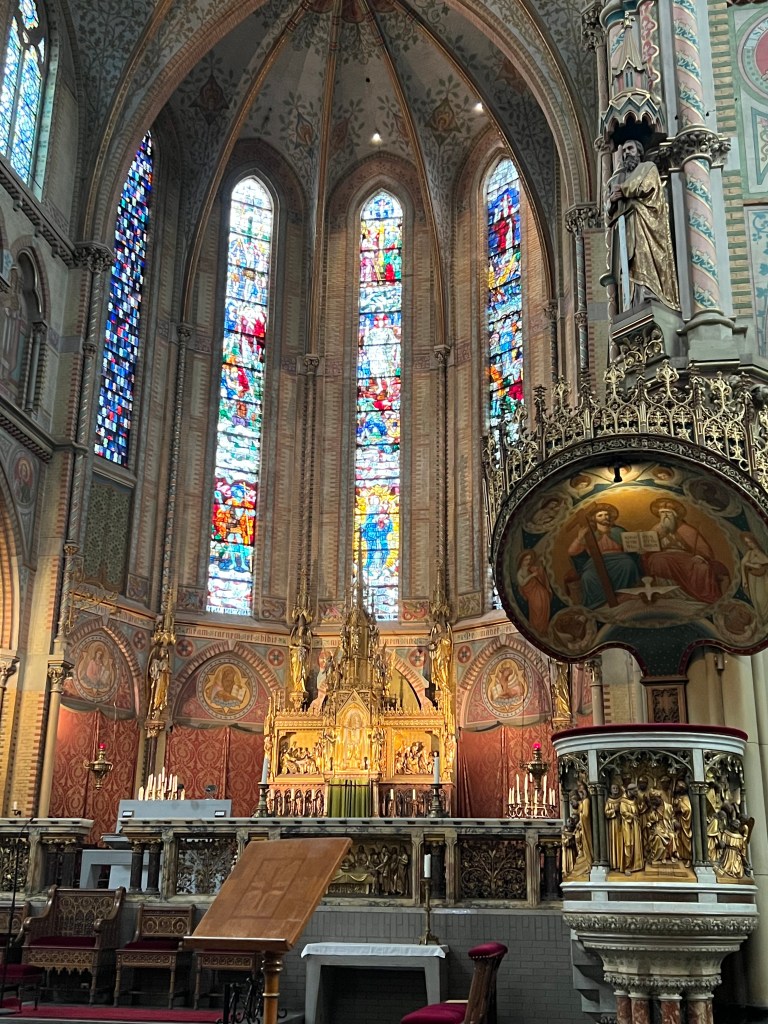
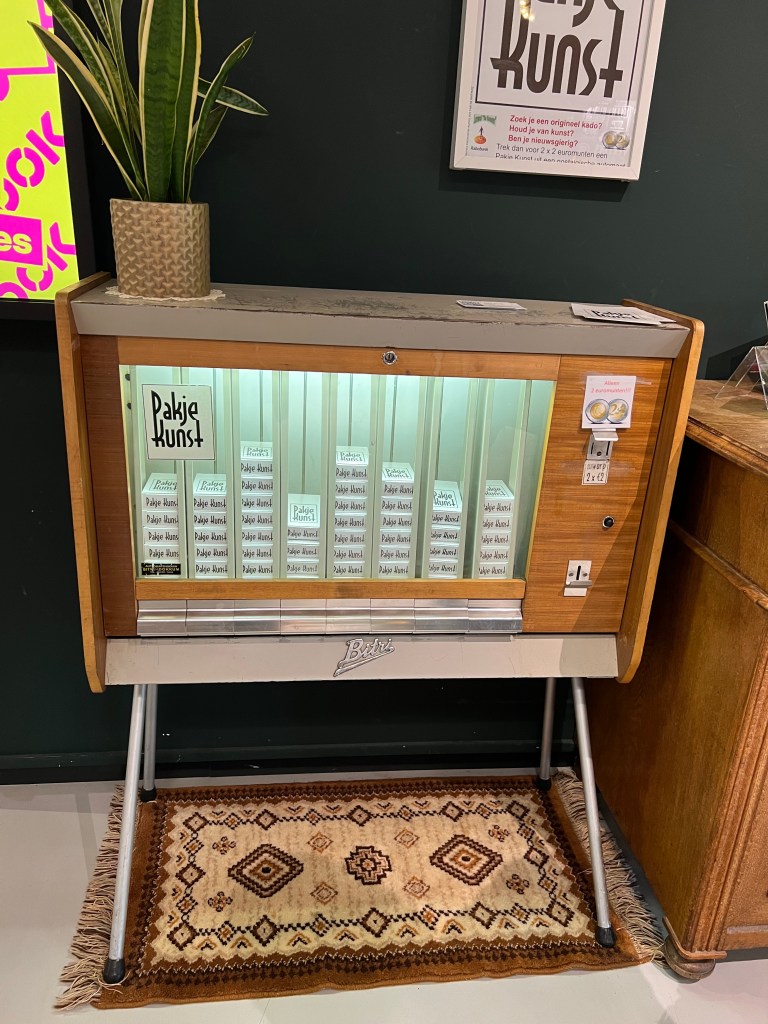
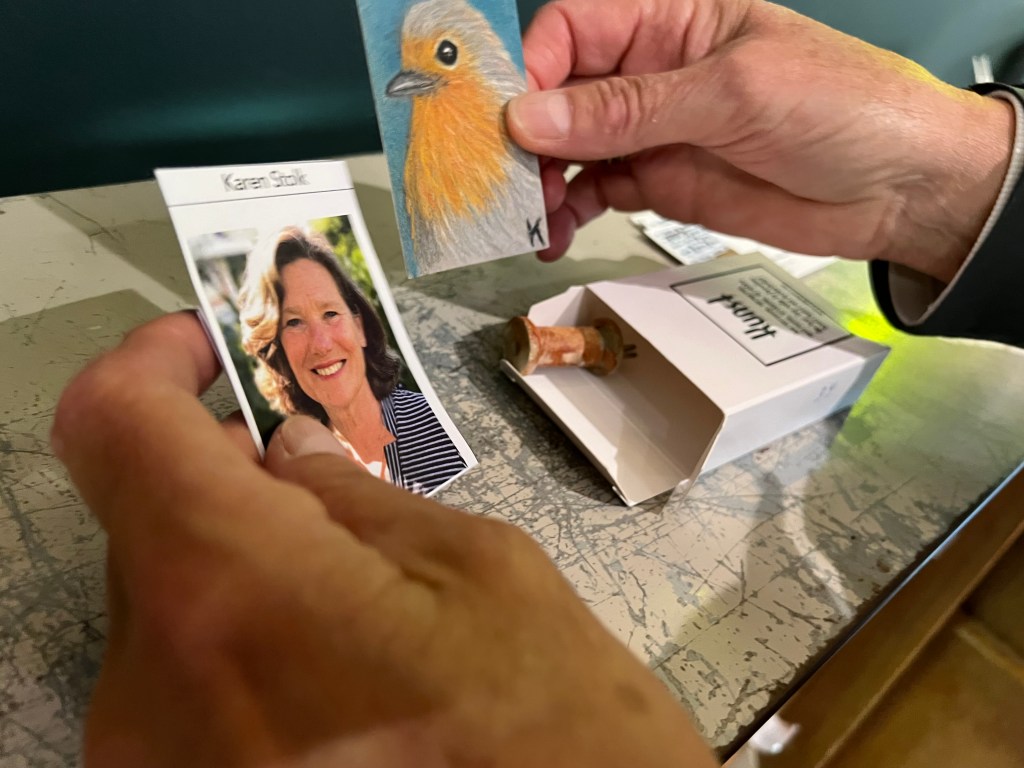
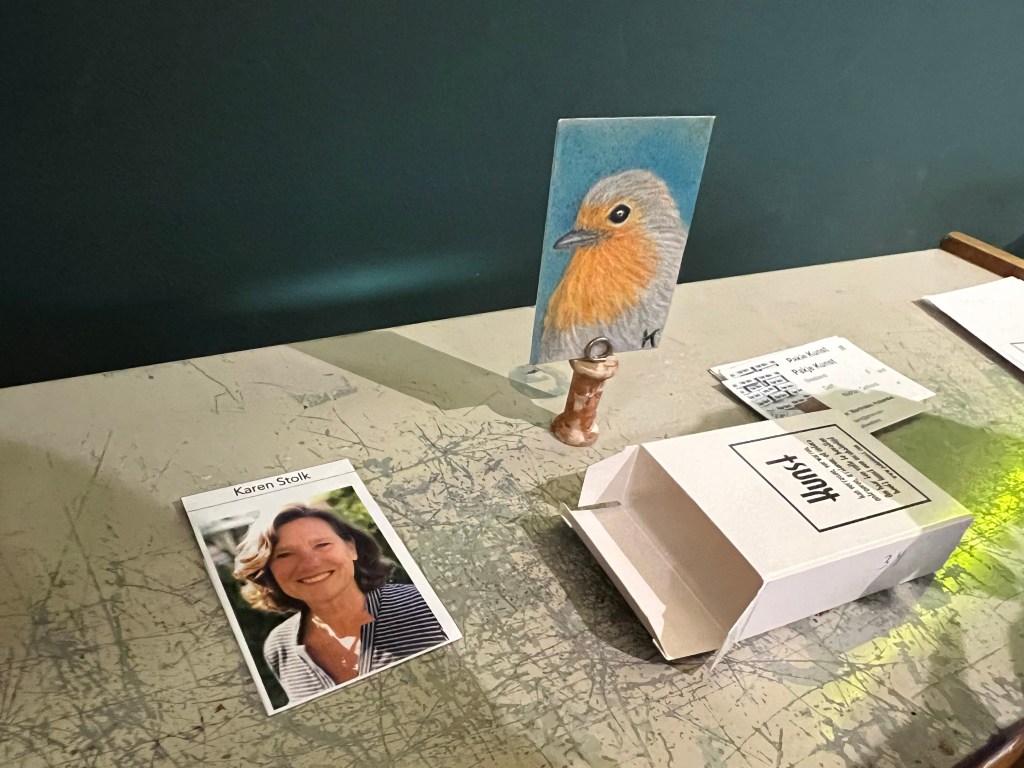
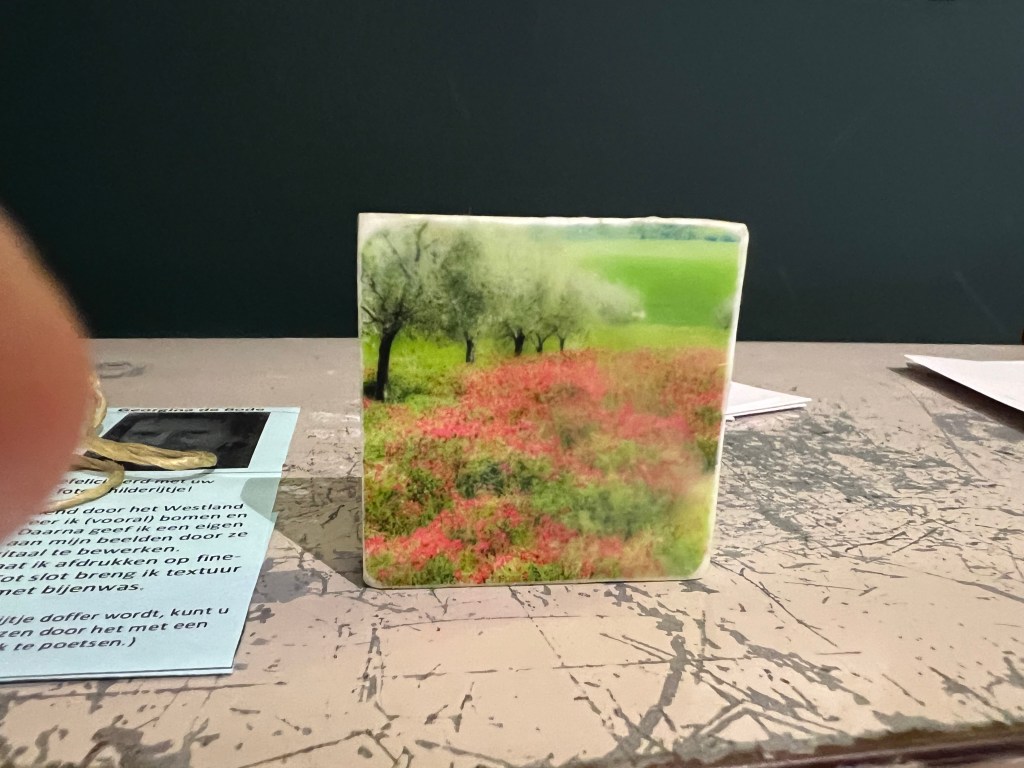
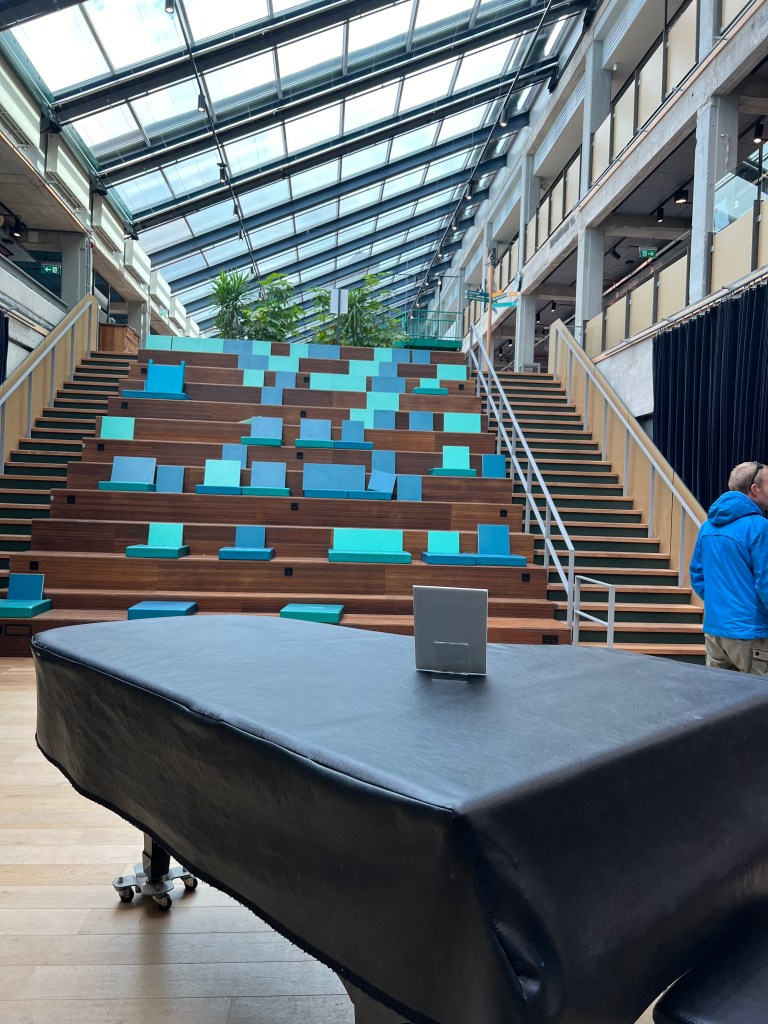
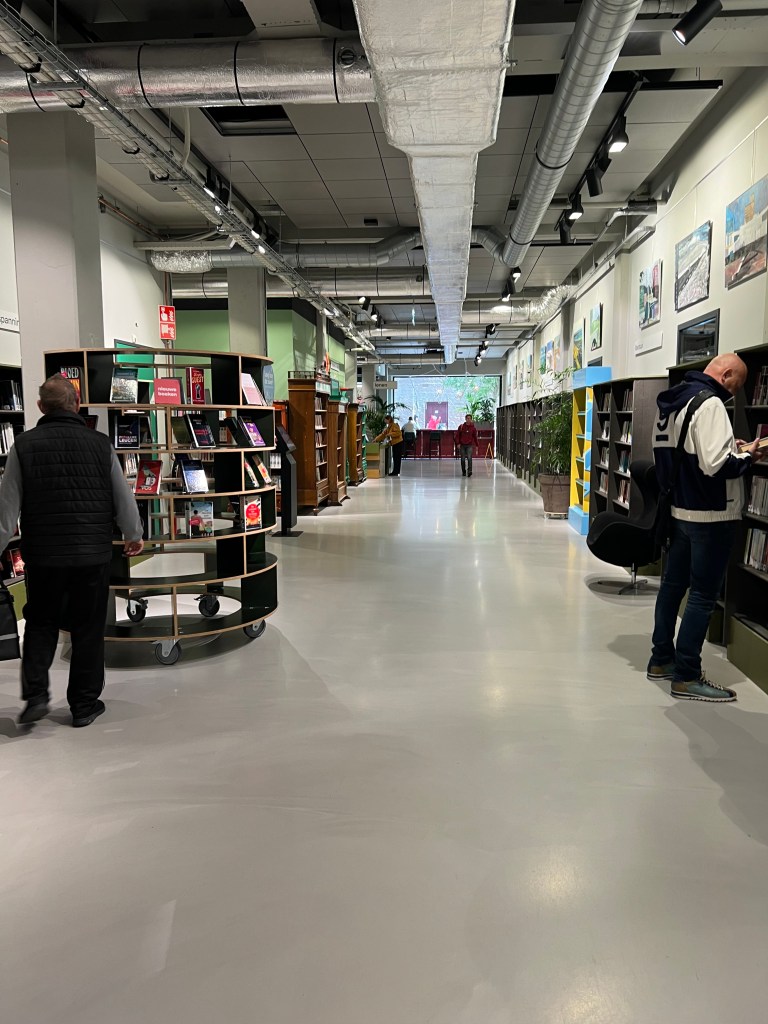
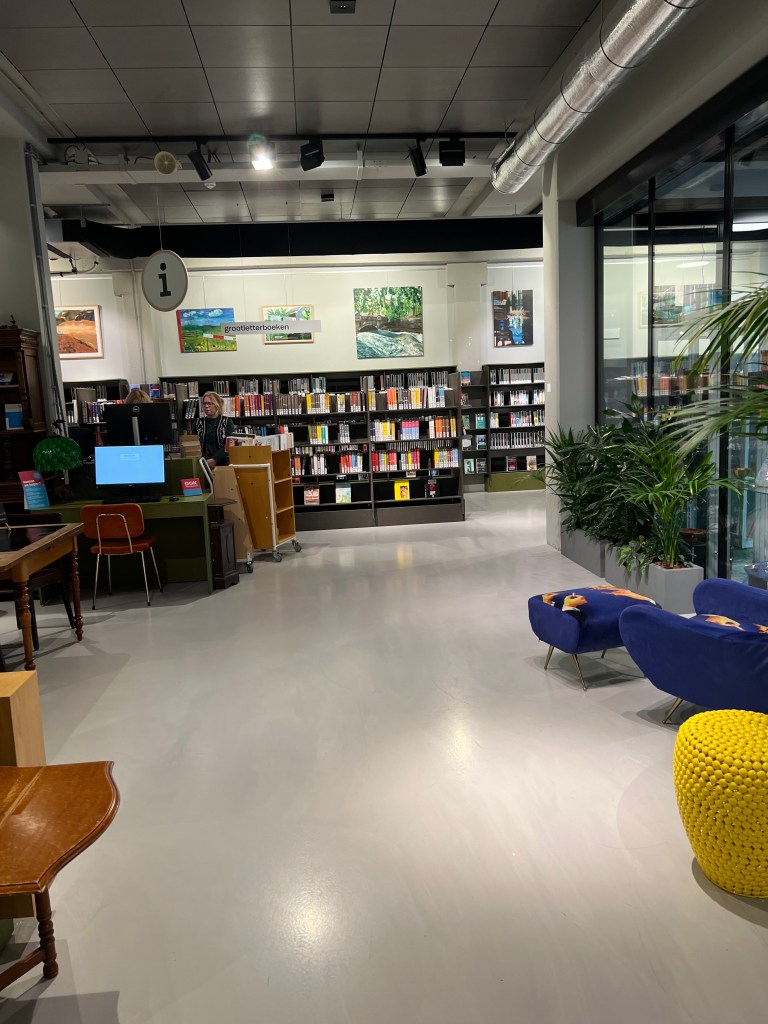
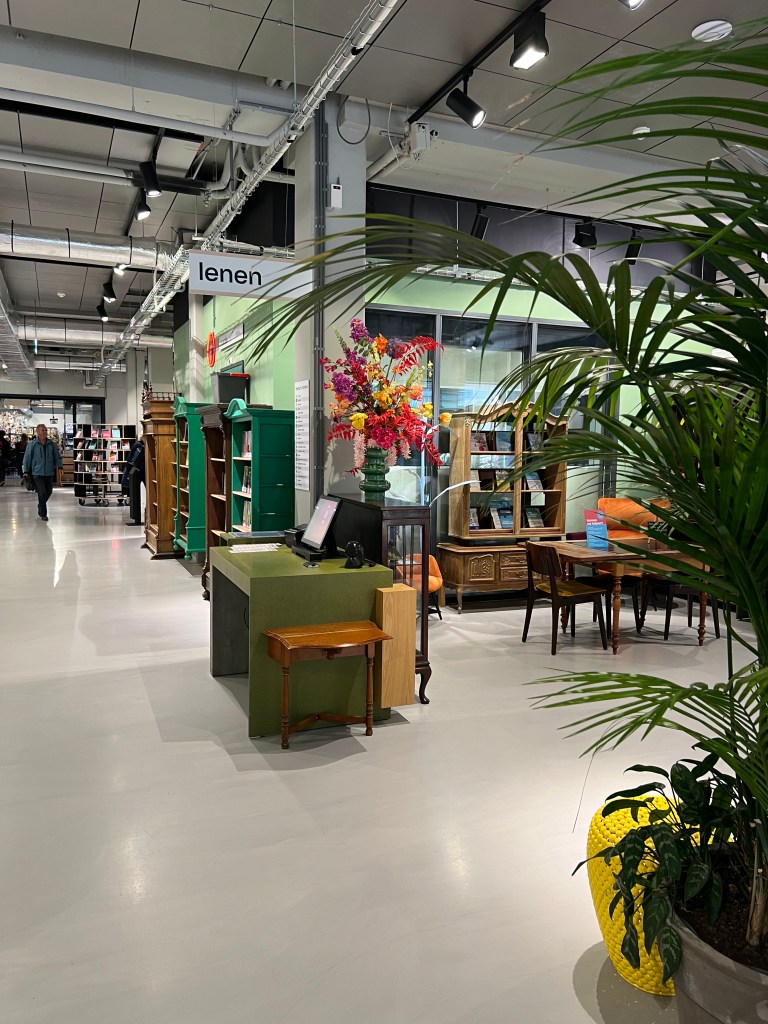
We were really intrigued by the public library, which is more of a community center than those in France. When we spotted what we thought was a vintage cigarette dispenser machine, it turned out instead to be an ingenious way of promoting local artists work. For the cost of 4 euros, you chose one of 8 slots which contain individual boxes. In each box is a miniature piece of art with the name and information of that artist. Caren’s pick netted a small bird portrait by Karen Stolk with a tiny spindle on which to seat it. My choice turned out to be a painted landscape on a small wood block by Georgina de Bode (www.fotoschilderijtjes.nl). We were absolutely enchanted by the idea and execution.






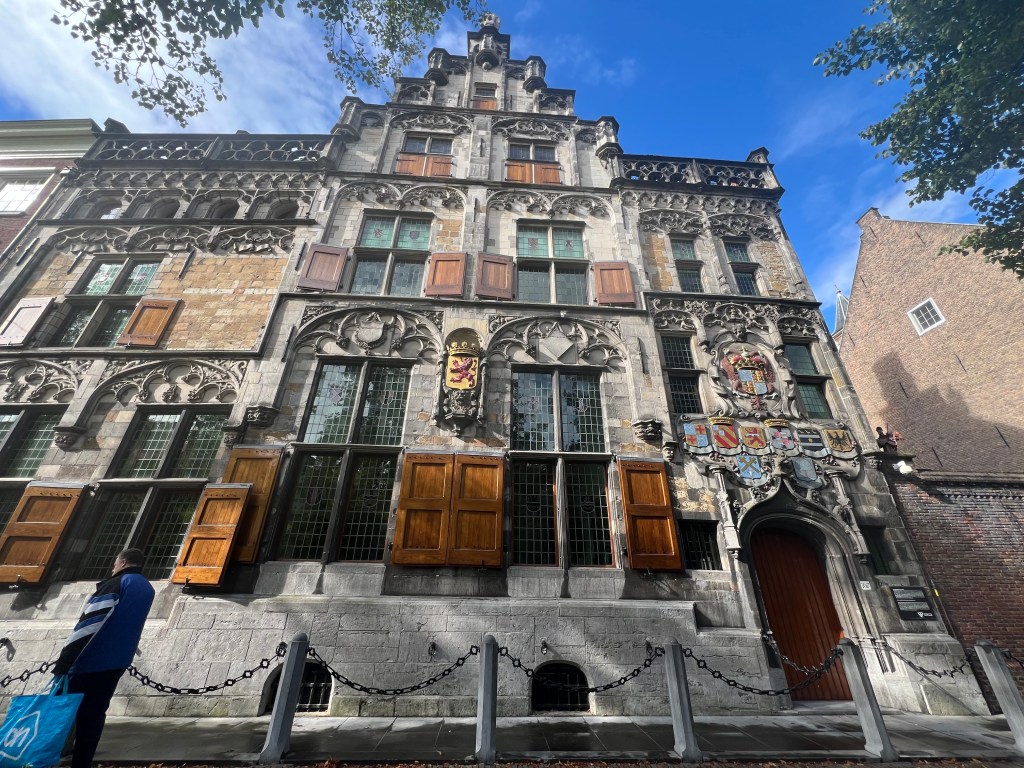
The canals allowed the small hamlet to feel bigger as we made our way around the shops and squares. Waterways, like all of the Netherlands, are a carefully managed environment and source of engineering study. We came across the oldest stone-built house in Delft from 1505 with a huge clay-of-arms above the entrance. The Delfland Water Authority has been based in the building since 1645. The Water Authorities are the oldest government institutions in the Netherlands and are responsible for flood protection, good water quality, surface water level management and sewage treatment. We also encountered more than a few groups of students engaged in discussions on the walks and one set actually checking the level of a canal against the permanent measurement ruler affixed to the brick sides.



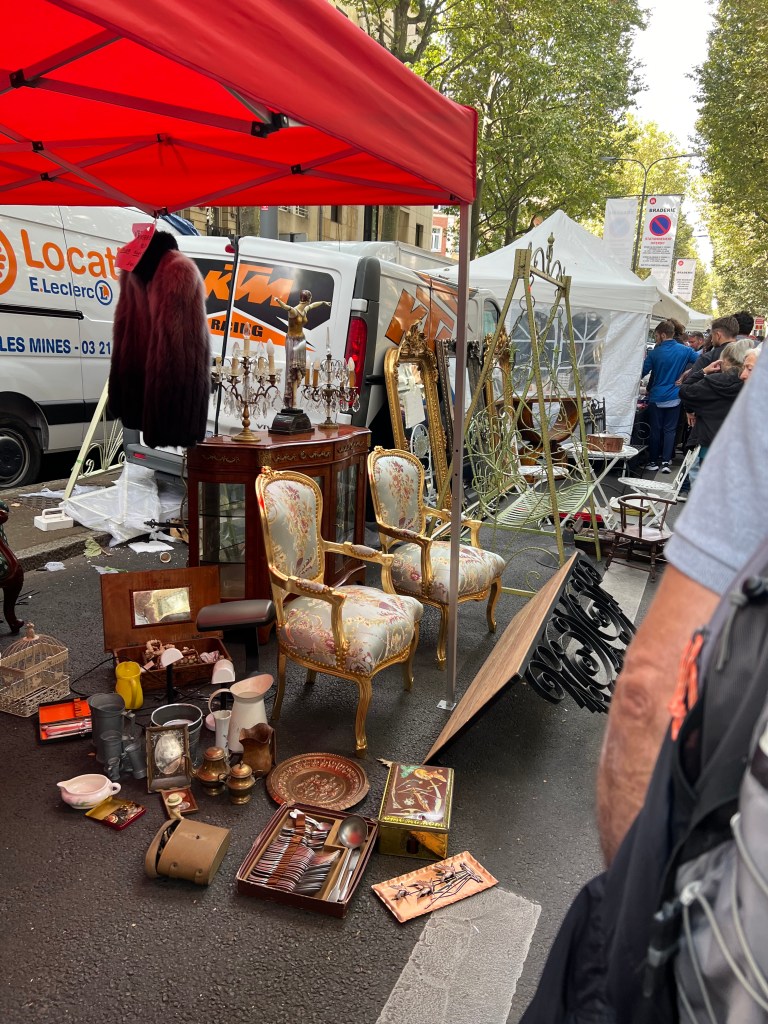
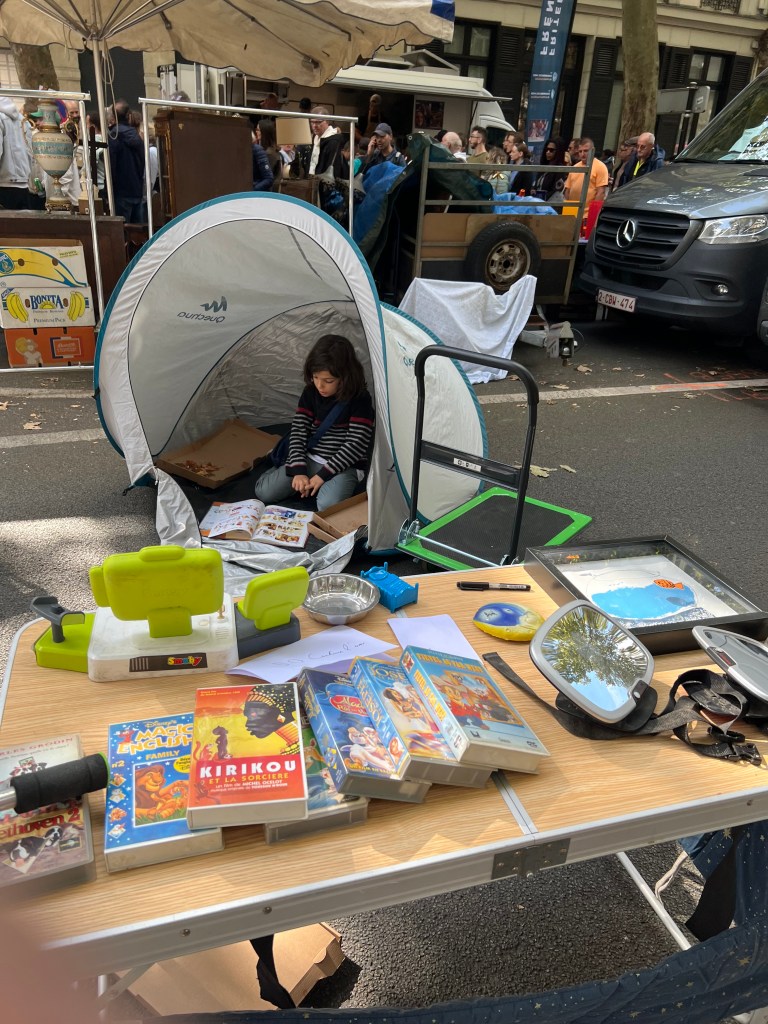
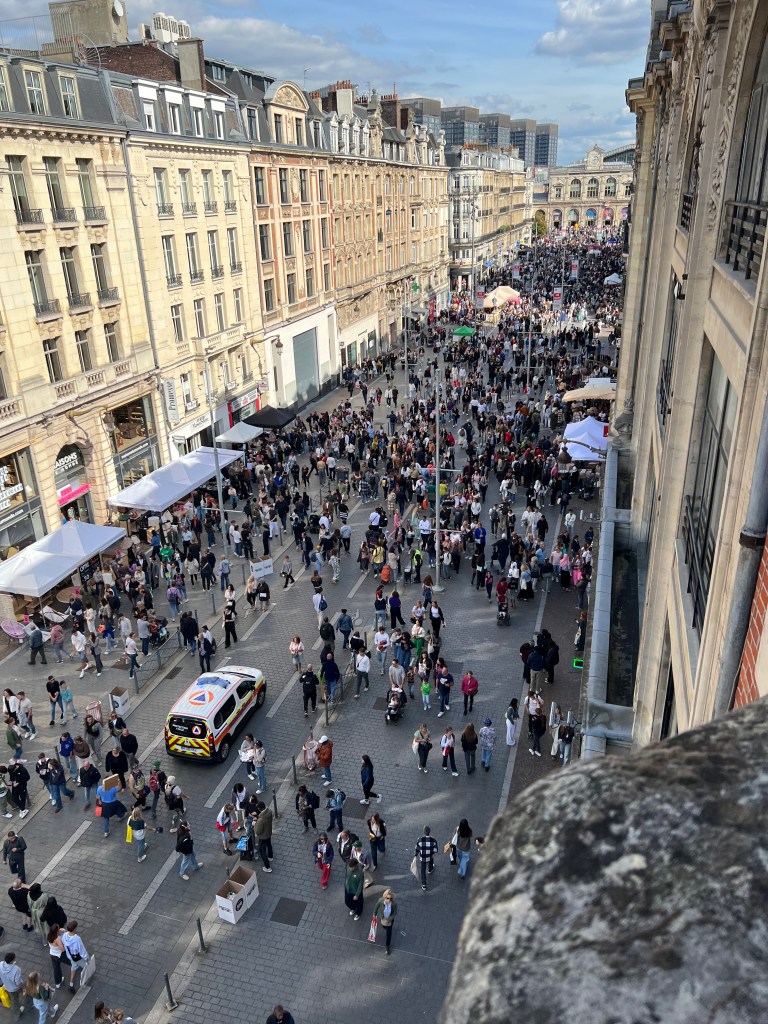
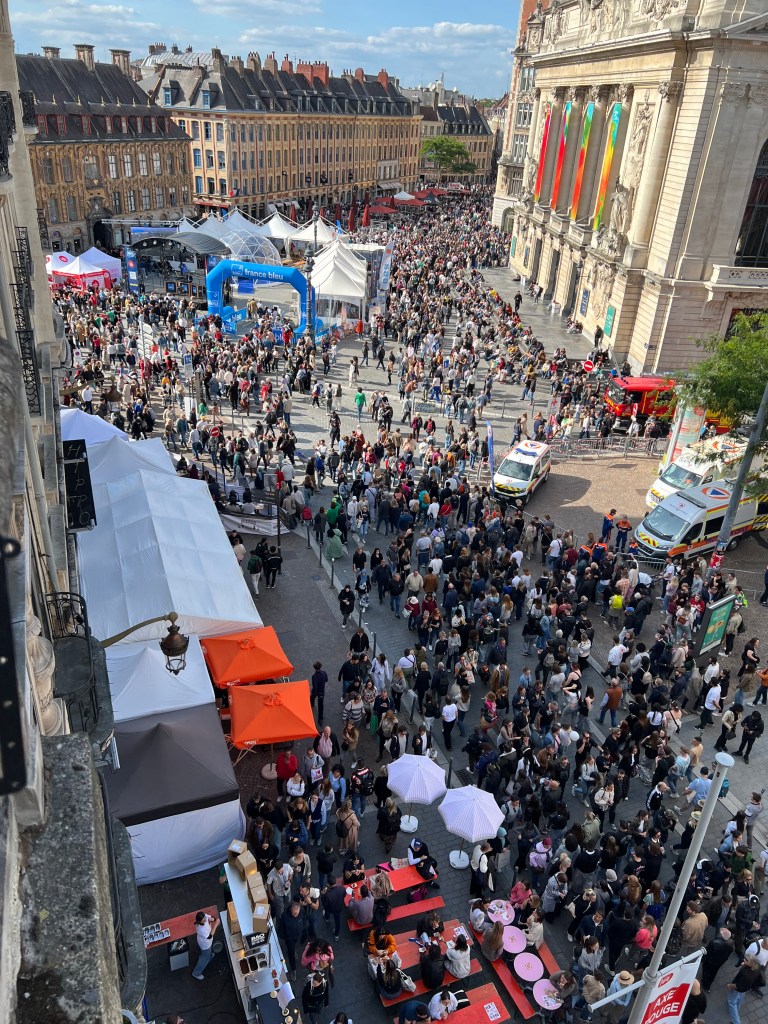
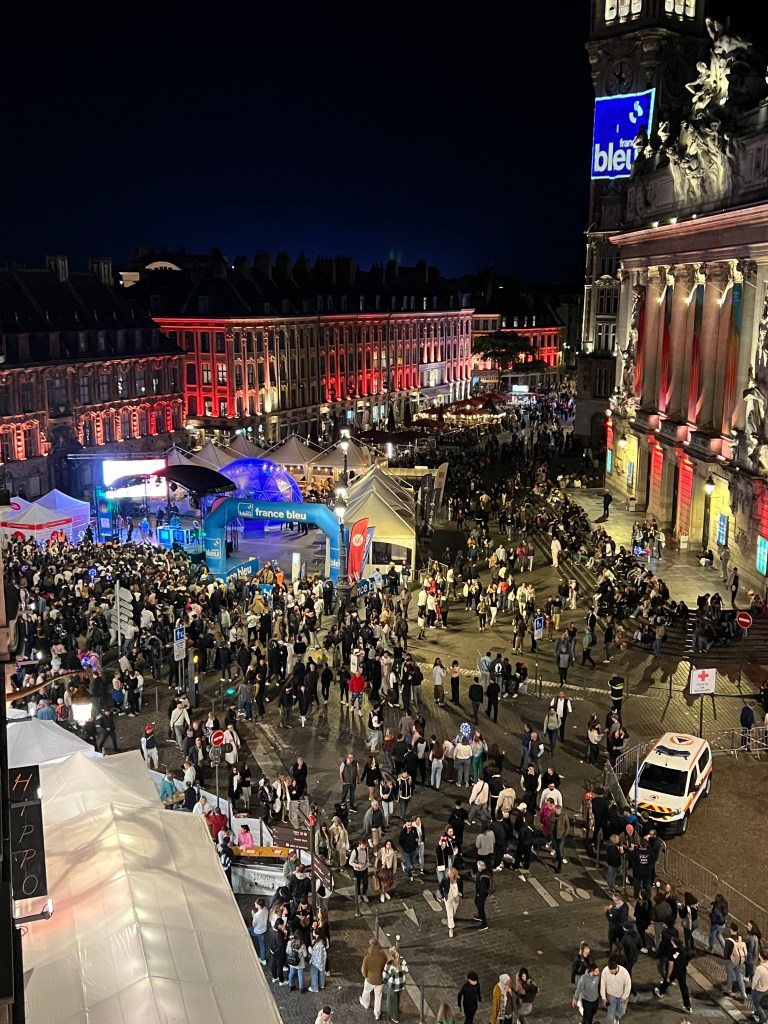
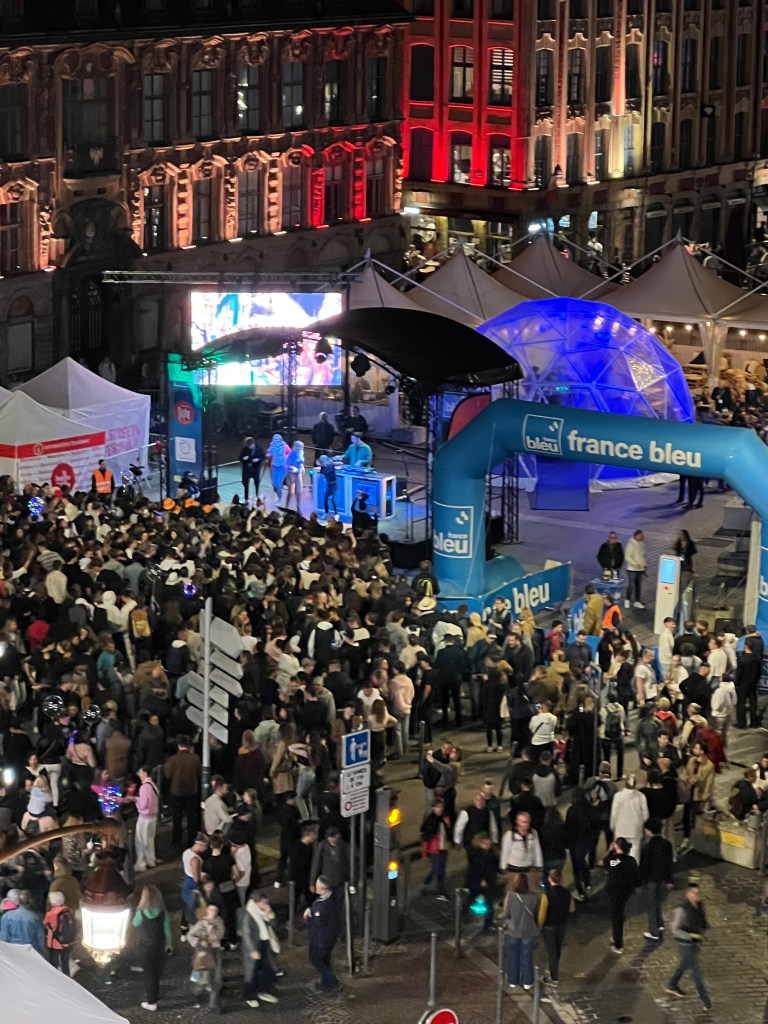
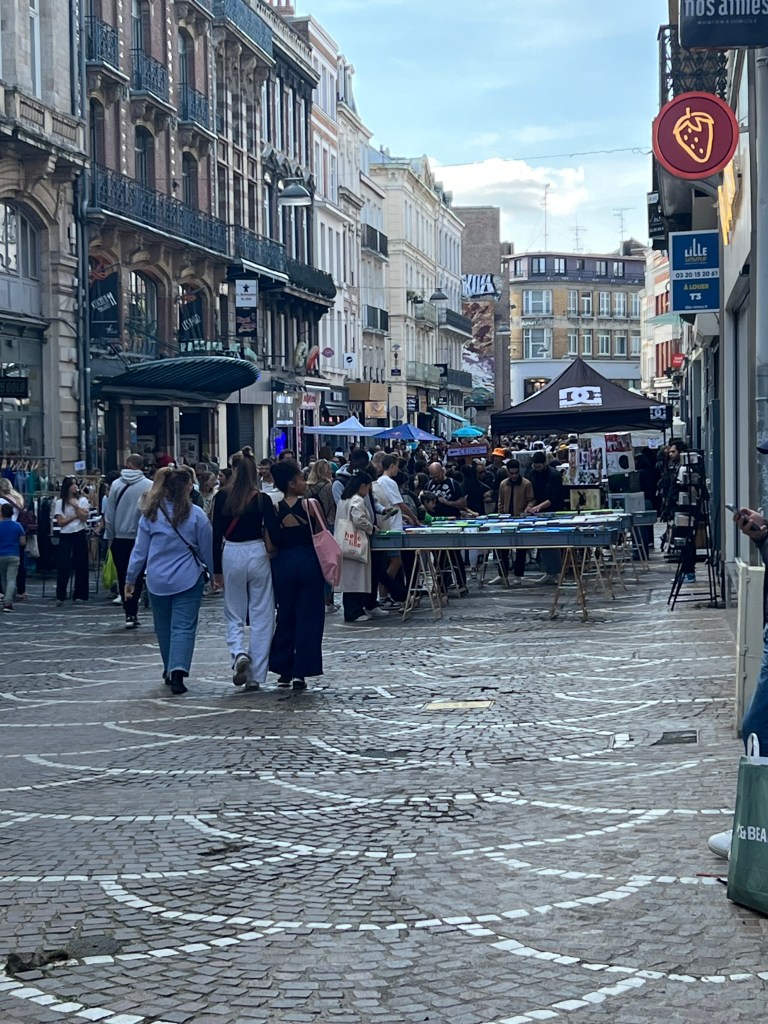
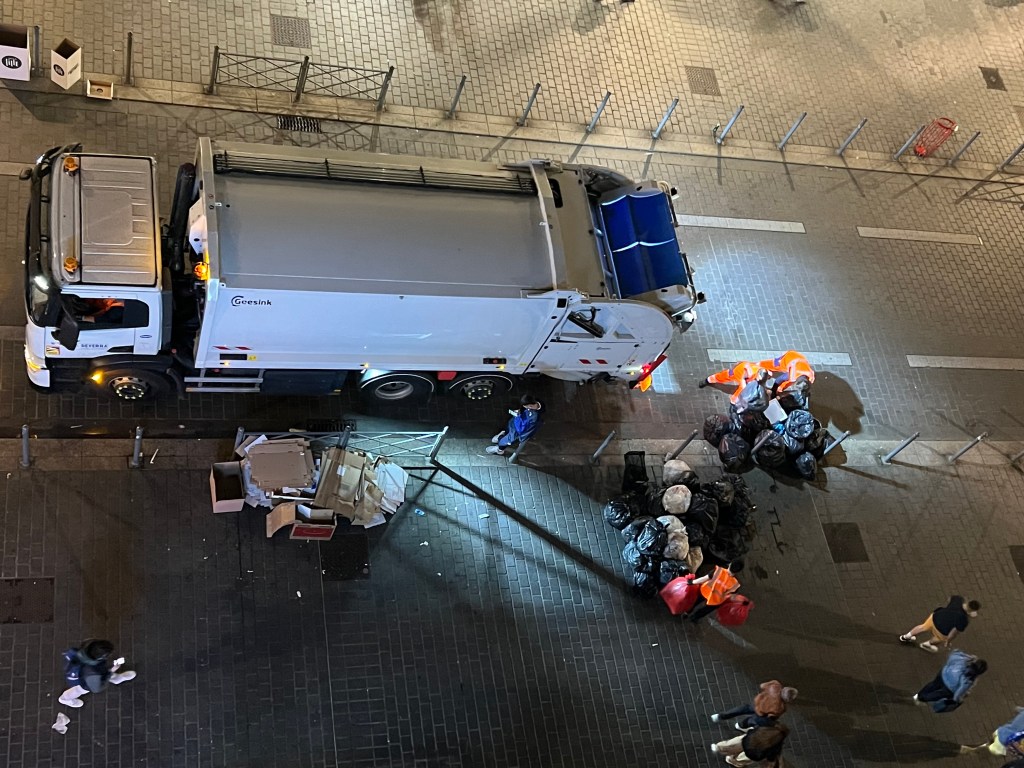
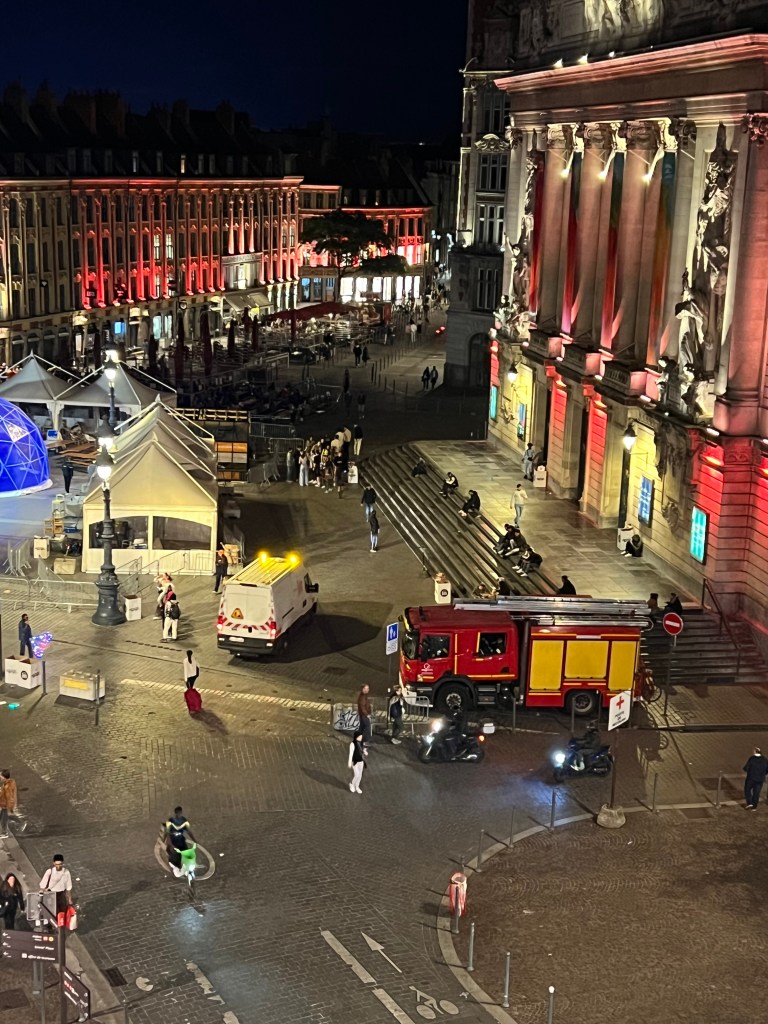
Returning to Lille, it was time for the annual Braderie, the largest flea market in Europe. 3 million people have been known to flock to the city as every street, boulevard, quai and alley are filled with second hand vendors and store sidewalk sales. Ordinarily it is held on the first weekend of September but had been delayed until the close of the Olympics in Paris. This year’s celebration was as noisy and as crowded as the preceding ones and trash pick up was continuous. The Lille public works staff did an incredible job cleaning up the city Sunday night to get ready for Monday morning commuters and city life.



It seemed really unfair that we had more in home machine problems but one afternoon our clothes washer decided to leak all over the kitchen floor. Bret told us that we talk more about our appliance problems than most old people talk about their health issues. He maintained that when the clothes washer died last year (and had to be replaced) that the robot floor vacuum and washer got jealous (died and had to be replaced) then our coffee machine got jealous (died and had to be replaced) which meant that it was coming around to the clothes washer again. Now if you can follow his line of thinking, good on you.
I really wish I had videos of the service call on the washer, both G making the call requesting service and the visit. After the technician came – speaking no English of course – we called our upstairs’ neighbor, Audrey, to help us out in translations. Poor thing was home from work with a cold but she was kind enough to jump into the conversation on speaker phone. G would ask her a question for the tech and she would ask the tech in French and then translate his answer to us in English. At one point however, instead of asking her the question in English, G barreled straight through the question in French. There was a pause on the line and Audrey’s raspy voice said, “I’m confused. Do you want me to repeat that to him? Didn’t you already ask him that in French ? We all laughed and kept Audrey on to continue the translation until its resolution. As it turned out, we had not understood the manual regarding the measurements of maximum loads so no wonder it decided to pee all over the kitchen floor. Problem addressed, no repair required and we ran up a pot of homemade chicken soup for Audrey as a thank you, to speed her recovery. “Will pay translators with food” is a sign I should post on our door.
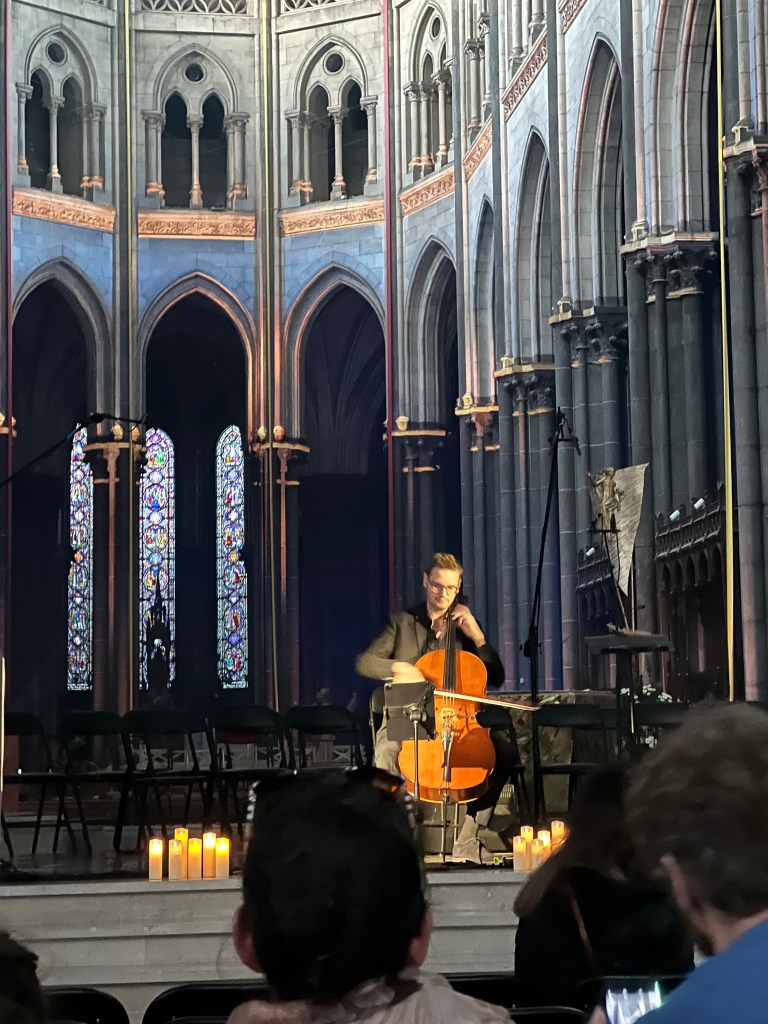
Before the month end, we attended a luminiscence event in town at the Notre-Dame de la Treille. It was done extremely well with live classical orchestration and a choir as light beams played imagery across the walls and ceilings of the cathedral. Photographing the performance was not allowed unfortunately so we are not able to share how magnificent the show was, but we’ve included some photos from before the performance began and afterwards, as we were all leaving.
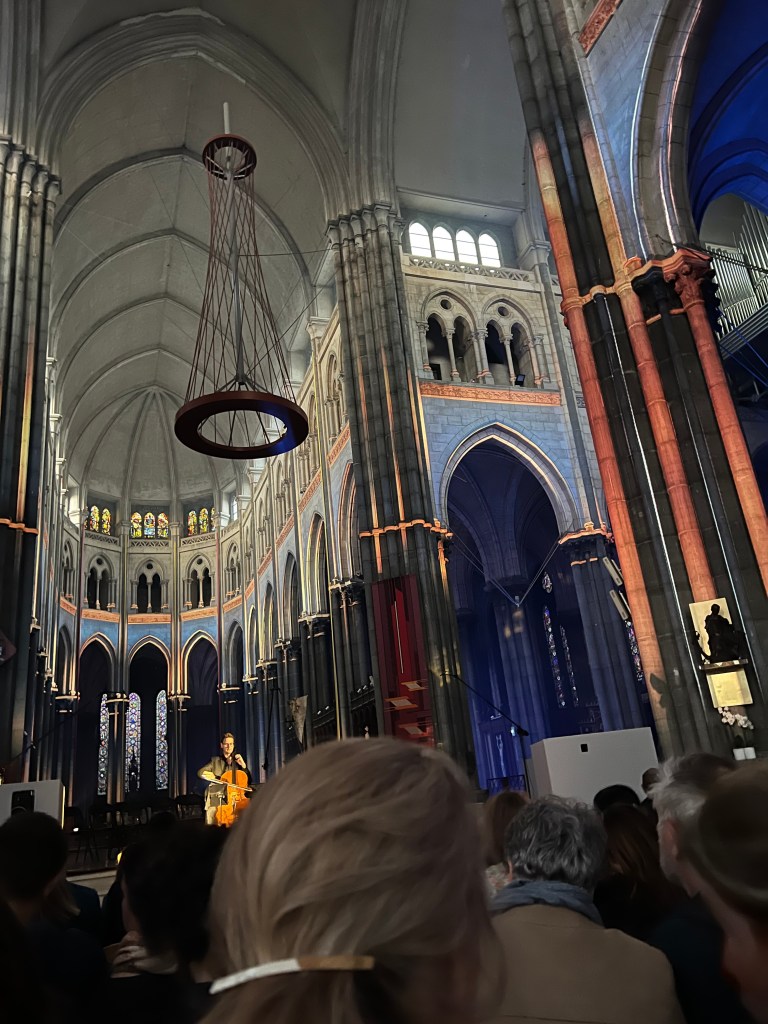
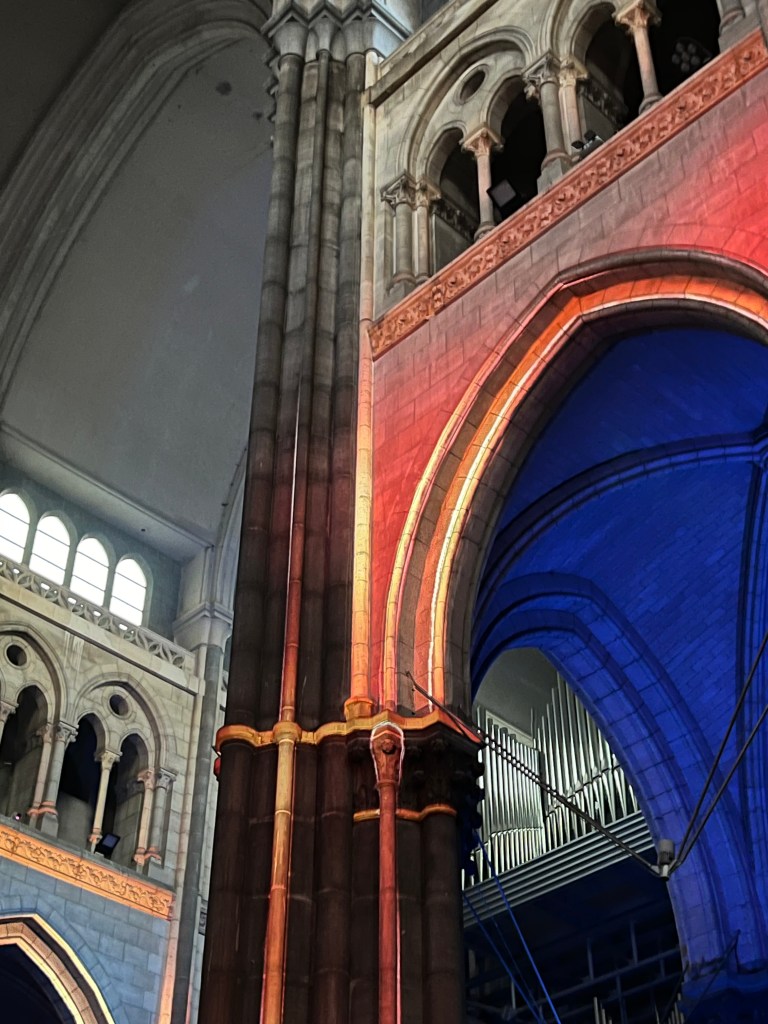
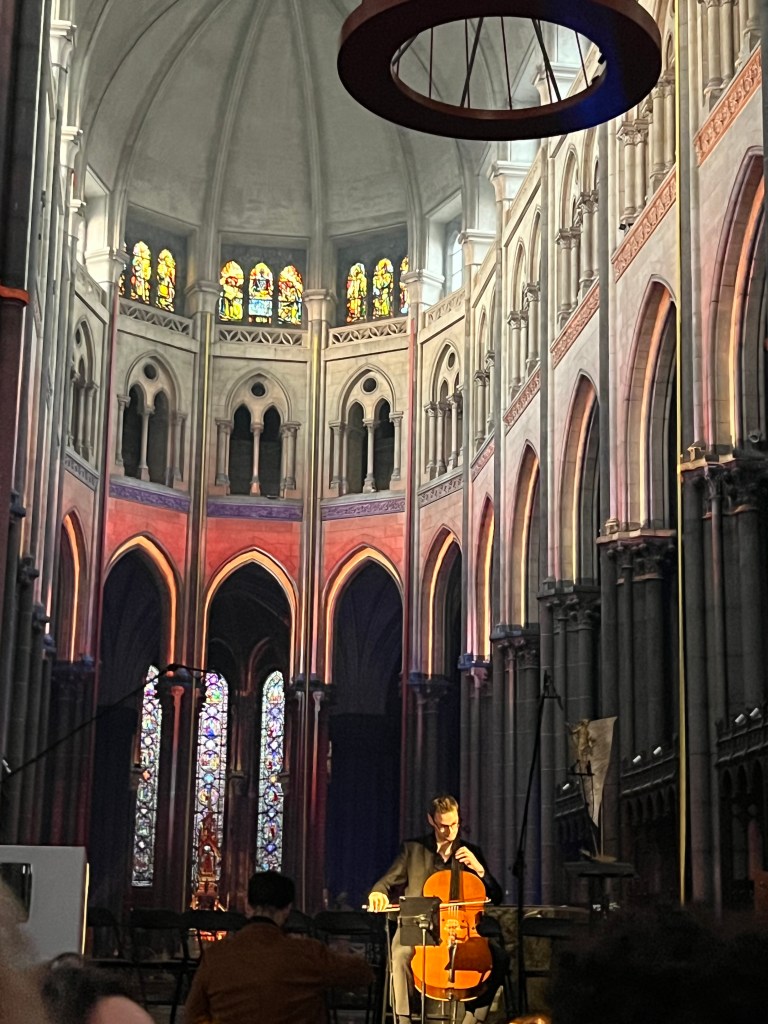

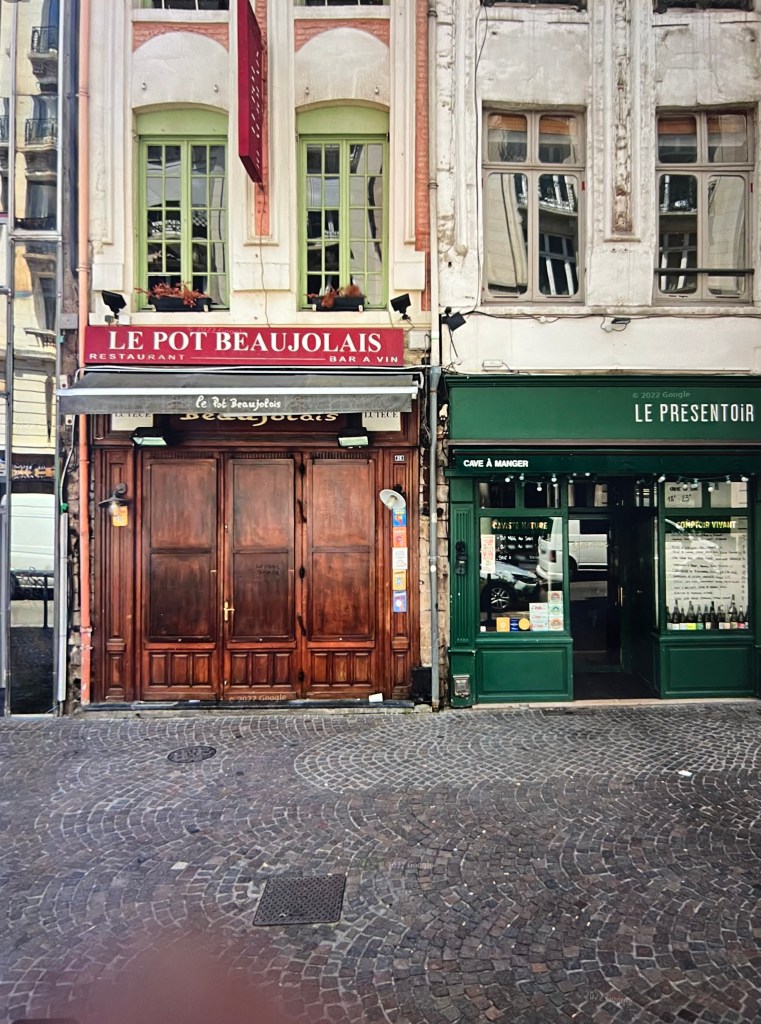
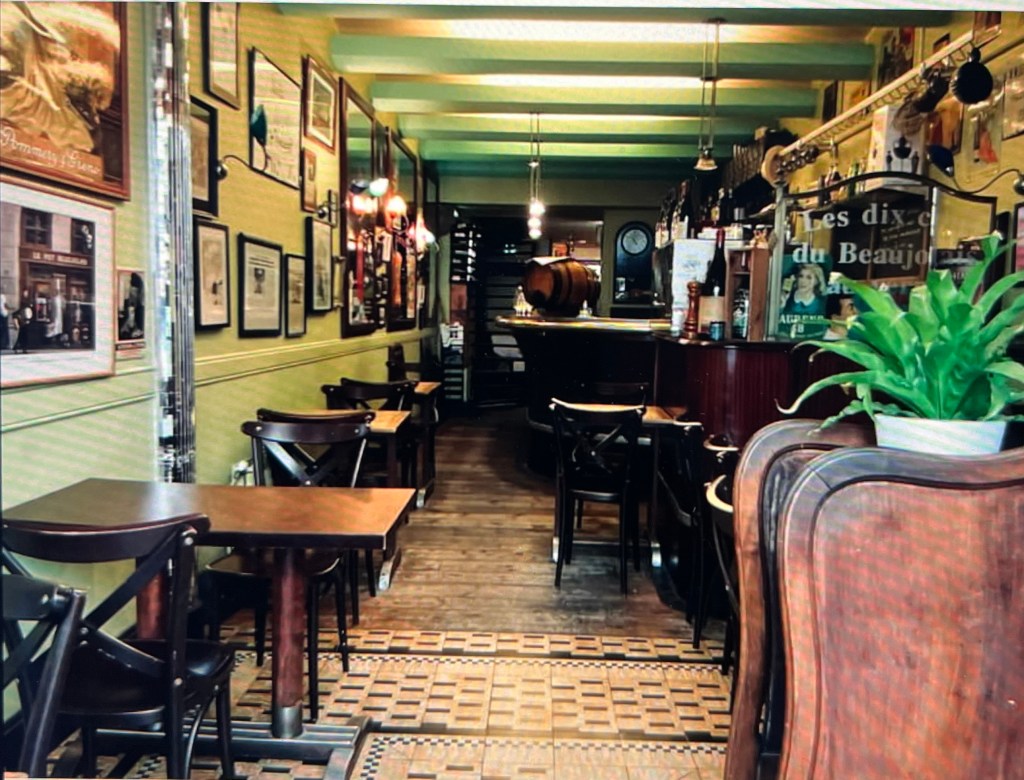
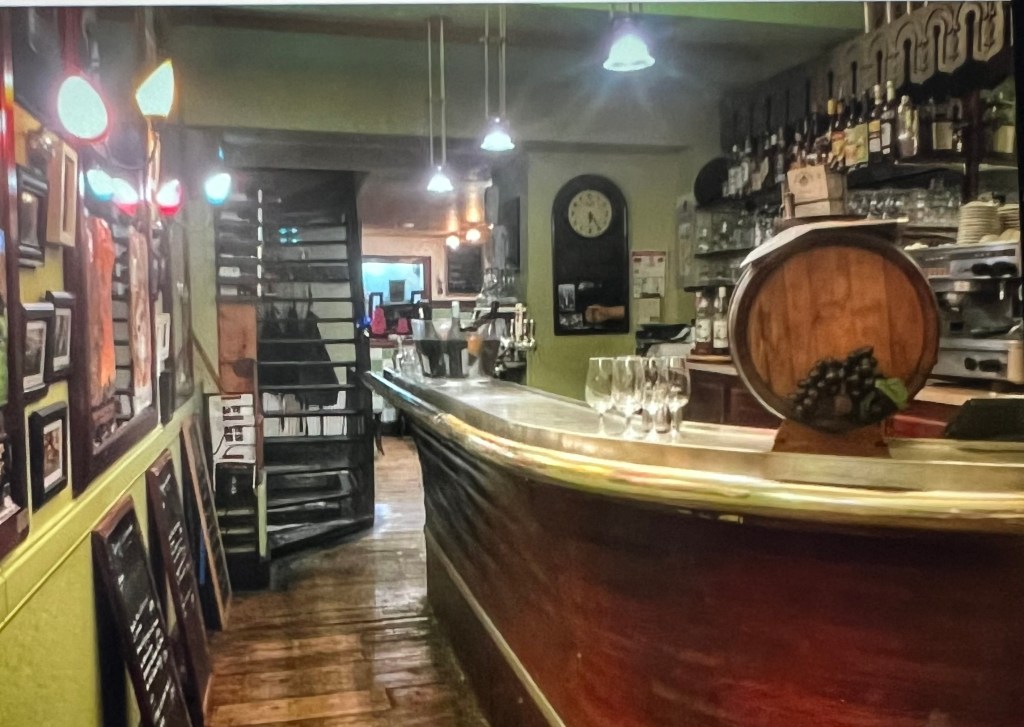
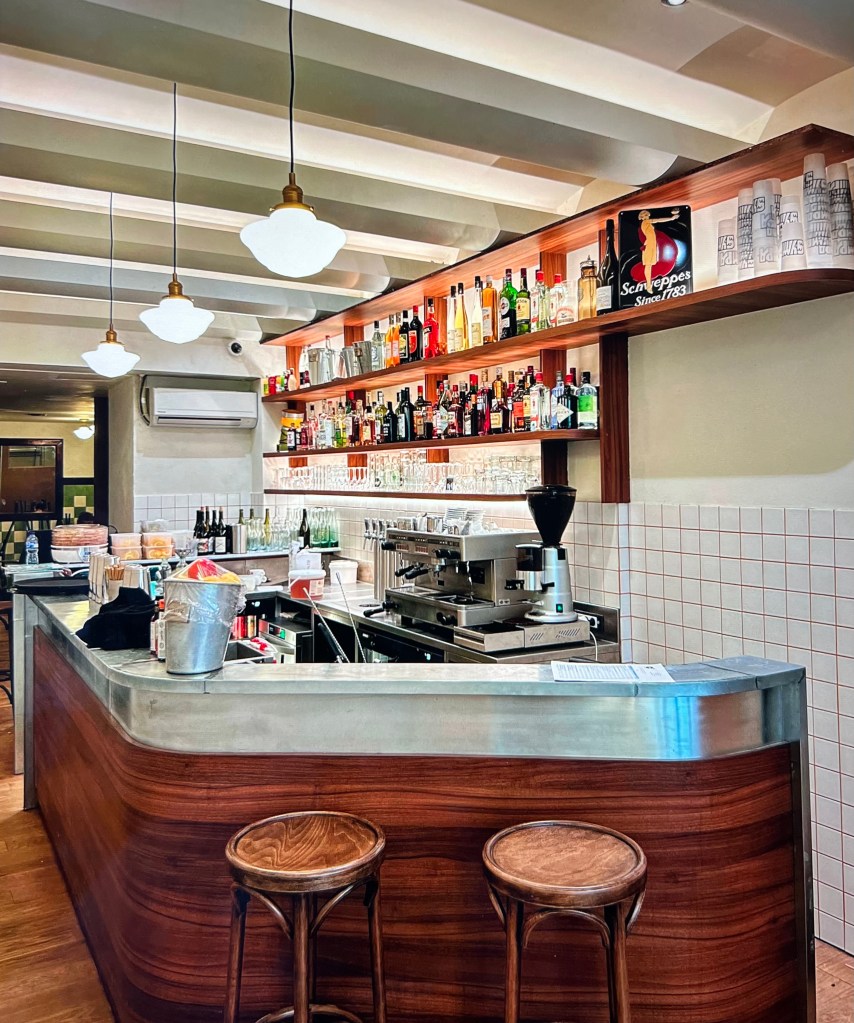
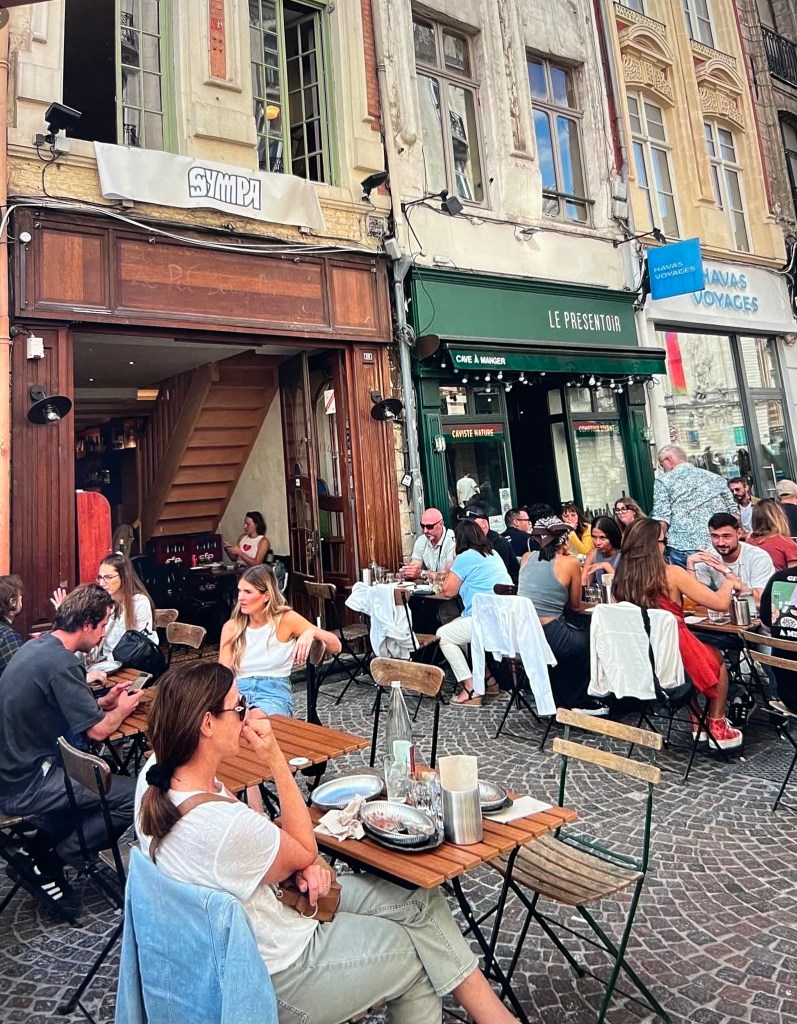
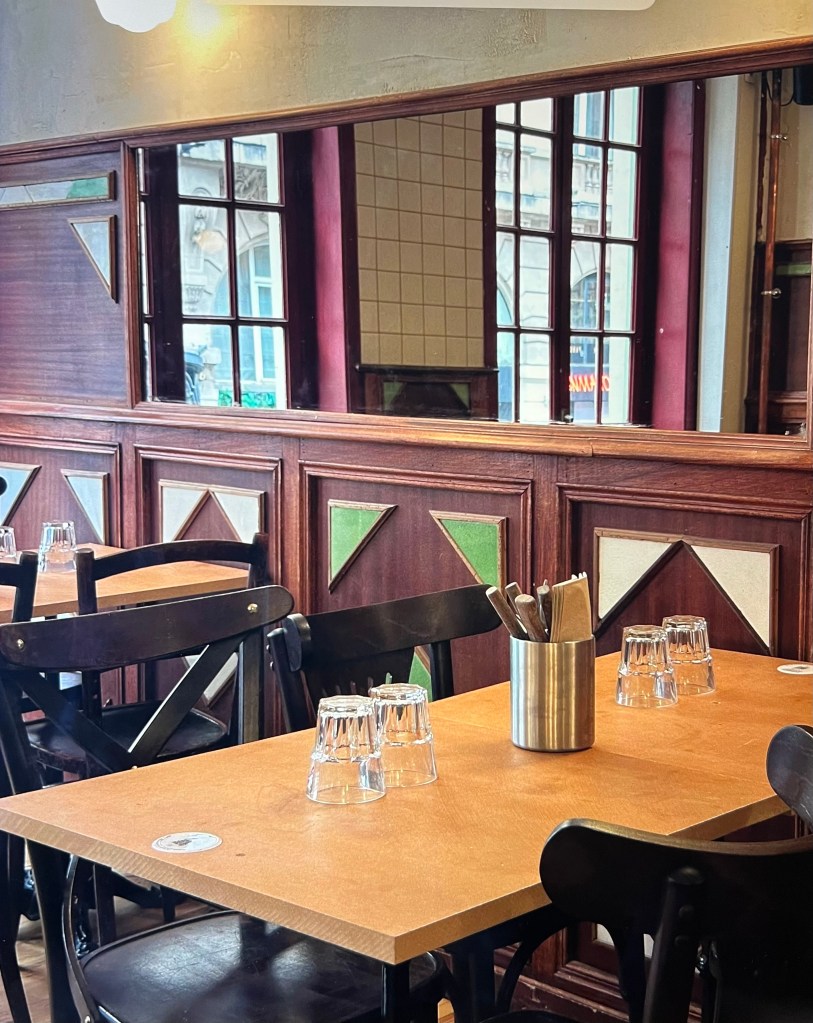
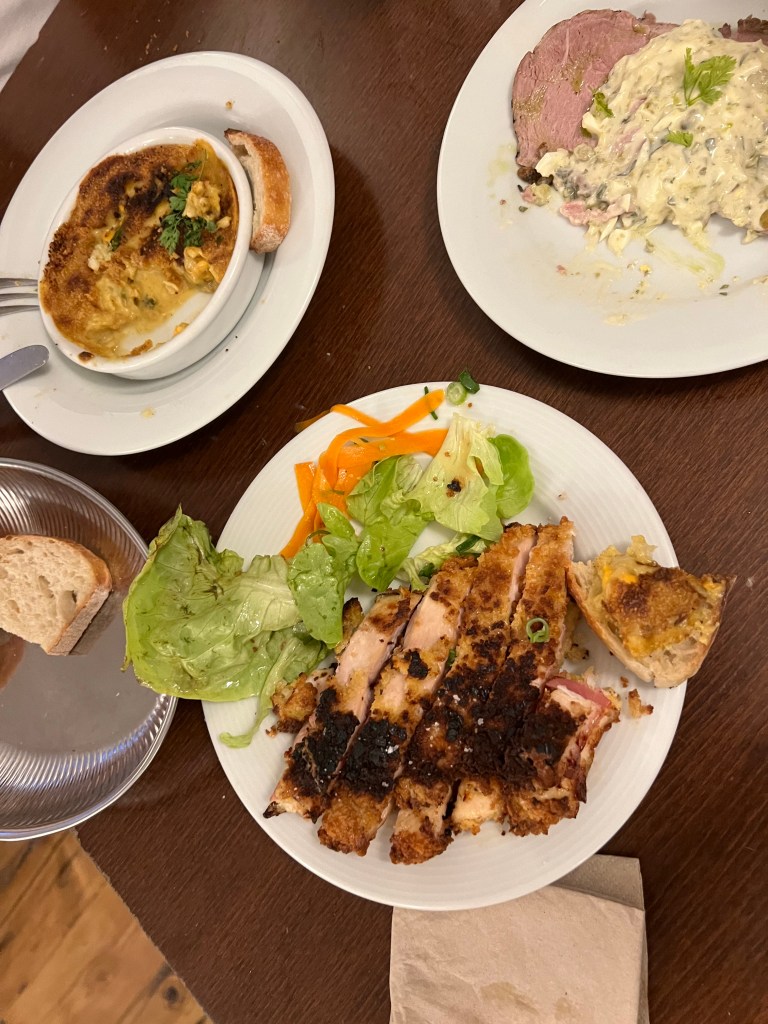
Rounding out the month was a trip to a new eatery, a new conscious routine for us. Sympa took over an old favorite, Le Pot Beaujolais, which closed after 30 years in April when the owners retired. The new owners have refurbished it well, giving a lighter treatment to the space and a fresh menu of small plates of French fare. The staff were warm and welcoming, the cocktails outstanding and the wine had great choices. The three plates we ordered; Roti Porc, Clam curry coconut gratin and Cordon Bleu, were absolutely superb. Situated around the corner from our apartment, it is now, again, a favorite on our list. The 1st three photos are of Le Pot Beaujolais, before renovations. G had more photos from in and about town but those photos will have to wait till next month.

 twokiddosoverseas.com
You must be logged in to post a comment.